Renault Weighs Appeal Over Racing Point Brake Duct Penalty, Citing Unfair Advantage
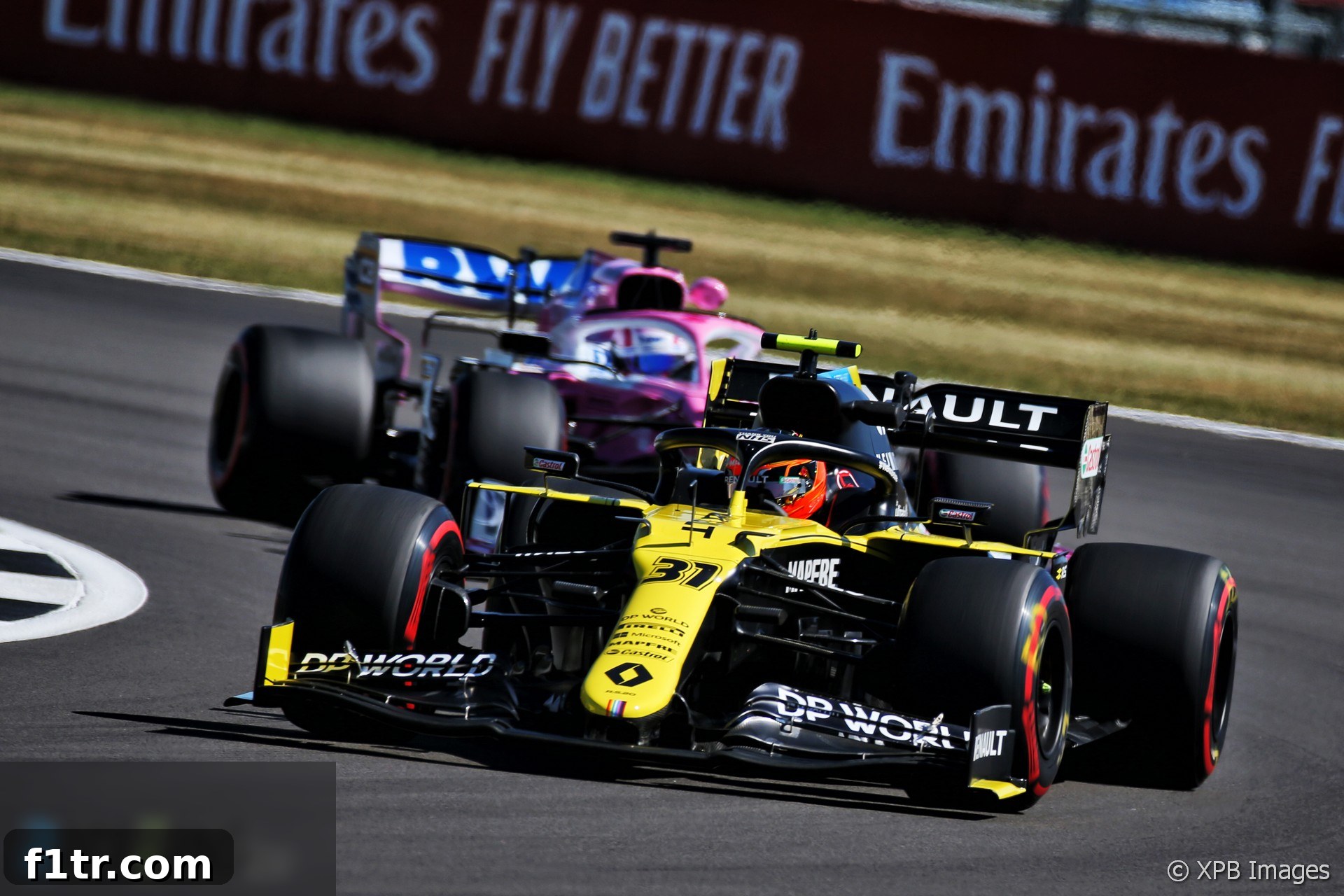
The controversy surrounding Racing Point’s RP20, dubbed the “Pink Mercedes,” has escalated, with Renault actively considering whether to appeal against the penalty handed down to the Silverstone-based team. The decision by the FIA stewards this morning confirmed Renault’s initial protest regarding Racing Point’s use of brake ducts primarily designed by Mercedes. While satisfied with the ruling that confirmed a breach of regulations, Renault’s concern now centers on the perceived leniency of the sanction.
Cyril Abiteboul, managing director of Renault, confirmed during today’s FIA press conference that the team would not protest the stewards’ decision itself, which upheld their initial grievance. However, the severity of the punishment – a 15-point deduction in the Constructors’ Championship and a €400,000 fine – is under scrutiny. Renault believes the penalty does not adequately reflect the significant competitive advantage Racing Point gained and continues to benefit from.
The Heart of the “Clone Car” Controversy: Illegally Designed Brake Ducts
The focal point of this highly contentious issue is Racing Point’s front and rear brake ducts. These components became “listed parts” for the 2020 season, meaning teams were required to design them independently. However, Racing Point had received the designs for Mercedes’ 2019 brake ducts when these parts were not yet listed. The stewards found that Racing Point had used these designs, effectively copying them, in their 2020 car, the RP20. While the acquisition of the initial data in 2019 was legitimate, the subsequent design process for 2020 was found to violate the updated regulations.
Brake ducts, often underestimated by casual observers, are far more than mere cooling components. In modern Formula 1, their design is intimately linked with a car’s overall aerodynamic philosophy. They meticulously channel airflow, influencing everything from tire temperature management to the generation of crucial downforce. A well-designed brake duct system can yield significant performance gains, contributing substantially to lap time. It’s an area where cutting-edge research and development, often consuming vast resources, are paramount. The fact that Racing Point derived this design from a championship-winning car like the Mercedes W10 immediately put them at a substantial advantage.
The FIA’s Ruling and Racing Point’s Sanction
Renault had lodged protests against Racing Point’s brake ducts at three consecutive races: the Styrian, Hungarian, and British Grands Prix. Throughout this period, Racing Point had scored a total of 34 points, demonstrating their competitive pace. Following a thorough investigation, the FIA stewards confirmed that Racing Point had indeed breached the sporting regulations regarding the design and use of these parts. The penalty imposed was a 15-point deduction from their Constructors’ Championship tally and a fine of €400,000.
This penalty directly impacts Racing Point’s standing in the championship, potentially altering their financial benefits from prize money at the end of the season. However, critically, the stewards’ decision also included a provision that allowed Racing Point to continue using the controversial brake ducts for the remainder of the 2020 season. This aspect is central to Renault’s contemplation of an appeal, as it means the “material advantage” gained will persist throughout the entire championship campaign.
Renault’s Pursuit of Proportionality: Why the Sanction May Not Be Enough
“I can confirm that we are considering whether or not to appeal,” Abiteboul stated, highlighting the complexity of the situation. “It happens that usually we have one hour to do that but in this particular case, given the complexity, we have 24 hours to do that and then 96 hours to confirm or not appeal.” This extended timeframe underscores the gravity of the decision and the need for careful consideration of all sporting and commercial implications.
The core of Renault’s argument for a potentially harsher penalty lies in the sheer scale of the benefit Racing Point obtained. Abiteboul elaborated, “We will consider that matter, bearing in mind the advantage that was obviously obtained will keep on going for all this season. And it’s a very material advantage. I mean, just to put things in perspective, any team will be spending 20 percent of its ATR, of its aerodynamic time into developing those parts.”
Aerodynamic Testing Restriction (ATR) is a crucial measure implemented by the FIA to limit resource expenditure and promote cost-effectiveness in F1. Dedicating 20% of a team’s ATR to developing a single set of components like brake ducts represents an enormous investment of time, resources, and intellectual capital. By essentially circumventing this development process through copying, Racing Point gained a significant competitive edge without incurring the associated costs or development time. Renault argues that a penalty that allows the continued use of these parts and impacts only a fraction of the points gained, does not adequately negate this substantial, season-long advantage. They believe the current sanction fails to deter similar practices in the future and compromises the principle of fair competition.
Analysis: How Renault’s Racing Point protest led the FIA to revise its rules on ‘clone cars’
The “Disruption” to Formula 1’s Ethos and the Need for Evolution
Beyond the immediate sporting implications, Abiteboul framed Racing Point’s approach as a significant “disruption” to the sport, necessitating a robust response. He acknowledged that copying has always been a part of Formula 1’s history, where teams often draw inspiration from successful designs. However, he argued that modern technology has fundamentally changed the landscape of imitation.
“We need to recognise that what Racing Point has done, based on the car that had such an advantage against anyone else on the grid, has been a shock in the system, has been a disruption,” Abiteboul explained. “And like there’s been other disruptions in Formula 1 before, there’s been other disruptions in other industries before, we need to see how we deal with it.”
The advancement of digital tools such as CAD (Computer-Aided Design), CFD (Computational Fluid Dynamics), and highly accurate laser scanning allows for an unprecedented level of precision in reverse engineering and copying. What was once a challenging process of visual interpretation and approximate replication can now be executed with near-perfect accuracy, blurring the lines between “inspiration” and direct “cloning.” This technological leap, according to Abiteboul, demands a corresponding evolution in the regulatory framework to maintain the integrity of the constructor principle, where each team is expected to design and build its unique car.
FIA’s Stance and Future Regulatory Changes
In parallel with the stewards’ decision, Nikolas Tombazis, the FIA’s head of single-seater matters, issued a statement indicating the governing body’s intent to prevent teams from adopting Racing Point’s copying strategy from the next year onwards. This proactive stance from the FIA has been cautiously welcomed by Renault.
“We’ve been pleased with the statements from Nikolas Tombazis this morning in parallel to the decision of the stewards about his willingness to tackle that matter and to tackle it strongly, without waiting, for next year,” Abiteboul commented. However, he added a note of caution, stating, “But we need to understand exactly what’s behind that statement. That’s why, again, we’ll take a little bit of time before deciding what’s our course of action from that point onward.” Renault is clearly looking for concrete, unambiguous rule changes that will leave no room for similar interpretations or exploitations of loopholes in the future.
Broader Implications for Formula 1 and its Sporting Integrity
This case is not merely about brake ducts; it sets a critical precedent for the future of car design and intellectual property in Formula 1. It forces the sport to confront fundamental questions about what it means to be a “constructor” and the ethical boundaries of competitive advantage. If teams can simply copy major aerodynamic components with minimal penalty, it could undermine the very essence of F1 as a pinnacle of technological innovation and engineering prowess.
An appeal from Renault would likely bring even greater scrutiny to the FIA’s regulations and their enforcement. It would also further ignite the debate among teams, with some possibly supporting Renault’s stance in a bid to safeguard independent development, while others might defend Racing Point’s position, perhaps arguing for greater flexibility in sharing components to reduce costs. The outcome of this potential appeal, and the subsequent changes to the sporting and technical regulations, will undoubtedly shape the competitive landscape of Formula 1 for years to come.
Conclusion: Awaiting Renault’s Final Decision
As the 24-hour window for formal notification of appeal draws to a close, and the subsequent 96-hour period for confirmation looms, the Formula 1 community holds its breath. Renault’s decision will have significant ramifications, not just for the 2020 Constructors’ Championship standings, but for the fundamental principles of design, innovation, and fair play within the sport. The “Pink Mercedes” saga has exposed a grey area in the regulations that the FIA is now committed to clarifying, but the immediate question remains whether the existing sanction is deemed sufficient by one of the sport’s prominent manufacturers.
The resolution of this controversy will be a testament to the sport’s ability to adapt its rulebook to rapidly evolving technology and to uphold the spirit of competition while fostering genuine innovation.
2020 F1 Season Related Articles
- Grosjean to make F1 test return tomorrow for first time since Bahrain horror crash
- Pictures: Wrecked chassis from Grosjean’s Bahrain fireball crash to go on display
- Bottas vs Rosberg: Hamilton’s Mercedes team mates compared after 78 races each
- F1 revenues fell by $877 million in Covid-struck 2020 season
- Hamilton and Mercedes finally announce new deal for 2021 season
Browse all 2020 F1 season articles