In the vibrant and often controversial world of Formula 1, five-time world champion Lewis Hamilton has consistently used his platform to champion causes beyond the racetrack. Recently, Hamilton offered a nuanced perspective on the increasing trend of climate activism disrupting major sporting events, stating his support for protesters as long as their actions do not endanger themselves or others. This stance highlights a growing tension between global sporting spectacle and urgent calls for social and environmental change, positioning Hamilton as a leading voice advocating for a more conscious and responsible future for sport.
Lewis Hamilton on Activism: A Call for Peaceful Change
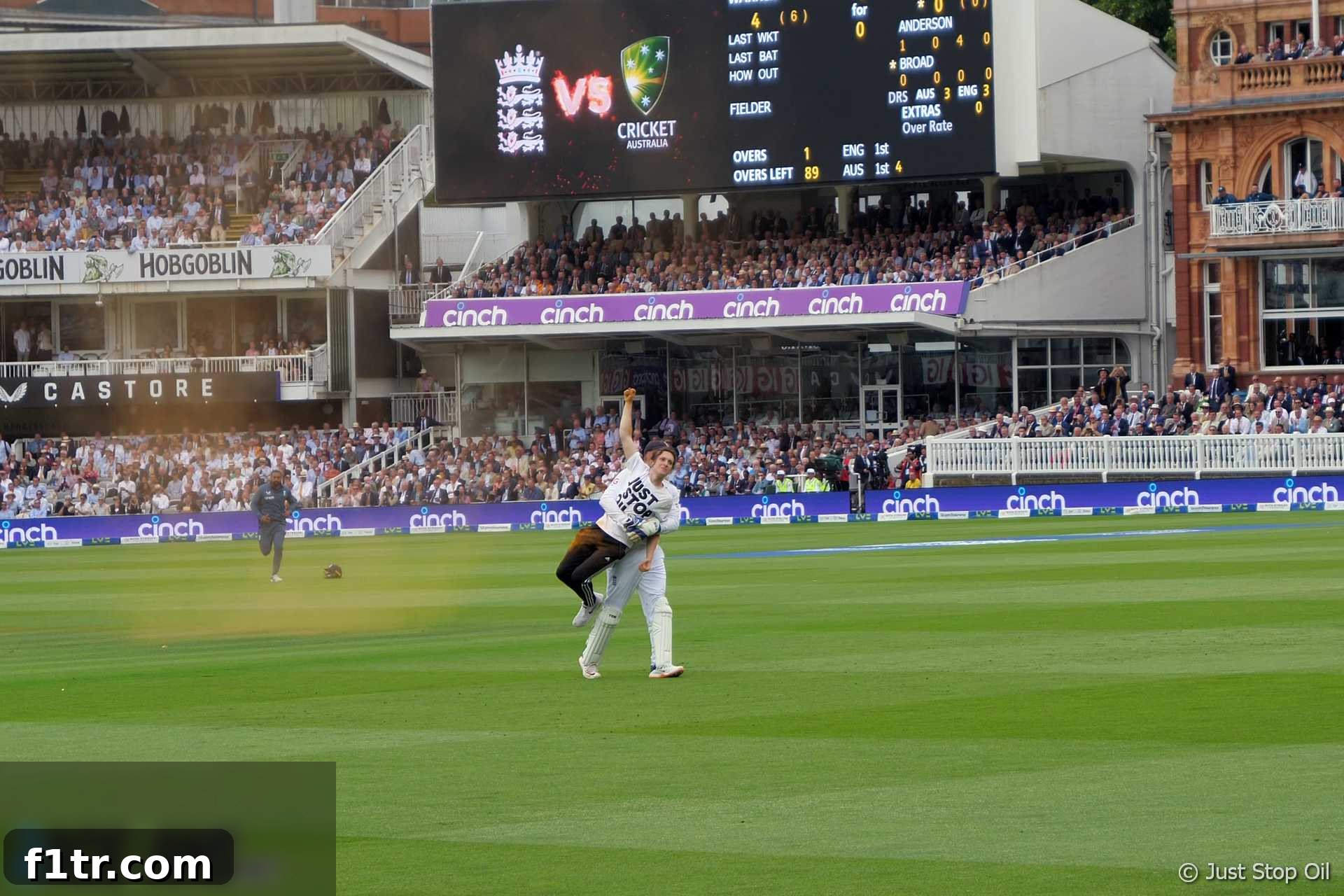
Hamilton’s comments come amidst a wave of high-profile protests targeting various sporting events across the globe. Climate activist groups, notably Just Stop Oil, have made headlines by disrupting significant competitions, aiming to draw attention to the urgency of environmental issues. These incidents include a Formula E race in Berlin just two months prior, the iconic British Grand Prix at Silverstone last year, and more recently, an Ashes cricket match in London. The group also made its presence felt at the World Snooker Championship in April, demonstrating a clear strategy of utilizing sport’s immense visibility to amplify their message.
Hamilton, a vocal advocate for environmental causes and social justice throughout his career, expressed profound sympathy for the activists’ core message. “I welcome protesters or activists,” he conveyed to the media, including RaceFans. “Always they are pushing for positive change.” This statement underscores his belief in the power of protest as a catalyst for societal improvement and his alignment with the fundamental goals of environmental protection.
However, Hamilton’s support is not without its boundaries. He drew a critical distinction between peaceful demonstration and actions that pose a risk to safety. The incident at last year’s British Grand Prix, where a group of Just Stop Oil protesters entered the track following the start of the race, exemplified the kind of tactic Hamilton explicitly disapproves of. “We never want to see people standing on the track and putting themselves in harm’s way,” emphasized the Mercedes driver. This clear boundary reflects a paramount concern for the safety of all individuals involved in sporting events – athletes, officials, and even the protesters themselves.
The Impact of Protest: Sparking Dialogue and Driving Change
Despite his reservations about dangerous tactics, Hamilton firmly believes in the transformative potential of protest. He articulated that such actions “spark conversation, that sparks dialogue and it often helps – sometimes, done the right way – it sparks change. And we need more change.” This sentiment goes to the heart of what many activists aim to achieve: to disrupt complacency and force uncomfortable but necessary discussions about pressing global issues.
Hamilton expanded on the critical areas where change is desperately needed. “We need to become more sustainable. We need to be more inclusive. There’s all these things that we need to do more of.” For Hamilton, Formula 1, and indeed all major industries, have a responsibility to evolve. He recognizes that the fast-paced nature of modern life and commercial pressures can sometimes overshadow these crucial objectives. Protests, in his view, serve as potent reminders, “sparked up again by conversation,” to refocus efforts on sustainability and inclusivity.
His hope remains that future events will not see a repeat of the track invasion scenario witnessed at Silverstone. “But as I said, I’m always supportive of peaceful protests,” he reiterated, cementing his position as a champion of both environmental consciousness and responsible activism. This balanced perspective invites a broader conversation about how high-stakes sports can navigate their role in a world grappling with significant environmental and social challenges.
Addressing Fan Behavior: Lessons from the Austrian Grand Prix
Beyond external activism, the 2023 Austrian Grand Prix brought a different kind of public concern to the forefront: instances of harassment and abuse among fans within the crowd. Reports emerged of deeply unsettling behavior, including sexist and homophobic abuse targeting certain individuals. One particularly distressing incident involved a Lewis Hamilton fan who was subjected to sexist abuse, leading to Mercedes bringing her into the paddock to offer support. Such conduct was unequivocally condemned by drivers, teams, and the Formula 1 organization itself, which promptly raised the matter with the race promoters during the weekend.
Hamilton expressed profound disappointment at these occurrences. “When coming to such a beautiful place it was definitely sad to hear what happened last year,” he commented, referring to the previous year’s event where similar issues arose. He acknowledged that Formula 1 had taken steps to implement changes for the current weekend, aiming to prevent a recurrence. However, he also stressed that the ultimate responsibility lies with individual spectators to uphold standards of respect and decency. “But I still feel that there’s work that needs to be done,” he added, indicating that systemic changes and educational efforts are ongoing requirements rather than one-off fixes.
The challenge, as Hamilton noted, is that “potentially the same group of people could turn up.” This highlights the persistent nature of such issues and the need for continuous vigilance. His powerful message emphasized the importance of a resolute stance: “We just need to be very strong in our stance in terms of how we expect people to be within this space that’s inclusive for anybody.” The aspiration for Formula 1 is to be a welcoming and safe environment for all fans, regardless of their background, gender, or allegiances. “So I hope last year was a one-off. Fingers crossed,” he concluded, reflecting a blend of hope and cautious optimism.
Verstappen’s Perspective: Enjoying the Race Responsibly
Adding another voice to the discussion on fan conduct was Max Verstappen, who enjoys tremendous support, often characterized by a sea of orange, at Red Bull’s home race in Austria. While his comments were more pragmatic and focused on the immediate experience, they complemented Hamilton’s broader call for respect. Verstappen urged those in the stands to “not get too drunk” and “just watch the race, enjoy it.” His advice centered on responsible enjoyment of the event, ensuring that the passion of the fans translates into a positive atmosphere rather than conflict.
“It will be good to see them, it’s always nice to see the orange colour next to the track,” he continued, acknowledging the vibrant support he receives. He also highlighted a unique aspect of the Austrian circuit: “I think also about this track is that on any grandstand that you sit you can actually see a lot of the track and that makes it, I think, very unique.” Verstappen’s comments, while less focused on activism than Hamilton’s, underscore the importance of a harmonious and enjoyable environment for all attendees, regardless of which driver they support.
The Future of Formula 1: Balancing Spectacle with Social Responsibility
The convergence of these discussions – from external climate protests to internal fan misconduct – illustrates the evolving landscape of Formula 1. It is no longer merely a sport defined by speed and competition; it has become a global platform where significant social and environmental issues frequently intersect with the racing action. Lewis Hamilton, through his consistent advocacy, challenges the sport to not only entertain but also to lead by example, embracing sustainability and championing inclusivity.
The dialogue sparked by activists, coupled with the imperative to address fan behavior, pushes Formula 1 and its stakeholders to reflect on their societal impact. The sport’s immense reach and influence mean that its actions and rhetoric can resonate far beyond the track. By fostering environments that are both safe for protesters to express their views peacefully and respectful for all fans to enjoy the spectacle, Formula 1 has the opportunity to solidify its role as a progressive and responsible global entity. The commitment to these principles will undoubtedly shape its identity in the years to come, ensuring that the thrill of motorsport is matched by an unwavering dedication to positive change and universal respect.
2023 Austrian Grand Prix Related Articles
- Mercedes left scratching heads by lack of performance at Austrian GP
- Verstappen’s determination to grab every point makes him a record-breaker
- Austrian GP track limits farce was avoidable like ‘IndyGate’ and Spa 2021 – Brown
- Alpine now “definitely beatable” for McLaren after upgrade – Brown
- Paddock Diary: 2023 Austrian Grand Prix
Browse all 2023 Austrian Grand Prix articles