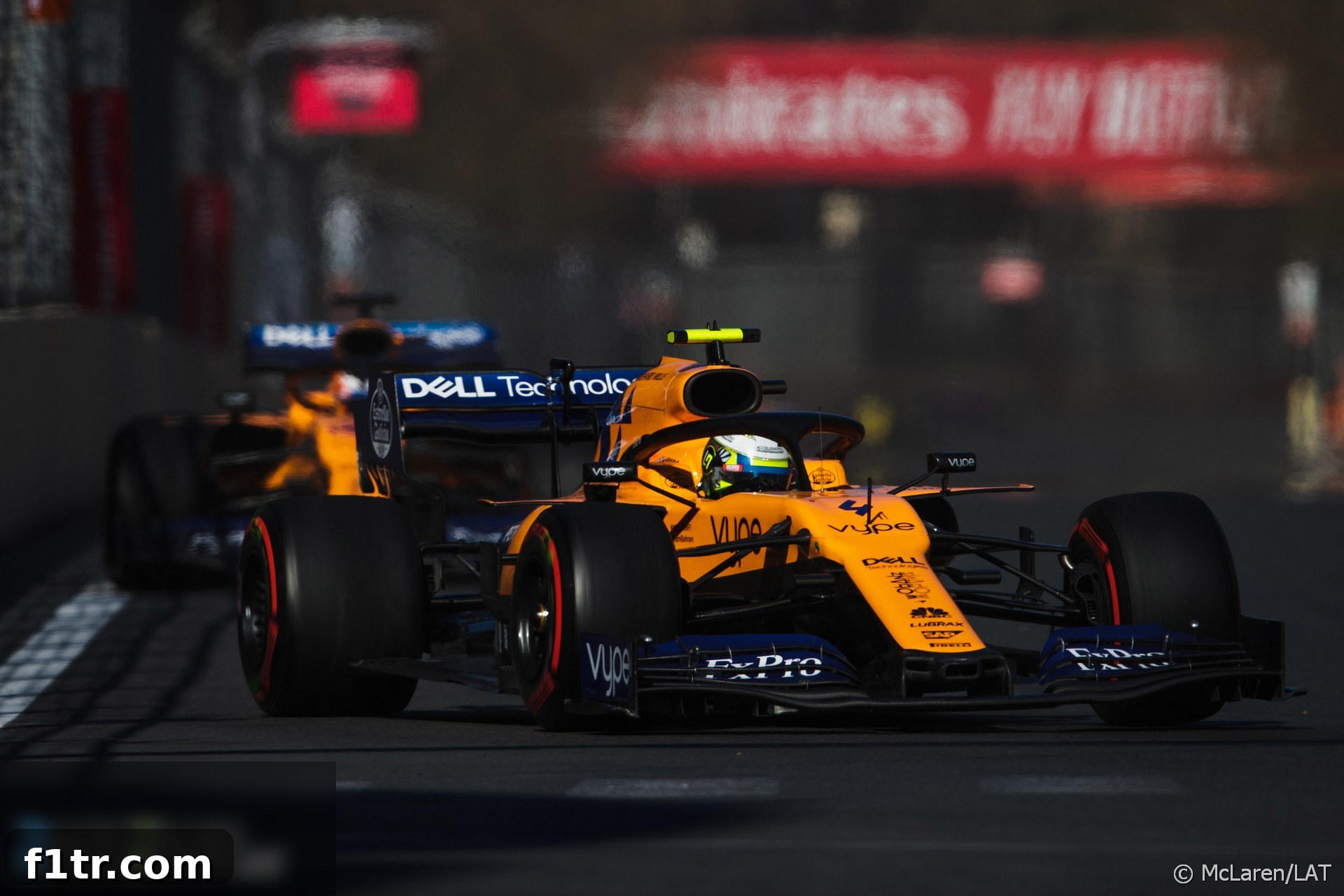
In the high-stakes world of Formula 1, where split-second decisions can dictate fortunes, the 2019 Azerbaijan Grand Prix presented a pivotal strategic moment for Lando Norris and the McLaren team. Despite a controversial extra pit stop that saw him relinquish a hard-fought position to his teammate, Carlos Sainz Jnr, Norris unequivocally supported McLaren’s audacious decision. This event underscored the complex interplay of team strategy, driver trust, and the unpredictable nature of F1 racing, particularly on the challenging Baku Street Circuit.
The incident unfolded during a Virtual Safety Car (VSC) period. Norris, then engaged in a spirited battle with Sergio Perez of Racing Point, was called into the pits for a second time. McLaren’s gamble was clear: sacrifice track position for a set of fresher, used soft tyres, hoping the superior grip would provide a decisive advantage over the final 12 laps. This strategic call, often termed a ‘box to overtake’ maneuver, is designed to give a driver a tire offset against competitors, allowing for aggressive late-race charges. However, the outcome was not as McLaren had envisioned; the pit stop dropped Norris behind his teammate, and crucially, he was unable to make any meaningful progress against either Sainz or Perez. Yet, despite forfeiting a position and two championship points to Sainz, Norris expressed unwavering confidence in his team’s tactics.
Understanding McLaren’s Bold Strategy in Baku
The 2019 Azerbaijan Grand Prix, known for its long main straight and tight technical sections, frequently presents opportunities for unconventional strategies due to its high likelihood of Safety Car or VSC deployments. McLaren’s decision to pit Norris under the VSC was a calculated risk, aimed at maximizing their chances against competitors, especially Sergio Perez, who was proving difficult to pass. Norris elucidated the team’s rationale, stating, “As a team we didn’t win or lose points from where we were before I stopped. We just wanted something to see if we could have a bigger advantage over Checo [Perez] to get ahead because we didn’t have the straight-line speed to pass him.”
The core of the strategy was to create a significant tire performance delta. By switching to a set of used soft tyres, McLaren anticipated that Norris would have a superior grip advantage compared to Perez, who was on older rubber. This advantage, they hoped, would be enough to overcome the inherent difficulties of overtaking on Baku’s long straight without a substantial speed differential or reliance on DRS. McLaren’s radio call to Norris, “we’d like to box to overtake,” perfectly encapsulated their aggressive intent. It wasn’t about simply changing tires; it was about engineering an opportunity that wasn’t otherwise present.
The Driver’s Trust: Lando Norris’s Perspective
A crucial element in any successful F1 strategy is the driver’s belief and collaboration. Lando Norris, even in his rookie season, demonstrated remarkable maturity and a deep understanding of team dynamics. He revealed that the decision was a shared one, not a directive forced upon him. “It was a ‘box to overtake’ so if he boxed, I wouldn’t have boxed; if he didn’t box I boxed,” Norris explained, highlighting the conditional nature of the call. He further emphasized his agency in the situation: “I could’ve easily said ‘no I don’t think you’re right’ or ‘I want to stay out’ or whatever. It was just a chance to do something different, to do something a little bit better.”
Norris’s willingness to embrace the risk stemmed from his trust in the McLaren strategists. “I believed in their decision, I agreed with it, I boxed, I could’ve easily not boxed. So I’m fine with the decision, it was a team decision, it just didn’t work out the way I wanted it to.” This statement speaks volumes about his team-first mentality and his capacity to accept outcomes, even when they don’t perfectly align with personal gain. It showcased a driver who was not only fast but also strategically astute and deeply integrated into the team’s overarching objectives. For a young driver, this level of trust and analytical thought is a strong indicator of future leadership within the team.
Analyzing the Outcome: Why the Gamble Didn’t Pay Off
Despite the well-intentioned strategy, the ‘box to overtake’ maneuver for Norris did not yield the desired results. The hope that the used soft tires would provide a significant enough pace advantage for Norris to scythe through the field and pass both Sainz and Perez proved overly optimistic. The crucial factor was likely the condition of the “used softs” themselves, and perhaps the remaining laps simply weren’t enough for the tire advantage to fully materialize against rivals who were managing their older sets effectively. The high-speed nature of Baku also means that tire degradation, while present, might not always be drastic enough in the final laps to allow for truly rapid overtaking without a significant power or downforce advantage.
Ultimately, the net effect was a swap in positions within the McLaren garage. While Sainz gained two points by finishing ahead of Norris, the team’s overall constructors’ points tally remained unchanged from what it would have been had Norris stayed out. This highlights a common dilemma in F1 strategy: the balance between aggressive gambles for higher positions and conservative tactics to secure existing points. In this instance, the aggressive approach, while commendable for its ambition, didn’t deliver the intended improvement in track position or point haul against external competitors. However, the experience provided valuable data and insights for McLaren’s strategists to refine their decision-making processes in future races.
The Missed Opportunity: Norris’s Pre-VSC Battle with Perez
Adding another layer of complexity to the narrative, Norris genuinely believed he was on the cusp of passing Sergio Perez even before the VSC was deployed. This suggests that had the race remained green, the strategic pit stop might not have been necessary at all. Norris explained his pre-VSC intentions: “His tyres started going off a bit towards the end, just before the VSC. My pace at that point was quite a bit better.” This indicates that Norris was effectively managing his own tires and had a clear plan to execute an overtake through conventional means.
His description of preparing for the overtake offers a fascinating glimpse into the intricate art of F1 racing. “I had a few opportunities but those last couple of laps before the VSC came out I was saving that battery, trying to make him use it as much as possible so I could make the most of him recharging on the final start-finish straight, as that was my only opportunity to try and pass.” This meticulous energy management, a critical skill in modern F1, underscores Norris’s strategic thinking behind the wheel. The VSC, while opening a window for McLaren’s pit stop gamble, simultaneously closed Norris’s own window for a direct overtake, creating a double-edged sword of strategic disruption.
Lessons Learned and McLaren’s Path Forward
The 2019 Azerbaijan Grand Prix served as a microcosm of the continuous learning curve in Formula 1. For McLaren, the decision, though it didn’t play out perfectly, demonstrated their willingness to be proactive and aggressive in strategy, rather than simply reacting to events. This aggressive mindset, combined with the detailed analysis of what worked and what didn’t, contributes to the team’s long-term development and strategic prowess. The experience offered invaluable data on tire performance under specific race conditions and the effectiveness of VSC pit windows on a circuit like Baku.
For Lando Norris, the event further cemented his reputation as a mature, team-oriented driver. His unwavering support for McLaren’s decision, despite the personal cost of two championship points, highlighted his understanding of the bigger picture. In a sport where individual glory often overshadows team objectives, Norris’s perspective was a refreshing display of professionalism and collaborative spirit. His analytical approach, both in recounting the team’s strategy and his own pre-VSC battle plans, pointed to a driver with a deep tactical understanding beyond his years. This blend of raw speed, technical insight, and team loyalty would become a hallmark of his burgeoning career at McLaren, contributing significantly to the team’s upward trajectory in subsequent seasons.
Ultimately, while the immediate outcome of the extra pit stop was a position swap, the incident provided valuable insights into the complexities of F1 strategy, the importance of driver-team trust, and the continuous pursuit of marginal gains that defines success in Grand Prix racing. McLaren and Lando Norris, through this experience, continued to hone their partnership, laying crucial groundwork for future triumphs.