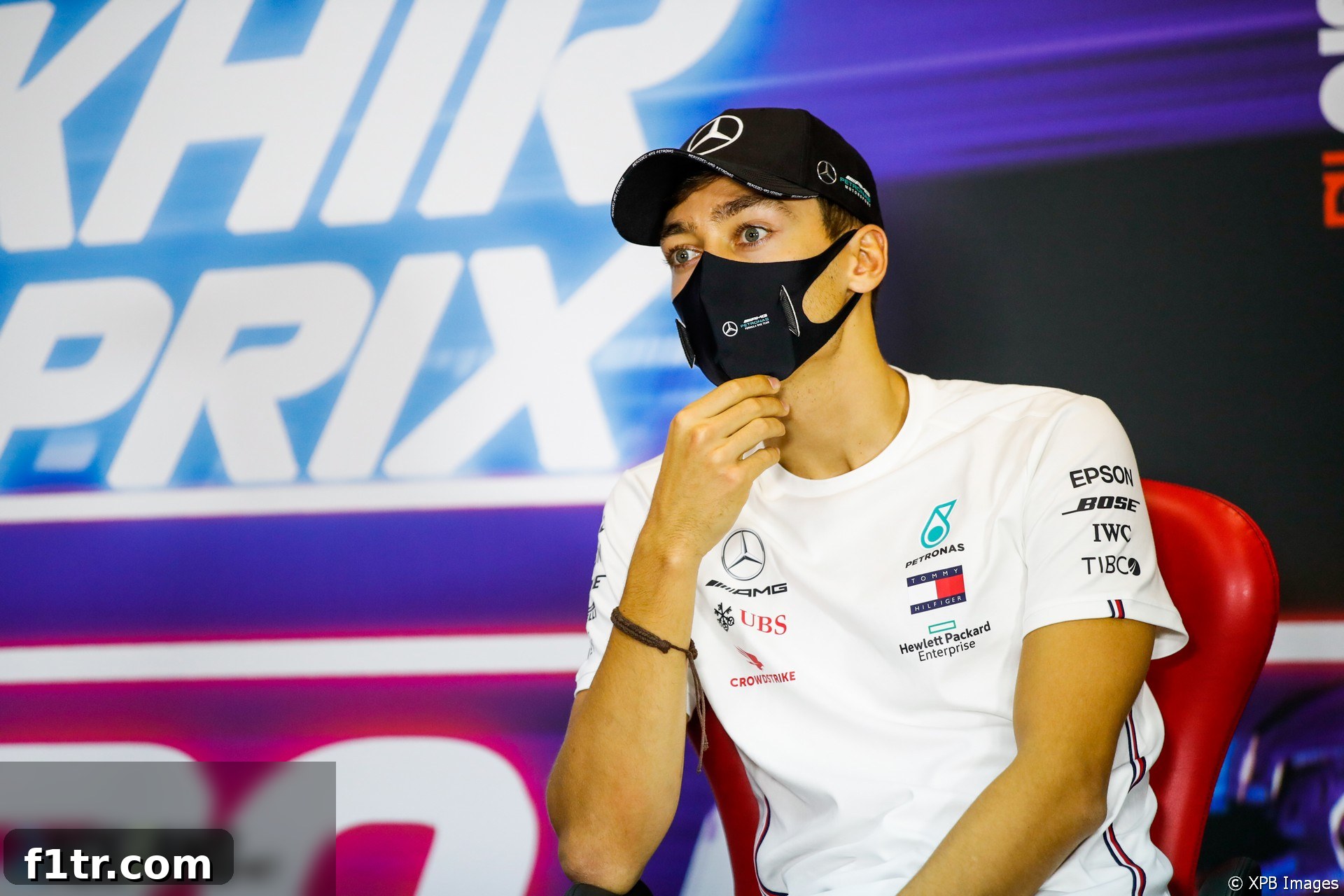
George Russell’s Mercedes Debut: Navigating the Dream at Sakhir Grand Prix
In a turn of events that sent ripples through the Formula 1 world, George Russell found himself thrust into the most coveted seat on the grid: a Mercedes-AMG Petronas F1 car. Stepping in for the reigning world champion, Lewis Hamilton, who was sidelined due to a positive COVID-19 test, Russell’s opportunity at the Sakhir Grand Prix was nothing short of a dream, albeit one laden with immense pressure and a tight timeframe. Despite the monumental nature of this call-up, Russell remained grounded, emphasizing that he does not expect a full-time Mercedes seat solely based on this singular, high-profile performance.
Advertisement
Your Ad Here
The circumstances surrounding Russell’s sudden promotion from Williams to Mercedes were unprecedented. With Hamilton testing positive for Covid-19 ahead of the Sakhir Grand Prix, the sport’s dominant team needed a quick, capable replacement. Russell, a member of the Mercedes junior driver programme since 2017, was the obvious, yet highly challenging, choice. Speaking to the media during the FIA press conference, Russell admitted the reality of his dramatic switch hadn’t fully sunk in. “It’s all happened so fast,” he recounted, reflecting on an “intense 48 hours” that redefined his immediate future.
The Midnight Call: A Dream Initiated by Toto Wolff
The saga began in the early hours of Tuesday morning, when Mercedes team principal Toto Wolff made the pivotal call. Russell vividly recalled the moment: “I got a phone call from Toto at 2 am on Tuesday morning. I was actually in the bathroom in the moment which was slightly awkward. I answered the phone, he said ‘George, are you in the bathroom?’, I said ‘Sorry, I am in the bathroom’.” This candid anecdote offered a glimpse into the surreal nature of the moment for the young Briton.
Wolff then delivered the news that would change Russell’s weekend, and potentially his career trajectory. “He said ‘Unfortunately Lewis has caught Covid, he’s doing well, he’s healthy and feels fine which is most important but we want you to drive’.” Russell’s immediate reaction was a mix of shock and determination: “I said ‘Right, OK’. Obviously a bit of a sleepless night.” The subsequent day was a whirlwind of logistics and negotiations. “Then we made it happen throughout the following day. I had 64 phone calls on Tuesday pinging between so many different people. I’m glad we got there in the end.”
Navigating Contractual Hurdles: Williams’ Gracious Release
One of the most significant challenges was securing his release from his current contract with Williams Racing. As a contracted driver, Russell was initially unsure whether the Grove-based team would grant him permission to drive for their engine supplier, Mercedes. This uncertainty added another layer of anxiety to an already stressful 24 hours.
Advertisement
Your Ad Here
“I was very anxious on Tuesday waiting to find out if we could strike a deal with Williams,” he confessed. The eventual agreement highlighted the collaborative spirit within the Formula 1 paddock and Williams’ understanding of the magnitude of the opportunity for their star driver. Russell extended a heartfelt thanks: “I need to say a massive thank you to them for allowing me this opportunity. And here we are.” This gesture from Williams was crucial, allowing Russell to seize an opportunity that many drivers only dream of.
Back with Mercedes: A Familiar Yet Alien Environment
Russell’s connection to Mercedes is not new. He has been a valued member of their junior driver programme since 2017, participating in several test sessions for the team previously, including official F1 tests. This weekend, he would partner regular Mercedes driver Valtteri Bottas, presenting a direct benchmark against a driver deeply integrated into the team.
“It feels strange to be back with Mercedes,” Russell remarked. “Obviously I spent two years as their test and simulator driver. I know all of the guys which makes things a lot easier to get back into the team.” However, familiarity with personnel doesn’t equate to immediate comfort in a new race car setup. “I’m just being bombarded with information at the moment to learn ready for the weekend ahead,” he added, highlighting the steep learning curve ahead.
The Mercedes W11: A Beast to Tame
The Mercedes W11, the car Russell was about to pilot, is arguably one of the most dominant Formula 1 machines in history. It boasts an intricate array of systems, sophisticated aerodynamics, and a powerful hybrid powertrain, all finely tuned to Hamilton’s and Bottas’s preferences. Adapting to such a complex car, with its unique steering wheel layout, brake bias settings, and energy recovery strategies, in a mere few hours of practice sessions, is an immense undertaking.
For a driver accustomed to the significantly different characteristics of a Williams, the transition would be profound. The W11 demands a specific driving style to extract its maximum potential, and understanding its nuances quickly would be critical. Every button on the steering wheel, every setting change, has a precise impact on performance, requiring muscle memory and instinctive reactions that take years to build. Russell would have to compress this learning into a single Friday practice session, a true baptism of fire.
Sakhir Grand Prix: An Unforgiving Stage
Adding another layer of complexity was the unique “Outer Track” configuration of the Sakhir Grand Prix. This shortened layout, featuring fewer corners and higher average speeds, promised an exceptionally fast and intense race. With lap times expected to be under one minute, mistakes would be magnified, and the margin for error would be minimal. This format would allow less time for Russell to get comfortable with the car during each lap, demanding instant confidence and precision.
Russell articulated his target for the weekend simply: “do my best.” However, he was realistic about the immense challenge. “It’s going to be incredibly difficult,” he predicted. “Valtteri has been pushing Lewis a huge amount over the years. I know it’s not going to be an easy task coming in.” The sheer difference in preparation and integration became clear as he elaborated: “When you’re in the groove, you’re integrated into the team. The level I was at with Williams just having spent two years in the same car with my same engineers, same mechanics, changing suddenly there’s so many new things to learn.”
Advertisement
Your Ad Here
His strategy was clear and pragmatic: “I’ve got no expectations, no targets. Just build up to it over Friday, learn as much as I can and just do my best.” This approach, focusing on incremental improvements and absorbing as much information as possible, was his best bet for a respectable performance.
The Physical Challenge: A Tight Squeeze
Beyond the mental and technical hurdles, Russell also faced a significant physical challenge. Being around 10 centimetres taller than Lewis Hamilton, fitting into the existing cockpit of the W11 proved to be a literal squeeze. The Mercedes car, meticulously tailored to Hamilton’s ergonomic specifications, offered little room for adjustment.
“It definitely was a tight squeeze,” Russell revealed. “Also my size 11 feet were a struggle so I’m having to wear a slightly smaller shoe than is ideal. So that’s slightly uncomfortable but I’m sure I can endure the pain to get this opportunity.” This detail underscored the immediate, practical difficulties he faced, highlighting his determination to overcome any discomfort for this once-in-a-lifetime chance.
Long-Term Implications: One Race, Not a Career-Defining Moment
While the F1 paddock buzzed with speculation about Russell’s future, he maintained a remarkably level head regarding the long-term implications of his Sakhir performance. With Lewis Hamilton widely expected to sign a new deal to remain with Mercedes for the 2021 F1 season and beyond, and Valtteri Bottas already having a contract for next season, immediate changes to Mercedes’ driver line-up seemed unlikely.
Russell echoed this sentiment, asserting that one race wouldn’t alter Mercedes’ short-term plans. “One race doesn’t define a driver’s capabilities or the decision-making for something that’s over 12 months away,” he stated firmly. “So from my side that is not even in the back of my mind.” His focus remained squarely on the present opportunity.
Instead of viewing it as a direct audition for 2022, Russell framed the experience as a vital learning opportunity. “I’m going to go out there, enjoy it, learn as much as I can. Because obviously I have a job to do back on my return to Williams which is to try and push that team forwards as well, to maximise that learning from Valtteri, the team, whoever.” This perspective revealed a maturity beyond his years, understanding the broader context of his career path.
“In terms of the future, that’ll be judged over the course of the season and what’s happened in the past as well, not just one or maybe two races,” he added, reinforcing the idea that consistency and long-term performance are what truly count in Formula 1. He felt no undue pressure: “From my side I think there’s no pressure. I’m being thrown in at the last opportunity. I haven’t driven their simulator in two years. My seat is three years old. I’ve got so much information to learn and going up against Valtteri isn’t going to be easy.”
The Weight of the Opportunity: An Unofficial Audition
Despite Russell’s measured statements, the reality remained that this was an unofficial, high-stakes audition. Every moment on track, every lap time, every overtake, would be scrutinised by Mercedes management, rival teams, and millions of fans worldwide. A stellar performance could solidify his reputation as a future world champion and place him firmly at the top of Mercedes’ list should a long-term seat become available. Conversely, a less-than-ideal outing, while understandable given the circumstances, would still represent a missed chance to fully capitalize on this golden opportunity.
For any young driver, the chance to drive the fastest car on the grid is the ultimate aspiration. This weekend at Sakhir offered George Russell the rare privilege of showcasing his talent on the biggest possible stage, surrounded by the best engineers and strategists in the business. The experience, irrespective of the final result, would undoubtedly be invaluable, shaping his understanding of a top-tier team’s operations and the demands of fighting at the very front of the grid.
Conclusion: A Weekend to Remember
George Russell’s sudden elevation to the Mercedes F1 team for the Sakhir Grand Prix represented one of the most compelling narratives of the Formula 1 season. It was a testament to his talent, his consistent performance at Williams, and the faith Mercedes has in their junior program. While he downplayed expectations and focused on the learning experience, the entire motorsport world watched with bated breath to see how this promising young driver would fare in the car that had dominated the sport for so long.
His journey to the Mercedes cockpit was a whirlwind of anticipation, logistical challenges, and immense personal pressure. Yet, through it all, Russell maintained a calm and focused demeanor, ready to embrace the challenge. The Sakhir Grand Prix was set to be a defining moment in his career, not necessarily in determining his immediate future at Mercedes, but in proving unequivocally that he possesses the skill, temperament, and sheer speed to compete at the very pinnacle of motorsport.