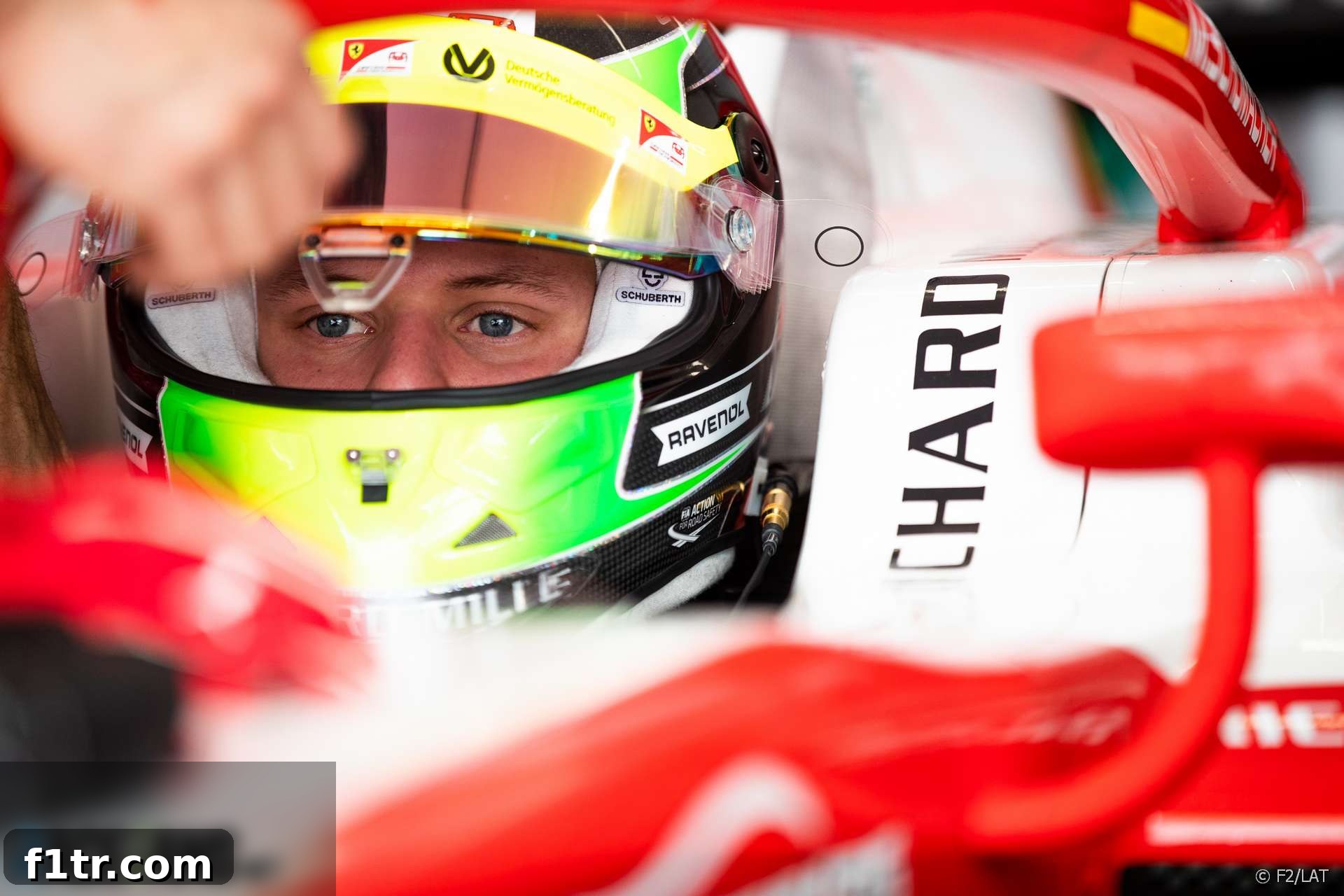
The illustrious Hockenheimring, a circuit steeped in motorsport history and a perennial host of the German Grand Prix, found itself at a pivotal moment. With the emergence of Mick Schumacher, the highly anticipated son of legendary seven-time Formula 1 world champion Michael Schumacher, a unique opportunity arose. Local promoters and the management at Hockenheimring recognized the immense potential of capitalizing on Mick’s burgeoning popularity after he embarked on his journey in the fiercely competitive Formula 2 championship. Their vision was clear: to integrate an F2 race into the German Grand Prix weekend, offering fans an unparalleled experience and celebrating the return of the Schumacher name to competitive racing on home soil.
This initiative, however, proved to be more challenging than initially anticipated. Despite earnest attempts and a strong desire to bring Mick Schumacher’s home race to the schedule, these efforts ultimately fell short. According to Jorn Teske, the managing director of Hockenheimring, the primary impediments were significant financial outlays and complex logistical considerations. The dream of witnessing Mick Schumacher compete in Formula 2 at the iconic German circuit, nestled within the broader spectacle of the Formula 1 Grand Prix, remained unfulfilled for that season, a testament to the intricate and often demanding realities of top-tier motorsport event organization.
Mick Schumacher’s Ascent and the Weight of a Legendary Name
Mick Schumacher’s trajectory through the junior ranks of motorsport had been nothing short of impressive, culminating in his crowning as the FIA Formula 3 European Champion the previous year. This significant achievement paved the way for his highly anticipated move up to Formula 2, joining the renowned Prema Racing team. The transition was met with considerable excitement and scrutiny, given the immense legacy he carries. Every move, every race, and every interview was magnified by the world’s keen interest in how Michael Schumacher’s son would fare.
Hockenheim, a circuit intrinsically linked with Michael Schumacher’s numerous triumphs and iconic moments, instantly grasped the potential impact of having Mick race on the support bill for its weekend’s grand prix. The synergy was undeniable: a German circuit, hosting the German Grand Prix, featuring a German driver bearing one of the most revered names in motorsport, competing in a crucial feeder series just below Formula 1. It was an almost poetic alignment that promised to draw in huge crowds, ignite national pride, and provide an invaluable boost to the event’s profile and commercial viability.
The Strategic Imperative: Capitalizing on Local Hero Appeal
“It was tried harder later on when the calendar was issued already,” Teske revealed in an exclusive interview, underscoring the persistence of the Hockenheimring team. “There were many initiatives to bring F2 to Hockenheim, especially this year, when it was noticed how much the impact of Mick is in the German market.” This statement highlights the strategic thinking behind their efforts. The popularity of Mick Schumacher, even in his debut F2 season, was a phenomenon that Hockenheimring was eager to leverage. His presence on the F2 grid represented a powerful marketing tool, capable of drawing a new generation of fans and rekindling the passion of long-time supporters of the Schumacher dynasty.
The vision was not merely about filling seats; it was about rejuvenating the entire German Grand Prix experience. A Formula 2 race featuring Mick would transform the event from a standard F1 weekend into a profound narrative, connecting past legends with future stars. It would offer a comprehensive motorsport festival, showcasing talent across different tiers and providing continuous on-track action. Such an addition would undoubtedly enhance the overall value proposition for attendees, making the high ticket prices more justifiable through an enriched and captivating schedule.
Unpacking the Obstacles: Why the F2 Dream Remained Just That
Despite the strong commercial rationale and emotional appeal, the attempts to add an F2 race to the German Grand Prix schedule ultimately failed. “They tried to add another race in Germany but finally it didn’t work out because of money, probably, and time, and logistic reasons,” Teske elaborated. These three factors—money, time, and logistics—are often the triumvirate of challenges in major sporting event planning, and in this instance, they proved insurmountable.
The Financial Burden of Hosting an F2 Round
Hosting a Formula 2 race, while incredibly beneficial for event promotion, comes with a substantial financial cost. Circuits are typically required to pay a hefty sanctioning fee to the championship organizers. Beyond this, there are significant operational expenditures: additional track marshals, medical staff, safety equipment, paddock infrastructure, garage space, and general personnel to manage the increased number of teams, drivers, and associated equipment. For a circuit like Hockenheim, which has, at times, faced its own financial pressures regarding the F1 hosting fee, adding another major financial commitment proved to be a bridge too far. The economic viability of the entire Grand Prix weekend had to be carefully balanced, and the additional F2 costs evidently tipped the scales negatively.
Logistical Complexities and Calendar Rigidity
Beyond the financial aspect, the logistical nightmare of shoehorning an additional premier support series into an already packed Formula 1 weekend is immense. A Grand Prix weekend is a meticulously choreographed event, with every minute of track time and every inch of paddock space accounted for. Incorporating F2 would demand significant adjustments to the schedule, potentially impacting other established support races like Formula 4 and the Porsche Supercup. Paddock allocation, team transport, accommodation for hundreds of additional personnel, and the intricate timing of practice, qualifying, and race sessions all contribute to a colossal logistical puzzle.
Furthermore, Teske’s comment that efforts were intensified “when the calendar was issued already” points to another crucial hurdle: the established F2 season schedule. Formula 2 teams operate on a pre-defined calendar, with logistical plans, travel arrangements, and staffing commitments made well in advance. Disrupting this by adding a last-minute event in Germany would have necessitated substantial changes for all teams involved, potentially incurring additional costs and creating an unwelcome administrative burden. It’s a testament to the highly structured nature of international motorsport that even a compelling opportunity like Mick Schumacher at his home race couldn’t easily bend the established order.
Germany: An Anomaly Among European F1 Venues
The situation in Germany also stood out in stark contrast to other European F1 rounds. Germany was, at that time, the only European F1 event on the calendar which did not have an F2 support race. This made the unfulfilled ambition even more conspicuous. Other major European circuits routinely host F2 and F3, offering fans a full spectrum of racing action, from the cutting-edge technology of F1 to the thrilling battles of emerging talents in the junior categories. These support races are not just fillers; they are integral components of the Grand Prix experience, showcasing the future stars of the sport and providing continuous entertainment. The absence of F2 at Hockenheim meant that, while the F1 spectacle remained, a significant dimension of the modern Grand Prix weekend was missing for German fans.
A Glimpse of Greatness: Mick Schumacher’s F2004 Demonstration Runs
While a full F2 race was not feasible, Hockenheimring found a captivating alternative to engage fans and celebrate the Schumacher legacy: Mick Schumacher performed two highly anticipated demonstration runs in his father’s iconic Ferrari F2004. This historic car, a dominant force in the 2004 Formula 1 season, carried Michael Schumacher to his record-breaking seventh world title. The sight and sound of the F2004, driven by his son, offered a poignant connection between generations and a powerful emotional pull for the German audience.
The first demonstration run took place after F1 qualifying and the F4 and Porsche Supercup support races, providing a spectacular close to Saturday’s track action. The second, equally momentous run, was held prior to the revered drivers’ parade on race day, setting the stage for the main event with a vivid reminder of Formula 1 greatness. These demonstrations, though not competitive, served as a powerful bridge, allowing fans to witness Mick in a legendary machine and experience a piece of motorsport history firsthand, bridging the gap left by the absence of a competitive F2 outing.
Stay Connected with the World of Motorsport
The complexities surrounding the potential inclusion of an F2 race at the German Grand Prix underscore the delicate balance between commercial aspirations, logistical realities, and the passion that defines motorsport. For fans eager to stay abreast of every development, from Formula 1 to the junior categories shaping tomorrow’s champions, continuous engagement is key. Keep up with exclusive interviews, breaking news, and in-depth analyses from across the racing world.
Enhance your RaceFans experience! Become a Supporter & go ad-free
Don’t Miss Anything New from RaceFans
Follow RaceFans on social media to get instant updates, behind-the-scenes content, and interact with a vibrant community of motorsport enthusiasts:
- Join RaceFans on Facebook
- Follow RaceFans on Twitter
- Get daily email updates from RaceFans
Support independent motorsport journalism. Become a RaceFans supporter andgo ad-free while enjoying exclusive content and a cleaner browsing experience.
Further Reading: Insights into Formula Two
Delve deeper into the world of Formula 2, a crucial stepping stone for future Formula 1 stars. Explore the latest news, driver movements, and championship battles that define this exciting series:
- Formula 2 to debut in Miami and Montreal after Iran war cancellations
- Ex-McLaren junior Dunne’s move to Alpine finally confirmed
- Schumacher says his IndyCar feels like ‘an F2 car, just with better tyres’
- The Formula 2 team with an older driver line-up than almost half the F1 grid
- FIA to award more F1 superlicence points to IndyCar drivers from 2026
Browse all Formula 2 articles