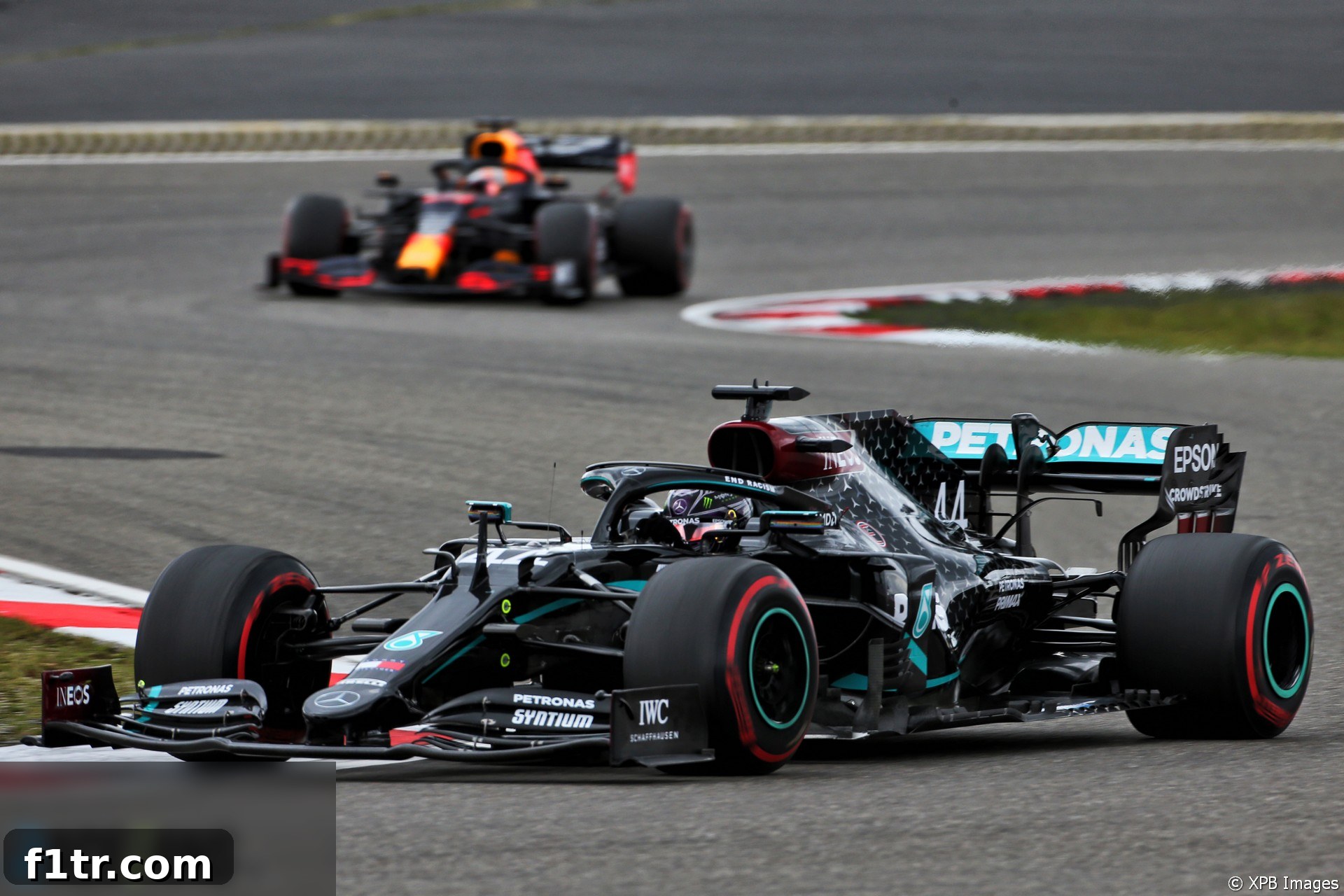
In the high-stakes world of Formula 1, where every millisecond and every degree of temperature can dictate victory or defeat, innovation is paramount. The 2020 Eifel Grand Prix at the Nürburgring circuit served as a stark reminder of this, particularly concerning Mercedes-AMG Petronas F1 Team’s ingenious Dual Axis Steering (DAS) system. Amidst the challenging cold conditions that gripped the iconic German track, Mercedes’ chief strategist, James Vowles, confirmed that the team leveraged its unique DAS technology “more than ever” to master tyre performance, ultimately securing a decisive advantage.
The Eifel Grand Prix was a race defined by fluctuating temperatures and strategic calls, making tyre management an even more critical factor than usual. As drivers battled not only each other but also the elements, the ability to rapidly and precisely influence tyre temperatures became a crucial differentiator. Mercedes’ groundbreaking DAS system emerged as the silent hero, playing an instrumental role in Lewis Hamilton’s dominant performance and solidifying the team’s relentless pursuit of perfection.
Understanding Dual Axis Steering (DAS): Mercedes’ Masterstroke
Introduced with much fanfare and subsequent controversy during pre-season testing in Barcelona, the Dual Axis Steering (DAS) system was a testament to Mercedes’ engineering ingenuity. At its core, DAS is a mechanical device that enables the driver to adjust the toe angle of the front tyres by moving the steering wheel backwards and forwards along its axis. Pulling the wheel towards the driver altered the toe-in, while pushing it away created toe-out.
The primary purpose of this adjustment was to optimise tyre temperature. By altering the toe angle, the contact patch of the tyre with the track surface would change, thereby generating or shedding heat more effectively. This seemingly subtle adjustment offered profound benefits, particularly in situations where tyre temperatures were not ideal, such as during Safety Car periods, formation laps, or even in qualifying runs.
Advert | Become a Supporter & go ad-free
Despite initial scrutiny and debate over its legality, the FIA deemed DAS permissible for the 2020 season, provided it met specific criteria related to its operation and safety. Mercedes was the only team known to have successfully developed and implemented such a system, affording them an exclusive competitive edge. However, its innovative tenure was to be short-lived, as the device was subsequently outlawed for the 2021 season and beyond, primarily due to efforts to reduce costs and prevent a technology arms race among competitors.
The Crucial Role of DAS at Nürburgring’s Eifel Grand Prix
Navigating the Challenges of Cold Track Conditions
The Eifel Grand Prix was a unique event, marking Formula 1’s return to the Nürburgring for the first time since 2013. Adding to the challenge was the unseasonably cold weather, with ambient temperatures barely creeping into double digits Celsius and track temperatures often lower. Such conditions notoriously make it difficult for Formula 1 tyres to reach and maintain their optimal operating window. Cold tyres translate directly into reduced grip, increased wear, and a higher propensity for locking up, all of which compromise performance and driver confidence.
James Vowles highlighted the profound impact of these conditions, stating that Mercedes utilized DAS “more than ever” across all sessions. “We used it in free practice, on single lap work, in qualifying, but also during the race,” Vowles explained. This pervasive deployment underscored the system’s versatility and its critical role in helping drivers like Lewis Hamilton and Valtteri Bottas extract maximum performance from their Pirelli tyres, regardless of the challenging thermal environment.
The Safety Car Conundrum and DAS Intervention
One of the most defining moments of the Eifel Grand Prix came during the late-race Safety Car period. A power unit failure for Lando Norris necessitated the deployment of the Safety Car, bunching up the field and giving chase to the leading Mercedes. During such prolonged periods, F1 cars circulate at significantly reduced speeds, causing tyre temperatures to plummet. This rapid cooling presents a major headache for drivers, as a sudden loss of tyre performance at the restart can lead to immediate disadvantage, potential overtakes, and even accidents.
Both Lewis Hamilton and Red Bull’s Max Verstappen voiced their concerns over plummeting tyre temperatures during this phase. “We had a number of laps circulating on tyres that were just getting colder and colder,” Vowles recalled. It was in this precise scenario that DAS truly came into its own. By actively manipulating the front tyre toe angle, Hamilton could efficiently generate and retain heat in his tyres, ensuring they remained within a serviceable temperature range even behind the Safety Car.
The benefit of this was immediately apparent at the restart. As the Safety Car pulled into the pits, Hamilton was able to launch away from the pack with superior grip and confidence. His tyres were ready to perform, unlike those of some of his rivals who were still struggling to bring theirs up to temperature. Vowles succinctly summarized its impact: “I think it is fair to say DAS was a contributing factor to why our restart was so good and it really came into its own this weekend.” This perfect execution of the restart was a testament to the tactical advantage DAS provided, allowing Mercedes to pull away cleanly and cement their lead.
Mercedes’ Strategic Edge vs. Red Bull’s Disadvantage
The impact of DAS was not lost on Mercedes’ closest rivals, particularly Red Bull Racing. Team Principal Christian Horner openly acknowledged the disparity, linking it directly to Verstappen’s comparative disadvantage. “Because the Safety Car waited so long for the field to catch up and was going so slowly, the tyre temperature was a big issue,” Horner observed.
He continued, “I think the Mercedes with their DAS system are able to handle that perhaps better than we were, so the restart was a little tricky.” This candid admission from a direct competitor underscored the tangible performance benefit Mercedes derived from DAS. While all teams grappled with the cold conditions and the Safety Car’s slow pace, Mercedes possessed a unique tool that allowed their drivers to mitigate these challenges more effectively. This meant better tyre conditioning, superior grip at critical moments, and ultimately, a faster, more consistent race pace, contributing significantly to Mercedes’ continued dominance in the 2020 season.
DAS: A Testament to F1 Engineering Prowess and Rule Interpretation
The Dual Axis Steering system stands as a remarkable example of Formula 1 teams pushing the boundaries of engineering and creatively interpreting technical regulations. Mercedes’ ability to conceive, develop, and implement such an innovative solution within the stringent rules highlights the exceptional talent and resources present in modern F1. It represented a sophisticated understanding of aerodynamic principles, tyre dynamics, and driver-car interaction.
DAS also sparked wider discussions about the spirit versus the letter of the law in Formula 1 regulations. While deemed legal for a single season, its eventual ban reaffirmed the FIA’s commitment to controlling innovation for reasons of competitive balance, safety, and cost control. It serves as a classic F1 narrative: a brilliant technical innovation that provides a clear competitive advantage, only to be closed down by rule changes, forcing teams to constantly seek the next marginal gain.
The Legacy and Future of Innovation in Formula 1
While DAS may no longer grace the F1 grid, its impact on the 2020 season, particularly in races like the Eifel Grand Prix, is undeniable. It contributed to Mercedes’ virtually unchallenged march to both the Constructors’ and Drivers’ Championships, showcasing how a single, clever piece of technology can be a significant differentiator in a sport where margins are razor-thin.
Advert | Become a RaceFans supporter andgo ad-free
The story of DAS is also a broader commentary on the relentless cycle of innovation and regulation in Formula 1. Teams continuously strive to find performance advantages, whether through aerodynamics, power unit development, or driver-assist systems. The FIA, in turn, constantly evolves the rulebook to ensure fair competition, safety, and sustainability. This dynamic interplay ensures F1 remains at the forefront of automotive technology and engineering excellence, even as specific innovations like DAS become historical footnotes.
Conclusion: DAS’s Lasting Impact on the 2020 Season
The 2020 Eifel Grand Prix underscored the critical importance of tyre management, especially in cold conditions. Mercedes’ Dual Axis Steering system proved to be an invaluable asset, allowing the team and its drivers to maintain optimal tyre performance when others struggled. James Vowles’ revelation that DAS was used “more than ever” at the Nürburgring, particularly during the pivotal Safety Car restart, highlights its strategic significance. While consigned to the annals of F1 history after its single-season stint, DAS remains a memorable testament to Mercedes’ innovative spirit and its ability to harness cutting-edge technology to achieve unparalleled success, making it a pivotal factor in one of Formula 1’s most unique seasons.
2020 Eifel Grand Prix
- Renault “not scared of anywhere” in remaining races
- Bottas “needs a miracle” to overturn Hamilton’s 69-point lead
- 2020 Eifel Grand Prix Star Performers
- Leclerc sees ‘quite a few positives’ in Ferrari’s Nurburgring weekend
- Mercedes relied on DAS “more than ever” at cold Nurburgring
Browse all 2020 Eifel Grand Prix articles