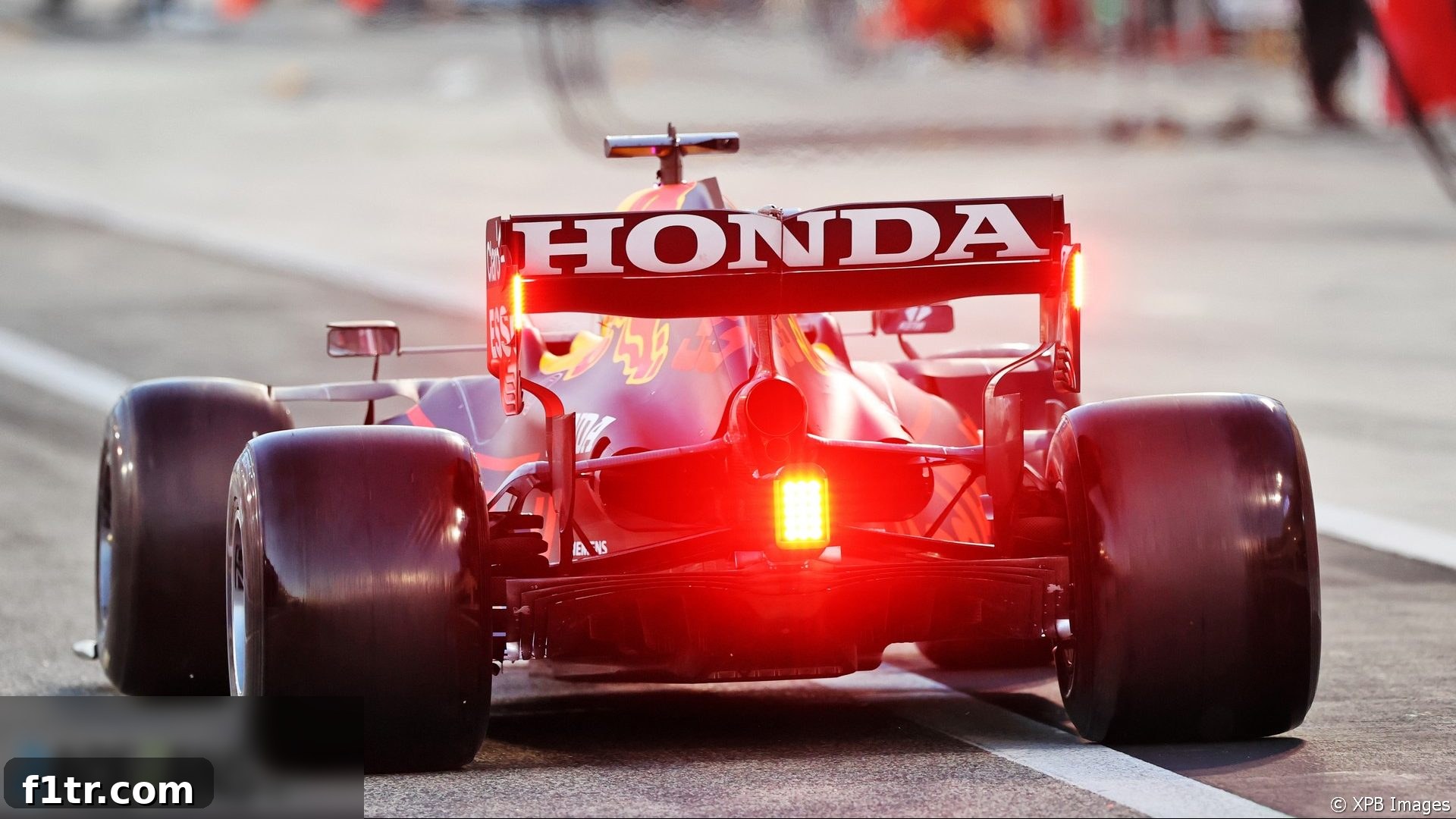
Max Verstappen’s commanding pole position for the Bahrain Grand Prix has ignited excitement for the 2021 Formula 1 season, with the Dutch driver crediting Honda for their “great job” on the new power unit. This stellar performance at the season opener sent a clear message to rivals, particularly the dominant Mercedes team, signalling Red Bull Racing’s serious intent to challenge for the championship.
Verstappen’s Dominant Pole Position Signals Red Bull’s Championship Intent
In a thrilling qualifying session at the Sakhir circuit, Max Verstappen demonstrated exceptional pace, securing pole position by a significant margin of 0.388 seconds. This performance was particularly noteworthy as he outclassed the reigning champions, Mercedes, who have long held an unyielding grip on F1’s qualifying sessions. Verstappen’s raw speed and the Red Bull RB16B’s formidable performance immediately established the team as a strong contender from the outset of the 2021 campaign.
While his new Red Bull teammate, Sergio Perez, experienced a more challenging qualifying, failing to advance to Q3, the overall strength of the Honda power unit was evident across the paddock. The sister team, AlphaTauri, further underscored Honda’s impressive gains, with Pierre Gasly securing a remarkable fifth place on the grid. This achievement meant two Honda-powered cars were firmly positioned within the top five, showcasing the engine’s competitiveness across different chassis designs and validating the Japanese manufacturer’s hard work.
Honda’s Power Unit: The Driving Force Behind Red Bull’s Pace
Verstappen was unequivocal in his praise for Honda, highlighting their relentless efforts in developing the new power unit. He stated, “Honda has worked really hard to improve their engine in general. And I think they’ve done a great job.” This acknowledgment from the lead driver is a powerful testament to the significant advancements made over the winter break. In the highly competitive world of Formula 1, even marginal gains in power and efficiency can translate into crucial tenths of a second on track, making Honda’s contribution indispensable to Red Bull’s newfound pace.
The performance gap to Mercedes, a team renowned for its engine superiority in the hybrid era, appears to have narrowed considerably. This close competition at the front promises an exhilarating season, where engine performance, combined with aerodynamic efficiency and driver skill, will be paramount. Honda’s commitment to pushing the boundaries of engine technology, even with their impending withdrawal from the sport at the end of 2021, demonstrates a powerful desire to conclude their F1 journey on a high note.
Navigating New Regulations: A Blend of Philosophy and Engineering Prowess
The 2021 Formula 1 season saw the introduction of new technical regulations, primarily impacting the car’s floor and rear diffuser to reduce downforce. These changes were implemented to manage car speeds and promote closer racing. While some analysts suggested these regulations might inherently suit Red Bull’s long-standing high-rake design philosophy more than Mercedes’ low-rake concept, Verstappen offered a more comprehensive perspective on their improved form.
“It’s our philosophy now for a long time,” he said regarding Red Bull’s high-rake design. “I don’t think you can point that out on that. I think there are a few factors.” Verstappen’s nuanced view emphasized that success is rarely attributable to a single element. Instead, he highlighted a combination of factors, including the car’s fundamental design philosophy and crucial developments from the power unit supplier.
He continued, “We knew our weaknesses from last year, and that’s not only with rake. It has to do with rake. Also from the engine side, I think Honda has worked really hard to improve their engine in general. And I think they’ve done a great job.” This statement underscores a holistic approach to performance enhancement, where both the chassis and power unit departments meticulously analyzed and addressed areas of improvement from the previous season. The collaborative effort between Red Bull’s aerodynamicists and Honda’s engineers appears to have created a package that is both aerodynamically efficient and powerfully potent, making it a formidable contender on track.
Honda’s Unwavering Commitment: A Partnership Built on Passion
Honda’s journey in Formula 1 since their return in 2015 has been characterized by immense dedication and perseverance. After a challenging initial period, their partnership with the Red Bull family, starting with Toro Rosso and then Red Bull Racing, allowed them to progressively demonstrate their engineering prowess. This long-term commitment has now seemingly culminated in their most significant performance leap yet.
Verstappen’s admiration for Honda extends beyond mere technical gratitude; he speaks of a deep, personal connection with the team. He described Honda’s winter progress as their “most impressive effort to date.” Reflecting on their journey, he added, “That doesn’t mean, of course, that in the previous years it wasn’t impressive. I think their turnaround has been very good and their understanding of the engine, I think is impressive.” This recognition highlights not just the outcome but also the meticulous process of learning, adapting, and innovating that Honda has undertaken.
Moreover, Verstappen painted a vivid picture of the working relationship, emphasizing the human element behind the technical marvels. “It’s really enjoyable to work with them as well. They’re really passionate and emotional, which I like. They’re just flat-out all the time. They want to win. And you can really see that.” This passion and relentless pursuit of victory resonate deeply within the highly competitive F1 environment, fostering a powerful synergy between driver and manufacturer. Despite the impending conclusion of their official F1 program, Honda’s commitment remains undiminished, pushing for success right to the very end. Verstappen concluded, “Big credit to them also for the result today. They had a great winter.” This sentiment encapsulates the respect and appreciation for a partnership that has blossomed into a formidable championship-challenging force.
Breaking the Cycle: A Strong Start to the Season
For several seasons, Red Bull Racing has often found itself playing catch-up, typically experiencing slower starts to the championship campaigns. This historical pattern has often put them at a disadvantage against Mercedes, making their title aspirations an uphill battle. The significance of beginning the 2021 season with a pole position, therefore, cannot be overstated.
Verstappen expressed his satisfaction at finally achieving the strong start they have consistently aimed for. “That’s what you always aim for,” he explained. “And of course the last few years it hasn’t really materialised.” The ability to hit the ground running, particularly in a season where stability in regulations could lead to tighter competition, is invaluable. He attributed this positive shift to a comprehensive understanding of past shortcomings and a successful strategy to address them. “But in a way, of course, the regulations haven’t really changed a lot and I think we knew what our weaknesses were last year. And it seems like we addressed them so far at the beginning of the year.” This proactive and analytical approach to overcoming previous deficiencies has provided Red Bull with a robust and competitive platform, instilling a renewed sense of confidence and determination within the team for the arduous championship ahead.
The 2021 F1 Season: A Glimpse into a Tense Championship Battle
Max Verstappen’s dominant pole position in Bahrain has ignited hopes for a truly competitive and thrilling 2021 Formula 1 season. The early evidence suggests that the long-standing dominance of Mercedes could be under serious threat from a revitalized Red Bull-Honda partnership. The prospect of a genuine head-to-head championship battle between Verstappen and seven-time world champion Lewis Hamilton promises exhilarating races and strategic duels throughout the calendar.
Furthermore, the strong performance of AlphaTauri, with Pierre Gasly qualifying fifth, indicates that the Honda power unit is performing exceptionally well across different chassis concepts. This bodes well for a tighter midfield battle and potentially more unpredictable race outcomes, adding another layer of excitement for fans. As the teams continue to develop their cars and adapt to the new regulations, every grand prix will be a critical opportunity to gain an advantage. The Bahrain Grand Prix has certainly set the stage for what promises to be one of the most compelling Formula 1 seasons in recent memory.
Related 2021 Bahrain Grand Prix Articles
- Why one driver says there’s no easy solution to F1’s ‘messy’ track limits problem
- Verstappen: Lost win in Bahrain “is not going to matter” if we have fastest car
- The classic rivalry for ‘best of the rest’ and six more Imola talking points
- Ocon: We need to extract the maximum from the car to score points
- Vettel feeling “not at home in the car yet” after tough weekend
Browse all 2021 Bahrain Grand Prix articles