Esteban Ocon’s Horrific Hungarian GP Crash: A Seat Shattered, Alpine’s Hopes Dashed
The opening lap of the 2023 Formula 1 Hungarian Grand Prix descended into immediate chaos, prematurely ending the race for both Alpine drivers, Esteban Ocon and Pierre Gasly. In the aftermath of a multi-car collision that eliminated the French squad from contention, Ocon revealed a terrifying detail: his custom-fitted carbon fibre seat fractured into two pieces upon impact. This shocking disclosure not only highlighted the immense G-forces and violent nature of modern F1 crashes but also sent a stark reminder of the relentless pursuit of driver safety in the pinnacle of motorsport.
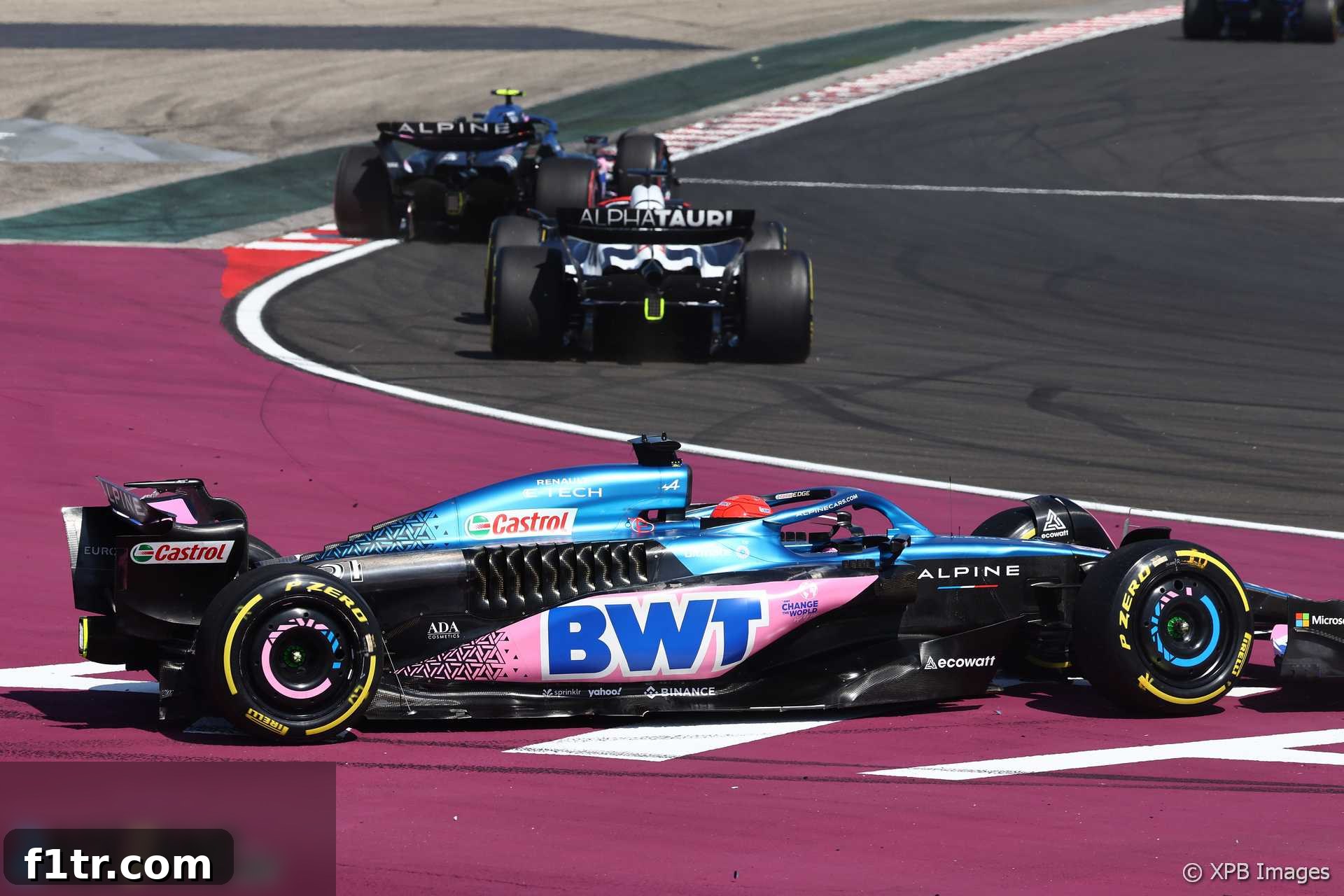
The incident unfolded mere seconds after the start lights extinguished at the Hungaroring. Alfa Romeo’s Zhou Guanyu, having started P5 but experiencing a notably sluggish launch, collided with the rear of Daniel Ricciardo’s AlphaTauri. This initial contact sent Ricciardo’s car veering into the path of Esteban Ocon, who was running alongside his Alpine teammate Pierre Gasly. The ensuing chain reaction was catastrophic for Alpine: Ocon’s A523 was forcefully launched into the air, briefly riding atop Gasly’s machine before crashing down hard onto the circuit. Both Alpine cars suffered race-ending damage, condemning the team to a devastating double retirement on the very first lap.
The Shocking Revelation: A Seat Shattered
Speaking to the media, including RaceFans, after the incident, a visibly shaken Esteban Ocon recounted the sheer brutality of the impact. “My seat broke in two pieces,” Ocon stated emphatically, conveying the extraordinary forces at play. “That’s how hard the impact was and how violent it was.” The revelation was startling, serving as a powerful testament to the extreme energies that F1 drivers are exposed to in high-speed accidents, even within the confines of a meticulously engineered safety cell. While modern F1 cockpits are designed to withstand immense forces, the fracturing of a driver’s seat underscores the limits even of these robust components when subjected to such severe kinetic energy.
Initially, Ocon was oblivious to the true extent of the damage to his car, and more specifically, to his immediate surroundings. His primary concern was the handling of his now-compromised machine. “I just completely dropped in the car and I thought it was the rear suspension that was broken because the car was handling terribly, obviously, after that much damage,” he explained. The sensation of being dislodged and sinking within the cockpit, coupled with the wildly unpredictable behaviour of his heavily damaged car, led him to misinterpret the immediate cause of his discomfort and handling woes. It was only upon later inspection that the critical failure of his bespoke carbon fibre seat became apparent, revealing a highly unusual and deeply concerning consequence of the impact. Such an event, though thankfully without serious injury in this instance, highlights the continuous evolution required in F1 safety standards and material science.
A Promising Start Derailed by First-Lap Chaos
For Esteban Ocon, the frustration stemming from the incident was profound and understandable. He had navigated the initial moments of the race well, having made a clean getaway from his 12th-place grid slot. Reflecting on the tight-knit battle leading up to the collision, Ocon believed he was strategically positioned for a strong opening lap. “We had plenty of room,” he commented. “I think at the time I would have taken the position, got around the car that was on the inside, it would have been tight with Pierre on the exit but it would have been okay.” The tantalizing prospect of breaking into the top ten was very much alive, making the sudden and unavoidable end to his race all the more bitter and disappointing.
His teammate, Pierre Gasly, had enjoyed an even more aggressive and promising start to the Grand Prix. Starting from 15th, three positions behind Ocon, Gasly had strategically opted for the soft compound tyres, a clear tactical choice designed to maximize early gains through the midfield. “Obviously Pierre was starting on the soft tyre so that was always the aim for him to get quite a lot of positions at the start,” Ocon confirmed. However, the tyre advantage became entirely irrelevant in the face of external forces. “But that was not the problem, the problem was the hit from behind that took us both out,” Ocon concluded, pinpointing the external factor that wiped out Alpine’s Sunday ambitions.
“Consequences of Starting in the Back”: Ocon’s Take on Fortune
When pressed on whether the multi-car pile-up was simply a case of “bad luck,” Ocon offered a more pragmatic, albeit still frustrated, perspective. He quickly dismissed the notion of mere misfortune, instead framing it as “the consequences of starting in the back.” While Ocon had qualified a respectable 12th and Gasly 15th, the midfield pack in Formula 1 is notoriously competitive and dense, often leading to increased risk of first-lap incidents. Zhou Guanyu’s sub-optimal start from an impressive fifth place only exacerbated this risk, injecting a faster but momentarily compromised car into the thick of the midfield battle, directly triggering the unfortunate sequence of events.
“A double DNF is a big shame,” Ocon lamented, considering the valuable championship points that were instantly lost. “After that start I already gained a place obviously from Zhou and I was probably going to go around the outside of whoever it was on the inside but I was probably going to be P10 already so there was some good prospects.” The missed opportunity to score points was a significant blow to Alpine’s constructors’ championship aspirations, especially in a season where the midfield fight is intensely competitive. Despite the disappointment, Ocon quickly shifted his focus: “But this will have to be done next week. We are lucky enough to be racing and forget that one quite quickly,” he remarked, already looking ahead to the upcoming Belgian Grand Prix, the final race before the traditional summer break.
Gasly’s Anguish and Alpine’s Unlucky Streak
Pierre Gasly, whose car sustained substantial damage, particularly to its rear wing and floor, echoed Esteban Ocon’s sentiments of profound disappointment and frustration. “It was extremely frustrating for the whole team to lose both cars on the first lap,” Gasly expressed, clearly disheartened by the turn of events. He elaborated on his promising opening moments, which saw him making excellent progress through the field. “On my side I took a really good start, we knew it was the target with the soft tyre. I managed to get off the line very well, positioned myself well into turn one, braked late, make already a couple of positions.” His strong initial performance made the subsequent retirement even harder to swallow.
The Frenchman’s recollection of the collision sequence perfectly aligned with Ocon’s account: “From what I saw and heard Zhou touched Daniel who touched Esteban and then Esteban ended up on top of my car. So it’s just very unfortunate.” This devastating chain of events brought a highly promising early phase of the race to an abrupt and premature end for both Alpine drivers, consigning them to a zero-point haul from the Hungarian Grand Prix, a crucial blow in the tight constructors’ battle.
The double retirement at the Hungaroring marked the second consecutive race where Alpine failed to score any championship points, signaling a disheartening and potentially worrying trend for a team striving to solidify its position among the top contenders in the constructors’ standings. “We just don’t seem to catch a break at the moment,” Gasly observed, articulating the team’s current run of challenging luck and unfortunate circumstances. “Every weekend we seem to have some unfortunate scenarios like that and I hope we can get away from this sort of spiral quite quickly and just get a clean run, especially for next weekend before the summer break.” The team’s immediate hopes now rest squarely on delivering a robust and trouble-free performance at Spa-Francorchamps, the final challenge before the much-needed summer shutdown, a period often utilized for significant development and strategic planning.
The Broader Impact on Alpine’s Season and Future Outlook
This dramatic incident was far more than just a single race retirement; it represented a significant setback for Alpine’s ambitious objectives in the 2023 Formula 1 season. With substantial investment poured into their A523 challenger and a refreshed driver lineup, the team had set its sights on consistent performance and a stronger challenge within the competitive midfield. A double DNF translates not only to a painful loss of valuable championship points – an invaluable commodity in the fiercely contested battle against rivals like McLaren, Aston Martin, and AlphaTauri – but also places considerable strain on the team’s operational resources. Replacing heavily damaged components, including chassis elements, engine peripherals, and intricate aerodynamic structures, incurs significant financial costs and demands extensive time, all under the strict limitations imposed by F1’s budget cap regulations.
Furthermore, such high-impact incidents inevitably prompt deeper scrutiny into driver safety, even as modern F1 cars are engineered to be incredibly robust. While Esteban Ocon emerged from the wreckage physically unharmed, albeit shaken, the fact that his bespoke carbon fibre seat fractured is a stark reminder of the sheer violence of these collisions and the continuous imperative for innovation in safety technology. The FIA will undoubtedly conduct a thorough review of the incident, not only for potential penalties (Zhou Guanyu was indeed handed a five-second time penalty for causing the collision, though its practical effect on Alpine was minimal) but also to glean any crucial lessons regarding car integrity and enhanced driver protection. This relentless drive for safety means that every such incident contributes to making the sport safer for future generations.
As the Formula 1 circus prepared to pack up and move to Belgium for the final race before the crucial summer break, Alpine faced the daunting, yet familiar, task of regrouping and galvanizing their efforts. The spirits of both Ocon and Gasly, though undoubtedly dampened by the Hungarian disappointment, remained resolutely focused on turning the page. The team’s ability to quickly rebound from such a demoralizing event will serve as a true test of their collective resolve, engineering prowess, and mental fortitude, as they strive to recover lost ground and recapture the vital momentum necessary for a successful and competitive second half of the 2023 season.
2023 Hungarian Grand Prix – Related Articles
- Was F1’s Alternative Tyre Allocation test successful? Drivers and teams have their say
- How far can McLaren climb with car rivals now say is the second-fastest in F1?
- Why Ricciardo says McLaren’s car “speaks Lando’s language” – but Norris disagrees
- Mercedes reveal cooling error behind loss of pace in Hungarian GP
- Perez answered critics in Hungary but needs to qualify better – Horner
Browse all 2023 Hungarian Grand Prix articles