Liberty Media’s F1 Transformation: A Marketing Vision Beyond the Track
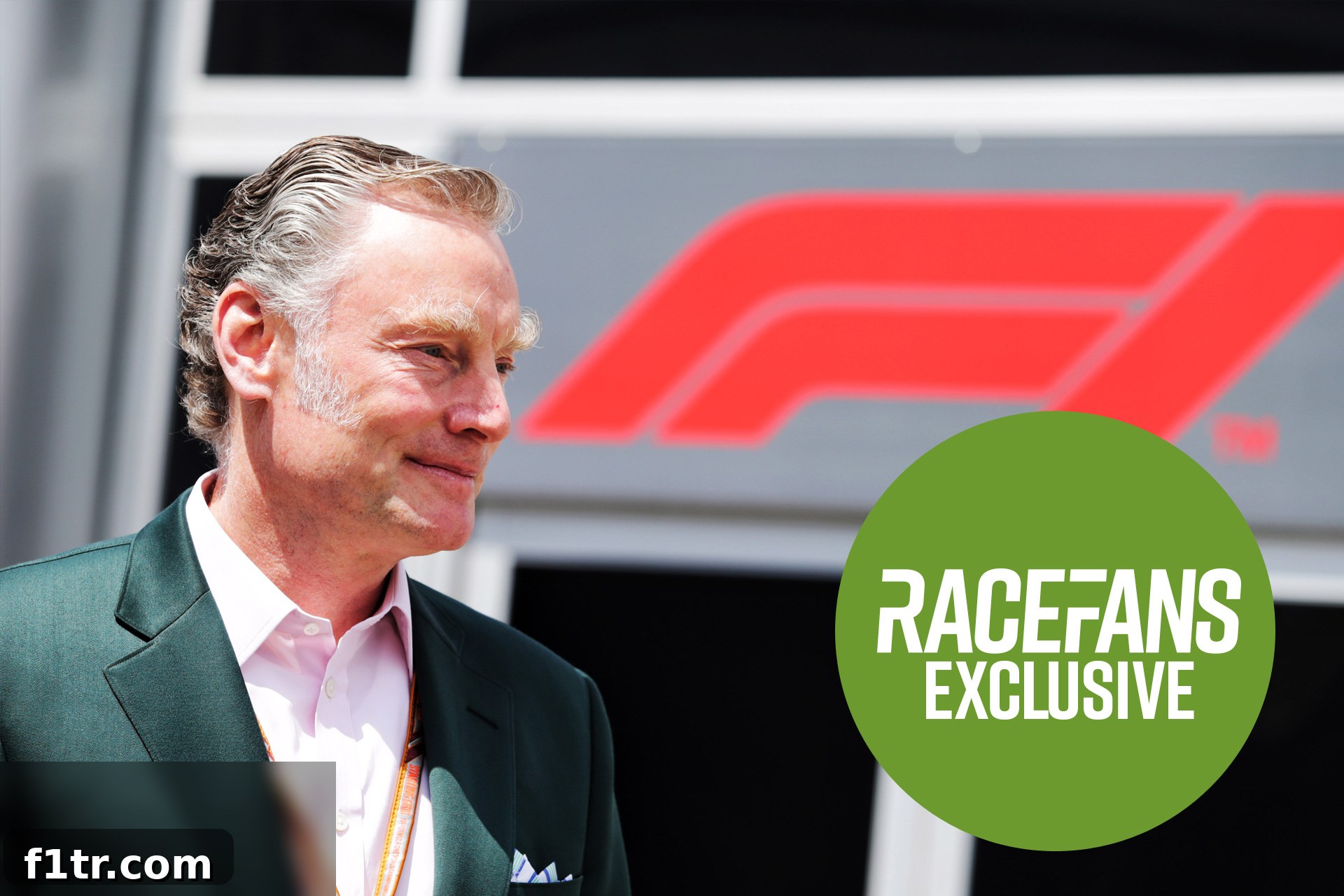
In a candid interview two years after Liberty Media’s pivotal takeover of Formula 1, Sean Bratches, then the sport’s commercial managing director, offered a unique perspective on its future. Bratches, notably not a traditional petrolhead, embraced his ability to view the sport with a marketer’s eye, unclouded by pure racing passion. His approach was rooted in entertainment marketing, a discipline he believed F1 desperately lacked under its previous custodians. This exclusive discussion with Dieter Rencken reveals how Liberty Media’s ambitious vision for Formula 1 began to materialize against the backdrop of changing consumer habits and a sport ripe for modernization.
A New Era for Formula 1: Liberty Media’s Strategic Intent
Advert | Become a Supporter & go ad-free
The Italian Grand Prix marked the two-year anniversary of Liberty Media’s acquisition of F1, an event swiftly followed by CEO-elect Chase Carey’s inaugural formal appearance on the grid in Singapore. Sean Bratches, a long-time colleague of Carey’s, officially joined the leadership team the following January, bringing his extensive marketing expertise to the forefront of the sport’s commercial operations. Sitting down at Monza, the timing was perfect to assess Liberty’s progress. The interview was structured around the fundamental “Five Ps of Marketing”: Promotion, People, Product, Place, and Price, offering a comprehensive look at the ongoing transformation.
P1: Promotion – Redefining F1 as a Media and Entertainment Powerhouse
Bratches, known for his distinctive “Sean-speak,” framed Liberty’s journey as an ongoing process rather than a final destination. He articulated the three core reasons behind Liberty’s substantial investment in Formula 1:
- A Global Brand with Immense Reach: F1 boasted over 500 million fans worldwide, representing an unparalleled global footprint ready for deeper engagement.
- Sports as the Last Bastion of Predictable Content: In an age where technology fragments content consumption, live sports stand out for their ability to consistently aggregate massive audiences, making them a prime asset for monetization.
- An Undermanaged Asset: While Bernie Ecclestone famously ran F1 as an individual, modern global sports demand an organizational structure with diverse business lines. Liberty saw an opportunity to unlock significant untapped potential.
Under Bratches’ leadership, the initial promotional thrust aimed to reposition F1 from a pure motorsport brand into a dynamic media and entertainment entity. This shift was not merely conceptual; it was backed by extensive global research informing every strategic decision. Despite facing limitations in human and economic resources, Liberty was committed to putting the fan experience at the heart of its strategy.
Advert | Become a RaceFans supporter andgo ad-free
A torrent of initiatives underscored this new promotional drive:
- The relaunch of a new non-live app, designed to enhance fan interaction.
- A “Daily Fantasy” platform in partnership with Play-on, tapping into the growing esports market.
- The introduction of an official F1 Esports series, extending the brand’s reach into competitive gaming.
- The launch of Formula 1’s first-ever global marketing campaign in its then 68-year history, moving beyond traditional trackside advertising to engage broader audiences.
- Vibrant fan festivals, such as the event in downtown Milan, which attracted 80,000 attendees with car runs, laser light shows, and parties. Ferrari and Sauber even participated, showcasing the direct engagement with the sport’s heritage and future. Bratches detailed plans for even more expansive fan festivals in 2019.
These efforts, combined with the “Engineered Insanity” campaigns, demonstrably boosted key metrics. Bratches proudly reported increases across the board: television ratings were up, event attendance had risen, digital audiences were expanding, and overall fan engagement was on an upward trajectory. Specifically, he noted a nine percent increase in qualifying and Grand Prix viewership year-on-year, and significant surges in ticket sales for specific events, such as a four-fold increase for the Russian Grand Prix and a 50% jump for the Japanese Grand Prix.
While acknowledging these increases might stem from relatively low previous bases, Bratches emphasized the immense growth opportunity that lay ahead, particularly in expanding Formula 1’s global appeal and commercial viability.
P2 & P3: Place & Price – Bolstering Promoter Value and Strategic Growth
A crucial aspect of F1’s business model revolves around race promotion fees, which are the bedrock of the sport’s economics. Bratches addressed the often-high costs associated with hosting a Grand Prix without flinching. His vision was clear: by continuously enhancing the value of the Formula 1 product, Liberty could justify – and even increase – these fees for promoters during renewal cycles. The goal was to tell a compelling story about the enhanced value F1 brings, thereby empowering promoters’ businesses and allowing Liberty to extract greater revenue, which would then be reinvested into further developing the sport.
This virtuous cycle of investment and value creation naturally led to questions about the future scale of the F1 calendar. While a 25-race season was considered “a high bar,” Bratches highlighted a significant advantage: the demand to host a Grand Prix far exceeded the available slots. This strong global interest provided Liberty with leverage and strategic options for future expansion.
Advert | Become a RaceFans supporter andgo ad-free
Liberty Media’s strategic outlook for Formula 1 extended beyond immediate gains. A meticulously crafted five-year plan guided current operations, complemented by a broader ten-year vision. While acknowledging the inherent difficulty in predicting outcomes a decade into the future, the five-year plan included detailed projected metrics for both existing business lines and myriad new opportunities yet to be fully exploited under the Formula 1 umbrella. Although specific financial figures remained confidential due to F1’s status as a public company, Bratches’ confident demeanor suggested strong internal projections and growth trajectories.
P4: Product – Prioritizing Thrilling Racing and Digital Innovation
Beyond the business figures, the core product – the racing itself – was a paramount focus. Bratches noted a crucial insight from their global research: while fans expected incredible speed from F1 cars, their ultimate interest lay in “racing.” This distinction between raw pace and competitive, wheel-to-wheel action was vital. To address this, Liberty Media brought in Ross Brawn, one of the sport’s most respected technical minds and strategists, as managing director of motor sports. Brawn’s expertise was being deployed to ensure the technical regulations fostered closer, more thrilling on-track battles, delivering the livery-to-livery excitement fans craved.
The Evolution of F1 TV Pro: Addressing Fan Expectations
The discussion inevitably turned to F1 TV Pro, the ambitious Over-The-Top (OTT) streaming service designed to offer an immersive, customizable viewing experience for fans. While fans appreciated the high-tech aspirations, early perceptions, including personal experiences and feedback from subscribers in the limited launch markets, often labeled F1 TV Pro as a “beta product” sold at a premium price. Bratches acknowledged the complexities of launching such a sophisticated platform.
He explained the immense technological challenges involved: F1 TV Pro necessitated the instantaneous integration of highly diverse and intricate systems across the globe to deliver a seamless viewer experience, a feat arguably more complex than any other sports league’s OTT service. While impressive in scope, the immediate question from fans was, “Will it improve soon?”
Bratches emphasized an “iterative” development process. The initial year was dedicated to building a robust, multi-device platform. He highlighted substantial progress in content availability; a year prior, contractual limitations prevented F1 Television from launching in a single market globally. Within two years, Liberty had renegotiated agreements, expanding F1 TV Pro’s reach to 51 markets. The commitment was to continuously enhance the service, adding more feeds and languages in the following year, assuring fans that improvements would be consistent and ongoing, rather than a single, overnight transformation.
Despite the transparency regarding technical challenges and ongoing development, one critical metric remained undisclosed: subscriber numbers. When pressed, Bratches firmly stated these figures were confidential, citing F1’s status as a public company and the strategic decision to withhold such data, a contrast to other public companies like Netflix which openly share subscriber counts. However, he confirmed that F1 TV Pro was “tracking quite nicely” and that Liberty was “very encouraged” by both subscriber acquisition and product development, despite initial criticisms.
F1 TV Pro: A User Perspective on Progress and Hurdles
Go ad-free for just £1 per month>> Find out more and sign up
A user review by Josh Holland, conducted during the Belgian and Italian Grands Prix, provided a valuable real-world assessment of F1 TV Pro’s performance. Compared to earlier reports, live sessions showed significant improvement, with smooth transitions between different feeds and minimal loading times. Minor, periodic lags of two to three seconds were noted, along with occasional signal dropouts at specific track points, which proved frustrating.
Race replays, while generally available within 30 minutes to an hour after sessions, sometimes required multiple attempts to load. Once loaded, playback was typically smooth with limited buffering. The mobile app, introduced before the Italian Grand Prix, aimed to enhance the experience further, allowing side-by-side viewing of two driver onboard feeds with sector times. However, this feature struggled with synchronization, often showing different points of the race simultaneously. While strides had clearly been made, fundamental functionality and advanced features still required refinement for a truly flawless user experience.
P5: Price – Investing for Long-Term Shareholder Value
From an investor perspective, Liberty Media’s share price performance was also under scrutiny. Bratches acknowledged the global market’s “mercurial” nature but affirmed confidence in F1’s stock performance. He underlined that Formula 1 had been a “neglected platform” for many years in terms of investment. Liberty Media was in a crucial “investment stage,” pouring resources into various areas to unlock what they perceived as extraordinary potential for shareholders and all stakeholders within the F1 community, including the fans.
These investments spanned significant areas:
- New offices and infrastructure.
- Expansion of research and marketing teams.
- Advanced technology development.
- Strategic business development initiatives, which take time to mature.
Bratches likened the transformation to a rapid leap from a “Sears and Roebuck catalogue to the internet,” emphasizing the profound, systemic changes required. While public companies typically trumpet investment figures, these details were reserved for earnings calls to all investors simultaneously. The focus was on building foundational capabilities – human capital, real estate, research, and technology – essential for long-term growth. The challenge, he noted, was that when Liberty arrived, there was a significant vacuum in terms of pipelines for new business development, necessitating a ground-up rebuilding effort.
P6 (Bonus P): People – The Indispensable Fan Reaction
Ultimately, the success of Liberty Media’s tenure rests on the reaction of the fans – the “people” who form the very heart of the sport. Bratches reported incredibly encouraging feedback. The massive turnout for fan festivals, like the 80,000 attendees in Milan, and personal anecdotes of fans thanking the leadership for their efforts, underscored a palpable positive shift in sentiment. Liberty has actively sought fan input through initiatives like “F1 Fan Voice,” a platform dedicated to surveying fan opinions and questions.
This direct engagement with a large fan base provided constructive feedback, allowing Liberty to adapt and refine its strategies based on what the community truly desired. The positive fan reaction and proactive engagement were seen as critical indicators of progress, affirming that the strategic direction was resonating with the sport’s most important stakeholders.
Conclusion: A Future-Focused Formula 1
Liberty Media’s acquisition marked a profound inflection point for Formula 1. Under leaders like Sean Bratches, the sport embarked on a comprehensive journey of commercial and brand transformation. From repositioning F1 as a dynamic media and entertainment brand to strategically investing in fan engagement, digital platforms like F1 TV Pro, and the core racing product itself, every facet of the business was being re-evaluated and revitalized. Despite the inherent challenges of modernizing a global sport, particularly in the complex digital landscape, Bratches’ interview painted a picture of determined progress. The focus on long-term value creation, iterative improvement, and placing the fan at the center of every decision positions Formula 1 for sustained growth and relevance in an ever-evolving global entertainment market.
Follow Dieter on Twitter: @RacingLines
Related Articles: RacingLines Perspectives
- The year of sprints, ‘the show’ – and rising stock: A political review of the 2021 F1 season
- The problems of perception the FIA must address after the Abu Dhabi row
- Why the budget cap could be F1’s next battleground between Mercedes and Red Bull
- Todt defied expectations as president – now he plans to “disappear” from FIA
- Sir Frank Williams: A personal appreciation of a true racer
Browse all RacingLines columns