The Latest F1 Buzz: Alonso’s Endurance Ventures, Grid Debates, and Motorsport History
Welcome to your comprehensive roundup of the latest news and insights from the thrilling world of Formula 1 and beyond. This edition delves into Fernando Alonso’s recent endurance racing exploits, crucial discussions about the future of F1’s grid, captivating historical reflections, and the vibrant interactions shaping the motorsport community online.
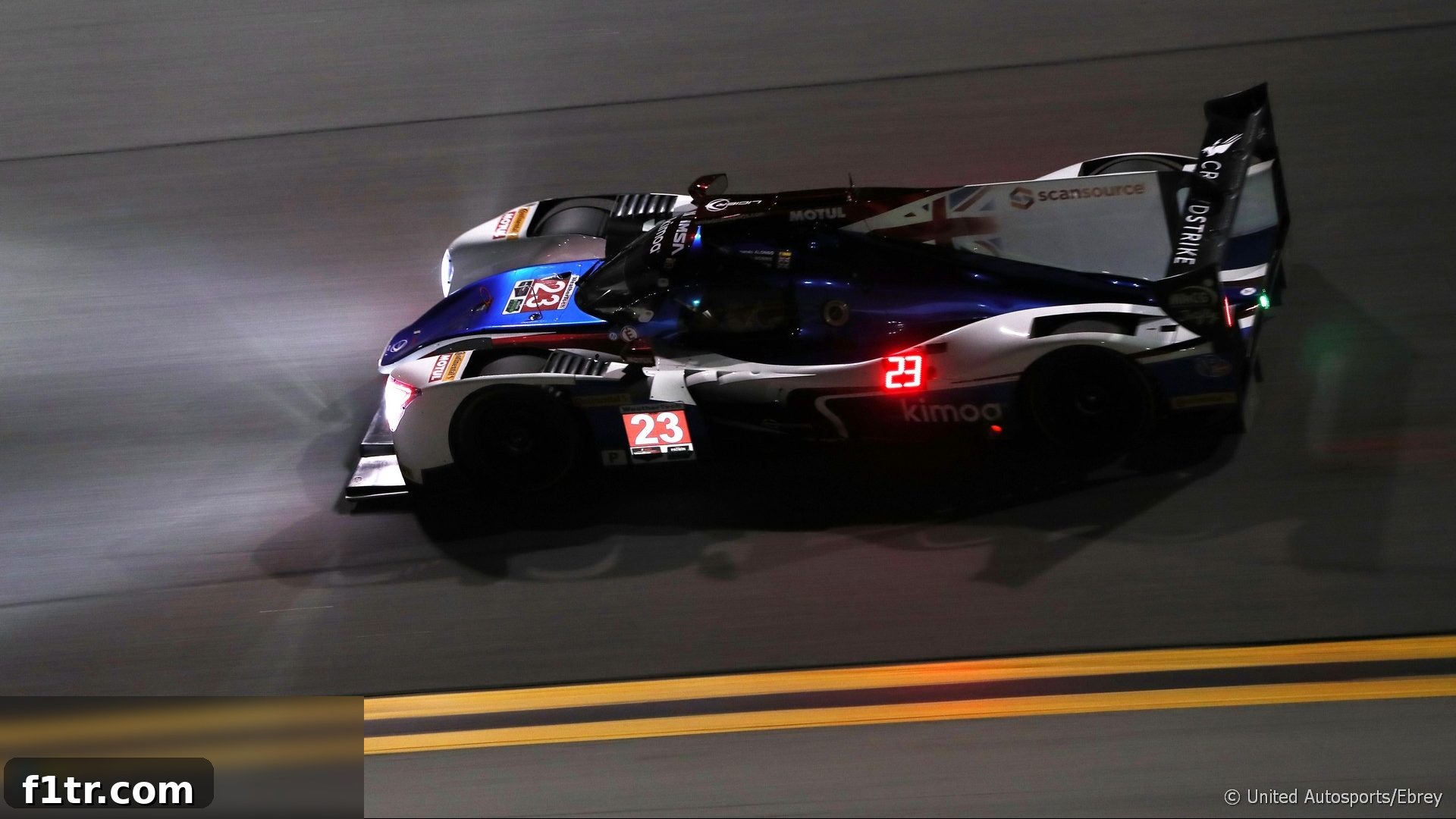
Fernando Alonso’s Daytona 24 Hours Adventure: A Test of Resilience
Two-time Formula 1 world champion Fernando Alonso recently concluded his highly anticipated participation in the legendary Daytona 24 Hours endurance race. Despite facing significant challenges, including a critical brake failure and other mechanical setbacks that ultimately left his team P38 at the chequered flag, Alonso expressed satisfaction with the invaluable experience gained. His foray into North American endurance racing is a clear indicator of his unwavering commitment to motorsport’s ultimate challenges, particularly his ambitious pursuit of the Triple Crown.
The endurance classic presented a stark contrast to the high-precision, sprint-race format of Formula 1. Alonso, known for his relentless pursuit of perfection, adapted quickly to the unique demands of multi-class racing, traffic management, and extended stints under varying conditions. The brake failure, a dramatic moment during the night, highlighted the unforgiving nature of endurance racing, where mechanical reliability is paramount. Alonso candidly admitted feeling “scared a little bit” by the incident, particularly when navigating the track in the dark, underscoring the extreme risks drivers undertake in these iconic events. Such experiences not only add to his already formidable driving repertoire but also provide a captivating narrative for fans following his multifaceted career.
His decision to compete at Daytona, alongside his prior and future participations in events like the Indy 500 and Le Mans, showcases a unique chapter in a modern F1 driver’s career. It allows him to hone skills beyond the F1 cockpit, demonstrating versatility and an enduring passion for racing in its purest forms. These ventures also attract a broader audience to F1, connecting the pinnacle of single-seater racing with the rich tapestry of global motorsport.
F1 News Digest: Grid Debates, Driver Dynamics, and Historical Reflections
Our daily digest brings you essential news, thought-provoking opinions, and in-depth features from across the Formula 1 landscape:
Alonso’s Legacy and Paddock Perceptions: The Honda Saga
In a candid statement, Red Bull Racing advisor Helmut Marko suggested that Fernando Alonso “did everything to make Honda look bad” during his tenure with McLaren. This comment reflects the intense scrutiny and political undertones that often define relationships between drivers, teams, and engine manufacturers in Formula 1. Alonso’s frustrations with the performance of the Honda power unit during the McLaren-Honda partnership were well-documented, often conveyed through memorable radio messages and pointed remarks. While his vocal criticisms sparked debate, they also underlined his fierce competitive spirit and his desire for championship-contending machinery.
The era of McLaren-Honda’s struggles was a challenging period for one of F1’s most iconic teams and a frustrating chapter for a driver of Alonso’s caliber. Marko’s perspective offers a glimpse into the rival teams’ views, suggesting that Alonso’s public expressions exacerbated Honda’s image issues. This historical context is crucial for understanding the complex dynamics within the F1 paddock, where reputations, technological prowess, and strategic alliances constantly shift. Such narratives remind us that Formula 1 is not just about raw speed but also about the intricate human and corporate interactions behind the scenes, shaping legacies and rivalries for years to come.
Mansell on F1’s Competitive Depth: A Call for Larger Grids
Formula 1 legend Nigel Mansell voiced concerns regarding the sport’s competitive depth, advocating for an expansion of the grid. Mansell stated, “We want to see 26 cars on the grid. There is an awful lot of worthy drivers who are backlogged and have nowhere to go.” His comments resonate with many fans and industry insiders who recall the larger grids of past eras, which often provided more opportunities for emerging talent and enhanced the spectacle of racing. The current F1 grid, typically featuring 20 cars, has been criticized for limiting entry points for promising young drivers who graduate from feeder series like Formula 2 and Formula 3.
A larger grid could potentially inject more dynamism into the sport, fostering greater competition, diverse strategies, and increased fan engagement. However, expanding the grid presents significant logistical and financial challenges for new teams, including securing substantial investment, developing competitive infrastructure, and navigating complex regulatory frameworks. Mansell’s call highlights an ongoing debate within F1 about balancing exclusivity and accessibility, ensuring that the sport remains the pinnacle of motorsport while also providing sufficient opportunities for the next generation of racing heroes. It’s a delicate equilibrium that the sport continuously strives to achieve, often influenced by commercial interests and the pursuit of competitive balance.
Historical Flashback: The Last Full F1 Grid at Monaco
Reflecting on the sentiment for larger grids, we cast our minds back to the 1995 Monaco Grand Prix, which marked F1’s last race with a full grid. The concept of a “full grid” in Formula 1, typically referring to a field of 26 cars, evokes a sense of nostalgia for an era of greater participation and perhaps less constrained entry. The 1995 Monaco event, a classic race on a legendary circuit, saw a vibrant and extensive field battling for supremacy amidst the principality’s iconic streets.
This historical benchmark underscores the evolution of Formula 1 over the decades. In contemporary F1, regulations and economic realities have led to a more streamlined grid, prioritizing competitive standards and financial stability for existing teams. While the current 10-team, 20-car format ensures a high level of professionalism and intense competition, the memory of a bustling 26-car grid at a venue like Monaco serves as a poignant reminder of F1’s rich history and the perpetual discussion surrounding the ideal size and composition of the world championship entry list. It prompts fans to consider what might be lost or gained with different approaches to team and driver inclusion in the sport’s elite ranks.
Do you have a tip for a link to feature in our next F1 Fanatic round-up? Send it in here:
- Contact F1 Fanatic
Social Media Pulse: Fan Reactions and Driver Insights
The digital world of Twitter and Instagram continues to be a vibrant hub for F1 fans and drivers, offering immediate reactions, insightful commentary, and a direct line to the heart of the motorsport community:
Cool to see the respect from @alo_oficial on the difficulty in competing in the #Daytona500! A world champion who respects the best races around the world. | #F1 #IMSA #NASCAR #USAC
— Kyle Zimmerman (@KyleDZimmerman) January 28, 2018
Kyle Zimmerman’s tweet perfectly captures the widespread admiration for Fernando Alonso’s humble approach to tackling diverse racing disciplines. His respect for the challenge of events like the Daytona 500 (and, by extension, the Daytona 24 Hours he competed in) resonates deeply with fans across various motorsport categories. It highlights a rare quality in a modern F1 champion – the willingness to step out of his comfort zone and genuinely engage with different racing cultures and skill sets. This cross-pollination of racing experiences not only enriches Alonso’s personal driving journey but also fosters a broader sense of community and appreciation across motorsports, proving that true champions recognize excellence in all its forms.
With all Alonso experiments in other racing…I wonder how much longer we’re gonna see Alonso in F1.
— Chevy84 (@chevychevelle48) January 28, 2018
The question posed by @chevychevelle48 is one that has lingered in the minds of many Formula 1 enthusiasts: How long will Fernando Alonso continue his F1 career amidst his ambitious forays into other racing series? Alonso’s pursuit of the Triple Crown (winning the Monaco Grand Prix, Indy 500, and Le Mans 24 Hours) has undoubtedly added a fascinating dimension to his later career, but it also sparks speculation about his long-term commitment to Formula 1. This discussion touches upon the broader trend of F1 drivers, particularly those with established legacies, seeking new challenges and expanding their racing horizons beyond the confines of the Grand Prix circuit. His dedication to mastering varied disciplines suggests a driver driven by the pure love of racing, potentially hinting at a future where his presence in F1 might eventually give way to a more diverse racing calendar, but always leaving an indelible mark on the sport’s history.
A bit of positive PR for @LewisHamilton in the celebrity pages: https://t.co/P8UJZCszXy #F1
— Keith Collantine (@keithcollantine) January 28, 2018
Keith Collantine’s observation about positive PR for Lewis Hamilton in celebrity news highlights another facet of modern Formula 1: the drivers are global superstars whose lives extend far beyond the race track. F1 drivers, especially those at the pinnacle of the sport, are constantly under the media spotlight, with their actions and appearances scrutinized in both sports and mainstream press. Positive public relations, whether stemming from philanthropic efforts, fashion choices, or admirable personal conduct, plays a crucial role in shaping a driver’s public image and broader appeal. For a figure as prominent as Hamilton, maintaining a positive narrative off-track is as important as his performance on it, contributing to his brand, influence, and the overall image of Formula 1 to a global audience. This constant interplay between sport and celebrity culture continues to define the landscape of F1 in the 21st century.
- Find more official F1 accounts to follow in the F1 Twitter Directory
Community Engagements: Captions, Discussions, and Shout-Outs
Comment of the Day: Fan Creativity Shines
Our recent Caption Competition, featuring a captivating image of Fernando Alonso, Lando Norris, and Jimmie Johnson, sparked a flurry of creative and humorous entries from our dedicated community. We extend our sincere thanks to everyone who participated, showcasing the wit and passion of F1 fans. The winning caption, penned by @Wessel-v1, perfectly captured the essence of the moment with its clever observation:
Lando’s idea of a rap battle has yet to pick up some steam.
@Wessel-v1
An honourable mention also goes to @Doublestuffpenguin for being the only person to claim to have been on the rollercoaster in the photograph, adding a unique, personal touch to the competition. These caption contests are a fantastic way for our community to engage, share a laugh, and celebrate the lighter side of motorsport, bringing fans closer together through shared humor and a passion for the sport’s iconic personalities.
From the Forum: What Makes an F1 Race Unforgettable?
- A straightforward yet universally appealing question from @DavidJWest sparked a lively debate in our forum: Which is the best F1 race to attend?
This question is a perennial favorite among F1 enthusiasts, as the answer often depends on individual preferences for atmosphere, circuit layout, historical significance, and overall fan experience. Iconic races like the Monaco Grand Prix offer unparalleled glamour and a unique street circuit challenge, while events such as the Italian Grand Prix at Monza are celebrated for their passionate “Tifosi” and high-speed action. Silverstone in the UK boasts a rich history and knowledgeable crowds, and Spa-Francorchamps in Belgium is revered for its epic natural setting and demanding corners. Factors like accessibility, local culture, and the availability of off-track entertainment also heavily influence a race-goer’s choice. The diversity of opinions in the forum reflects the rich tapestry of experiences that Formula 1 has to offer its global fanbase, making every race a potentially unforgettable pilgrimage for motorsport aficionados.
Snapshot: Sainz Jnr’s Rally Experience
Carlos Sainz Jnr recently took to the stages of the legendary Monte-Carlo Rally, driving a 13-kilometre section in one of the event’s course cars. This unique experience for the Formula 1 driver highlights the fascinating crossover between different motorsport disciplines and his deep connection to rallying through his father, the two-time World Rally Champion Carlos Sainz Sr. Participating in a rally course car allows a driver to experience the incredible demands and precision required in rallying, offering a stark contrast to the smooth tarmac of F1 circuits. It involves navigating treacherous and varied surfaces, often in challenging weather conditions, demanding a completely different set of car control skills.
Sainz Jnr’s stint at Monte-Carlo is not just a personal thrill but also a nod to his family legacy and the diverse skills within the Sainz motorsport dynasty. It underscores how elite drivers often possess an innate talent for speed and car control that transcends specific racing formats. This kind of cross-discipline engagement is invaluable for broadening a driver’s perspective and understanding of motorsport as a whole, reminding us of the fundamental connection between various forms of racing and the universal appeal of pushing the limits of speed and skill. It’s a moment that bridges the gap between the high-tech world of F1 and the rugged, adventurous spirit of rally racing.
Happy Birthday!
A very happy birthday goes out to Graeme, Hazel J, Mpj1994, Shery, Southpawracer, Hester Burger, William and Jack! We hope you all have a fantastic day filled with celebration and motorsport excitement.
If you want a birthday shout-out in a future F1 Fanatic round-up, simply tell us when yours is via our contact form or by adding to the list here. We love celebrating with our vibrant community!
On This Day in F1 History: Jacarepagua’s Debut
- On this day, 40 years ago, the Jacarepagua circuit in Brazil hosted its very first Brazilian Grand Prix. It was a race for the ages, where Carlos Reutemann, driving for Ferrari, denied local hero Emerson Fittipaldi what would have been a dream home victory in his own Fittipaldi team car.
The 1978 Brazilian Grand Prix at Jacarepagua, officially known as the Autódromo Internacional Nelson Piquet, marked a significant moment in Formula 1 history. The circuit, nestled in Rio de Janeiro, provided a new challenge for the F1 grid, offering a fast and flowing layout. The race itself was a captivating affair, with Argentine driver Carlos Reutemann skillfully managing his Ferrari to a commanding victory. However, much of the public’s attention was on two-time world champion Emerson Fittipaldi, who was attempting to secure a fairy-tale win on home soil with his eponymous Fittipaldi Automotive team.
Despite Fittipaldi’s valiant effort and the passionate support of the Brazilian crowd, he finished nearly 50 seconds behind Reutemann. While not a victory, his performance in his own constructor’s car was a testament to his enduring talent and entrepreneurial spirit, even if the dream of a home win in a Fittipaldi car remained just out of reach. This race is remembered not just for Reutemann’s triumph, but for its historical context – a new circuit, a national hero pushing the boundaries with his own team, and a glimpse into the dynamic and often unpredictable nature of Formula 1 in the late 1970s, a golden era of diverse teams and legendary drivers.
That concludes our latest F1 roundup, packed with analysis on Fernando Alonso’s multifaceted career, crucial debates about Formula 1’s future, and nostalgic dives into its rich history. Stay tuned for more updates as the motorsport world continues to evolve and deliver unforgettable moments, both on and off the track. We appreciate your continued engagement and look forward to hearing your thoughts on these pressing topics.