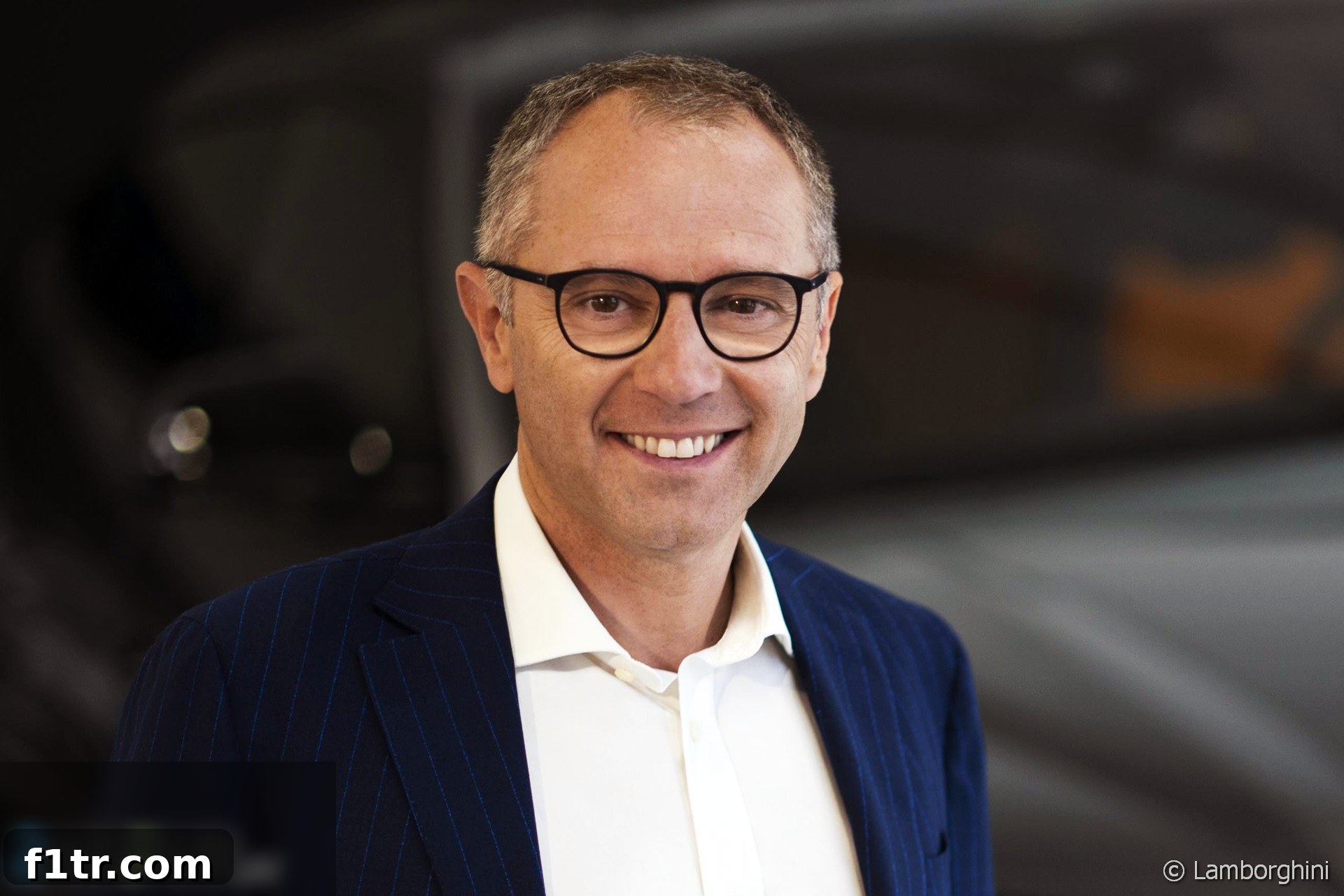
In a momentous development for the world of motorsport, Stefano Domenicali is set to take the helm as Formula 1’s new Chief Executive Officer, effectively stepping into the role previously held by Chase Carey. This significant leadership transition, initially revealed by RaceFans and subsequently confirmed by the sport, is slated for January next year. While appearing seismic at first glance, a deeper analysis reveals this appointment to be a remarkably logical and strategic move for the pinnacle of global motor racing.
The shift sees Chase Carey transitioning to a non-executive chairman position within F1. It is anticipated that he will base himself in New York, where his extensive Wall Street experience will remain invaluable for Liberty Media, F1’s parent company. Carey’s future role will be largely external-facing, focusing on investor relations and broader strategic oversight. In contrast, Domenicali will dive into the operational intricacies, leading the day-to-day business aspects and steering Formula 1 through critical transitions, including the implementation of the ambitious 2021-2022 regulatory framework.
Stefano Domenicali: A Career Forged in Motorsport Excellence
Born in Imola, Italy, into a family with a banking background, the 55-year-old Domenicali possesses an unparalleled depth of connections and understanding within the Formula 1 ecosystem. His personal life further intertwines with the sport; his wife, Silvia, is the daughter of Ercole Colombo, one of Italy’s most renowned F1 photographers. Domenicali’s career trajectory is a testament to his dedication and multifaceted expertise, beginning with humble beginnings in hobby work at his local racetrack, progressing into circuit management at Mugello, and ultimately ascending to executive positions within Ferrari.
His tenure at the Scuderia Ferrari marked a period of notable success, culminating in his leadership of the team as Team Principal during their most recent constructors’ championship triumph in 2008. Beyond sporting achievements, Domenicali cultivated a comprehensive skill set, graduating in business science and accumulating extensive experience across administration, finance, and human resources. He meticulously oversaw Ferrari’s vast sponsorship portfolios and managed the crucial sporting and logistics departments during an era characterized by unrestricted testing and major teams deploying up to 300 personnel at races. His leadership at Ferrari as Team Principal spanned six challenging years until April 2014, leaving an indelible mark on the storied Italian marque.
One of the most telling episodes that define Domenicali’s character came with his departure from Ferrari. Faced with immense pressure from then-Ferrari president Luca di Montezemolo to dismiss key engine department personnel following a disappointing start to the V6 hybrid turbo era, Domenicali famously refused point blank. This principled stance ultimately led him to sacrifice his own career at the time. This wasn’t his first encounter with such a dilemma; he had previously carried out a similar order in 2011 against his long-standing friend and technical director, Aldo Costa, and had vowed “never again” to compromise his values in such a manner. This unwavering integrity has become a hallmark of his professional reputation.
From Audi Ambitions to Lamborghini Success
Following his departure from Ferrari, Domenicali was quickly courted by Audi, where he was appointed vice president for new business projects. This role, a euphemism for high-level feasibility studies, involved exploring Audi’s potential entry into Formula 1. The project reportedly came agonizingly close to realization, with sources indicating that Audi was within a week of committing to an F1 engine operation and acquiring Red Bull Racing – with the energy drinks company poised to continue as title sponsor. However, these ambitious plans were abruptly derailed by the infamous Dieselgate scandal, which engulfed the entire Volkswagen Group and forced a re-evaluation of all major investment projects.
Despite the F1 project being shelved, Ferdinand Pïech, then head of the VW Group, recognized Domenicali’s exceptional talent. Instead of letting him go, Pïech orchestrated a strategic move, shifting Stephan Winkelmann from Lamborghini CEO to Bugatti, and installing Domenicali at the helm of the iconic Sant’Agata Bolognese brand. During his impressive five-year tenure at Lamborghini, Domenicali not only doubled unit sales but also successfully launched the highly acclaimed Urus SUV range, significantly broadening the brand’s market appeal and financial stability. Concurrently, he found time to head the FIA Single Seater Commission, a body charged with the crucial task of streamlining the career path for aspiring drivers into Formula 1 – a mission he successfully accomplished.
In summary, Domenicali’s illustrious 30-year career is marked by a string of distinguished achievements, executed with his characteristic quiet yet steely resolve. Throughout this journey, he has remained a remarkably grounded and respected individual. Within the competitive and often cutthroat environment of the F1 paddock, it is rare to find someone about whom no negative word is spoken, yet this is precisely the case with Stefano Domenicali. Comments from team bosses during the Sochi Friday press conference, for instance, were universally positive, underscoring the high esteem in which he is held by his peers and even direct competitors.
Intriguingly, rumors from Maranello suggested that Ferrari recently attempted to entice Domenicali back, this time to replace CEO Louis C. Camilleri, reporting directly to chairman John Elkann. Domenicali, however, gave the offer short shrift, questioning why Ferrari would genuinely value him now in a time of crisis, given their previous stance. This decisive rejection should silence those who falsely and unfairly concluded that he remains a ‘Tifoso’ (ardent Ferrari fan) to his core, demonstrating his independent and professional approach.
The Path to F1’s Top Job: A Strategic Alliance
Contrary to speculation that Ferrari brokered his appointment, Domenicali’s return to Formula 1 was orchestrated by his former Audi colleague, Luca de Meo, now the CEO of Renault. The two Italians forged a close professional bond during their respective spells at Fiat/Ferrari and Audi, where de Meo, as CEO of Seat, often sat at board tables with Domenicali. Upon de Meo’s move to Renault in July, one of his immediate sporting tasks was to rebrand the team as “Alpine” and secure its commitment to the crucial 2021-2025 Concorde Agreement.
De Meo, concerned about a perceived lack of clear succession planning under Liberty Media’s previous leadership, saw an opportunity. Simultaneously, Domenicali had heard whispers that Lamborghini and Bugatti might be divested as part of Volkswagen’s aggressive electrification strategy, and he reportedly did not receive the coherent denials he sought from management. This confluence of circumstances prompted de Meo to propose Domenicali to the F1 board, setting the stage for his return to the sport’s highest executive position.
The Immense Challenges Awaiting Formula 1’s New CEO
Stefano Domenicali now steps into arguably the biggest challenge of his distinguished professional life: leading the pinnacle of motorsport for a NASDAQ-listed company whose primary metric for success is inextricably linked to its share price. While Formula 1 values its fans as customers, its teams as essential suppliers, and its circuits and broadcasters as vital shop windows, Domenicali’s unique experience sets him apart. Crucially, he has been an integral member of all three of these groups at various stages of his career, providing him with a holistic and empathetic understanding of the sport’s complex ecosystem.
He assumes leadership at a time when Chase Carey has largely achieved his initial mission: all ten teams have committed to the foundational 2021-2025 Concorde Agreement, a pivotal achievement for the sport’s stability. Furthermore, the $145 million budget cap is not only in place but has been successfully reduced from its original $175 million proposal, signaling a new era of cost control and competitive parity. Revised sporting and technical regulations have been meticulously drafted and finalized, laying the groundwork for future development. Amidst the unprecedented global challenge of the Covid-19 pandemic, F1, under Carey’s leadership, impressively salvaged a 17-race season from an initial 22-race calendar – a feat that far exceeded the expectations of many critics in the early stages of the crisis.
Navigating Financial Headwinds and Future Growth
Despite these critical accomplishments, the financial health of both Liberty Media and the participating teams desperately requires stabilization and renewed growth. A paramount imperative for Domenicali will be to extend, and where necessary, replace existing circuit and television broadcasting contracts at optimal commercial levels. Simultaneously, he must foster substantial growth in both live event attendance and television viewership, all while meticulously managing investor expectations and maintaining strong relationships with the financial community, working in close collaboration with Chase Carey in his new role.
F1’s ambitious over-the-top (OTT) streaming service remains a work-in-progress, presenting Domenicali with some difficult strategic decisions regarding its future development and market positioning. Insiders suggest that a condition of his acceptance of the role was an insistence on total executive freedom and authority, complete with clear “get-out” clauses should those assurances not materialize. The potential havoc an unexpected departure could wreak on F1’s share price underscores the importance of such assurances, leaving little doubt that he secured the necessary guarantees.
Expect to see significant changes once Domenicali is firmly settled into his new position, and these will likely extend far beyond just the OTT service, impacting the company across all divisions. Liberty Media has made substantial investments in various areas since acquiring F1, and Domenicali, with his seasoned and critical eye, will undoubtedly scrutinize these initiatives. His track record at Lamborghini suggests he is not one to insist on change for change’s sake but rather to implement rapid and effective adjustments where genuine improvements can be made, always with a clear strategic objective.
The Future of Ross Brawn and F1’s Technical Direction
Domenicali’s appointment naturally raises questions about the future of Ross Brawn, F1’s Managing Director of Motorsports, and why his former junior colleague at Ferrari received the top executive nod over him. Brawn, too, can be lauded with the “mission accomplished” accolade. He skillfully guided the US executives through the often-turbulent waters after Liberty Media’s acquisition and was instrumental in implementing many of the transformative changes slated for 2022. While some of his ambitious plans did not come to fruition, there’s a sense that he may have eased off the accelerator recently.
Brawn will celebrate his 66th birthday next month, a man who has amassed wealth beyond his wildest dreams after selling his eponymous Brawn GP team, now cherishes time with his grandchildren, and has achieved far more in his career than he could have ever imagined when he began as an apprentice instrument technician in 1971. The smart money suggests he will oversee a smooth handover, then transition into a consulting role before ultimately stepping back to dedicate more time to his beloved hobby of fishing, after nearly five decades in the demanding world of motorsport.
Brawn’s eventual departure is likely to trigger a significant shift within F1’s technical department. This department, which effectively acts as a consultancy to the FIA (the sport’s governing body, responsible for accepting or rejecting recommendations), is expected to transition its primary base to the FIA. With the comprehensive 2022 regulations now firmly in place, retaining a large, dedicated department in London makes little economic sense. It is anticipated that current specialists will be seconded to the FIA’s headquarters in Paris on a consultancy basis, ensuring continuity and expertise.
Diplomacy and Long-Term Stability
One of Domenicali’s immediate diplomatic challenges will be to skillfully manage relationships with other prominent F1 CEO hopefuls, notably Toto Wolff and Christian Horner. Both are likely to be bitterly disappointed that he, rather than they, secured the sport’s top job. Horner has worked alongside Domenicali for many years, both at Red Bull and during past team acquisition discussions, giving them a familiar dynamic. Wolff and Mercedes, while crucial stakeholders, represent a largely unknown quantity for Domenicali, requiring careful relationship building.
Equally vital for Domenicali will be maintaining solid and constructive relations with the current FIA leadership, presided over by his former Ferrari mentor, Jean Todt. This relationship will be crucial as he also prepares for a significant regime change at the FIA itself at the end of 2021, with several names already in contention for the FIA presidency. Needless to say, a harmonious and productive relationship between the governing body and the commercial rights holder is absolutely indispensable for the long-term health and prosperity of Formula 1.
Addressing Existential Challenges and Shaping F1’s Future
In the longer term, Formula 1 confronts profound existential challenges, mirroring those faced by the supercar business Domenicali is departing, particularly concerning environmental sustainability. Last year, he spearheaded the launch of the Sián, Lamborghini’s first hybrid supercar, demonstrating his proactive approach to green technology. One of his overriding objectives at F1 will undoubtedly be to ensure the sport embraces a sustainable future in the face of widespread global electrification. This monumental task of balancing technological innovation, environmental responsibility, and maintaining F1’s core identity will likely pose his most significant long-term challenge.
Another crucial challenge will be to maintain, and ideally increase, the current constellation of teams and engine suppliers. The sport thrives on a healthy roster of competitive participants, fostering innovation and exciting racing. While checks and balances are in place for the immediate future, the current engine regulations are set to expire in 2025. Crafting a new power unit formula that champions greener fuels and significantly lower emissions will be absolutely critical to Formula 1’s continued relevance and appeal. Those five years, in the fast-paced world of F1, will undoubtedly pass in a flash.
A long and complex to-do list, then, awaits Stefano Domenicali. Yet, few individuals are as uniquely equipped and perfectly suited to the demanding role of Formula 1 President and CEO. CVs often merely list accomplishments, tending to gloss over intangible qualities. However, these intangibles are arguably Domenicali’s greatest assets: an unbridled, lifelong passion for the sport, combined with a clear, calm, and astute business mind, all underpinned by genuine humility. Frankly, there is no one better prepared to lead Formula 1 into its next exhilarating 70 years.
2020 F1 season
- Grosjean to make F1 test return tomorrow for first time since Bahrain horror crash
- Pictures: Wrecked chassis from Grosjean’s Bahrain fireball crash to go on display
- Bottas vs Rosberg: Hamilton’s Mercedes team mates compared after 78 races each
- F1 revenues fell by $877 million in Covid-struck 2020 season
- Hamilton and Mercedes finally announce new deal for 2021 season
Browse all 2020 F1 season articles