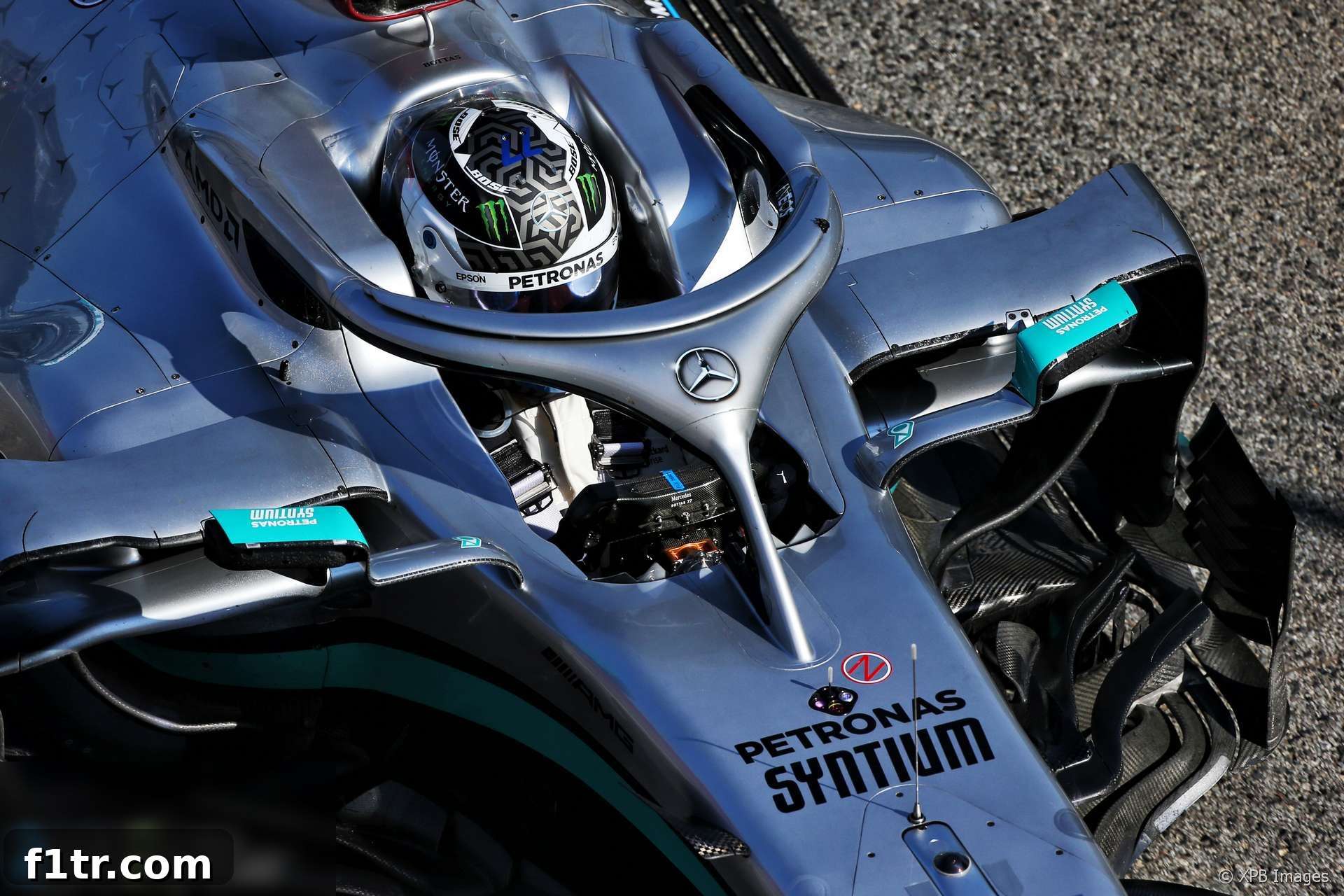
The murmurs from the paddock after the initial three-day 2020 F1 season pre-season test were loud and clear: Mercedes-AMG Petronas was in a league of its own. While rivals clung to the hope that the headline lap times weren’t fully representative of the true pecking order, the reigning world champions delivered a stark warning, demonstrating a pace advantage of over 1.3 seconds against the rest of the field. This dominant display from the Silver Arrows immediately positioned them as the team to beat, setting a formidable benchmark for the upcoming season.
Mercedes’ Unmatched Performance: A New Benchmark for 2020
At the heart of Mercedes’ impressive showing was Valtteri Bottas, who unequivocally set the fastest time of the first phase of testing. Utilising Pirelli’s softest compound tyres, the C5, Bottas navigated the demanding Circuit de Catalunya with breathtaking precision. His blistering lap time was not just a testament to his skill but also highlighted the immense potential of the Mercedes W11 chassis, proving nearly half a second quicker than Mercedes’ best effort during last year’s pre-season testing on comparable compounds. This significant year-on-year improvement underscored the team’s relentless pursuit of perfection and their ability to extract even greater performance from their machinery.
In typical fashion, Mercedes meticulously split their testing duties between their star drivers. Lewis Hamilton seamlessly took over from Bottas in the afternoon sessions, continuing the team’s structured program of data gathering and component assessment. Both drivers focused on understanding the W11’s characteristics across different setups and tyre compounds, ensuring a comprehensive evaluation. This methodical approach is a hallmark of Mercedes’ pre-season preparations, prioritizing reliability and a deep understanding of the car’s behaviour over pure, one-off fastest laps.
Introducing DAS: Mercedes’ Innovative Edge
Beyond the outright speed, Mercedes also unveiled an intriguing innovation that immediately captured the attention of the F1 world: the Dual Axis Steering (DAS) system. This groundbreaking technology allows drivers to adjust the toe angle of the front wheels by pushing or pulling the steering wheel. While its full impact and legality were subjects of intense debate, the DAS system hinted at Mercedes’ continuous effort to find performance gains in every possible area, potentially offering advantages in tyre management and cornering. The introduction of DAS further solidified Mercedes’ reputation as an engineering powerhouse, always pushing the boundaries of what’s possible in Formula 1.
Rivals Face Early Hurdles and Mixed Fortunes
While Mercedes dominated the headlines with their pace, the competition experienced a more turbulent start, punctuated by reliability issues and varying levels of performance. The first test session was notably interrupted on four separate occasions by red flags, highlighting the initial teething problems many teams encountered with their new machinery.
Ferrari’s Power Unit Woes
One of the most significant early setbacks came for Ferrari and Sebastian Vettel. A power unit failure on his SF1000 brought his session to an abrupt halt, forcing the team to undertake a lengthy engine change. Although Vettel eventually rejoined the track, the substantial delay meant Ferrari was unable to hit their targeted 100-lap mark for the day, hindering their crucial data collection efforts. This incident immediately raised concerns about the reliability of Ferrari’s new power unit, a critical component for championship aspirations.
Williams and Haas Grapple with Incidents
Power unit problems weren’t exclusive to Ferrari. Nicholas Latifi, making his pre-season debut with Williams, also experienced a similar issue, bringing his Mercedes-powered FW43 to a standstill. Like Ferrari, Williams was compelled to fit a replacement unit, costing valuable track time for the rookie driver and the struggling team eager to make amends for a challenging 2019 season. Despite the setback, Williams showed signs of improved underlying pace and a more stable platform compared to their previous year’s car, offering a glimmer of hope for a more competitive year.
The Haas F1 Team also endured a difficult afternoon. After taking over from team mate Romain Grosjean, Kevin Magnussen’s session was cut dramatically short. After completing just four laps, he spun his VF-20 at turn seven, making contact with the barrier with his front-right wheel. The incident rendered the car undriveable, and it was not seen on track again after being recovered to the pits, severely limiting Haas’s understanding of their new challenger.
Renault’s Resilience Amidst Challenges
The final stoppage of the day was caused by Daniel Ricciardo’s Renault. However, in contrast to some of the other incidents, Ricciardo was able to resume his run swiftly, allowing the French team to recover and achieve a highly productive day. Renault completed over 150 laps, marking their most extensive and fruitful day of testing thus far. This resilience, coupled with new signing Esteban Ocon’s solid debut, provided a positive outlook for the team as they aimed to climb the midfield ladder.
The Wider Field: Glimpses of Potential and Strategy
Beyond the headline-makers and incident reports, other teams quietly went about their business, showcasing varying levels of progress and revealing initial strategic directions. Red Bull Racing, with Max Verstappen and Alexander Albon, maintained a relatively low profile on the timesheets but focused on extensive long runs and reliability assessments, a characteristic approach for the Milton Keynes squad. Their performance often only truly reveals itself when competitive action begins.
Racing Point’s RP20, controversially dubbed the “Pink Mercedes” due to its striking resemblance to the 2019 Mercedes W10, turned heads not just for its aesthetics but also for its strong performance. Lance Stroll’s impressive lap times demonstrated the potential of their design philosophy, hinting at a strong contender in the midfield battle and potentially challenging the front-runners on occasion.
McLaren, coming off a strong 2019 season, continued their diligent work with Carlos Sainz Jnr and Lando Norris. Their focus appeared to be on consolidating reliability and refining the MCL35, rather than chasing outright lap times. Similarly, AlphaTauri (formerly Toro Rosso) with Daniil Kvyat and Pierre Gasly, and Alfa Romeo with Antonio Giovinazzi, diligently logged laps, gathering crucial data for the season ahead.
Advert | Become a RaceFans supporter andgo ad-free
F1 Pre-Season Test 1: Day 3 Combined Results
Below is a detailed breakdown of the combined results from the third day of the first pre-season test, offering a snapshot of the pecking order and lap counts:
| Pos. | Car number | Driver | Team | Model | Best time | Gap | Laps |
|---|---|---|---|---|---|---|---|
| 1 | 77 | Valtteri Bottas | Mercedes | W11 | 1’15.732 | 65 | |
| 2 | 44 | Lewis Hamilton | Mercedes | W11 | 1’16.516 | 0.784 | 70 |
| 3 | 31 | Esteban Ocon | Renault | RS20 | 1’17.102 | 1.370 | 76 |
| 4 | 18 | Lance Stroll | Racing Point | RP20 | 1’17.338 | 1.606 | 114 |
| 5 | 26 | Daniil Kvyat | AlphaTauri | AT01 | 1’17.427 | 1.695 | 62 |
| 6 | 99 | Antonio Giovinazzi | Alfa Romeo | C39 | 1’17.469 | 1.737 | 152 |
| 7 | 3 | Daniel Ricciardo | Renault | RS20 | 1’17.574 | 1.842 | 93 |
| 8 | 33 | Max Verstappen | Red Bull | RB16 | 1’17.636 | 1.904 | 86 |
| 9 | 10 | Alexander Albon | Red Bull | RB16 | 1’18.213 | 2.481 | 57 |
| 10 | 10 | Pierre Gasly | AlphaTauri | AT01 | 1’18.213 | 2.481 | 57 |
| 11 | 55 | Carlos Sainz Jnr | McLaren | MCL35 | 1’18.274 | 2.542 | 76 |
| 12 | 8 | Romain Grosjean | Haas | VF-20 | 1’18.380 | 2.648 | 48 |
| 13 | 5 | Sebastian Vettel | Ferrari | SF1000 | 1’18.384 | 2.652 | 99 |
| 14 | 4 | Lando Norris | McLaren | MCL35 | 1’18.454 | 2.722 | 49 |
| 15 | 6 | Nicholas Latifi | Williams | FW43 | 1’19.004 | 3.272 | 71 |
| 16 | 20 | Kevin Magnussen | Haas | VF-20 | 1’19.709 | 3.977 | 4 |
Advert | Become a RaceFans supporter andgo ad-free
Looking Ahead: What Does the First Test Tell Us?
While the first pre-season test provided an exciting initial glimpse into the 2020 Formula 1 season, it’s crucial to interpret the results with caution. Pre-season testing is notoriously deceptive, with teams running varying fuel loads, engine modes, and tyre compounds, often prioritising reliability and data collection over outright speed. The concept of “sandbagging”—where teams deliberately hide their true pace—is a common practice, particularly among top contenders.
However, Mercedes’ sheer dominance, coupled with their reliability and the innovative DAS system, sent a clear message. Their performance suggests that the W11 is a formidable package right out of the box, building on the strengths of its championship-winning predecessors. While Ferrari’s power unit concerns are a definite worry, and other teams like Red Bull and McLaren quietly conducted their programs, the initial impression is one of Mercedes maintaining a significant advantage.
The next phase of testing will be critical for rivals to close the gap and for Mercedes to confirm their early promise. The anticipation for the first race of the 2020 F1 season, following these intriguing test sessions, is now higher than ever.
More on the 2020 F1 season
- Grosjean to make F1 test return tomorrow for first time since Bahrain horror crash
- Pictures: Wrecked chassis from Grosjean’s Bahrain fireball crash to go on display
- Bottas vs Rosberg: Hamilton’s Mercedes team mates compared after 78 races each
- F1 revenues fell by $877 million in Covid-struck 2020 season
- Hamilton and Mercedes finally announce new deal for 2021 season
Browse all 2020 F1 season articles