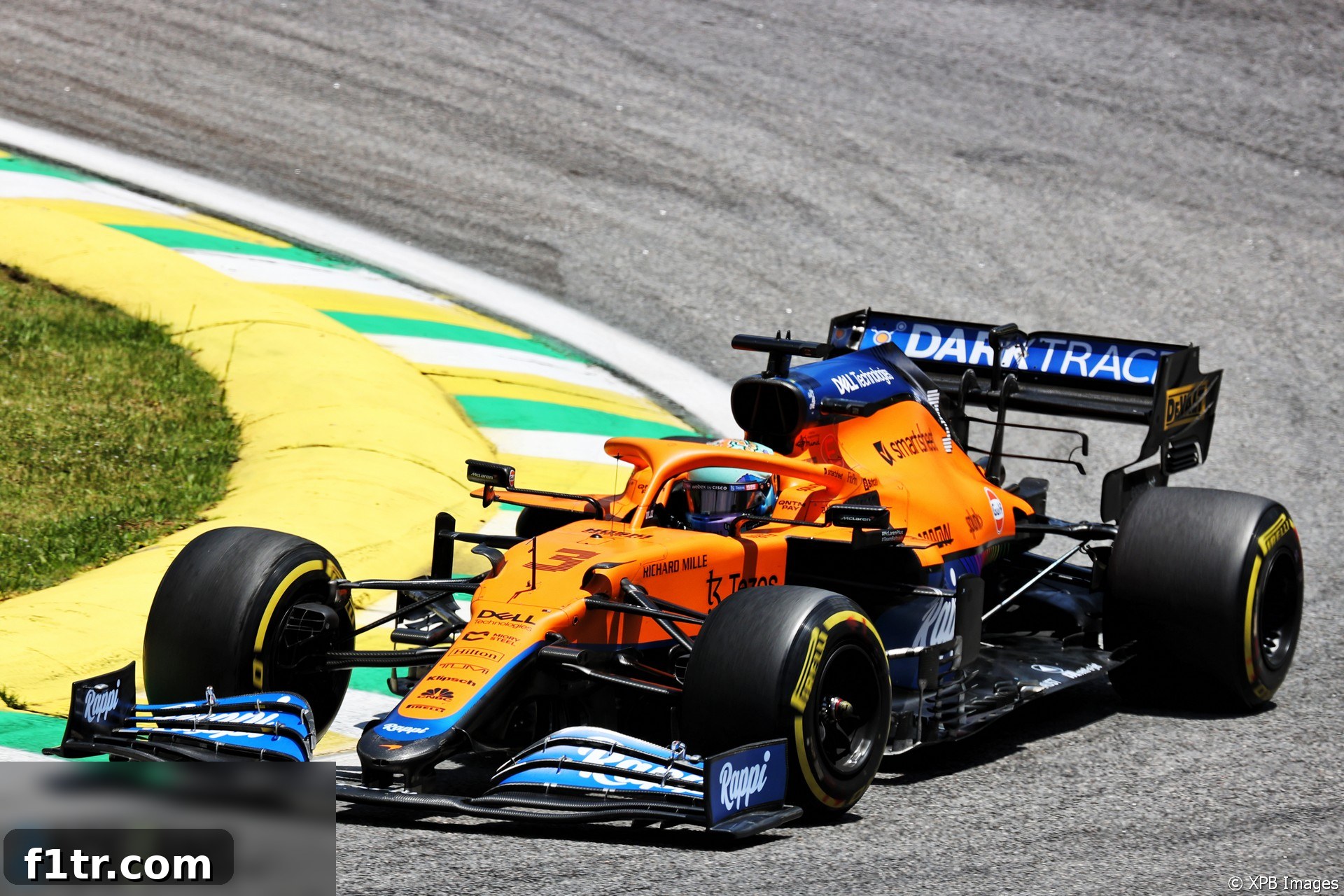
The 2021 Formula 1 season delivered unparalleled drama, and the Sao Paulo Grand Prix in Brazil was no exception. Amidst the thrilling battles and championship implications, an unexpected setback struck McLaren, as Daniel Ricciardo was forced to retire from the race. Initial suspicions leaned towards the prevalent Mercedes power unit reliability issues, a common theme for Mercedes-powered teams throughout the year. However, post-race investigations by the McLaren team revealed a more intricate problem: a suspected crack within the chassis side of the power unit installation. This discovery shifted the narrative, placing the focus on the car’s structural integrity rather than solely on its engine components.
Daniel Ricciardo’s Race Ends Prematurely in Sao Paulo
Daniel Ricciardo’s promising charge at the Sao Paulo Grand Prix came to an abrupt halt on lap 50, forcing him to retire from a points-scoring eighth position. The Australian driver reported an immediate and noticeable loss of power, a critical failure that left his McLaren MCL35M struggling on track. This incident was a bitter blow for Ricciardo, who had been steadily working his way through the field and feeling increasingly optimistic about his chances to secure valuable points for his team. His retirement was not merely a personal disappointment but also carried significant implications for McLaren’s fierce battle for third place in the Constructors’ Championship against rivals Ferrari.
Before the unfortunate power loss, Ricciardo’s race strategy appeared to be unfolding effectively. He was engaged in a tight fight, notably with the Ferrari drivers and AlphaTauri’s Pierre Gasly. The strategic nuances of tire choices were playing out, with Ferrari opting for a two-stop strategy on medium tires, while McLaren had the flexibility of a potential one-stop approach with Ricciardo on hard compounds. This strategic diversity suggested that the latter stages of the race could have become particularly “interesting,” as Ricciardo himself noted, offering opportunities for McLaren to capitalize. His forced withdrawal eliminated these possibilities, leaving both Ricciardo and the team frustrated by the unfulfilled potential of what had been shaping up to be a strong performance.
Unraveling the Mystery: Chassis Crack Identified by McLaren
The immediate aftermath of Ricciardo’s retirement naturally led to speculation regarding the cause, particularly given the recurring reliability challenges faced by Mercedes-powered teams throughout the 2021 Formula 1 season. All eight drivers utilizing Mercedes power units had, by this point, exceeded their maximum allocation of engine components, underscoring the widespread nature of these issues. However, McLaren team principal Andreas Seidl swiftly clarified the situation, indicating that the problem affecting Ricciardo’s car might be distinct from the broader power unit reliability concerns. Seidl revealed that initial investigations pinpointed a “technical issue, a crack on the chassis side of the power unit installation.”
This diagnosis is crucial because it suggests a structural failure within the car’s chassis, specifically in the area where the power unit is mounted, rather than an internal engine component failure. Such a distinction carries significant weight, as it shifts the responsibility for the issue from the power unit supplier (Mercedes) to the car manufacturer (McLaren) for the chassis integrity. A crack in this critical area could compromise the entire power unit system, leading to the observed loss of power and making continued operation unsafe. McLaren’s engineering team now faces the daunting task of conducting a thorough and detailed investigation. Seidl emphasized that this in-depth analysis would commence once the car completed its long journey from Brazil to Qatar for the next Grand Prix, highlighting the logistical challenges involved in diagnosing and rectifying such complex issues during the demanding F1 calendar. Understanding the root cause of this crack will be paramount for McLaren to prevent similar occurrences and ensure the structural robustness of their future vehicles.
Ricciardo’s Renewed Optimism and Disappointment
Despite the premature end to his race, Daniel Ricciardo’s mood before his retirement was notably more positive than it had been following a disappointing sprint qualifying performance. The Grand Prix had offered the Australian driver a chance for redemption, and he felt he was delivering on that promise. “I think it was actually going well,” Ricciardo remarked, reflecting on the progress he had made. He had been actively involved in a series of engaging battles on track, a stark contrast to the less eventful sprint race. “I had some battles. I think it was a much, much more interesting race than yesterday, and we were at least in the mix, in the fight.”
Ricciardo’s assessment highlighted a sense of regained confidence and competitive spirit. He was feeling more at one with the car and was optimistic about McLaren’s strategic position. The team was carefully monitoring the strategies of key rivals like Ferrari, who had committed to a two-stop strategy by using medium tires for their initial stints. McLaren, by contrast, had Ricciardo on hard tires, potentially opening up the option for a more advantageous one-stop race. This flexibility, combined with his solid pace and ability to fend off challenges from drivers like Pierre Gasly, indicated that Ricciardo was poised for a strong points finish. The sudden loss of power, therefore, was not just a technical failure but a crushing blow to a race that was finally beginning to turn in his favor, leaving him with a sense of “what might have been” at a crucial juncture of the season.
The Critical Impact on McLaren’s Constructors’ Championship Hopes
Daniel Ricciardo’s retirement in Sao Paulo could not have come at a worse time for McLaren, delivering another significant blow to their aspirations of securing third place in the Constructors’ Championship. The battle for this coveted position against Ferrari has been one of the most compelling narratives of the 2021 season, with both teams exchanging momentum and points throughout the year. In Brazil, McLaren managed to salvage only a single point, courtesy of Lando Norris’s tenth-place finish. This meager haul, coupled with Ferrari’s stronger performance, further widened the gap between the two fierce rivals.
Following the Sao Paulo Grand Prix, McLaren found themselves trailing Ferrari by a substantial 31.5 points. With just three races remaining on the calendar, the urgency for McLaren to maximize every scoring opportunity intensified dramatically. Each point became a precious commodity, and Ricciardo’s DNF represented a lost opportunity that McLaren could ill-afford. Finishing third in the Constructors’ Championship is not merely about prestige; it carries significant financial implications through prize money distribution, which can greatly influence a team’s development budget for the following season. Andreas Seidl had previously emphasized the need for McLaren to “get back to scoring the results that are on the table,” a sentiment that now resonated even more powerfully. The pressure on the Woking-based outfit to perform flawlessly in the concluding races mounted exponentially, as they faced the formidable challenge of overcoming Ferrari’s current advantage and securing the crucial third spot.
Looking Ahead: Qatar and the Final Push
As the Formula 1 circus packed up from Brazil and prepared for the inaugural Qatar Grand Prix, McLaren’s focus immediately shifted to understanding the precise nature of the chassis crack that sidelined Daniel Ricciardo. The long journey back to the factory, followed by the rapid turnaround for the next race, presented logistical hurdles for a thorough investigation. Yet, the imperative to diagnose and address the issue swiftly was paramount, not only to prevent a recurrence with either car but also to restore confidence in the structural integrity of their machinery.
The incident underscored the relentless demands of modern Formula 1, where the smallest technical flaw can have profound consequences on championship standings. For McLaren, the remaining races in Qatar, Saudi Arabia, and Abu Dhabi became a critical test of their resilience and engineering prowess. They needed to demonstrate not only their ability to recover from setbacks but also to extract every ounce of performance from their package. The Constructors’ Championship battle with Ferrari was poised for a thrilling conclusion, and McLaren understood that their fate would depend on unwavering reliability, strategic brilliance, and the consistent delivery of strong results from both Daniel Ricciardo and Lando Norris. Every lap, every pit stop, and every strategic decision would be scrutinized in their final push to secure third place in a truly unforgettable season.