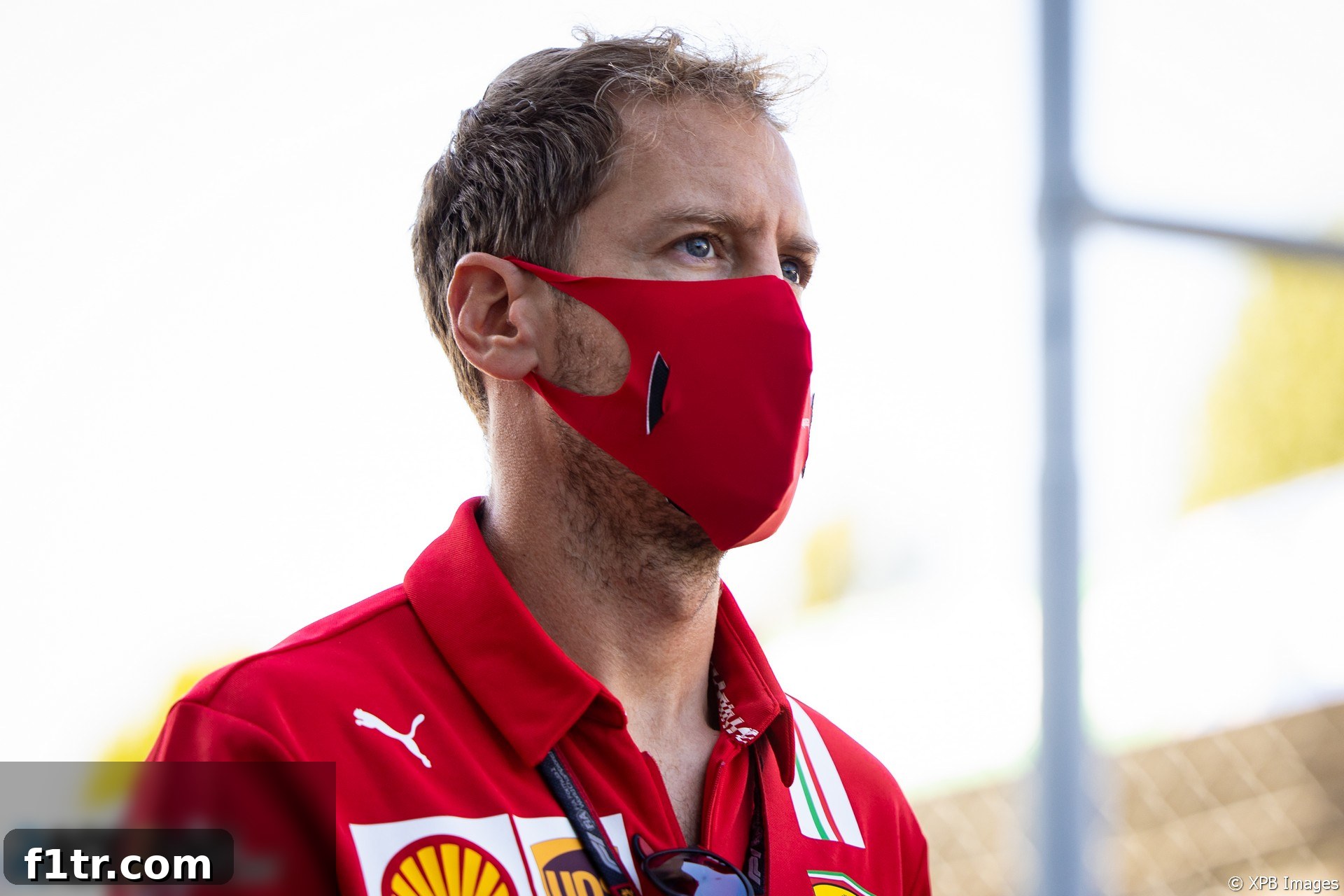
Sebastian Vettel Reflects on Ferrari Stint: The Fights, The Failures, and The Future with Aston Martin
Four-time Formula 1 World Champion Sebastian Vettel has offered a remarkably candid assessment of his time at Ferrari, admitting that his failure to secure another world championship since joining the Scuderia in 2015 was partly due to “fights that maybe I shouldn’t have picked.” These revealing comments shed light on the internal struggles and personal reflections of one of the sport’s most decorated drivers as he prepared to depart from the iconic Italian team at the end of the season.
Advert | Become a Supporter & go ad-free
Vettel’s tenure at Ferrari, a dream move many had hoped would rekindle the glory days of Michael Schumacher, ultimately fell short of the ultimate prize. Despite showing flashes of brilliance and challenging for the title in 2017 and 2018, the championship eluded him. Ferrari announced earlier this year that the German driver would be leaving the team, paving the way for a new chapter in his illustrious career. While acknowledging the disappointment of not achieving his primary goal, Vettel expressed no regrets about his impending departure.
“I have failed because I set myself the mission or the target to win the championship with Ferrari,” Vettel openly stated in a revealing interview for the official F1 website. This powerful admission underscores the immense personal pressure and the high standards Vettel holds for himself. His quest for a fifth world title, and crucially, one with Ferrari, remained unfulfilled.
Delving deeper into his self-assessment, Vettel elaborated on the nuanced reasons behind his struggles. “There’s things that I should have done better. Things that maybe I should have seen earlier, fights that maybe I shouldn’t have picked. But then again, I think everything that happened brought me to where I am now.” This introspection suggests a learning curve, an evolution of perspective that goes beyond mere on-track performance. It points to potential complexities within the team dynamic, strategic disagreements, or even battles of will that may have ultimately hindered their collective progress.
Vettel was careful to distinguish these internal battles from specific on-track incidents, such as his costly error at the 2018 German Grand Prix. “I’m generally not talking about the stuff that happens on the track. Losing the car in Hockenheim in sort of half-wet, half-dry conditions – many people point that one out as a low point. But I’m not talking about things like that, I’m more talking about what’s been going on.” This clarification highlights a deeper, more systemic issue that he believes impacted his championship aspirations, rather than isolated driving mistakes. The Hockenheim incident, while visually dramatic and a significant turning point in that year’s championship battle, was, for Vettel, a symptom rather than the root cause of his ultimate failure to deliver the title to Maranello.
“So if I’m fair and harsh, then I have failed. Were there reasons? Probably, yes. But I don’t accept them as excuses so whatever happened also, I guess, put me on the next step forward and next level to focus on.” This statement exemplifies Vettel’s mature and accountable approach. He acknowledges external factors but refuses to use them as an excuse, instead viewing his experiences as crucial stepping stones for personal and professional growth. This mindset is vital for a driver of his caliber, especially when facing the twilight of a remarkable career and embarking on a new, challenging venture.
The “fights” he referred to were, in his estimation, “maybe, looking back, they weren’t worth fighting.” Yet, he concedes that they were likely an inherent part of his competitive nature. “But then again part of it is probably my nature and it was natural to do so. And I think I had a point as well in some of these some of these little fights and battles, whatever. But I think ultimately that’s how you mature and how you learn.” This reflection offers a glimpse into the intense, often political, world of Formula 1, where a driver’s conviction and drive can sometimes clash with team strategies or established hierarchies. It’s through these very challenges, Vettel believes, that genuine maturity and invaluable lessons are gained, shaping not just a better driver, but a more well-rounded individual.
Following his departure from Ferrari, Vettel is set to embark on an exciting new chapter, joining Racing Point, which will be rebranded as Aston Martin for the highly anticipated 2021 F1 season. This move marks a significant shift, taking him from one of F1’s most storied and pressured teams to a rising outfit with considerable ambition. He revealed that team owner Lawrence Stroll played a pivotal role in convincing him to make the switch, painting a compelling vision for the future.
Advert | Become a RaceFans supporter andgo ad-free
“I think the fact [is] that the team is growing. [There’s] a lot of factors. So I think those boxes were quite easy to tick in terms of the performance, the racing side of things. Where the team is, where the team might be, the potential and so on,” Vettel explained, indicating that the core racing merits and future prospects of the team were undeniably attractive. Racing Point, under Stroll’s leadership, has shown impressive development, making significant strides in recent seasons and demonstrating a clear upward trajectory in performance.
However, it was more than just the technical aspects that swayed Vettel. “But more so, I think it was the mindset and the will to really do something good, bring something good together. And it sounds like a fun project and something that ultimately I decided I want to be part of. So it is very different to Ferrari.” This emphasis on mindset and the appeal of a “fun project” suggests a desire for a different working environment, perhaps one with less of the intense scrutiny and internal complexities that characterized his later years at Ferrari. The Aston Martin project represents a fresh start, a chance to be an integral part of a team’s foundational growth rather than simply slotting into an established giant.
“Obviously Racing Point as it stands today and in the future Aston Martin will be growing, there will be a lot of things happening for the first time. I think it’s an incredible, challenging journey for the whole team and me joining I hope I can contribute a lot of things and do good in the car and outside the car.” Vettel’s enthusiasm for the Aston Martin challenge is palpable. He sees himself not just as a driver, but as a key contributor to the team’s evolution, leveraging his vast experience and championship-winning mentality to guide their development both on and off the track. This role as a mentor and a leader, rather than just a performer, seems to resonate deeply with his matured outlook.
Vettel’s most recent victory came at the Singapore Grand Prix over a year ago, marking his 53rd career win. This impressive tally places him as the third most successful Formula 1 driver of all time in terms of Grand Prix victories, trailing only the legendary Michael Schumacher and reigning champion Lewis Hamilton. Despite this remarkable statistical achievement, Vettel surprisingly stated, “I’m not sure I’m proud of that” statistic.
His reasoning reveals a thoughtful perspective on historical comparisons in sport. “It’s not fair if you compare to the past because they have way fewer races than us today,” he explained. “So it’s a bit fake in my opinion.” Vettel rightly points out the disparity in the number of races per season across different eras, making direct comparisons of raw victory counts potentially misleading. Earlier generations of drivers competed in far fewer events annually, meaning their victory percentages might tell a different story than a simple tally. He acknowledges the validity of the statistic within its specific context but prefers a more holistic view of a driver’s career and impact.
“They did a lot of races, probably in other categories. So you have to add those as well. But they’re not grands prix so I get the statistics.” This nuanced viewpoint underscores his respect for past champions and an understanding that their careers were often multifaceted, encompassing various racing disciplines. While Grand Prix wins are the benchmark in F1, Vettel’s comments invite a broader appreciation of motorsport history, where talent and achievement weren’t solely defined by a single metric. His perspective offers a refreshing take on how we evaluate greatness, moving beyond simple numbers to consider the context, challenges, and evolution of the sport itself.
Advert | Become a RaceFans supporter andgo ad-free
2020 F1 season
- Grosjean to make F1 test return tomorrow for first time since Bahrain horror crash
- Pictures: Wrecked chassis from Grosjean’s Bahrain fireball crash to go on display
- Bottas vs Rosberg: Hamilton’s Mercedes team mates compared after 78 races each
- F1 revenues fell by $877 million in Covid-struck 2020 season
- Hamilton and Mercedes finally announce new deal for 2021 season
Browse all 2020 F1 season articles