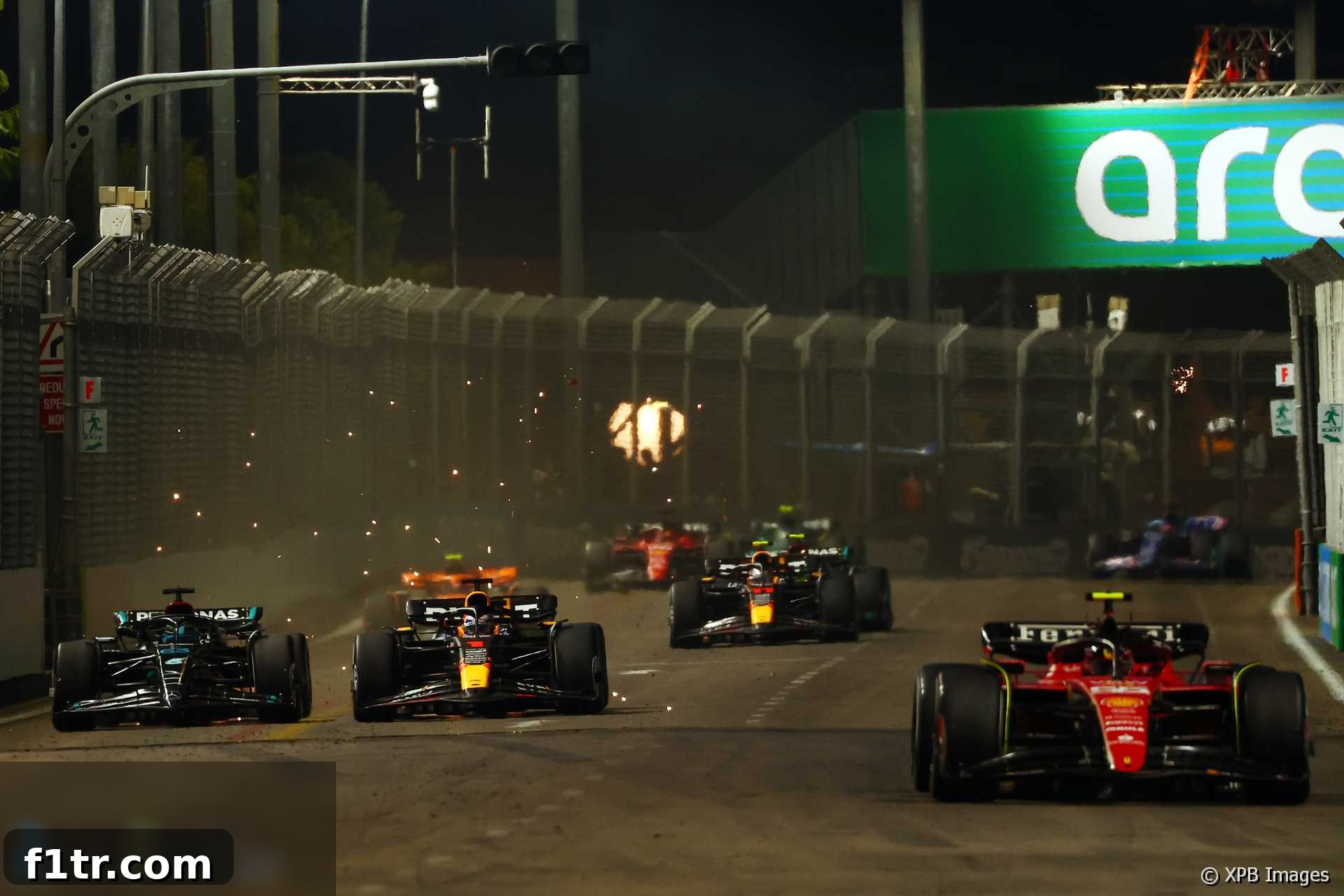
The iconic Marina Bay Street Circuit, home to the highly anticipated Singapore Grand Prix, is set to offer an even more exhilarating spectacle for motorsport enthusiasts this season. In a significant move aimed at enhancing the racing action and facilitating more overtaking opportunities, a fourth Drag Reduction System (DRS) zone has been officially added to the challenging Singapore track layout. This strategic revision is expected to inject an extra layer of dynamism into the already thrilling night race, making it one of the most action-packed events on the Formula 1 calendar.
The newly introduced DRS zone is strategically positioned between Turns 14 and 16, a section of the circuit that underwent substantial modifications just last year. These revisions in 2022 saw the removal of four corners from the original layout, creating a much straighter and faster stretch of asphalt. This alteration was a direct consequence of ongoing construction work at the harbour front, specifically related to the development of the NS Square project, a future premier event space. The elongated section, which was initially envisioned to host an additional DRS zone, now finally accommodates it, much to the delight of drivers and fans alike.
Advert | Become a Supporter & go ad-free
The decision to implement this fourth DRS zone was not made lightly and follows extensive discussions and considerations over the past year. While the FIA, Formula 1’s governing body, had initially explored the possibility of adding this zone last year following the track layout changes, the proposal was ultimately put on hold after consultations with various teams. This delay sparked considerable debate among the drivers, many of whom were strong advocates for its immediate inclusion.
“All the drivers, we all requested it from the FIA,” recalled Lewis Hamilton, a multiple world champion, highlighting the collective desire for improved overtaking prospects at Marina Bay. He further elaborated on the reasons for the initial rejection, stating, “The FIA asked all the teams and there’s a couple of teams that turned it down.” The reluctance from certain teams reportedly stemmed from a combination of factors, including potential safety concerns regarding the high-speed Turn 15 kink within the proposed zone, as well as strategic considerations about car performance and setup under these new conditions.
A primary apprehension that led to the deferral of the DRS zone in 2022 revolved around the safety implications of drivers attempting to navigate the flat-out left-hand kink of Turn 15 with their rear wings open, significantly reducing drag and downforce. This particular corner, while seemingly innocuous, could pose a considerable challenge at full throttle with DRS activated, raising concerns about vehicle stability and driver control. However, many drivers expressed confidence in their ability to handle the added challenge. Esteban Ocon, for instance, commented last year, “The FIA is concerned about safety in that little left kink. I reckon personally, and the other drivers too, that it’s not going to be an issue.” This year’s approval suggests that either the FIA has found a satisfactory resolution to these concerns, or the collective insistence from drivers and the desire for enhanced racing have overridden previous hesitations, possibly after further simulations and safety assessments.
Beyond the addition of the new DRS zone, the sections of the track encompassing this new overtaking opportunity have also benefited from a fresh layer of asphalt for this year’s race. This resurfacing effort extends beyond Turns 14-16, with other critical sections between Turns 3 and 9, and Turns 10 and 12, also receiving new tarmac. Resurfacing is a common practice on street circuits, which are subjected to heavy urban traffic throughout the year, causing wear and tear to the road surface. A fresh surface typically provides increased grip, which can translate to faster lap times and greater confidence for drivers, while also potentially influencing tire degradation and race strategy. This comprehensive resurfacing project underscores the organizers’ commitment to providing optimal racing conditions and a truly world-class experience at the Singapore Grand Prix.
The Drag Reduction System, commonly known as DRS, plays a pivotal role in modern Formula 1 by allowing drivers to temporarily adjust their rear wing to reduce aerodynamic drag, thereby increasing top speed. This mechanism is crucial for facilitating overtaking on tracks where it might otherwise be difficult. The decision to introduce a fourth DRS zone at Marina Bay signifies a clear intent to boost the number of overtakes and create more thrilling wheel-to-wheel battles, which have historically been somewhat challenging on this tight and twisty street circuit. The unique characteristics of the Singapore Grand Prix – a night race run under floodlights, often characterized by high humidity and demanding physical conditions – make any advantage in overtaking particularly valuable.
With the integration of this additional zone, the existing DRS zones at the exits of Turns 5, 13, and 19 have been retained, ensuring that multiple opportunities for overtaking remain distributed throughout the circuit. The Marina Bay Street Circuit now joins an exclusive club, becoming only the second venue on the Formula 1 calendar to feature four separate DRS zones. The other circuit to boast this many overtaking aids is the Albert Park circuit in Melbourne, Australia, which hosts the Australian Grand Prix. This comparison highlights Singapore’s commitment to adapting its circuit to modern F1 racing dynamics and addressing the perennial challenge of overtaking on street circuits.
The inclusion of a fourth DRS zone could dramatically alter the strategic landscape of the Singapore Grand Prix. Teams will need to re-evaluate their car setups, prioritizing optimal downforce for the tight sections while maximizing straight-line speed where DRS can be deployed. This could lead to more varied car characteristics across the grid and more unpredictable race outcomes. Furthermore, the increased overtaking potential means drivers might be more aggressive in their strategies, opting for different tire compounds or pit stop timings to capitalize on the new opportunities. For fans, this promises a higher frequency of overtakes, particularly during the crucial middle phase of the race when tire degradation becomes a significant factor.
Looking ahead, the evolution of the Marina Bay Street Circuit is far from complete. Further revisions to the track layout are anticipated for the 2026 race, by which time the ongoing construction work at the harbour front is expected to be finalized. These future modifications could potentially integrate the circuit more seamlessly with the newly developed urban infrastructure, perhaps leading to a permanent, optimized track layout that balances the thrill of street racing with the demands of modern Formula 1. Such long-term planning ensures that the Singapore Grand Prix continues to be a highlight of the F1 calendar, consistently delivering innovative and engaging racing experiences.
In conclusion, the addition of a fourth DRS zone at the Singapore Grand Prix represents a pivotal enhancement for the Marina Bay Street Circuit. This change, combined with comprehensive resurfacing, is designed to significantly improve overtaking possibilities and elevate the overall spectacle of the race. Following extensive deliberation and driver feedback, the FIA’s decision signals a proactive approach to evolving circuit design to meet the demands of contemporary Formula 1. As drivers prepare to tackle this updated, faster, and potentially more action-packed layout, fans around the world eagerly await a Singapore Grand Prix that promises more thrills, more strategy, and more unforgettable racing moments under the dazzling night sky.
Advert | Become a RaceFans supporter andgo ad-free
Miss nothing from RaceFans
Get a daily email with all our latest stories – and nothing else. No marketing, no ads. Sign up here:
2024 Singapore Grand Prix
- Ricciardo’s brake woe and why Perez thought he had an engine problem: Singapore GP radio
- ‘Perez is only quicker when he has DRS’: How Hulkenberg’s Haas beat a Red Bull – again
- Mercedes explain “clear mistake” strategy call which left Hamilton “so angry”
- “Sometimes I wonder why I do this”: How Hamilton endured a slog to sixth in Singapore
- F1’s rules need surgery as well as sticking plaster after fastest lap controversy
Browse all 2024 Singapore Grand Prix articles