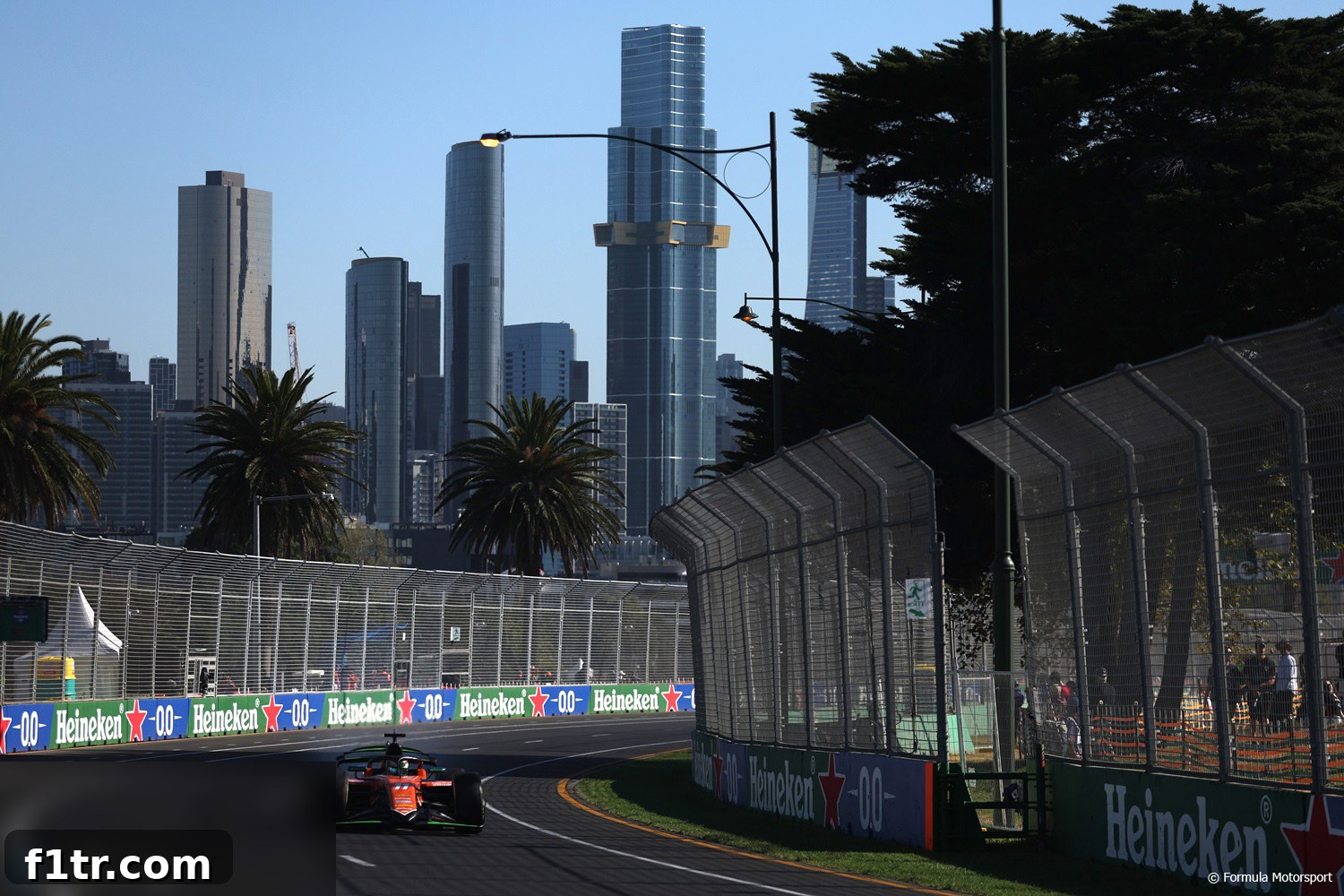
Hauger Blazes to Maiden F2 Pole in Thrilling Albert Park Qualifying Session
Dennis Hauger delivered a masterclass performance in a captivating Formula 2 qualifying session at the iconic Albert Park Circuit, securing his first-ever feature race pole position. The MP Motorsport driver, showcasing remarkable pace and composure, outmaneuvered Mercedes-backed sensation Andrea Kimi Antonelli in a session characterized by multiple incidents and yellow flags, setting the stage for an exhilarating Australian Grand Prix weekend.
As the chequered flag waved, Hauger completed a sensational final lap, a testament to his focus amidst the chaos. His blistering effort saw him leapfrog Antonelli by a significant three-tenths of a second, clinching the coveted top spot on the grid. This crucial pole position marks a pivotal moment for Hauger’s 2024 campaign, providing him with the best possible starting point for Sunday’s main race and injecting significant momentum into his championship aspirations in the highly competitive feeder series.
Dramatic Unfoldings: A Qualifying Session Full of Twists
The qualifying hour in Melbourne was anything but straightforward. Drivers battled not only against each other and the clock but also against the unforgiving nature of the Albert Park street circuit, which offered little margin for error. The session reached a fever pitch in its closing minutes, with numerous drivers pushing to their absolute limits, leading to several high-profile incidents that ultimately shaped the grid and added layers of intrigue.
Hauger’s Pole-Winning Lap Amidst Yellow Flags Controversy
Hauger’s pole-winning lap was delivered under contentious circumstances, adding an extra layer of drama to his achievement. Towards the very end of the session, Enzo Fittipaldi unfortunately spun off into the barriers at Turn 6, bringing out yellow flags. Crucially, Hauger appeared to have cleared the incident zone and set his fastest time just before the yellow flags were visibly deployed. This precise timing will undoubtedly be a talking point, but for now, his raw speed has secured him the top spot, pending any further review by race control. The ability to perform under such high-pressure, rapidly evolving conditions highlights Hauger’s mental fortitude.
Andrea Kimi Antonelli’s Breakthrough Front Row Start
While Hauger celebrated pole, Andrea Kimi Antonelli’s performance was equally impressive, marking a significant milestone in his nascent Formula 2 career. The talented Mercedes junior will start on the front row for the very first time, a remarkable achievement given his rookie status in this highly competitive series. Antonelli’s rapid adaptation to the F2 machinery and the challenging Melbourne track underscores his immense potential and positions him as a serious contender for the feature race podium. His Prema team will be buoyed by this strong showing, hoping to convert it into valuable championship points and further solidify his reputation as a future star.
Oliver Bearman’s Challenging Return from F1 Duties
In stark contrast to his teammate Antonelli, Ferrari junior Oliver Bearman endured a difficult qualifying session. Fresh off his sensational Formula 1 debut at the Saudi Arabian Grand Prix, where he impressed many standing in for Carlos Sainz, Bearman could only manage a disappointing 16th place on the grid. The quick turnaround from F1 duties, coupled with the inherent differences in car dynamics and track conditions, likely contributed to his struggle to find optimal pace. This result means Bearman faces a substantial challenge to climb through the field in both the sprint and feature races, highlighting the brutal competitiveness of Formula 2 even for drivers with recent F1 experience. It serves as a reminder of the demanding nature of the F2 championship.
Midfield Mayhem and Standout Performances
Behind the front two, the battle for grid positions was fiercely contested, with several drivers delivering strong performances to put themselves squarely in contention for points. Richard Verschoor, driving for Trident, secured an impressive third position, showcasing consistent speed and invaluable experience. He will undoubtedly be looking to convert this strong starting spot into a podium finish, which would be a significant boost for his team.
Kush Maini, in the Invicta Virtuosi Racing car, qualified a commendable fourth, though his final flying attempt was compromised by a track excursion from his teammate, Gabriel Bortoleto, at Turn 12. Despite this disruption, Maini demonstrated strong pace throughout the session, hinting at his potential to challenge at the front. Zane Maloney, who briefly held provisional pole with less than five minutes remaining, ultimately secured a commendable fifth place for Rodin Motorsport, illustrating the volatile and unpredictable nature of the closing stages. Paul Aron rounded out the top six for Hitech Pulse-Eight, showcasing a solid and composed performance in a session fraught with challenges.
Further down the top ten, Pepe Marti and his Campos Racing teammate Isack Hadjar secured seventh and eighth respectively, indicating the strong form and competitive package of the Campos Racing squad. Gabriel Bortoleto, despite his late-session run-off, managed to qualify ninth, keeping him within reach of points positions for Sunday. The significant outcome for the reverse-grid sprint race on Saturday is Roman Stanek, who qualified tenth. This crucial position grants him the reverse-grid pole, offering a golden opportunity for a victory in the shorter race and adding another layer of strategic intrigue to the weekend’s proceedings.
Incidents, Investigations, and Setbacks for Key Contenders
The Albert Park qualifying session was punctuated by several dramatic incidents that underlined the demanding nature of the circuit and the fine margins at this level of motorsport. Beyond Enzo Fittipaldi’s late spin, two other prominent incidents significantly impacted the session and the fortunes of key drivers.
Red Bull junior Jak Crawford endured a particularly torrid time. His session began with an early scare as he sustained rear wheel damage after making contact with the wall, forcing him back to the pits for repairs. Later, with just five minutes remaining on the clock and attempting to improve his time, Crawford’s qualifying hopes were definitively ended when he crashed out at Turn 12. These successive incidents will be a significant setback for the DAMS Lucas Oil driver, who will now face an uphill battle from the very back of the grid in both races, needing a miracle to salvage points.
Alpine junior Victor Martins also suffered a premature and frustrating exit from the session. On his very first timed lap, Martins ran wide over the treacherous kerb at the apex of Turn 5, losing control of his ART Grand Prix machine over a bump and spinning out. This early mistake meant he failed to set a representative lap time, relegating him to the very back of the grid alongside Crawford, a devastating start for a driver with high expectations for the season. Both drivers will be eager to bounce back in the races.
Race control was kept busy throughout the session, not only responding to on-track incidents but also noting potential infringements. Williams junior Franco Colapinto was noted for crossing the white line at pit exit upon entering the track at the start of the session, an infraction that often incurs penalties. Furthermore, Jak Crawford and fellow Williams junior Zak O’Sullivan are slated for investigation after qualifying regarding an alleged impeding incident. These inquiries could potentially lead to grid penalties, further altering the starting order for the upcoming races and adding another layer of complexity to the weekend’s narrative, making the final grid uncertain until official decisions are made.
Implications for the Australian Grand Prix Races: Strategy and Showdown
The qualifying results in Formula 2 are always crucial, but perhaps even more so with the distinct format of the sprint and feature races. Dennis Hauger’s pole position gives him the best possible chance to secure a significant points haul in Sunday’s feature race, which awards more points and is considered the premier event of the weekend. Starting from the front allows him to dictate the pace, manage his tires effectively, and ideally avoid the midfield chaos that often characterizes F2 races, providing him with a strategic advantage.
The Reverse Grid Sprint Race: A Strategic Challenge and Redemption Opportunity
The sprint race, scheduled for Saturday, will see Roman Stanek start from reverse-grid pole position, having qualified tenth. This format is specifically designed to shake up the grid and provide exciting, unpredictable racing, often leading to spectacular overtakes and unexpected winners. Drivers like Stanek, who manage to qualify tenth, twelfth, or eighth, often find themselves in prime positions to fight for wins or strong points. Those starting further back, including the likes of Oliver Bearman, Jak Crawford, and Victor Martins, will have their work cut out for them, needing to employ aggressive strategies, manage tire degradation carefully, and capitalize on any opportunities to make up ground. The sprint race will be a high-stakes affair, offering crucial points and an opportunity for redemption for those who struggled in qualifying, making it a must-watch event.
The Feature Race Showdown: Hauger’s Ultimate Opportunity
Sunday’s feature race will see the grid line up according to the full qualifying results, with Hauger on pole alongside Antonelli. This race demands endurance, strategic pit stops, and meticulous tire management over a longer distance. Hauger will be under immense pressure to convert his pole into a victory, a feat that would significantly boost his championship hopes and send a strong message to his rivals. Antonelli, starting on the front row, will be equally determined to challenge for the win, showcasing his potential against more experienced competitors. The long run down to Turn 1 will be critical, as will the ability to maintain pace and manage the Pirelli tires over the full race distance. The Albert Park circuit, known for its mix of fast sweeps and technical sections, will test every aspect of the drivers’ skills and their teams’ strategic acumen, promising a thrilling conclusion to the Formula 2 weekend.
Full Formula 2 Australian Grand Prix Qualifying Results
| Position | Car | Driver | Team |
|---|---|---|---|
| 1 | 11 | Dennis Hauger | MP Motorsport |
| 2 | 4 | Andrea Kimi Antonelli | Prema Racing |
| 3 | 22 | Richard Verschoor | Trident |
| 4 | 9 | Kush Maini | Invicta Virtuosi Racing |
| 5 | 5 | Zane Maloney | Rodin Motorsport |
| 6 | 17 | Paul Aron | Hitech Pulse-Eight |
| 7 | 21 | Josep Maria Marti | Campos Racing |
| 8 | 20 | Isack Hadjar | Campos Racing |
| 9 | 10 | Gabriel Bortoleto | Invicta Virtuosi Racing |
| 10 | 23 | Roman Stanek | Trident |
| 11 | 2 | Zak O’Sullivan | ART Grand Prix |
| 12 | 6 | Ritomo Miyata | Rodin Motorsport |
| 13 | 12 | Franco Colapinto | MP Motorsport |
| 14 | 24 | Joshua Duerksen | PHM AIX Racing |
| 15 | 25 | Taylor Barnard | PHM AIX Racing |
| 16 | 3 | Ollie Bearman | Prema Racing |
| 17 | 15 | Rafael Villagomez | Van Amersfoort Racing |
| 18 | 14 | Enzo Fittipaldi | Van Amersfoort Racing |
| 19 | 16 | Amaury Cordeel | Hitech Pulse-Eight |
| 20 | 8 | Juan Manuel Correa | DAMS Lucas Oil |
| 21 | 7 | Jak Crawford | DAMS Lucas Oil |
| 22 | 1 | Victor Martins | ART Grand Prix |
Further Insights into Formula 2 and Driver Development Pathways
The Formula 2 championship serves as a critical stepping stone for aspiring Formula 1 drivers, and events like the Australian Grand Prix qualifying highlight the immense talent and fierce competition within its ranks. From seasoned contenders like Hauger to promising rookies like Antonelli, every session is a battle to impress team principals and advance their careers. The series provides an unparalleled proving ground for young talents aiming for the pinnacle of motorsport.
The feeder series continues to evolve, with new tracks being added to the calendar, closer integration with F1 weekends, and driver academies playing a more significant role than ever in nurturing future champions. The pressure on these young talents is immense, not just to perform on track but also to demonstrate consistency, maturity, technical understanding, and adaptability – all qualities essential for a successful career in Formula 1. The F2 championship truly prepares drivers for the challenges of top-tier racing.
Understanding the nuances of F2, including its unique race formats, the strategic demands of tire management, and the various challenges drivers face, provides a deeper appreciation for the arduous journey these athletes undertake. The outcome of qualifying in Melbourne sets up a compelling narrative for the races ahead, promising high-octane action, dramatic overtakes, and potentially championship-defining moments as the season progresses. Stay tuned for an unforgettable weekend of racing.
Explore more Formula 2 news and analysis:
- Formula 2 to debut in Miami and Montreal after Iran war cancellations
- Ex-McLaren junior Dunne’s move to Alpine finally confirmed
- Schumacher says his IndyCar feels like ‘an F2 car, just with better tyres’
- The Formula 2 team with an older driver line-up than almost half the F1 grid
- FIA to award more F1 superlicence points to IndyCar drivers from 2026
Browse all Formula 2 articles