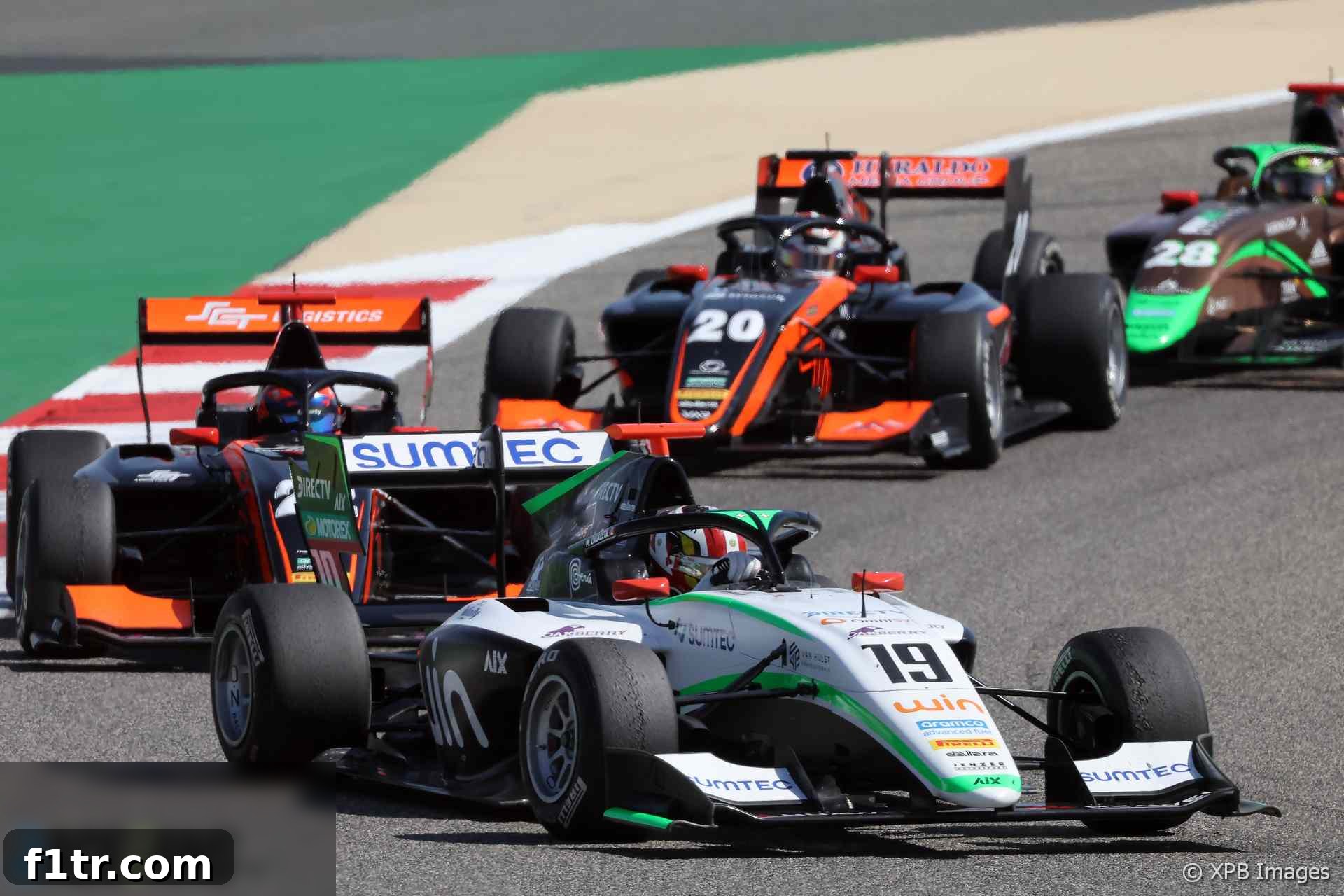
The highly anticipated start of the new Formula 3 season has brought with it a significant shift in how track limits infringements are policed. Stewards have wasted no time in demonstrating a tougher stance, effectively doubling the severity of penalties for drivers caught exploiting track boundaries. This stricter approach signals a clear intent to uphold sporting integrity and ensure that competitors adhere rigorously to the rules of engagement on the circuit, setting a definitive tone for the championship ahead.
Formula 3 Implements Stricter Track Limits Penalties for 2024 Season
In a move that has immediately impacted the competitive landscape, Formula 3 officials have introduced a new baseline penalty for track limits violations. Previously, similar infringements typically resulted in a five-second time penalty. However, during the inaugural sprint race of the season, drivers Luke Browning and Matias Zagazeta were each handed a substantial 10-second time penalty. These sanctions were specifically for “leaving the track and gaining a lasting advantage,” a phrase that underscores the stewards’ renewed focus on preventing any unfair benefit derived from straying beyond the circuit’s designated limits.
This increased deterrent reflects a broader commitment within motorsport to eliminate any ambiguity surrounding track boundaries and to ensure that a driver cannot gain a strategic edge by not respecting the confines of the circuit. The stewards’ decision to elevate the standard penalty suggests a desire to proactively address the kind of debates and controversies that have previously plagued various racing series, particularly concerning the perceived leniency of lesser penalties.
Understanding the New Baseline Penalty for Lasting Advantage
The term “baseline penalty” indicates that a 10-second time penalty is now the starting point for specific types of track limits violations, particularly those involving an overtake or a significant gain in position. This move directly targets situations where a driver deliberately or inadvertently uses runoff areas or pavement beyond the white lines to complete a pass or defend a position, thereby achieving a “lasting advantage.” This advantage could manifest as gaining a place, preventing an overtake, or improving lap time in a material way that would not have been possible had the driver remained within the legal track parameters.
The stewards’ detailed explanations accompanying these penalties serve to clarify the interpretation and application of this new rule. It’s no longer sufficient for drivers to simply cede a position; the act of gaining an advantage by exceeding track limits itself now carries a heavier price. This shift is expected to compel drivers to exercise greater precision and caution, especially during wheel-to-wheel battles, fundamentally altering the risk-reward calculation for aggressive maneuvers.
Case Study 1: Luke Browning’s Costly Overtake
One of the most prominent examples of this new enforcement came with Luke Browning’s penalty. During a fierce battle, Browning was penalized for overtaking Christian Mansell at Turn 4 after exceeding track limits. The stewards’ report provided a clear breakdown of their decision-making process. They noted: “Once entering the corner, Car 14 attempted an outside pass on car 23 [Browning], left the track and re-joined in front of car 23 [Mansell].” This initial observation highlighted the core of the infraction: a pass executed by exploiting areas beyond the track. However, the reasoning delved deeper into the racing dynamics.
The key factor in the stewards’ ruling was their assessment that Browning was not entitled to be given room by Mansell. Their judgment stated, “because Browning’s front axle was not alongside the front axle of car 23 at the apex of the corner or the exit, he was not entitled to be given room by car 23.” This crucial detail implies that Browning’s position during the maneuver did not merit the space required for a clean, on-track pass. By leaving the track, he effectively circumvented the need for Mansell to accommodate him, thus gaining an undeniable advantage.
Ultimately, the stewards concluded: “The stewards determined that car 14 left the track and gained a lasting advantage by exceeding the track limits and impose the baseline penalty of a 10 seconds time penalty.” This ruling not only confirmed the infraction but also solidified the 10-second sanction as the new standard for such advantageous excursions.
Case Study 2: Matias Zagazeta’s Wide Exit and Lasting Advantage
Matias Zagazeta faced a similar fate in the same sprint race, incurring a 10-second time penalty for gaining a lasting advantage while passing Tom Smith at Turn 8. This incident, while resulting in the same penalty, presented a slightly different scenario, further illustrating the nuanced application of the track limits rules. The video evidence presented to the stewards was compelling. It showed that “car 22 [Smith] was alongside car 19 [Zagazeta] at the apex of the corner and it was driven in a safe and controlled matter throughout the manoeuvre (entry, apex, and exit).” Furthermore, the images “clearly show that car 22 left enough room to car 19 between his car and the white line.” This established that Smith had acted correctly, providing ample space for Zagazeta to complete a legal overtake within the track boundaries.
Zagazeta, however, chose a different line. He explained to the stewards that he was “side-by-side of car 22 at the exit of the corner and decided to run wide to avoid the kerb at [Turn 8] and any potential damage to his car.” While protecting one’s car is understandable, the stewards determined that this action led to an unfair advantage. Their conclusion was decisive: “The stewards concluded that car 19 left the track at [Turn 8] and maintained his position by exceeding the track limits. Therefore, considered that car 19 gained a lasting advantage and decided to impose a 10-second time penalty.”
Interestingly, Zagazeta later retired from the race, which meant his time penalty had no practical effect on his race classification. Acknowledging this, the stewards made an additional decision regarding future sanctions. They stated that they “decided not to impose a grid place penalty on the driver for the next race due to the non-dangerous nature of the incident.” This highlights a degree of discretion stewards retain, even within stricter penalty frameworks, focusing on the specific circumstances and the severity of the incident beyond just the track limits violation itself.
Why the Change? Learning from Formula 1’s Track Limits Challenges
The decision by Formula 3 stewards to impose tougher penalties is not an isolated one; it comes on the heels of extensive criticism regarding the leniency of five-second penalties for track limits violations in Formula 1 during the previous season. The premier category of motorsport often found itself embroiled in debates where drivers and teams voiced strong opinions about the effectiveness of current sanctions.
A recurring point of contention was the perceived imbalance in the risk-reward equation. Drivers frequently pointed out situations where they had more to gain by overtly overtaking a rival illegally and accepting a five-second time penalty than by attempting to execute a legal, on-track pass. This scenario created a loophole where the penalty for an illegal maneuver was not sufficiently punitive to deter drivers, effectively encouraging aggressive, off-track actions that compromised the fairness of competition. For instance, gaining a crucial position or avoiding a loss of position with a five-second penalty might still put a driver in a better strategic position than losing time or a place by attempting to stay within limits. This “weak penalties will encourage illegal passes” sentiment, as articulated by McLaren drivers in October last year, exposed a fundamental flaw in the previous system.
By doubling the standard penalty to 10 seconds, Formula 3 is directly addressing this critical feedback. A 10-second penalty carries significantly more weight and is far less likely to be absorbed without impacting a driver’s final position or strategic standing in the race. This stronger deterrent aims to eliminate the incentive for drivers to intentionally or recklessly exceed track limits, thereby fostering a more disciplined approach to racing and ensuring that on-track overtakes are achieved within the spirit and letter of the regulations.
Impact on Racing Integrity and Driver Conduct in F3
The introduction of these tougher penalties is expected to have a profound impact on racing dynamics and driver conduct throughout the Formula 3 season. Drivers will now need to exercise a heightened level of precision and self-control, particularly in high-pressure situations such as overtakes and corner exits. The margin for error regarding track limits has been effectively halved in terms of penalty severity, meaning that even minor excursions with perceived advantages will be met with serious repercussions.
This stricter enforcement should lead to cleaner racing and a more consistent application of rules. It aims to reduce ambiguous situations and provide clearer boundaries for what constitutes an acceptable maneuver. While some might argue that it could lead to less aggressive racing, the primary goal is to ensure fair competition. Drivers will be forced to find legitimate ways to gain advantages, relying more on skill, strategy, and car performance within the track limits, rather than exploiting the grey areas of regulations. Ultimately, this change reinforces the principle that success in motorsport should be achieved strictly through adherence to the defined racing surface, enhancing the integrity of the sport.
The Broader Landscape: Defining and Enforcing Track Limits
Track limits remain one of the most persistent and challenging aspects of motorsport regulation across various categories, from grassroots racing to Formula 1. The challenge lies in striking a balance between allowing drivers to push the absolute limits of their cars and ensuring that races are won fairly within the confines of a clearly defined circuit. Different tracks present unique challenges, with some having vast asphalt runoff areas that invite drivers to venture wide, while others feature unforgiving gravel traps or walls that naturally deter such actions.
The evolving nature of circuit design, often prioritizing safety through extensive run-off zones, has inadvertently complicated the enforcement of track limits. Stewards frequently rely on a combination of technology, such as timing loops and high-definition cameras, and their expert judgment to make decisions. The F3 stewards’ recent actions signify a proactive step towards greater clarity and stricter adherence, acknowledging that consistency and severity are paramount for effective enforcement. This move by F3 could also set a precedent or influence discussions in other feeder series and even higher categories, as motorsport continues to seek the optimal balance between thrilling competition and stringent fair play.
Conclusion: Setting a Clear Precedent for the Season
Formula 3’s decision to double the severity of penalties for track limits infringements marks a significant and commendable step towards reinforcing sporting integrity. By implementing a 10-second baseline penalty for gaining a lasting advantage, the series has sent an unmistakable message to all competitors: strict adherence to track boundaries is non-negotiable. The early application of these tougher sanctions in cases involving Luke Browning and Matias Zagazeta demonstrates the stewards’ commitment to enforcing this new standard rigorously from the outset.
This proactive approach, influenced by lessons learned from the broader motorsport community, particularly Formula 1’s recent struggles with track limits controversies, aims to eliminate the incentive for illegal overtakes and ensure fair competition. As the season progresses, it will be fascinating to observe how drivers adapt their strategies and how these stricter rules contribute to closer, fairer, and ultimately more compelling racing within the thrilling world of Formula 3.
Formula 3 Articles
- McLaren drop three drivers from junior roster and hire FREC runner-up De Palo
- Lawson: Tsunoda ‘had his time – I beat him in the junior series’
- F3 driver’s penalty cancelled after FIA asks stewards to review decision
- Antonelli and Bearman’s F1 graduations show the limitations of its feeder series
- Win-less Fornaroli clinches F3 title with last-lap pass in epic Monza finale
Browse all Formula 3 articles