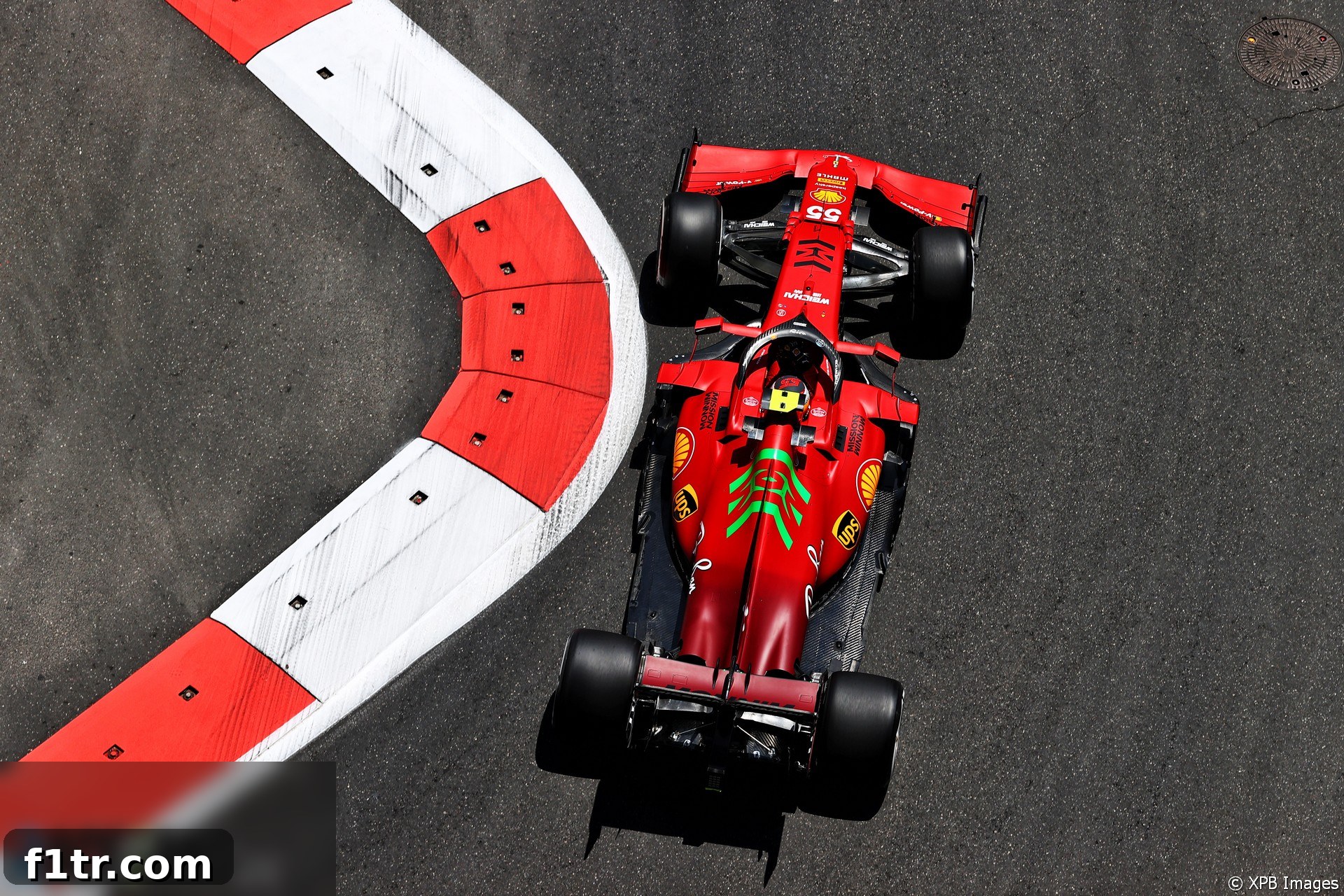
Formula 1’s engine manufacturers are executing diverse and strategic decisions regarding power unit deployment as the racing calendar progresses, with a significant wave of new hardware introduced for this weekend’s Azerbaijan Grand Prix. This pivotal race on the calendar, known for its demanding street circuit layout, often pushes the intricate components of an F1 power unit to their absolute limits, making component management a critical factor for success and reliability.
The strategic divergence among manufacturers is stark. Both Mercedes and Ferrari, two of the sport’s most dominant engine suppliers, have opted for a proactive approach, fitting all 14 of their customer and works team drivers with brand new power units for the Baku street circuit. This move, made well within the regulatory limits for engine component allocation, ensures that none of the involved drivers will incur any grid penalties, allowing them to maximize their performance potential without compromise.
Conversely, their rivals powered by Honda and Renault have chosen a more conservative path, electing not to introduce new engines for the Azerbaijan Grand Prix at this juncture. The six drivers utilizing Honda and Renault power units are continuing with their existing hardware, a decision that could stem from various factors including confidence in the current units’ durability, strategic timing for future upgrades, or a desire to preserve their allocation of components for later, perhaps even more demanding, stages of the championship. They still retain the option to fit new engines before qualifying or the race without penalty, should their performance data or strategic considerations warrant such a change.
Component management in Formula 1 is a delicate balance of performance, reliability, and regulatory adherence. The rules stipulate a finite number of power unit elements that each driver can use throughout the season before incurring grid penalties. Exceeding these allocations forces teams to start further down the grid, a severe handicap in the intensely competitive world of F1. Therefore, the timing of introducing new components is a critical strategic decision for every team and manufacturer.
Historically, early season incidents or reliability concerns can force teams into early changes. Yuki Tsunoda, driving for AlphaTauri with a Honda power unit, serves as a prime example of this. Following his significant crash during qualifying for the Emilia-Romagna Grand Prix, Tsunoda was the first and, at the time of the Azerbaijan Grand Prix, the only driver to have already taken an additional engine, illustrating the immediate consequences of unforeseen events on a team’s engine strategy.
Strategic Deployment: Mercedes and Ferrari’s Bold Move for Baku
The decision by Mercedes and Ferrari to equip their entire fleet of cars with new power units for Baku speaks volumes about their confidence and strategic planning. The eight Mercedes-powered drivers from the Mercedes-AMG Petronas F1 Team, McLaren, Aston Martin, and Williams, alongside the two factory Ferrari drivers, will all benefit from fresh Internal Combustion Engines (ICE), Turbochargers (TC), Motor Generator Units – Heat (MGU-H), and exhaust systems (EX). Furthermore, the eight Mercedes-powered drivers and Ferrari’s works team (Charles Leclerc and Carlos Sainz Jnr) are also receiving new Motor Generator Units – Kinetic (MGU-K).
This widespread deployment of new MGU-K units by Mercedes and Ferrari’s factory team, but notably not by Ferrari’s customer teams (Alfa Romeo and Haas), highlights a nuanced approach. The MGU-K is responsible for recovering kinetic energy during braking and deploying it to the crankshaft, directly boosting acceleration. Providing new MGU-Ks to their factory teams could indicate a focus on maximizing performance at a circuit where acceleration out of tight corners onto long straights is paramount. Customer teams, while receiving other fresh components, might be on a slightly different component cycle or have different performance requirements based on their car’s overall package.
The introduction of new engines at this stage of the season, particularly for a high-demand track like Baku, offers several advantages. Fresh components inherently reduce the risk of mechanical failure, a crucial consideration given the unforgiving nature of the Baku City Circuit. Additionally, new units can sometimes bring minor performance uplifts, either through improved calibration, updated mapping, or simply the restoration of peak efficiency that diminishes with wear over race weekends. This proactive refresh allows these teams to tackle the challenges of Baku with optimal machinery, potentially gaining an edge over rivals who are still running older power units.
Honda and Renault’s Measured Approach to Engine Changes
In contrast to Mercedes and Ferrari, Honda and Renault-powered teams, including Red Bull Racing, AlphaTauri, and Alpine, have opted to postpone their engine changes for the Azerbaijan Grand Prix. This conservative strategy could be driven by a variety of factors. Perhaps their current power units have demonstrated exceptional reliability and performance thus far, alleviating the immediate need for replacements. It could also be a calculated move to save their new engine allocations for circuits that might be even more detrimental to component life, or to introduce potential upgrades later in the season when development cycles allow.
The decision to run older units in Baku is not without its risks. The immense stresses placed on power units by the circuit’s long, high-speed straights – notably the 2.2km main straight – followed by sharp braking zones and subsequent bursts of acceleration, can accelerate component wear. However, if their current engines are performing robustly, continuing with them means they preserve their allocation of fresh components for later in the season. This careful management of resources can be crucial in the latter half of the championship, particularly as the fight for constructor and driver titles intensifies.
The Demands of the Baku City Circuit on F1 Power Units
The Baku City Circuit is notorious for being one of the most demanding tracks on the Formula 1 calendar for power unit performance. Its unique blend of ultra-fast sections and incredibly tight, low-speed corners creates a challenging environment for every component of the F1 engine. The circuit features the longest straight in Formula 1, where cars spend extended periods at full throttle, subjecting the Internal Combustion Engine (ICE), Turbocharger (TC), and MGU-H to sustained high temperatures and mechanical stress. The MGU-H, in particular, works tirelessly to recover energy from the exhaust gases under these conditions.
Following these high-speed blasts, drivers encounter heavy braking zones into tight chicanes and hairpins. Here, the MGU-K comes into its own, recovering vast amounts of kinetic energy from braking, which is then stored in the Energy Store (ES) and redeployed for acceleration. The rapid transition between full throttle and heavy braking, coupled with high ambient temperatures, puts immense strain on the entire power unit, including the Control Electronics (CE) which manage these complex energy flows, and the exhaust system, which must dissipate significant heat while remaining structurally sound. Given these extreme conditions, the decision to introduce new, fresh components or rely on existing, proven units becomes a high-stakes gamble for all teams.
Understanding F1 Power Unit Components and Their Allocation Limits
To fully appreciate the strategic choices made by manufacturers, it’s essential to understand the individual components of the Formula 1 hybrid power unit and the strict allocation limits imposed by the FIA regulations. Each driver is permitted a finite number of these elements per season before grid penalties are applied, making every change a carefully weighed decision.
- ICE (Internal Combustion Engine): The primary source of power, typically limited to three units per season. Its longevity is crucial for avoiding penalties.
- TC (Turbocharger): Boosts engine power by compressing air, working in conjunction with the ICE and MGU-H. Also usually limited to three units.
- MGU-H (Motor Generator Unit – Heat): Recovers thermal energy from the exhaust gases, converting it into electrical power. This is crucial for efficiency and for spooling the turbo, limited to three units.
- MGU-K (Motor Generator Unit – Kinetic): Recovers kinetic energy during braking. This energy is then converted into electrical power and stored, or deployed directly to the crankshaft for an additional power boost. Also limited to three units.
- ES (Energy Store): The battery pack that stores electrical energy recovered by the MGU-H and MGU-K. Limited to just two units per season due to its critical role and often high cost.
- CE (Control Electronics): The ‘brain’ of the power unit, managing all the complex hybrid systems and their intricate interactions. Like the ES, it’s limited to two units per season.
- EX (Exhaust System): Responsible for guiding exhaust gases away from the engine. While seemingly simpler, its design is crucial for MGU-H efficiency and overall aerodynamic performance. Teams are allowed eight exhaust systems per season, reflecting their higher wear rate due to extreme temperatures and vibrations experienced during races.
The varying limits on components like the ES and CE (two units) compared to ICE, TC, MGU-H, and MGU-K (three units), and especially the EX (eight units), dictate how frequently teams can swap them out without penalty. This regulation structure forces teams to prioritize reliability and judicious use across the entire season, meticulously planning their component rotation to minimize the risk of incurring grid penalties, which can significantly derail a race weekend.
Engine Component Usage So Far: A Detailed Look at the Field
| No. | Car | Engine | Driver | ICE | TC | MGU-H | MGU-K | ES | CE | EX |
|---|---|---|---|---|---|---|---|---|---|---|
| 14 | Alpine | Renault | Fernando Alonso | 1 | 1 | 1 | 1 | 1 | 1 | 5 |
| 31 | Alpine | Renault | Esteban Ocon | 1 | 1 | 1 | 1 | 1 | 1 | 4 |
| 22 | AlphaTauri | Honda | Yuki Tsunoda | 2 | 2 | 2 | 2 | 3 | 3 | 3 |
| 55 | Ferrari | Ferrari | Carlos Sainz Jnr | 2 | 2 | 2 | 2 | 1 | 1 | 3 |
| 16 | Ferrari | Ferrari | Charles Leclerc | 2 | 2 | 2 | 2 | 1 | 1 | 3 |
| 9 | Haas | Ferrari | Nikita Mazepin | 2 | 2 | 2 | 1 | 1 | 2 | 3 |
| 7 | Alfa Romeo | Ferrari | Kimi Raikkonen | 2 | 2 | 2 | 1 | 1 | 1 | 3 |
| 47 | Haas | Ferrari | Mick Schumacher | 2 | 2 | 2 | 1 | 1 | 1 | 3 |
| 99 | Alfa Romeo | Ferrari | Antonio Giovinazzi | 2 | 2 | 2 | 1 | 1 | 1 | 3 |
| 63 | Williams | Mercedes | George Russell | 2 | 2 | 2 | 2 | 1 | 1 | 2 |
| 4 | McLaren | Mercedes | Lando Norris | 2 | 2 | 2 | 2 | 1 | 1 | 2 |
| 3 | McLaren | Mercedes | Daniel Ricciardo | 2 | 2 | 2 | 2 | 1 | 1 | 2 |
| 31 | Williams | Mercedes | Nicholas Latifi | 2 | 2 | 2 | 2 | 1 | 1 | 2 |
| 77 | Mercedes | Mercedes | Valtteri Bottas | 2 | 2 | 2 | 2 | 1 | 1 | 2 |
| 44 | Mercedes | Mercedes | Lewis Hamilton | 2 | 2 | 2 | 2 | 1 | 1 | 2 |
| 5 | Aston Martin | Mercedes | Sebastian Vettel | 2 | 2 | 2 | 1 | 1 | 2 | |
| 18 | Aston Martin | Mercedes | Lance Stroll | 2 | 2 | 2 | 2 | 1 | 1 | 2 |
| 10 | AlphaTauri | Honda | Pierre Gasly | 1 | 1 | 1 | 1 | 2 | 2 | 2 |
| 11 | Red Bull | Honda | Sergio Perez | 1 | 1 | 1 | 1 | 2 | 2 | 2 |
| 33 | Red Bull | Honda | Max Verstappen | 1 | 1 | 1 | 1 | 1 | 1 | 2 |
The provided table offers a clear snapshot of power unit component usage among all drivers heading into the Azerbaijan Grand Prix. Several key trends and individual situations emerge from this data, reinforcing the strategic decisions discussed.
As expected, the Mercedes and Ferrari drivers predominantly show ‘2’ for their ICE, TC, MGU-H, and MGU-K units, indicating they have moved onto their second allocated unit for these components. This confirms their proactive engine change strategy. It’s particularly notable that Ferrari’s customer teams, Alfa Romeo and Haas, are also on their second ICE, TC, and MGU-H, but remain on their first MGU-K unit, as anticipated. This specific divergence in MGU-K deployment between factory and customer Ferrari teams is a subtle but important detail in their component management, potentially reflecting differing performance priorities or supply chain strategies.
For Honda and Renault-powered drivers, the numbers tell a different story. Fernando Alonso and Esteban Ocon (Alpine, Renault) are still on their first units for all major engine components (ICE, TC, MGU-H, MGU-K, ES, CE), demonstrating robust reliability and a conservative approach to component changes. Similarly, Pierre Gasly and Sergio Perez (Honda) are also primarily on their first main components, though they have moved onto their second ES and CE units. Max Verstappen, a key championship contender, is still on his first unit for all components except for his second exhaust, showcasing exceptional reliability from his initial power unit package – a testament to Honda’s engineering and Red Bull’s careful operation.
Yuki Tsunoda’s situation stands out significantly. His ‘3’ for ES and CE highlights the consequences of his earlier crash, forcing him to exceed the allocation for these two specific components. With only two ES and CE units allowed per season without penalty, Tsunoda has already incurred a grid penalty for future races (likely at the point of taking the third unit), underscoring the severity of such incidents and the challenge of managing components after an early setback. This situation serves as a stark reminder of the financial and sporting implications of accidents in Formula 1.
Exhaust systems, with their higher allocation of eight units, show a more varied usage across the grid. Drivers like Fernando Alonso are already on their fifth exhaust, indicating the high wear rate these components endure throughout the season due to extreme temperatures, vibrations, and aerodynamic stresses, especially on high-speed circuits like Baku. This higher allowance reflects the practical realities of managing components that are subjected to such punishing conditions.
Strategic Implications for the Championship Battle
The strategic choices made by manufacturers and teams at the Azerbaijan Grand Prix will undoubtedly have ripple effects throughout the rest of the Formula 1 season. By taking new power units early, Mercedes and Ferrari-powered teams are aiming for peak performance and maximum reliability at Baku, potentially gaining valuable points in both championships. This aggressive strategy suggests they prioritize immediate performance gains and confidence in their current engine iteration. However, this also means they have fewer new components left in their allocation for the remainder of the season, potentially facing tougher decisions or even penalties later on as component wear becomes a more pressing concern.
Conversely, Honda and Renault’s decision to stick with their current units could mean they have more fresh components available for the crucial final stages of the championship, or that they are holding out for performance upgrades that will be introduced with their next batch of power units. This ‘wait and see’ approach carries the risk of reliability issues in the short term, especially on a demanding track like Baku, but offers flexibility and potential for performance boosts in the long run. It is a calculated risk, betting on the robustness of their existing hardware while preserving future options.
The delicate balance between outright performance, enduring reliability, and meticulous adherence to component allocation rules forms a complex strategic puzzle that F1 teams must solve. Every engine change, or lack thereof, is a calculated gamble in the high-stakes world of Formula 1, with the Azerbaijan Grand Prix serving as a critical battleground in this ongoing strategic warfare. The outcome of these engine management decisions could well influence the trajectory of the championship for both drivers and constructors as the season unfolds.
2021 Azerbaijan Grand Prix Coverage
- Aston Martin also confirms it followed Pirelli’s tyre restrictions before crash
- Pirelli confirm teams not to blame for Baku tyre failures following investigation
- “Tyres should not explode like that” says Villeneuve as Pirelli prepares to reveal findings
- Why Alonso is able to enjoy F1 more now than when he left
- Penalty for Safety Car error was just one of Latifi’s frustrations in Baku
Browse all 2021 Azerbaijan Grand Prix articles