The introduction of the Halo to Formula 1 undoubtedly marked a pivotal moment where the FIA unequivocally prioritized driver safety over aesthetic considerations. Since its mandatory inclusion in 2018, this cockpit protection device has sparked fervent debate among fans, drivers, and even team principals. While its incredible strength in deflecting significant impacts has been proven, its visual impact has been widely criticized, often being labeled an eyesore. This sentiment echoes a familiar pattern in motorsport, where safety innovations, however crucial, often face initial resistance due to their appearance.
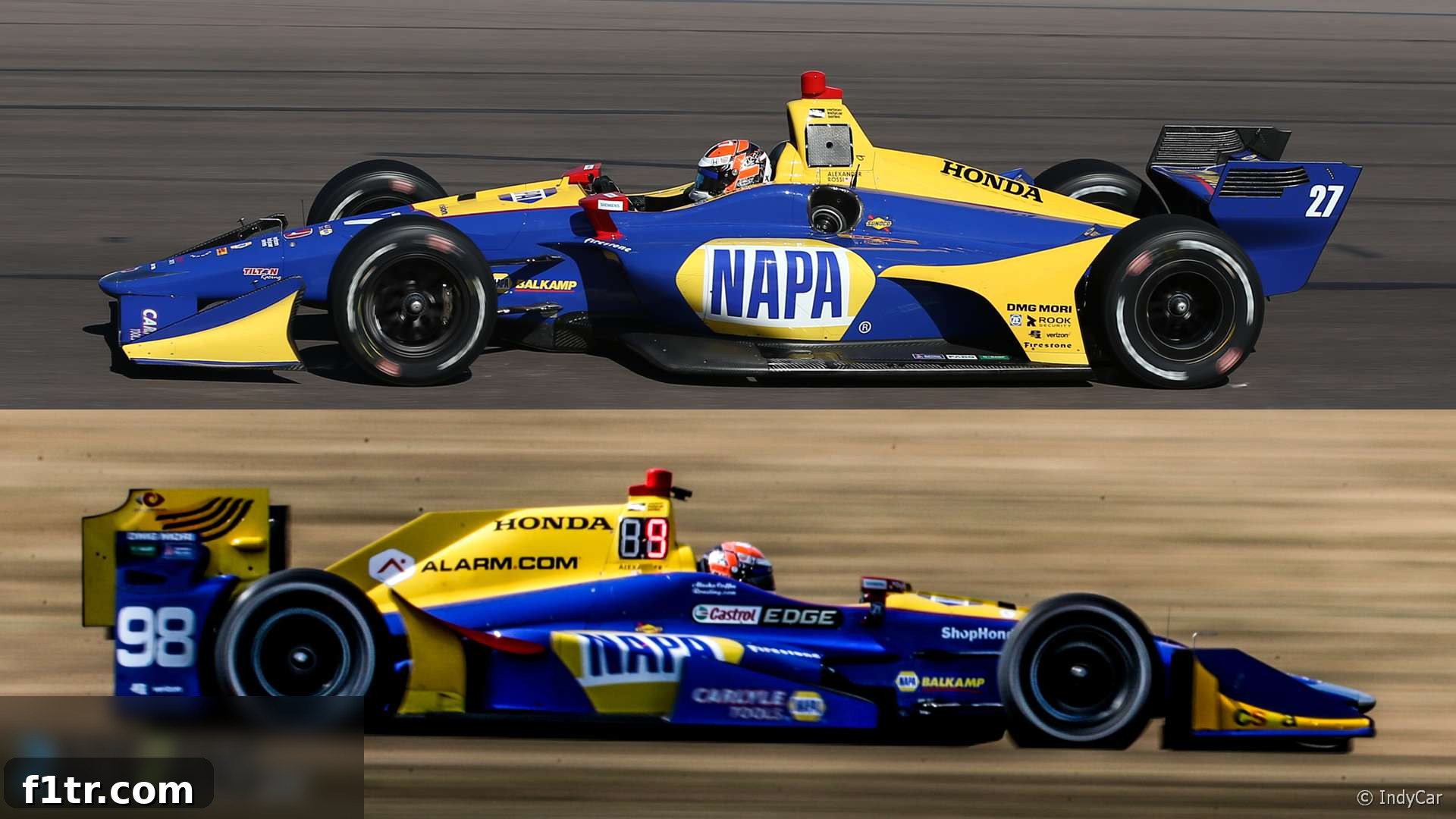
To understand the potential trajectory of such controversial safety features, critics of the Halo might find valuable insight in the recent evolution of IndyCar design. The championship, renowned for its high-speed, often perilous racing, introduced its own widely panned safety innovation in 2012: the rear wheel pods. These distinctive, if aesthetically challenged, additions were mandated with the best intentions for driver protection. Yet, a mere six years later, these very pods have been conspicuously absent from the new-look IndyCar chassis, which made its debut this weekend. This raises pertinent questions for Formula 1: Why were IndyCar’s rear wheel pods deemed unnecessary, and could their eventual removal hint at a future where the F1 Halo, too, might one day be superseded or integrated differently?
The Rise and Fall of IndyCar’s Rear Wheel Pods: A Lesson in Evolving Safety
IndyCar’s decision to introduce the rear wheel pods in 2012 stemmed from a series of alarming incidents where race cars were launched airborne following wheel-to-wheel contact. These terrifying aerial crashes posed significant risks to drivers and spectators alike. The pods were conceived as a proactive measure, designed to minimize the interlocking of wheels during close racing, thereby preventing cars from becoming airborne. Their introduction was even planned prior to the tragic multi-car crash at Las Vegas in 2011 that claimed the life of Dan Wheldon, underscoring the urgency felt by the series organizers.
The new DW12 chassis, featuring these distinctive rear wheel pods, debuted at the opening round of the 2012 season. While there has been a noticeable reduction in aerial crashes since then, attributing this solely to the wheel pods would be an oversimplification. The true story behind their eventual removal lies in a deeper understanding of crash dynamics and a fundamental shift in chassis design and racing philosophy within IndyCar. The initial logic was straightforward: physically guard the rear wheels to reduce the likelihood of contact leading to an aerial launch. However, as experience grew and data accumulated, it became clear that addressing the root cause of these incidents was far more effective than merely mitigating their consequences.
A key factor contributing to the prevalence of aerial crashes, particularly on banked ovals, was the phenomenon of ‘pack racing’. This intense form of competition, characteristic of IndyCar’s predecessor to the DW12 chassis, saw cars running flat-out in extremely close proximity for extended periods. In such conditions, incidents of wheel-to-wheel contact were virtually inevitable, and when they occurred, the potential for spectacular, dangerous aerial launches was incredibly high. The DW12 chassis brought about a significant reduction in pack racing, which in turn dramatically decreased the opportunities for the kinds of accidents the wheel guards were specifically designed to prevent. This transition highlights a crucial principle in motorsport safety: preventing the circumstances that lead to crashes can be a far more potent strategy than merely attempting to minimize the damage after a collision has occurred.
Furthermore, subsequent aerial crashes, such as Helio Castroneves’ incident at Indianapolis in 2015, were largely one-car events where the wheel guards would have offered no discernible benefit. Similarly, Scott Dixon’s dramatic crash with Jay Howard at the Brickyard a year later demonstrated that even with the guards in place, certain high-impact scenarios could still result in cars becoming airborne. These incidents further underscored the limited effectiveness of the pods in a broader range of accident types, reinforcing the argument that their primary purpose had been superseded by more comprehensive safety advancements and design changes.
Helio Castroneves’ dramatic airborne crash at Indianapolis in 2015, highlighting the nature of one-car incidents.
Scott Dixon’s harrowing collision with Jay Howard at the Brickyard, an example where wheel guards had limited impact.
IndyCar’s Holistic Approach to Cockpit Safety: Lessons for Formula 1
IndyCar’s journey with the wheel pods offers compelling parallels to Formula 1’s current situation with the Halo, especially concerning the critical issue of cockpit intrusion from large pieces of debris or interaction with other cars and trackside barriers. For IndyCar, this problem gained even greater prominence following the tragic death of Justin Wilson in an accident three years ago, when he was struck by a piece of flying debris from another car. This devastating incident underscored the unique and arguably more pressing nature of cockpit safety in IndyCar racing.
The inherent design and operational characteristics of IndyCar contribute to this heightened risk. Its cars frequently race at significantly higher average speeds, particularly on oval circuits. The close proximity of unforgiving barriers on these ovals not only poses a direct hazard but also increases the likelihood of debris remaining within the confines of the track, presenting a recurrent danger to drivers. While Formula 1 cars also achieve incredible speeds, the dynamics of racing on purpose-built road courses and street circuits differ, often dispersing debris more widely and reducing direct barrier interaction.
However, IndyCar possesses a distinct advantage over Formula 1 when it comes to developing and implementing comprehensive safety solutions: its single-specification chassis. This uniformity simplifies the research and development process, enabling faster and more focused innovation. This advantage has been clearly demonstrated in the development of its new cockpit protection system, the aesthetically pleasing Aeroscreen (often referred to as a windscreen). This solution, engineered by Red Bull Advanced Technologies, offers robust head protection while integrating more seamlessly into the car’s design, garnering far less aesthetic criticism than the Halo.
Beyond the Aeroscreen, IndyCar’s single-spec approach allows for a more holistic safety strategy. Both series have long utilized tethers to prevent wheels from detaching in an accident, but following Wilson’s crash, IndyCar significantly extended the use of these tethers to include front and rear wing assemblies. This proactive measure aims to contain larger, potentially lethal components within the car’s structure during a collision, further reducing the risk of debris-related injuries. This strategic emphasis on preventing the very causes of catastrophic injuries, rather than solely relying on passive protection, mirrors the philosophy that led to the removal of the rear wheel pods. It’s a testament to the idea that addressing the source of danger is often more effective than simply treating its symptoms.
The Future of F1 Halo: An Evolving Landscape of Safety and Design
The journey of IndyCar’s rear wheel pods and its subsequent advancements in cockpit protection offer valuable foresight for Formula 1, especially as the sport anticipates significant chassis rule overhauls, most notably with the regulations planned for future seasons (originally 2021, now encompassing broader, ongoing development cycles). Despite initial hopes, the Halo has struggled to integrate seamlessly into the aesthetic of the 2018 and subsequent F1 chassis designs. For many, it still retains the appearance of a somewhat rudimentary, after-market addition, a sentiment echoed by a number of drivers who openly expressed their reservations about its visual impact.
Formula 1 faces the complex challenge of balancing the critical need for enhanced driver protection with the desire for visually appealing and aerodynamically efficient car designs. Unlike IndyCar, F1’s open-competition chassis development model means a uniform, integrated solution like the Aeroscreen is harder to mandate without potentially stifling innovation or creating competitive disadvantages. However, the overarching goal of safety remains paramount. The FIA’s commitment to driver well-being is unwavering, a principle highlighted by the Halo’s rigorous testing and implementation, which demonstrated its life-saving capabilities in several high-profile incidents.
The parallel experiences of F1 and IndyCar underscore a fundamental question facing all top-tier motorsports: how much risk is acceptable for its drivers? IndyCar racing, by its very nature and often on high-speed oval circuits with close walls, presents an inherently greater degree of danger. This higher baseline risk has historically pushed IndyCar to adopt and adapt safety measures with a certain urgency and pragmatism. Formula 1, while equally dangerous, operates in a different context, often with more advanced safety run-offs and different crash dynamics, yet the threat of cockpit intrusion remains a universal concern.
Ultimately, the evolution of safety in motorsport is a continuous, dynamic process. While the Halo may currently be a visually polarizing feature, it represents a crucial step in Formula 1’s relentless pursuit of driver protection. As technology advances and understanding of crash dynamics deepens, future iterations of F1 chassis design, perhaps influenced by IndyCar’s integrated solutions and holistic safety philosophy, could lead to even more effective and aesthetically refined cockpit protection systems. The journey from the “ugly” rear wheel pods to the integrated Aeroscreen in IndyCar serves as a powerful reminder that sometimes, the most unpopular safety innovations pave the way for future advancements, ensuring that the thrill of racing can continue with increasingly robust protection for those behind the wheel.