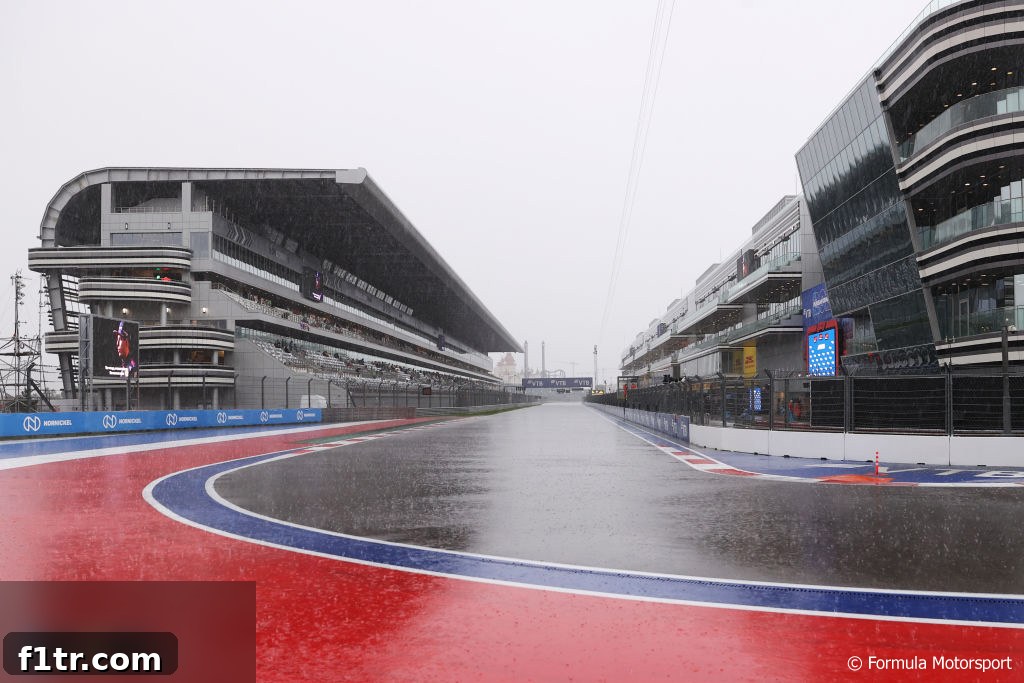
Heavy, incessant rainfall at the iconic Sochi Autodrom has thrown the Formula 1 Russian Grand Prix weekend into disarray, forcing the postponement of critical sessions and raising significant questions about the viability of Saturday’s schedule. The morning’s Formula 2 race was swiftly called off, marking the first major disruption as torrential conditions enveloped the Black Sea venue. The escalating weather concerns now cast a long shadow over the eagerly anticipated Formula 1 qualifying session, which remains the top priority for race organisers amidst challenging circumstances.
The decision to halt the Formula 2 proceedings was made with little hesitation as the circuit became increasingly saturated. Race control, acting promptly in the interest of driver safety, opted against opening the pit lane for cars to venture onto the waterlogged track. A lone Safety Car was dispatched to assess the treacherous conditions, providing an on-the-ground evaluation of the standing water and reduced grip levels. Following this swift appraisal, the F2 race was officially postponed, underlining the severity of the weather and setting a precedent for the day’s subsequent events.
Despite the extreme precipitation, Formula 1 Race Director Michael Masi expressed a degree of cautious optimism regarding the afternoon’s F1 qualifying session. Scheduled for 3 pm local time, the session is crucial for determining the starting grid for Sunday’s Grand Prix. Masi shared insights from meteorological forecasts, indicating a potential window of opportunity later in the day. “What we’ve seen from the forecast side is that we will have this level of rain until about 1:30-2 pm local time and then decreasing in the afternoon,” Masi stated, highlighting the narrow timeframe for improvement. He unequivocally affirmed the primary objective for the day: “The priority from today’s perspective is obviously Formula 1 qualifying this afternoon.”
However, the challenge at Sochi extends beyond merely the cessation of rain. Even if the downpour eases as predicted, another critical factor looms large: visibility. Masi candidly admitted that diminishing daylight, exacerbated by the overcast and heavy weather conditions, could become the ultimate arbiter of the day’s events. “The determining factor this afternoon will be the light,” he explained. “Sunset locally is about quarter past six in the evening. But with weather conditions like this, obviously light diminishes far earlier. So that will ultimately be our cut-off point.” This crucial safety consideration means that even a dry track might not be enough if the natural light falls below acceptable levels for high-speed racing, particularly given the spray generated by F1 cars in damp conditions.
The possibility of postponing Formula 1 qualifying to Sunday morning is a well-established contingency in the sport, one that has been utilised in the past during similar weather crises. Michael Masi confirmed that the FIA has a clear plan in place should today’s conditions prove insurmountable. “If qualifying isn’t able to happen today, as we’ve seen a few times before in the past, then we’ll re-do our programme and hold qualifying on Sunday morning,” Masi reiterated. A notable precedent occurred at the 2019 Japanese Grand Prix, where Typhoon Hagibis forced a complete overhaul of the weekend schedule, pushing qualifying to race day morning. This demonstrates the flexibility and resilience of F1 operations in adapting to unforeseen meteorological challenges, ensuring that the integrity of the sporting event remains intact while prioritising driver safety.
The proactive management of the weekend schedule, however, has already proven beneficial. A key decision was made yesterday to reschedule the opening Formula 3 race, bringing it forward from Saturday morning to Friday afternoon. This tactical move proved to be a stroke of foresight, as Masi confirmed that the F3 race would have faced the same fate as its F2 counterpart today. “We were fortunate enough in restructuring the programme to have the first Formula 3 race yesterday, pre-empting the weather that was going to happen this morning,” he explained. “Which, based on what we saw when we came out to the circuit this morning, was absolutely the right decision. It was torrential at the time we would have been having the F3 race.” This strategic adjustment underscores the meticulous planning involved in top-tier motorsport, often requiring difficult decisions based on imperfect weather forecasts.
The ramifications of the severe weather extend far beyond just F1 qualifying. The entire day’s racing programme at the Sochi Autodrom has been thrown into jeopardy. In addition to the premier qualifying session, final practice for the Grand Prix, as well as further Formula 3 and Formula 2 races, were all slated to take place today. Each of these faces the significant threat of disruption or outright cancellation due to the prevailing conditions. Furthermore, the fan experience has also been impacted, with all fan zone activities at the circuit regrettably postponed. This comprehensive disruption highlights the domino effect of adverse weather on a meticulously planned motorsport weekend, affecting teams, drivers, and spectators alike.
The approach adopted by race control under Michael Masi’s guidance is one of preparedness and real-time evaluation. Instead of making blanket cancellations too far in advance, the strategy is to remain ready to proceed should conditions improve. “The procedure today will be that we will aim to start all sessions, get everything ready from an operational perspective, and then judge the conditions at the time,” Masi clarified. This method allows for maximum flexibility, ensuring that every possible opportunity to run the sessions is explored. It means teams and drivers must remain on high alert, prepared to take to the track at short notice, while the FIA closely monitors weather patterns and track conditions right up to the designated start times.
The stakes are particularly high for Formula 1 qualifying. A grid set under less-than-ideal circumstances, or a delayed session, can have significant implications for the championship battle, potentially influencing the outcome of the Russian Grand Prix. Drivers will be pushing their limits in whatever conditions they encounter, seeking to gain an advantage in a season marked by intense competition. The ability of the teams to adapt quickly to changing track conditions, make optimal tyre choices, and extract performance in limited practice will be paramount. Ultimately, the priority for all involved remains safety, and the decisions made today will reflect the FIA’s commitment to ensuring a fair yet secure racing environment for all participants.
As the clock ticks towards the revised assessment windows, the motorsport world watches Sochi with bated breath. The combination of unpredictable weather and the looming threat of diminishing daylight creates a tense situation, demanding vigilance and swift decision-making from Michael Masi and his team. Whether Formula 1 qualifying will proceed as planned, be delayed, or postponed until Sunday, one thing is certain: the Russian Grand Prix weekend has already delivered its share of drama, even before the cars have officially lined up on the grid for a competitive session.
Further Reading on the Russian Grand Prix
- Russian Grand Prix 2021 Race Report and Analysis
- Lando Norris and McLaren’s Performance at Sochi
- Impact of Extreme Weather on Formula 1 Race Starts
- Latest Power Unit Developments in Formula 1
- Mercedes’ Championship Challenge and Missed Opportunities
Browse all articles related to the 2021 Russian Grand Prix weekend