The 2025 Belgian Grand Prix at the iconic Spa-Francorchamps circuit was marred by persistent rain, leading to a highly contentious start procedure that drew significant criticism from drivers, teams, and fans alike. The decisions made by race control, particularly regarding the timing and format of the race start, sparked a heated debate about driver safety, competitive fairness, and the inherent challenges of managing Formula 1 races in extreme weather conditions.
Originally slated for a conventional start, heavy rainfall before and during the scheduled start time rendered the track unsafe due to dangerously low visibility. Most drivers unanimously agreed that it was impossible to begin the race at the planned hour. However, after an 80-minute delay and several laps behind the Safety Car, opinions within the paddock became sharply divided. While some drivers believed the track was ready for racing, others maintained that conditions remained too perilous, highlighting the complex dilemma faced by race officials.
At the heart of this difficult situation was Race Director Rui Marques, who was tasked with making critical real-time decisions under immense pressure. The shadow of past controversies loomed large; his predecessor, Niels Wittich, had faced strong condemnation in the previous year’s Brazilian Grand Prix for allegedly delaying the halt of the race as conditions deteriorated to a perilous state. A harrowing radio message from one driver, “I’m trying not to die,” became a stark reminder of the gravity of such decisions and the ultimate responsibility for driver well-being. This precedent undoubtedly influenced Marques’ cautious approach at Spa, emphasizing safety above all else.
Race control initially committed to a minimum of two laps behind the Safety Car, allowing the cars to circulate and help clear standing water while drivers assessed visibility. This initial plan was extended for a further two laps, demonstrating the authorities’ ongoing concern for safety. When the decision was finally made to release the cars, it was opted for a rolling start rather than a conventional standing start, a move designed to minimize the risk of multi-car collisions in the still-challenging conditions, particularly given the amount of spray generated by 20 cars on a wet track. This choice, however, would become another point of contention.
The divergent views among drivers underscored the multifaceted nature of the problem. Front-runners like Max Verstappen, known for his aggressive driving style and confidence in adverse conditions, expressed a desire for the race to begin sooner. Conversely, championship contenders such as Lewis Hamilton voiced dissatisfaction with the conservative approach, specifically complaining about the decision to forgo a standing start. These differing perspectives highlight the inherent tension between ensuring driver safety and catering to the competitive instincts of elite athletes vying for victory.
Race control relies heavily on direct feedback from the drivers regarding track conditions. This real-time intelligence is crucial for making informed decisions about when to start, restart, or halt a race. However, officials must constantly factor in the strategic and competitive interests that can influence a driver’s assessment. For instance, a driver leading the field with a car configured for low downforce might prefer the Safety Car to remain on track for an extended period, allowing the racing line to dry out further, thus playing into their car’s strengths on faster sections. Such a driver would benefit from a progressively drier track, which would reduce the advantage of cars set up with higher downforce for wet conditions.
Conversely, a driver struggling at the rear of the grid, especially one whose car is equipped with a high-downforce wet weather setup, would be eager for the race to commence immediately. A chaotic start in genuinely wet conditions presents the best opportunity to gain positions quickly through overtakes or even capitalize on potential incidents ahead. This intricate dance between self-preservation and self-interest became acutely evident in the radio exchanges between drivers and their engineers as they patiently, or impatiently, waited for the 2025 Belgian Grand Prix to get underway.
F1 Drivers’ Radio Comments on the Start at Spa
The radio communications captured during the Safety Car laps at Spa offer a fascinating insight into the differing perceptions and motivations of the drivers. Their feedback was vital for race control, yet often colored by their individual circumstances and competitive aspirations.
Jump to:
1st Norris: “Maybe a lap or two more”
2nd Piastri: “There’s a lot of steam on the track”
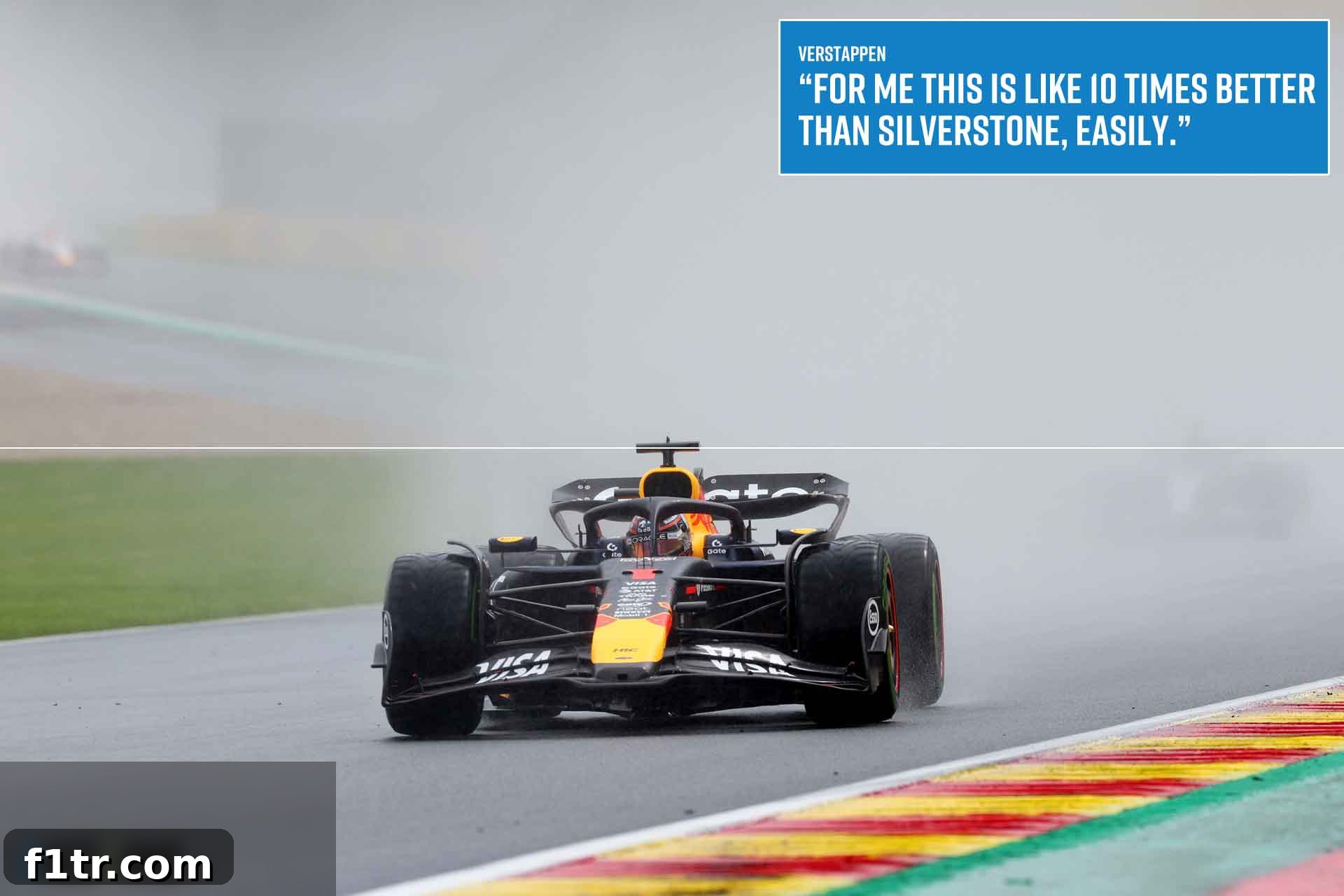
4th Verstappen: “10 times better than Silverstone”
6th Russell: “Verstappen needs to go over our grid slots to dry them”
11th Ocon: “I still can’t see”
17th Sainz: “Track is ready for a rolling start”
18th Hamilton: “Doesn’t need to be a rolling start”
1. Norris: “Maybe a lap or two more”
As the pole-sitter, Lando Norris had the clearest view ahead, but even he experienced significant visibility challenges, particularly in the notorious high-speed sections of Spa-Francorchamps. His race engineer, Will Joseph, repeatedly sought his detailed assessment of the track conditions, underscoring the team’s reliance on his direct observations. Norris’s feedback was cautious and precise, reflecting the high stakes of starting from the front in treacherous conditions. He specifically highlighted the long, flat-out Kemmel Straight and the iconic Eau Rouge as the most problematic areas, where the spray generated by even a single car, let alone a pack, could completely blind drivers. His suggestion for “a lap or two more” behind the Safety Car indicated a desire for further improvement in visibility, prioritizing safety over an immediate start, which could have put his advantageous grid position at risk in a chaotic first lap.
| Lap: 1/44 NOR: 3’04.619 | |||||||||||||||||||||||||||||||||||||||||||||||||||
| Joseph | Lando I need feedback on the conditions up the hill. | ||||||||||||||||||||||||||||||||||||||||||||||||||
| Norris | Yeah, it’s a bit better than before. I think a few laps behind the Safety Car and I think the visibility will be better for everyone. | ||||||||||||||||||||||||||||||||||||||||||||||||||
| Joseph | Copy that. | ||||||||||||||||||||||||||||||||||||||||||||||||||
| Norris | The wettest place so far is the Kemmel straight. But that’s the only place we really need the visibility, so… | ||||||||||||||||||||||||||||||||||||||||||||||||||
| Joseph | Copy | ||||||||||||||||||||||||||||||||||||||||||||||||||
| Joseph | Feedback on conditions through Blanchimont. | ||||||||||||||||||||||||||||||||||||||||||||||||||
| Norris | Yeah not bad, it’s just the Kemmel straight and Eau Rouge that are the two worst bits and now into the final corner still pretty bad as well. | ||||||||||||||||||||||||||||||||||||||||||||||||||
| Lap: 3/44 NOR: 3’02.567 | |||||||||||||||||||||||||||||||||||||||||||||||||||
| Joseph | Lando any update on conditions through Eau Rouge? | ||||||||||||||||||||||||||||||||||||||||||||||||||
| Norris | I mean, it’s just about getting better, I would say. Yeah, just about, maybe a lap or two more, two more maybe. | ||||||||||||||||||||||||||||||||||||||||||||||||||
| Joseph | Copy that. | ||||||||||||||||||||||||||||||||||||||||||||||||||
2. Piastri: “There’s a lot of steam on the track”
Oscar Piastri, running directly behind his teammate Lando Norris in second position, provided some of the most comprehensive and analytical feedback regarding the track conditions. His observations largely aligned with Norris’s concerns about visibility, particularly in the high-speed sections. However, Piastri’s reports were notably more granular, detailing specific areas of concern like “a lot of steam on the track” between turns seven and eight, and “a river on the exit of 13.” He also meticulously pointed out areas where the track was starting to dry, such as “dry patches already from turn nine to turn 10.” This detailed intelligence was invaluable for race control, offering a nuanced picture of the track’s evolution. Being in second place, Piastri would also be keenly aware of the spray from the leading car, which would directly impact his visibility and ability to push. His methodical assessment highlighted the gradual, uneven drying process, reinforcing the need for careful consideration before unleashing 20 cars into racing speeds.
| Lap: 1/44 PIA: 3’05.558 | |||||||||||||||||||||||||||||||||||||||||||||||||||
| Stallard | Oscar, how is the visibility? | ||||||||||||||||||||||||||||||||||||||||||||||||||
| Piastri | Quite a lot better than before through Eau Rouge. After Eau Rouge it’s still quite bad, yeah the straight is still pretty bad. | ||||||||||||||||||||||||||||||||||||||||||||||||||
| Stallard | Copy that, still pretty bad on the straight. | ||||||||||||||||||||||||||||||||||||||||||||||||||
| Piastri | There’s a lot of steam on the track from turn seven to turn eight. | ||||||||||||||||||||||||||||||||||||||||||||||||||
| Stallard | Understood. | ||||||||||||||||||||||||||||||||||||||||||||||||||
| Piastri | Dry patches already from turn nine to turn 10, but turn 10 is in the shade and still very wet, or still quite wet. | ||||||||||||||||||||||||||||||||||||||||||||||||||
| Stallard | Copy that. Dry patches nine to 10. Turn 10 still wet in the shade. | ||||||||||||||||||||||||||||||||||||||||||||||||||
| Stallard | We expect at least one more lap behind the Safety Car, Oscar, after this one. | ||||||||||||||||||||||||||||||||||||||||||||||||||
| Piastri | Copy. There’s a river on the exit of 13, but exit kerb of 13 is already starting to dry a little bit. | ||||||||||||||||||||||||||||||||||||||||||||||||||
| Stallard | Yeah, see the river between 13 and 14. | ||||||||||||||||||||||||||||||||||||||||||||||||||
| Lap: 2/44 PIA: 2’51.528 | |||||||||||||||||||||||||||||||||||||||||||||||||||
| Stallard | And any updates on visibility still useful, 20 cars been through now. | ||||||||||||||||||||||||||||||||||||||||||||||||||
| Piastri | Yeah, the visibility is not too bad, just up the Eau Rouge is pretty bad, and into Blanchimont. At the end of the straights, pretty bad visibility. | ||||||||||||||||||||||||||||||||||||||||||||||||||
| Stallard | Understood. | ||||||||||||||||||||||||||||||||||||||||||||||||||
| Stallard | Okay, any more updates useful? | ||||||||||||||||||||||||||||||||||||||||||||||||||
| Stallard | Track condition’s not really changed. | ||||||||||||||||||||||||||||||||||||||||||||||||||
| Stallard | Understood. | ||||||||||||||||||||||||||||||||||||||||||||||||||
| Lap: 3/44 PIA: 3’02.060 | |||||||||||||||||||||||||||||||||||||||||||||||||||
| Stallard | Any update on conditions? | ||||||||||||||||||||||||||||||||||||||||||||||||||
| Piastri | Similar, maybe a little bit better. I think the last places to dry will be turn five, six, seven and turn nine and into the last chicane. | ||||||||||||||||||||||||||||||||||||||||||||||||||
| Stallard | Copy. Five, six, seven, nine, last chicane. | ||||||||||||||||||||||||||||||||||||||||||||||||||
4. Verstappen: “10 times better than Silverstone”
Max Verstappen’s radio comments epitomized the competitive drive of a champion eager to race. Despite a strategic change from a low-downforce rear wing used for the dry sprint race to a higher-downforce setup for the wet grand prix, Verstappen remained confident in his car and his ability to handle the conditions. His emphatic declaration that the track was “10 times better than Silverstone” and “race-able” indicated a clear impatience with the Safety Car procedure. He boldly predicted the track would dry “within five laps,” a testament to his optimism and perhaps a subtle nudge to race control to quicken the start. This aggressive stance is characteristic of Verstappen, who often thrives in challenging conditions and prefers immediate racing action. His prediction, however, proved somewhat ambitious, as slick tyres weren’t feasible until lap 11, underscoring the gap between a driver’s competitive desire and the actual pace of track evolution.
| Lap: 1/44 VER: 3’10.061 | |||||||||||||||||||||||||||||||||||||||||||||||||||
| Verstappen | Yeah, this is race-able. Definitely not more than two laps behind the Safety Car. It’s going to dry within five laps. | ||||||||||||||||||||||||||||||||||||||||||||||||||
| Lap: 2/44 VER: 2’51.567 | |||||||||||||||||||||||||||||||||||||||||||||||||||
| Verstappen | For me this is like 10 times better than Silverstone, easily. | ||||||||||||||||||||||||||||||||||||||||||||||||||
6. Russell: “Verstappen needs to go over our grid slots to dry them”
Beyond the decision of when to start, race control also had to consider the critical “how.” For a standing start, George Russell was positioned on the left-hand side of the grid, directly behind Max Verstappen. His radio message revealed a strategic concern specific to a standing start in wet conditions: the cleanliness and dryness of his grid slot. A wet grid slot can significantly hinder traction off the line, potentially costing valuable positions. Russell keenly observed that Verstappen, ahead of him, was not driving over their shared side of the grid during the Safety Car laps, thus failing to help “dry them out.” This highlighted a tactical aspect of wet starts, where drivers often weave to scrub tyres and clear water from their starting positions. Russell’s comment underscored the intense focus on every minor detail that could influence the crucial first few meters of a race, demonstrating his strategic thinking even amidst safety concerns.
| Lap: 1/44 RUS: 3’13.707 | |||||||||||||||||||||||||||||||||||||||||||||||||||
| Russell | Is this is going to be one or two laps? | ||||||||||||||||||||||||||||||||||||||||||||||||||
| Dudley | A minimum of two laps. | ||||||||||||||||||||||||||||||||||||||||||||||||||
| Lap: 2/44 RUS: 2’51.828 | |||||||||||||||||||||||||||||||||||||||||||||||||||
| Dudley | Just let me know how track is. | ||||||||||||||||||||||||||||||||||||||||||||||||||
| Russell | Slowly improving in terms of visibility. As soon as we’re flat-chat in the straight, visibility is bad. | ||||||||||||||||||||||||||||||||||||||||||||||||||
| Lap: 3/44 RUS: 2’57.493 | |||||||||||||||||||||||||||||||||||||||||||||||||||
| Russell | If we’re going for another lap Verstappen needs to go over our grid slots to dry them out. Everyone’s driving on the inside at the moment. | ||||||||||||||||||||||||||||||||||||||||||||||||||
| Dudley | Yeah copy we’ve seen that, it does look wetter on that side. | ||||||||||||||||||||||||||||||||||||||||||||||||||
11. Ocon: “I still can’t see”
Further down the grid, in 11th position, Esteban Ocon faced a drastically different reality compared to the front-runners. His desperate radio message, “I still can’t see,” painted a vivid picture of the treacherous conditions experienced by drivers in the midfield. With a low-downforce setup, Ocon’s car would have generated less spray, but he was simultaneously enduring the full force of spray from multiple cars ahead. Visibility rapidly diminishes the further back a car is in the pack, as the sheer volume of water kicked up by leading cars creates an almost impenetrable wall of mist. His repeated statements about “poor visibility in the back straight” and specifically mentioning “Turn one and down the hill is the worst place” underscored the immediate and severe safety concerns from his perspective. His feedback served as a critical reminder to race control that while the front of the grid might see improvements, the conditions for the majority of the field remained extremely dangerous, advocating for a more cautious approach.
| Lap: 1/44 OCO: 3’21.517 | |||||||||||||||||||||||||||||||||||||||||||||||||||
| Mueller | Feedback if you can, we see still bad visibility. | ||||||||||||||||||||||||||||||||||||||||||||||||||
| Ocon | Yeah, I still can’t see. | ||||||||||||||||||||||||||||||||||||||||||||||||||
| Mueller | Any more feedback on conditions? | ||||||||||||||||||||||||||||||||||||||||||||||||||
| Ocon | Still poor visibility in the back straight, can’t see. | ||||||||||||||||||||||||||||||||||||||||||||||||||
| Mueller | Will be another lap behind the Safety Car. | ||||||||||||||||||||||||||||||||||||||||||||||||||
| Lap: 2/44 OCO: 2’53.139 | |||||||||||||||||||||||||||||||||||||||||||||||||||
| Ocon | Turn one and down the hill is the worst place for visibility. | ||||||||||||||||||||||||||||||||||||||||||||||||||
| Mueller | Copy. | ||||||||||||||||||||||||||||||||||||||||||||||||||
| Mueller | How are the track conditions, is it drying at all? | ||||||||||||||||||||||||||||||||||||||||||||||||||
| Ocon | Ah, not yet, no. | ||||||||||||||||||||||||||||||||||||||||||||||||||
| Mueller | Copy. | ||||||||||||||||||||||||||||||||||||||||||||||||||
| Mueller | Another lap behind the Safety Car. | ||||||||||||||||||||||||||||||||||||||||||||||||||
| Lap: 3/44 OCO: 2’52.403 | |||||||||||||||||||||||||||||||||||||||||||||||||||
| Mueller | Another lap behind the Safety Car. 40 laps to go. | ||||||||||||||||||||||||||||||||||||||||||||||||||
17. Sainz: “Track is ready for a rolling start”
Carlos Sainz Jnr, starting from a disappointing 17th position after a poor qualifying session, provided a nuanced perspective. His assessment that the “Track is ready for a rolling start” two laps before the actual commencement of the race indicated a belief that conditions had improved sufficiently for racing to resume. However, he was meticulous in distinguishing between a rolling start and a standing start, unequivocally stating, “Not standing.” This distinction is crucial for a driver starting further back. A rolling start minimizes the initial chaos and potential for accidents that often accompany a standing start on a wet track, allowing drivers like Sainz to focus on racing rather than surviving the first corner lottery. While he was eager to get racing and potentially move up the order, his caution regarding a standing start showcased a strategic balance between competitive opportunism and practical safety considerations. His observation of “a lot of steam coming out of the Tarmac” also highlighted the rapid drying potential he perceived, fueling his readiness to race.
| Lap: 1/44 SAI: 3’31.318 | |||||||||||||||||||||||||||||||||||||||||||||||||||
| Jego | Feedback on track condition. | ||||||||||||||||||||||||||||||||||||||||||||||||||
| Sainz | Yeah, clearly wet. First part of the track [unclear] dry. Visibility, I think in one lap it should be okay. | ||||||||||||||||||||||||||||||||||||||||||||||||||
| Jego | Visibility, one lap okay. | ||||||||||||||||||||||||||||||||||||||||||||||||||
| Sainz | The track will dry very quick because I can see a lot of steam coming out of the Tarmac. | ||||||||||||||||||||||||||||||||||||||||||||||||||
| Jego | Okay. | ||||||||||||||||||||||||||||||||||||||||||||||||||
| Lap: 2/44 SAI: 2’52.573 | |||||||||||||||||||||||||||||||||||||||||||||||||||
| Sainz | Track is ready. | ||||||||||||||||||||||||||||||||||||||||||||||||||
| Jego | Copy, track is ready. | ||||||||||||||||||||||||||||||||||||||||||||||||||
| Sainz | Track is ready for a rolling start. Not standing. | ||||||||||||||||||||||||||||||||||||||||||||||||||
| Jego | Understood, track ready for rolling start. | ||||||||||||||||||||||||||||||||||||||||||||||||||
| Lap: 3/44 SAI: 2’45.975 | |||||||||||||||||||||||||||||||||||||||||||||||||||
| Sainz | I think it will be dry in 10 laps or less. | ||||||||||||||||||||||||||||||||||||||||||||||||||
18. Hamilton: “Doesn’t need to be a rolling start”
Lewis Hamilton, starting just behind Sainz, was a vocal proponent for a standing start. His firm statement, “Doesn’t need to be a rolling start,” articulated his belief that the track conditions, and particularly visibility, had improved sufficiently for a conventional grid start. This preference was not merely a casual observation but a strategic one. A standing start in wet-but-improving conditions can often create significant opportunities for skilled drivers to gain multiple positions if they get a good launch. Given his experience and competitive drive, Hamilton was clearly assessing the risk-reward balance and leaning towards a more aggressive commencement to the race, which he reiterated in his post-race comments. His confidence that “Visibility is fine” and “It’s drying up” reflected a more optimistic outlook than some of his peers, highlighting his desire to maximize racing potential and challenge for positions from the outset.
| Lap: 1/44 HAM: 3’33.712 | |||||||||||||||||||||||||||||||||||||||||||||||||||
| Hamilton | It’s drying pretty quick. | ||||||||||||||||||||||||||||||||||||||||||||||||||
| Adami | Copy that. And brake temps are good. | ||||||||||||||||||||||||||||||||||||||||||||||||||
| Lap: 2/44 HAM: 2’52.450 | |||||||||||||||||||||||||||||||||||||||||||||||||||
| Hamilton | The visibility is pretty decent. | ||||||||||||||||||||||||||||||||||||||||||||||||||
| Adami | Copy that, understood. | ||||||||||||||||||||||||||||||||||||||||||||||||||
| Hamilton | Are we staying behind Safety Car or what? | ||||||||||||||||||||||||||||||||||||||||||||||||||
| Adami | Yes, still deployed, Safety Car still deployed. | ||||||||||||||||||||||||||||||||||||||||||||||||||
| Lap: 3/44 HAM: 2’45.258 | |||||||||||||||||||||||||||||||||||||||||||||||||||
| Hamilton | Visibility is fine. | ||||||||||||||||||||||||||||||||||||||||||||||||||
| Adami | Understood | ||||||||||||||||||||||||||||||||||||||||||||||||||
| Hamilton | It’s drying up. A little on the nose at the moment. | ||||||||||||||||||||||||||||||||||||||||||||||||||
| Adami | Copy that, understood. | ||||||||||||||||||||||||||||||||||||||||||||||||||
| Lap: 4/44 HAM: 2’03.577 | |||||||||||||||||||||||||||||||||||||||||||||||||||
| Hamilton | Doesn’t need to be a rolling start, it’s… | ||||||||||||||||||||||||||||||||||||||||||||||||||
| Adami | Switches K2 on for the rolling start. | ||||||||||||||||||||||||||||||||||||||||||||||||||
The complexities surrounding the start of the 2025 Belgian Grand Prix perfectly encapsulated the perennial challenge faced by Formula 1 race control: balancing the imperative of driver safety with the demand for thrilling, competitive racing. Race Director Rui Marques and his team were in an unenviable position, tasked with making high-stakes decisions in rapidly evolving conditions, all while under intense scrutiny and informed by often conflicting feedback from the drivers themselves.
Ultimately, the decision to opt for an extended Safety Car period and a rolling start reflected a predominantly safety-first approach, especially given the history of severe accidents in wet conditions at circuits like Spa. While some drivers, particularly those with a stronger car or a desire for immediate action, pushed for a quicker, more conventional start, race control had to consider the full spectrum of conditions throughout the 7-kilometer track and the varied visibility for all 20 cars. Their mandate is to ensure the conditions are safe for *everyone* to race, not just those at the front with a clearer view.
The F1 paddock and its fans continue to debate the optimal approach to wet weather racing. Advancements in car design, tire technology, and track drainage have improved safety over the years, but the sheer volume of water displacement by modern F1 cars in heavy rain still creates a dangerous “wall of spray” that drastically limits visibility. The 2025 Belgian Grand Prix served as a potent reminder that even with all the data and driver feedback, the decision to wave the green flag in such conditions remains one of the most difficult and consequential calls in motorsport, a constant tightrope walk between spectacular racing and paramount safety.
2025 Belgian Grand Prix
- Hadjar’s Silverstone crash shows FIA was right to be cautious with Spa rain, say drivers
- “Stay out”: Antonelli told Mercedes track was ready for slicks on same lap as Hamilton
- Antonelli ‘paying the price for wrong steps’ made by Mercedes – Allison
- Verstappen is in his longest run of races without a podium finish for six years
- “I’m down to try”: How Hamilton changed his mind about crucial Spa pit stop
Browse all 2025 Belgian Grand Prix articles