The F1 Penalty Point System: Navigating Risk and Controversy in the 2021 Season
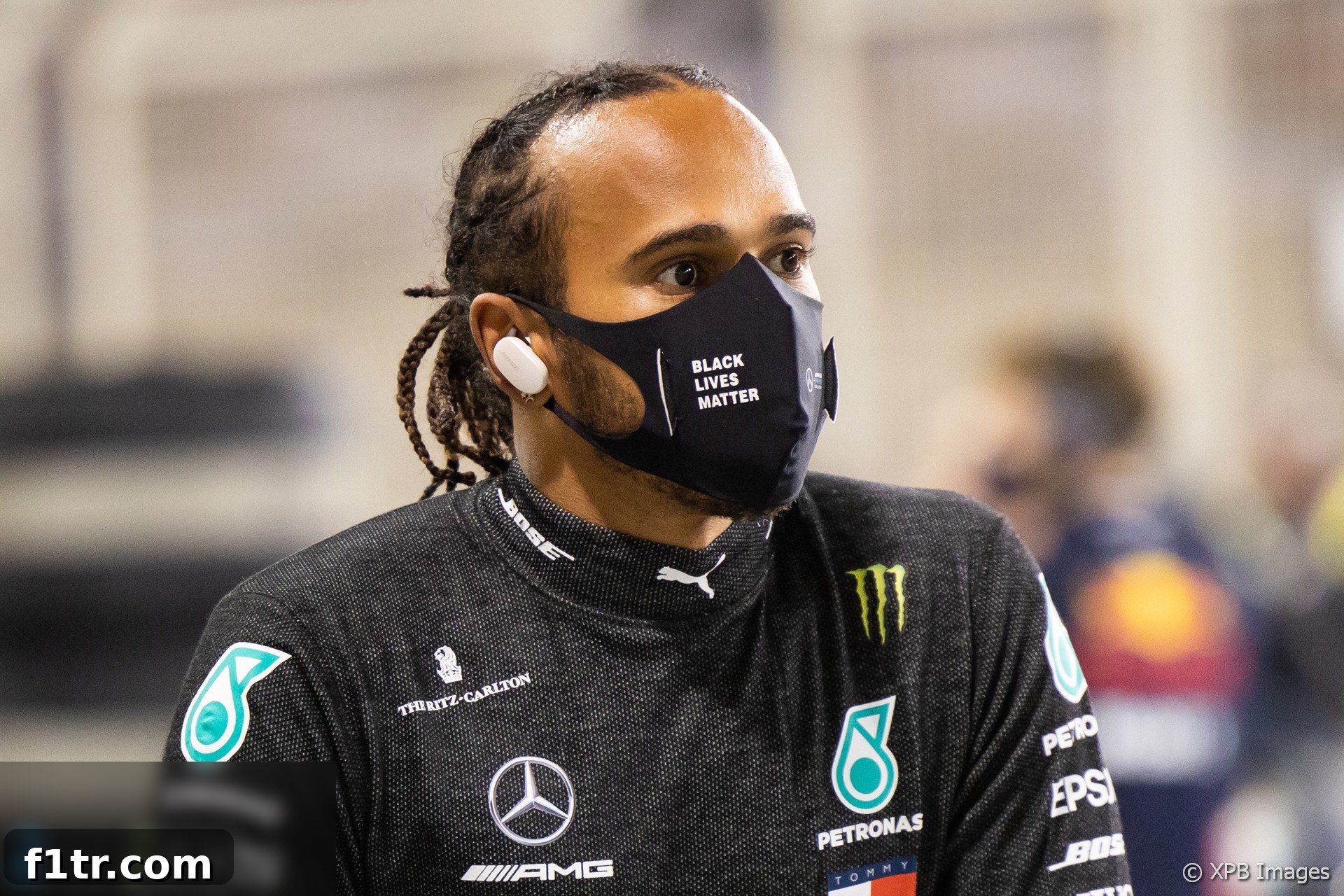
The Formula 1 penalty point system has consistently been a focal point of discussion and contention within the paddock, especially during recent seasons. Drivers frequently voiced their concerns, arguing that points were often issued too readily, sometimes for minor infringements. The inherent risk associated with accumulating these points became starkly apparent when Lewis Hamilton, a seven-time world champion, briefly found himself precariously close to an automatic race ban.
Advert | Become a Supporter & go ad-free
Understanding the F1 Superlicence Penalty Point System
At its core, the penalty point system is designed to promote safer driving and ensure fair play across Formula 1. Each driver holds an FIA Super Licence, a prerequisite for competing in the championship. Infringements of the sporting regulations can lead to a driver being handed penalty points, which are then added to their superlicence record. The critical threshold is 12 points accumulated over a 12-month rolling period. Reaching this total triggers an automatic one-race ban, a severe consequence that no driver wants to face.
Points are issued by race stewards following an incident, and the severity of the infraction determines the number of points awarded, typically ranging from one to three points for a single incident. Common offenses include causing collisions, ignoring yellow or red flags, unsafe pit releases, and repeated track limits violations. The system is meant to act as a deterrent, encouraging drivers to exercise caution and adhere strictly to the rules, both for their safety and that of their competitors.
The 2021 Season Outlook: Drivers on the Edge
Lewis Hamilton and George Russell: On the Brink
As the 2021 F1 season commenced, two prominent drivers found themselves in a particularly precarious position, each carrying six penalty points from the previous season. This tally placed them precisely halfway to the critical 12-point mark that would mandate a one-race suspension. One of these drivers was none other than Lewis Hamilton, whose brush with a ban in 2020 highlighted the system’s strictness, even for the sport’s biggest names.
Hamilton’s situation, while still risky, improved significantly following an incident at the Russian Grand Prix in Sochi last year. He was initially issued two penalty points for practicing start procedures in an unauthorized area. However, these points were subsequently rescinded after he engaged in discussions with the stewards, who acknowledged a potential miscommunication regarding the designated practice start zone. This illustrates the dynamic nature of steward decisions and the possibility for review.
The other driver sharing Hamilton’s elevated risk profile was George Russell. Russell, who memorably deputized for Hamilton at the Sakhir Grand Prix when the champion was sidelined by Covid-19, accrued all six of his penalty points through a pair of three-point infractions. Both instances were for failing to slow down sufficiently under yellow flag conditions, a rule that is strictly enforced to ensure safety during incidents on track. This pattern suggests a particular area of focus for Russell to address in his driving conduct.
Expiry Dates: A Critical Lifeline for At-Risk Drivers
A crucial aspect of the penalty point system is its 12-month rolling expiry period. Points do not remain on a driver’s superlicence indefinitely but are removed exactly one year after they were issued. This mechanism provides a lifeline for drivers, allowing them to reset their totals over time, provided they maintain a clean sheet. For Lewis Hamilton, four of his six points were incurred during the very first race weekend of the 2020 season. Consequently, these points were set to expire at the earliest possible opportunity in the 2021 calendar. However, due to the delayed start of the 2020 season, this expiry would not occur until the ninth round of the 2021 championship in July.
George Russell’s wait for point expiry was slightly longer, with his first points not being deducted until August. The timing of these expirations is a significant factor for drivers near the 12-point limit, influencing their approach to racing and their interactions with stewards in the intervening months. Navigating this period without further penalties is paramount to avoiding a race ban.
Noteworthy Point Accumulators from Past Seasons
While Hamilton and Russell started 2021 with the highest active totals, other drivers have accumulated significant penalty points in their careers, showcasing the system’s impact. Only one driver ended the 2020 season with more points than Hamilton or Russell: Alexander Albon, who finished the year with seven points, though he subsequently lost his Red Bull race seat during the off-season. While not directly linked to his penalty points, his performance and incidents contributed to his overall standing.
Looking further back, drivers who have since departed the F1 grid amassed considerable penalty point tallies during their tenure. Daniil Kvyat, known for his aggressive driving style, racked up an astonishing total of 27 points over his F1 career and came closer to a race ban than any other driver in the sport’s history, reaching 10 points during the 2017 season. Similarly, Romain Grosjean and Kevin Magnussen, both former Haas drivers, accumulated 23 and 22 points respectively. These figures underscore the cumulative effect of the system and how various incidents can quickly add up over a driver’s career.
Advert | Become a RaceFans supporter andgo ad-free
The F2-to-F1 Transition: Mazepin’s Unique Case
While three penalty points is typically the maximum issued for a single incident in Formula 1, a compelling case involving a new F1 entrant highlights the differences in feeder series regulations. Nikita Mazepin, who joined the F1 grid in 2021, had a rather eventful past in Formula 2 concerning penalty points. In 2019, Mazepin was handed four penalty points – an unusually high number – along with a 15-place grid penalty for causing a significant crash at the start of a race in Sochi.
His knack for attracting the stewards’ attention continued throughout his 2020 F2 campaign. One particular penalty controversially cost him a potential victory at Spa, elevating Yuki Tsunoda to first place. By the end of the 2020 F2 season, Mazepin had accumulated an alarming 11 superlicence points in the feeder series, coming just one point shy of an automatic F2 race ban. His aggressive maneuvers and repeated infringements sparked considerable debate about his readiness for Formula 1.
However, much to his fortune and perhaps the relief of some, F2 superlicence points are not transferred to Formula 1. This means that despite his extensive penalty point record in the junior category, Mazepin began his rookie F1 season with a clean slate of zero points, effectively wiping his F2 record clean.
F1 Race Director Michael Masi clarified the rationale behind this distinction: “The Formula 2 and Formula 3 regulations are structured in such a way that the penalty points [accumulate] over the championship rather than over a 12-month period like Formula 1 does,” he explained. “We’re quite fortunate with the abundance of talent that’s joining us from FIA Formula 2 championship into Formula 1 next year. But it was always seen as a way to track within the respective category itself, and that’s, from my understanding, the way that it was designed.” This emphasizes that each championship has its own disciplinary framework, tailored to its specific context and competitive environment.
A Fresh Start: Drivers with Clean Sheets for 2021
Beyond Mazepin, other highly anticipated F2 graduates also entered the 2021 F1 season with zero penalty points. Mick Schumacher, son of the legendary Michael Schumacher, and the spirited Yuki Tsunoda both started their rookie campaigns unburdened by past infractions. Their clean records allowed them to focus purely on adapting to Formula 1 without the added pressure of accumulated points.
The same clean slate applied to the returning two-time world champion Fernando Alonso. Alonso had six points on his superlicence when he initially departed the sport at the end of 2018. Notably, three of these points were collected in his final race before his hiatus, issued for repeatedly cutting the chicanes at the Yas Marina circuit. Thanks to his two-year absence, all of these points had expired, allowing him a fresh start upon his return to the pinnacle of motorsport.
Several other established drivers also entered 2021 with clean sheets, demonstrating either consistent adherence to rules or successful management of their point tallies. These included Nicholas Latifi, who navigated his rookie campaign without significant trouble, Valtteri Bottas, and Pierre Gasly. Even drivers like Max Verstappen and Sebastian Vettel, who have been no strangers to the stewards’ office in previous seasons due to their aggressive racing styles, had successfully reset their totals, offering them renewed freedom on track.
Driver Complaints and the Track Limits Debate
Despite the intention of the penalty point system, driver discontent remained a constant theme. Last year, many drivers vocalized their frustration, arguing that stewards were issuing penalty points too frequently, often for incidents they perceived as too minor to warrant such a serious consequence. This growing sentiment led to calls for a review of how and when points were applied.
A key area of contention for drivers was the issuing of penalty points specifically for track limits violations. The consistency and interpretation of track limits have been a recurring headache for both drivers and race control, with drivers often feeling unfairly penalized for exceeding track boundaries by fractions of an inch. Michael Masi acknowledged these concerns, indicating that the practice of awarding points for track limits would be reviewed ahead of the new season. While the 2020 season actually saw the lowest number of penalties issued since 2015 (50 penalties in total, less than three per race even accounting for the shorter calendar), the *perception* among drivers was that the severity of some penalties, particularly penalty points, was disproportionate.
Quotes: Dieter Rencken
Advert | Become a RaceFans supporter andgo ad-free
The Ongoing Significance of Penalty Points
The penalty point system is undeniably a vital component of Formula 1’s regulatory framework, designed to maintain discipline, uphold safety standards, and ensure fair competition. For drivers, it’s an ever-present consideration that shapes their race craft and strategic decisions. The specter of a race ban looms large for those accumulating points, adding another layer of pressure to an already high-stakes sport.
As the 2021 season unfolds, the application and impact of penalty points will undoubtedly remain a topic of intense scrutiny. The balance between strict enforcement and perceived fairness is delicate, and ongoing dialogue between drivers, teams, and the FIA will be essential to ensure the system serves its intended purpose effectively, without unduly penalizing racers for minor infractions or stifling the thrilling competition that defines Formula 1.
Join the RaceFans Supporters Drive!
If you’ve enjoyed RaceFans’ motor sport coverage during 2020 and beyond, please take a moment to find out more about our Supporter Drive. Your support helps us continue to provide insightful and independent motorsport content.
We’re aiming to welcome 3,000 new Supporters to help fund RaceFans so we can continue to produce quality, original, independent motorsport coverage. Here’s what we’re asking for and why – and how you can sign up to make a difference:
- Join the RaceFans Supporters Drive! Your contribution ensures our continued independent journalism.
More on the 2021 F1 Season
- Masi ‘basically gifted the championship’ to Verstappen says 2021 FIA steward Sullivan
- Las Vegas race backers looking to extend F1 deal beyond 2025
- Why Mercedes put ‘a reminder of joy and pain’ on display in their factory lobby
- Verdict on error in GT race suggests Mercedes would have lost 2021 Abu Dhabi GP appeal
- Title ‘stolen’ from Mercedes made us ‘underdogs people cheer for’ – Wolff
Browse all 2021 F1 season articles