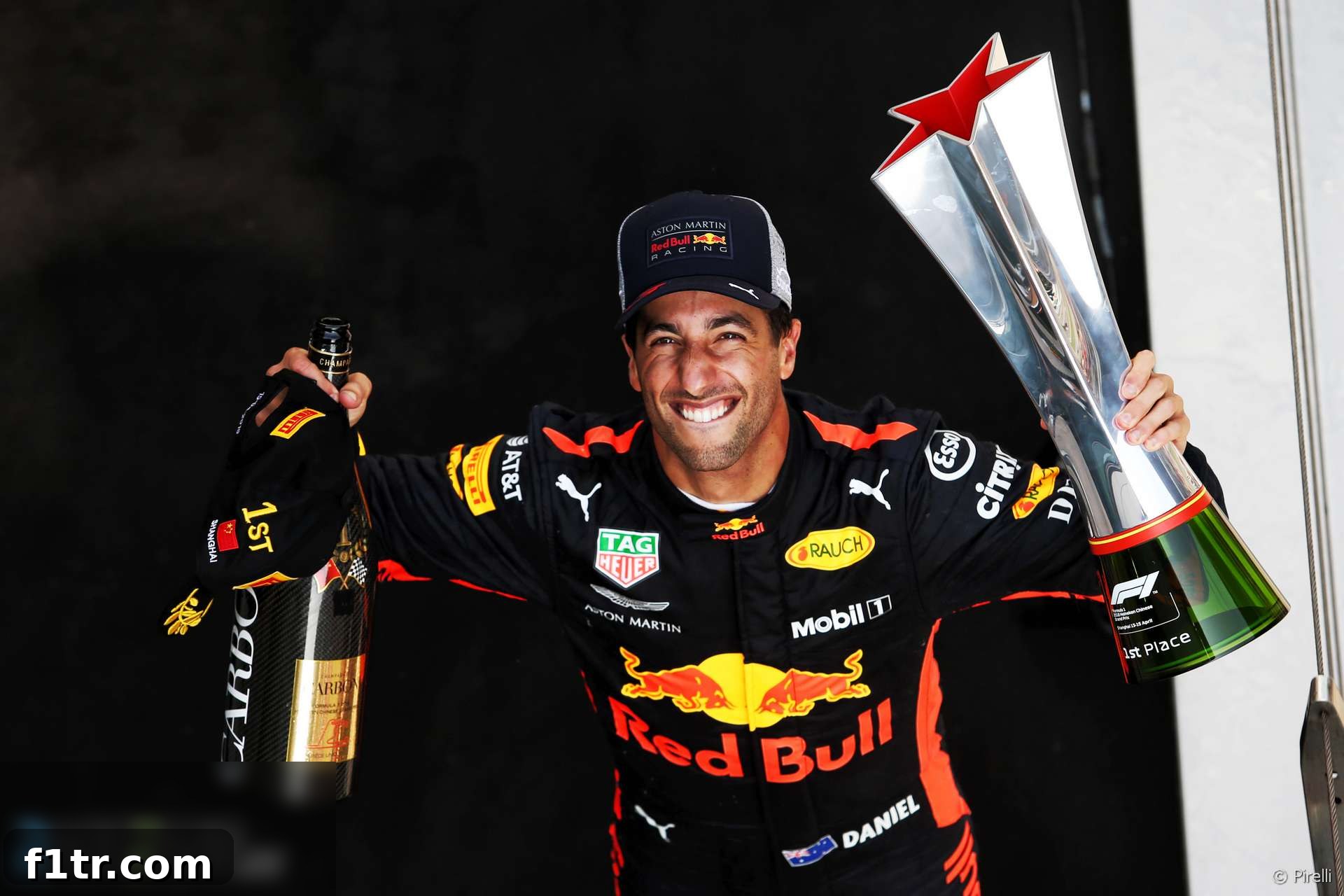
The thrilling landscape of Formula 1 driver contracts often ignites fervent speculation, and few situations in the 2018 season were as closely watched as that of Daniel Ricciardo. A pivotal figure in Red Bull Racing, Ricciardo’s contract was nearing its expiration, prompting widespread rumors linking him to rival powerhouse teams such as Ferrari. Amidst this high-stakes backdrop, Red Bull team principal Christian Horner made his position unequivocally clear: he believed Ricciardo’s optimal future lay with Red Bull, provided the team could consistently equip him with a genuinely competitive car capable of challenging for victories.
Horner’s assertive stance came on the heels of Ricciardo’s triumphant victory at the Chinese Grand Prix, a race that not only showcased the Australian driver’s exceptional talent but also demonstrated the potent capabilities of the Red Bull chassis. When pressed about the critical importance of retaining Ricciardo for the 2019 season, Horner’s response was direct and insightful, drawing a parallel to strategic decisions seen elsewhere on the grid. He remarked, “Look at Kimi [Raikkonen’s] race. You know, I didn’t understand that strategy. I think Daniel’s happy in this environment. If we can provide a car like we did today why would he want to be anywhere else?” This statement underscored Red Bull’s confidence in their package and their team environment, suggesting that a winning car was the ultimate incentive for a driver of Ricciardo’s calibre.
The Chinese Grand Prix of 2018 was a masterclass in opportunistic driving and strategic brilliance from Red Bull Racing, with Daniel Ricciardo at its heart. Starting from sixth on the grid after a dramatic engine change scare in qualifying, Ricciardo executed a series of breathtaking overtakes following a timely Safety Car period that allowed Red Bull to pit both cars for fresh, soft tyres. His charge through the field was nothing short of spectacular, culminating in a dominant display of race craft. The highlight of his performance, and a moment Christian Horner singled out for praise, was Ricciardo’s audacious pass on then-championship leader Lewis Hamilton. This move stood in stark contrast to his teammate Max Verstappen’s earlier, more aggressive attempt on Hamilton, which resulted in Verstappen running wide and losing positions.
Horner elaborated on the distinction between the two Red Bull drivers’ approaches during the race: “Max had a grip advantage, he got better drive. He found himself on the outside there and decided to hang it out with Lewis who is never going to concede in that corner easily. [Hamilton] was more generous with Daniel in the braking area but Daniel picked his time differently to where Max decided to have a go.” This commentary highlighted Ricciardo’s impeccable timing, strategic patience, and clinical execution – hallmarks of a seasoned and ’rounded’ driver. His ability to weigh the risks and opportunities, choosing the precise moment to strike, allowed him to navigate through the front-runners with a surgical precision that ultimately delivered an unexpected yet thoroughly deserved victory for Red Bull.
Ricciardo’s Chinese Grand Prix triumph served as a powerful testament to his comprehensive skill set, which Horner enthusiastically acclaimed. The team principal asserted that the victory definitively showed Ricciardo to be “a very rounded driver,” adding, “He’s absolutely at the top of his game and he has been for the last couple of years really.” This praise was not merely for his speed, but for the depth of his capabilities. Horner further elaborated on what makes Ricciardo such a formidable competitor: “He’s got that balance of experience and pace. He’s one of the best overtakers in the business. And his judgement is impeccable in terms of judging a gap, getting the car stopped and getting it rotated.” This comprehensive assessment paints a picture of a driver who combines raw talent with strategic intelligence and a deep understanding of race dynamics, making him a potent force on any circuit.
Beyond his individual brilliance, Ricciardo’s role within the team, particularly in relation to his dynamic teammate Max Verstappen, was a significant talking point. Horner candidly acknowledged the differing stages of their careers: “I really feel that he’s in a different part of his career to where Max is at the moment who’s very young and fresh and going through that experience.” This distinction was crucial. While Verstappen, with his explosive speed and fearless aggression, represented the exciting future of the sport, Ricciardo provided a blend of maturity, consistent performance, and refined race craft. His experience offered stability and a benchmark for the team, while also allowing him to extract maximum performance even when the car wasn’t perfectly suited to his style. This complementary dynamic was a strength for Red Bull, but also posed a challenge in managing two top-tier drivers with aspirations for the championship.
The allure of rival teams, especially Ferrari, was a genuine concern for Red Bull. For any top driver, the prospect of racing for one of Formula 1’s most storied and successful teams, or joining the dominant Mercedes outfit, is incredibly tempting. These teams often offer not just a potentially winning car, but also a legacy and brand prestige that few can match. Ricciardo’s demonstrated ability to win races and his consistently high-level performances made him an attractive candidate for any team looking to strengthen its driver lineup. Horner understood this perfectly, hence his emphasis on providing a car that could genuinely contend for championships. He recognized that loyalty, while valuable, would ultimately be secondary to a driver’s ambition to compete at the very pinnacle of the sport.
The broader context of the 2018 Formula 1 season and Red Bull’s position within it was also vital. While the team showed flashes of brilliance, particularly with Ricciardo’s two victories in China and Monaco, they were often hampered by the performance and reliability of their Renault power units. This ongoing struggle with engine performance, especially in comparison to the dominant Mercedes and Ferrari engines, put Red Bull at a disadvantage on many tracks. The impending switch to Honda power for the 2019 season, a decision that was already in motion during Ricciardo’s contract negotiations, added another layer of uncertainty. While promising a fresh start, the Honda project was still largely unproven at the front of the grid, presenting a significant gamble for a driver looking to maximize his championship chances in the prime of his career. These factors undoubtedly weighed heavily on Ricciardo’s mind as he considered his options for the future.
Ultimately, Christian Horner’s sentiments reflected Red Bull’s earnest desire to retain one of their most popular and successful drivers. Ricciardo was not just a race winner; he was a team player, a charismatic ambassador for the brand, and a driver at the peak of his powers. His departure would represent a significant loss, both in terms of on-track performance and public image. Horner’s public comments were a clear statement of intent, a strategic move to affirm the team’s commitment to providing a championship-contending package and to remind Ricciardo of the strong, familiar environment he thrived in. The battle to secure Ricciardo’s signature was a microcosm of the intense competition that defines Formula 1, not just on the track, but also in the high-stakes world of driver contracts and team dynamics. The question of whether Red Bull could indeed offer him the sustained competitiveness he craved remained the central pivot around which his future would inevitably turn.
2018 F1 season
- F1 feared “death knell” for Drive to Survive after Ferrari and Mercedes snub
- McLaren staff told us we were “totally crazy” to take Honda engines in 2018 – Tost
- ‘It doesn’t matter if we start last’: How Red Bull’s junior team aided Honda’s leap forward
- Honda’s jet division helped F1 engineers solve power unit problem
- McLaren Racing losses rise after Honda split
Browse all 2018 F1 season articles