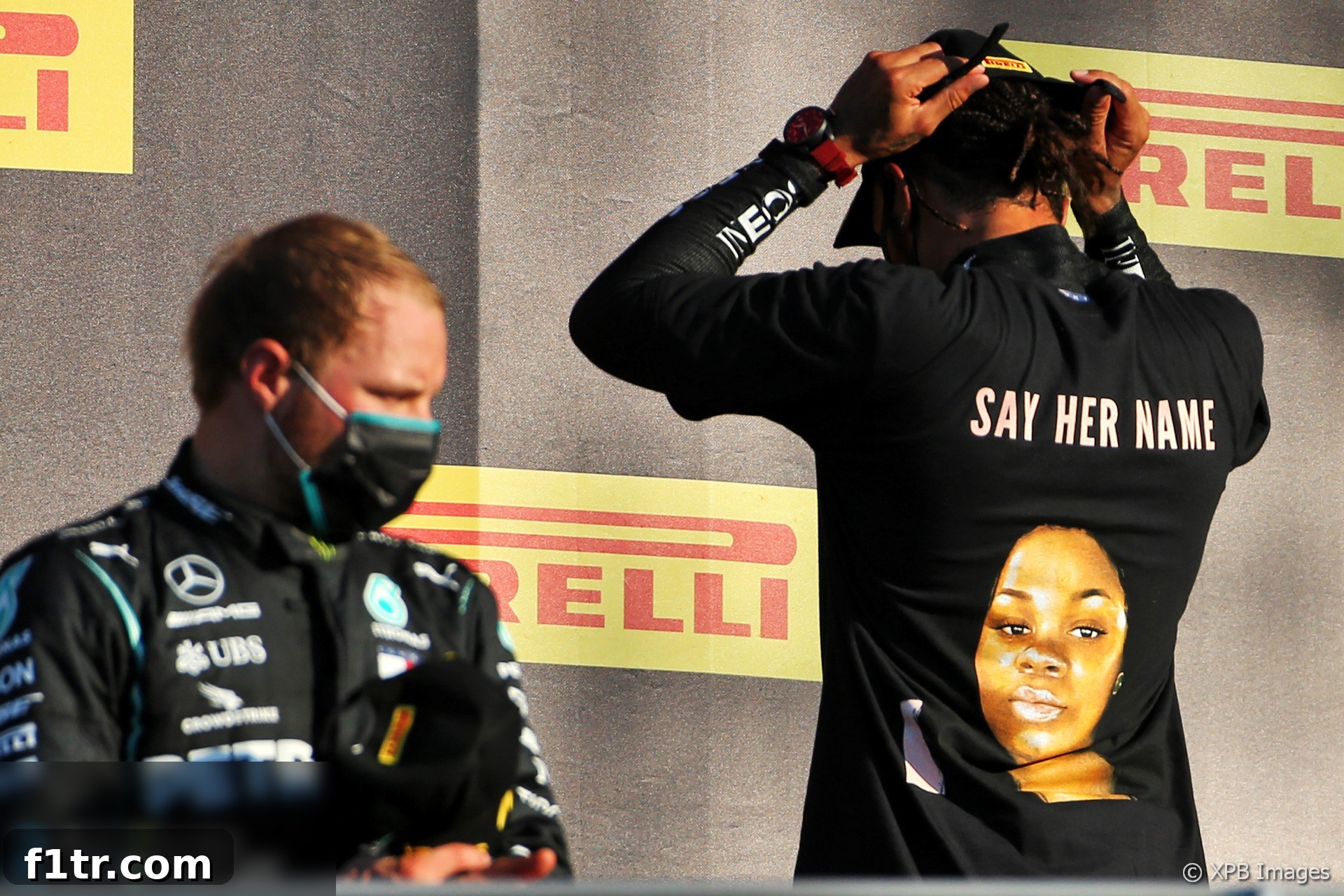
The global governing body for motorsport, the FIA (Fédération Internationale de l’Automobile), has implemented a significant update to its International Sporting Code (ISC), prohibiting drivers and other competitors from making “political, religious and personal statements” without prior written approval. This move, spearheaded by FIA President Mohammed Ben Sulayem, has ignited a fervent debate across the motorsport world, particularly within Formula 1, where driver activism has become increasingly prominent in recent years.
The revised regulations, which took effect at the start of the 2023 season, aim to reinforce the FIA’s principle of neutrality, as enshrined in its statutes. While the intention is to maintain the sport’s focus and integrity, the new directive has prompted considerable discussion regarding athlete free speech, the role of sports in social commentary, and the potential implications for driver engagement and fan relations. This comprehensive overview delves into the specifics of the new rule, the FIA’s rationale, the historical context of driver activism, the criticisms it has faced, and the challenging path ahead for its enforcement.
Advert | Become a Supporter & go ad-free
The New FIA Directive: A Closer Look at the International Sporting Code
The core of the controversy lies in the updated FIA’s International Sporting Code (ISC), the foundational document governing all international motorsport categories. The specific addition to the ISC, outlined in Article 12.2.1.n, explicitly bans “the general making and display of political, religious and personal statements or comments notably in violation of the general principle of neutrality promoted by the FIA under its statutes, unless previously approved in writing by the FIA for international competitions, or by the relevant ASN for national competitions within their jurisdiction.” This clause is not an outright ban but rather a stringent requirement for pre-approval, transforming spontaneous expressions into regulated communications.
Further to this, competitors are now also advised that “failure to comply with the instructions of the FIA regarding the appointment and participation of persons during official ceremonies at any competition counting towards a FIA championship” will be considered a breach of regulations. This broad statement suggests a more controlled environment for public appearances and interactions, extending the FIA’s oversight beyond just statements to encompass conduct during official events.
The implications of these changes are far-reaching. In a sport where drivers often use their helmets, race suits, or social media platforms to voice opinions on global issues, environmental concerns, or human rights, the new rule introduces a bureaucratic layer that could significantly alter how athletes engage with the wider world. The emphasis on “neutrality” as a guiding principle underscores the FIA’s desire to keep motorsport perceived as an apolitical arena, a stance that many argue is increasingly difficult, if not impossible, in today’s interconnected society.
FIA President Mohammed Ben Sulayem’s Rationale
FIA President Mohammed Ben Sulayem has been the primary voice explaining the rationale behind these significant changes. His explanations centre on several key pillars, primarily advocating for the separation of sport from personal agendas and promoting a unified message of peace through athletic competition. “We are concerned with building bridges. You can use sport for peace reasons,” Ben Sulayem articulated to reporters. This vision positions motorsport as a unifying force, transcending political divides rather than becoming a platform for them.
He further elaborated, stating, “But one thing we don’t want is to have the FIA as a platform for private personal agenda.” This highlights the FIA’s commitment to protecting its image as a non-partisan governing body. The president’s perspective suggests that individual expressions, while potentially well-intentioned, could inadvertently politicize the sport, diverting attention from the racing itself and potentially alienating segments of its global audience. The focus, he believes, should remain squarely on athletic performance and the spectacle of competition.
Ben Sulayem emphasized the primary role of drivers: “What does the driver do best? Driving. They are so good at it, and they make the business, they make the show, they are the stars. Nobody is stopping them.” This statement reinforces the idea that drivers’ core contribution to the sport is their skill behind the wheel, and that their personal views should be expressed through alternative channels. He acknowledged that individuals have the right to express themselves but suggested that the FIA platform is not the appropriate venue for such discourse without official sanction. “There are other platforms to express what they want. Everybody has this and they are most welcome to go through the process of the FIA, to go through that.”
The FIA President concluded his explanation by personalizing the matter: “I have my own personal things, okay, but it doesn’t mean I will use the FIA to do it.” This analogy aims to illustrate a principled separation between personal convictions and official responsibilities, a boundary he expects all participants within the FIA’s jurisdiction to observe. The underlying message is one of discipline and adherence to established protocols, ensuring that the sport’s global appeal and perceived neutrality are maintained.
The Era of Driver Activism: A Recent History in Formula 1
The FIA’s new restrictions have emerged against a backdrop of increasing driver activism, particularly prominent in Formula 1. In recent years, several high-profile drivers have leveraged their global platforms to champion various social, environmental, and human rights causes. This trend has reshaped the image of modern athletes, moving beyond mere sporting heroes to become influential voices for change.
Perhaps the most visible advocate has been seven-time world champion Lewis Hamilton. Hamilton has consistently used his platform to speak out against racism, advocate for diversity and inclusion within motorsport, and promote environmental sustainability. His “Black Lives Matter” T-shirts, rainbow-coloured helmets supporting LGBTQ+ rights, and outspoken comments on various global issues have become synonymous with his public persona. These gestures were often visible during pre-race ceremonies, press conferences, and even on the podium, effectively using the global stage of Formula 1 to amplify important messages.
Other drivers have also joined in, albeit with varying degrees of prominence. Sebastian Vettel, for instance, became an increasingly vocal advocate for environmental protection, LGBTQ+ rights, and social justice towards the end of his career. He wore helmets with messages promoting diversity and spoke passionately about climate change, even sporting a T-shirt against specific environmental practices at one Grand Prix. Drivers like Lando Norris have used their platforms to discuss mental health awareness, further broadening the scope of issues addressed within the F1 paddock.
These actions, often spontaneous and driven by personal conviction, resonated deeply with many fans and brought critical societal discussions into mainstream sporting discourse. They demonstrated a shift from the traditionally apolitical athlete to one who embraces their societal role. The FIA’s new rule, therefore, directly confronts this evolving landscape, seeking to rein in expressions that have, for many, become an integral part of modern sporting engagement.
Criticisms and the Free Speech Debate
Unsurprisingly, the FIA’s updated International Sporting Code has been met with considerable criticism from various corners, including drivers, human rights organizations, and a significant portion of the fanbase. The central argument against the new regulation revolves around the fundamental principle of free speech and the moral responsibility of athletes in the public eye.
Critics argue that silencing drivers on issues they care deeply about is akin to censorship. Many believe that athletes, especially those with global visibility like Formula 1 drivers, have a unique platform and a moral obligation to speak out against injustices or advocate for positive change. To restrict their ability to do so, particularly when addressing universal human rights or environmental crises, is seen by some as an abdication of responsibility and a step backward for the sport.
There’s also concern that the rule could stifle genuine expressions of solidarity or support that resonate with fans worldwide. The passion and conviction behind a driver’s personal statement often create a deeper connection with the audience, extending beyond the competitive aspect of the sport. By requiring pre-approval, the FIA risks sanitizing these expressions, potentially rendering them less impactful or even disingenuous if they appear overly corporate or pre-vetted.
Furthermore, the ambiguity of what constitutes a “political, religious, or personal statement” is a significant point of contention. The line between a universally accepted message of peace or diversity and a controversial political statement can be subjective and open to interpretation. This lack of clarity could lead to inconsistent application of the rule, sparking further controversy and potentially creating an environment of fear where drivers hesitate to speak out on any non-racing matter for fear of reprisal.
Human rights organizations have also voiced their apprehension, suggesting that such rules could be used to prevent athletes from speaking out against host nations with questionable human rights records, particularly in regions where F1 holds lucrative races. This raises ethical questions about sports washing and whether the FIA is prioritizing commercial interests and perceived neutrality over human values.
Advert | Become a RaceFans supporter andgo ad-free
Navigating the Future: Enforcement and Ambiguity
The true test of the FIA’s new regulation will lie in its enforcement. Ben Sulayem’s analogy to “speeding in the pit lane” — implying clear rules and immediate penalties — suggests a strict approach. “If there is anything, you take the permission,” he stated. “If not, if they make any other mistake, it’s like speeding in the pit lane. If you do it, it’s very clear what you get.” However, the nuanced nature of “political, religious, and personal statements” presents a far greater challenge than objective infractions like speeding.
The process for seeking permission remains somewhat opaque. Will there be a dedicated committee to review requests? What criteria will be used to grant or deny approval? How much lead time will be required? These practicalities need to be clearly defined to ensure a fair and consistent application of the rule. Without clear guidelines, the process could become arbitrary, leading to frustration and accusations of bias.
There’s also the question of spontaneous reactions. What if a significant global event occurs mid-race weekend, prompting a driver to express immediate solidarity or condemnation? Will the lengthy approval process accommodate such rapid developments, or will it effectively muzzle timely responses? The dynamic nature of current affairs clashes with the bureaucratic requirements of pre-approval, creating a potential dilemma for drivers who feel compelled to speak out.
The consequences for non-compliance could range from fines to sporting penalties, potentially impacting championship standings. This risk could deter drivers from expressing their views, even on issues they deeply care about, leading to a more muted and potentially less authentic paddock. The challenge for the FIA will be to enforce this rule without alienating its star attractions, fostering a perception of authoritarianism, or damaging the sport’s progressive image that many believe has been cultivated through driver activism.
Conclusion: The Enduring Tension Between Neutrality and Expression
The FIA’s decision to restrict drivers’ political, religious, and personal statements marks a pivotal moment for motorsport. It underscores the enduring tension between a governing body’s desire to maintain neutrality and protect the sport’s image, and athletes’ growing inclination to use their platforms for social commentary. While FIA President Mohammed Ben Sulayem articulates a vision of sport as a bridge-builder, focused solely on competition and peace, critics argue that such restrictions stifle vital conversations and undermine the moral agency of global sports stars.
The new regulation is not an outright ban, but the requirement for prior written approval places a significant barrier in front of spontaneous and heartfelt expressions. It shifts the burden onto drivers to navigate a bureaucratic process, potentially chilling their willingness to engage with important societal issues. The legacy of drivers like Lewis Hamilton and Sebastian Vettel, who boldly used their voices, has set a precedent that this new rule directly challenges.
As the 2023 season and beyond unfold, the motorsport world will closely watch how these regulations are enforced. The FIA faces the delicate task of applying its rules consistently without alienating its key participants or diminishing the sport’s broader cultural relevance. The outcome of this debate will undoubtedly shape the future landscape of athlete activism within motorsport, determining whether drivers are seen primarily as competitors or as influential voices in the global discourse.
2023 F1 season
- FIA president cleared of alleged interference in two 2023 races
- First week viewing figures for new Drive to Survive season fall again
- Max who? Drive to Survive season six prefers its favourite faces
- RaceFans’ complete 2023 season review
- The F1 drivers who pulled off the 10 biggest charges through the field in 2023
Browse all 2023 F1 season articles