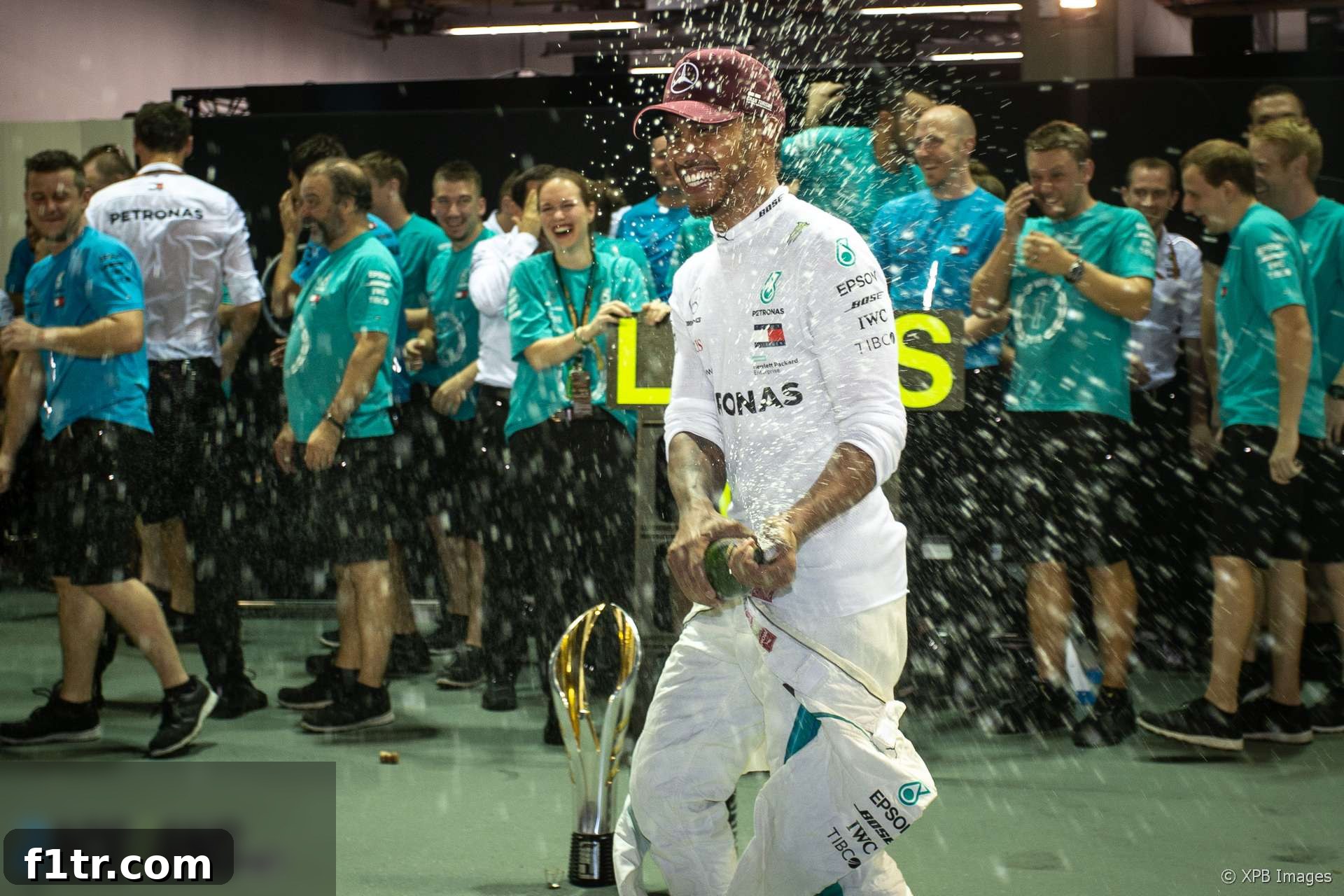
In a masterful display of strategic brilliance and exceptional driving, Lewis Hamilton secured a dominant victory at the 2018 Singapore Grand Prix, a circuit Mercedes-AMG Petronas F1 Team Principal Toto Wolff famously described as the team’s “bogey circuit.” This triumph at the demanding Marina Bay Street Circuit not only extended Hamilton’s championship lead over Sebastian Vettel and Ferrari to a commanding 40 points but also marked a significant psychological victory for the Silver Arrows, proving their versatility on tracks previously thought to be their weakness.
The Singapore Grand Prix, a unique night race set against the stunning backdrop of the city skyline, is renowned for its arduous conditions, requiring maximum downforce, precise driving, and meticulous tyre management. Historically, the tightly-wound street circuit, with its numerous slow-speed corners and lack of long straights, had not been a happy hunting ground for Mercedes. Ferrari, with its more agile car design and superior traction in specific conditions, often held an edge. Wolff’s candid admission of Singapore being their “bogey circuit” underscored the immense challenge facing the team heading into that pivotal weekend in the 2018 Formula 1 season. Yet, what unfolded was a testament to Mercedes’ relentless pursuit of perfection and their ability to adapt and overcome.
The Intense 2018 Championship Battle
The 2018 Formula 1 season had been a captivating ebb and flow between Lewis Hamilton and Sebastian Vettel, representing Mercedes and Ferrari respectively. Both drivers were vying for their fifth world championship, adding an extra layer of intensity to every race. Ferrari had started the season strongly, often possessing the quicker package in the initial phase, particularly evident on tracks requiring high downforce and excellent mechanical grip. Vettel had enjoyed a robust start, but a series of misfortunes and strategic errors on Ferrari’s part, coupled with Hamilton’s unwavering consistency and Mercedes’ development prowess, had seen the momentum shift. Coming into Singapore, Hamilton had already begun to build a comfortable margin, but with seven races remaining, anything could happen, and Ferrari was desperate to regain lost ground.
The pressure on Mercedes was immense. After a challenging Belgian Grand Prix where Ferrari had shown superior performance, the engineers at Brackley and Brixworth embarked on a deep dive into understanding their W09 car. Wolff revealed that the team had “worked so hard after Spa to understand the car,” a testament to their analytical rigour. This extensive review wasn’t merely about incremental gains; it was about addressing fundamental characteristics that made the car less competitive on certain layouts. The improvements brought to Singapore, including revised aerodynamic elements, were specifically targeted at enhancing the car’s performance in tight, slow-speed corners and improving cooling efficiency in the humid tropical conditions, factors critical for success at Marina Bay.
Hamilton’s “Stardust” Qualifying Lap
The foundation of Hamilton’s Singapore victory was laid during a breathtaking qualifying session. Despite the perceived disadvantage of the circuit for Mercedes, Hamilton produced what many, including Toto Wolff, described as one of the finest laps of his career. It was a lap born of pure instinct, aggression, and precision, pushing the W09 beyond its theoretical limits. Hamilton himself called it “magical,” an out-of-body experience where he extracted every ounce of performance from the car. The lap was indeed “stardust,” defying expectations and leaving rivals Sebastian Vettel and Max Verstappen trailing by significant margins.
Securing pole position at Singapore is notoriously crucial, given the difficulties of overtaking on the narrow street circuit. Hamilton’s stunning performance not only gave him the strategic advantage of leading into Turn 1 but also delivered a significant psychological blow to his championship rival, Vettel, who could only manage third place. This qualifying masterclass set the perfect stage for Mercedes to control the race, provided they could execute their strategy flawlessly and manage the unique demands of the Singapore Grand Prix for 61 laps.
The Strategic Chess Match and Tyre Mastery
From the moment the lights went out, Hamilton controlled the race with seasoned precision, navigating the initial chaos of the first lap and maintaining his lead. However, a Formula 1 Grand Prix is rarely a straightforward affair, especially at a venue like Marina Bay, where safety cars, tyre degradation, and strategic gambles can turn the tide instantly. Ferrari, desperate to challenge Hamilton, launched an aggressive undercut attempt during the pit stop window, bringing Sebastian Vettel in early for a fresh set of Pirelli Ultrasoft tyres.
An undercut strategy relies on the fresh tyres providing a significant performance advantage for the car that pits early, allowing them to gain track position on rivals who remain out on older, slower tyres. It’s a high-risk, high-reward move, particularly in Singapore where tyre wear is a constant concern. Wolff acknowledged the boldness of Ferrari’s call, stating, “it was not clear whether the ultra softs would make it to the end.” The ultrasofts, while offering immediate grip, are notoriously less durable than their softer counterparts. Mercedes, however, had meticulously calculated their strategy and held firm in their belief that the Soft compound was the optimal tyre for Hamilton’s lengthy second stint.
Mercedes’ confidence in the Soft tyre proved to be the right call. Hamilton’s impeccable tyre management, combined with the W09’s improved characteristics, allowed him to maintain a strong pace even as his tyres aged. The Ferrari gamble on the ultrasofts ultimately backfired, as Vettel struggled with degradation and found himself unable to make significant inroads. Hamilton’s ability to extract performance from the durable Soft tyres, nursed carefully throughout the remainder of the race, cemented his lead and showcased both his driving prowess and the strategic acumen of the Mercedes pit wall. The team’s faith in their data and preparation paid off handsomely, thwarting Ferrari’s aggressive manoeuvre and solidifying their control of the race.
Toto Wolff’s Resounding Declaration of Achievement
For Toto Wolff, the victory in Singapore was more than just another race win; it was a profound testament to the team’s resilience and determination. His words after the race conveyed a deep sense of satisfaction and pride. “It feels like one of the greatest victories because it was really our bogey circuit in the past,” Wolff declared. This statement highlighted the intrinsic value of conquering a known weakness, transforming it into a strength through sheer hard work and strategic ingenuity.
Wolff emphasised the collective effort behind the triumph, stating, “We were so motivated to do well here and show that we can also perform in Singapore and coming here and finishing by winning the race with a very solid team result is really a great achievement for everybody in the team.” This wasn’t merely about Hamilton’s individual brilliance; it was a victory forged in the collaborative spirit of every engineer, strategist, mechanic, and support staff member who contributed to understanding the car, optimising its performance, and executing a flawless race weekend. The win at Marina Bay was a powerful affirmation of Mercedes’ championship credentials and their holistic approach to Formula 1 racing, embodying their mantra of “making your own destiny.”
Impact on the Championship Landscape
The Singapore Grand Prix victory was a monumental turning point in the 2018 championship battle. By extending his lead to 40 points, Lewis Hamilton gained a significant psychological and mathematical advantage over Sebastian Vettel. This victory, achieved on a circuit where Mercedes was expected to struggle, instilled immense confidence within the team while simultaneously dealing a heavy blow to Ferrari’s morale. The momentum decisively swung in Mercedes’ favour, and from this point onwards, Hamilton continued his relentless march towards his fifth World Championship title. The race in Singapore became a symbol of Mercedes’ ability to adapt, innovate, and perform under the most intense pressure, ultimately defining their dominant season.
The win underscored Mercedes’ strategic superiority and Hamilton’s exceptional ability to deliver under pressure, even when the car might not be the outright fastest on a given track. It demonstrated that championships are won not just by raw speed, but by consistency, strategic foresight, and the collective strength of an entire team overcoming every obstacle. The Singapore Grand Prix 2018 remains a standout moment, not just for Hamilton’s driving, but for Mercedes’ strategic triumph over their “bogey circuit.”
Explore More from the 2018 F1 Season
Delve deeper into the memorable moments and pivotal events that shaped the thrilling 2018 Formula 1 season. From technical insights to championship rivalries, these articles offer a comprehensive look at one of the most exciting periods in recent F1 history.
- F1 feared “death knell” for Drive to Survive after Ferrari and Mercedes snub
- McLaren staff told us we were “totally crazy” to take Honda engines in 2018 – Tost
- ‘It doesn’t matter if we start last’: How Red Bull’s junior team aided Honda’s leap forward
- Honda’s jet division helped F1 engineers solve power unit problem
- McLaren Racing losses rise after Honda split
Browse all 2018 F1 season articles