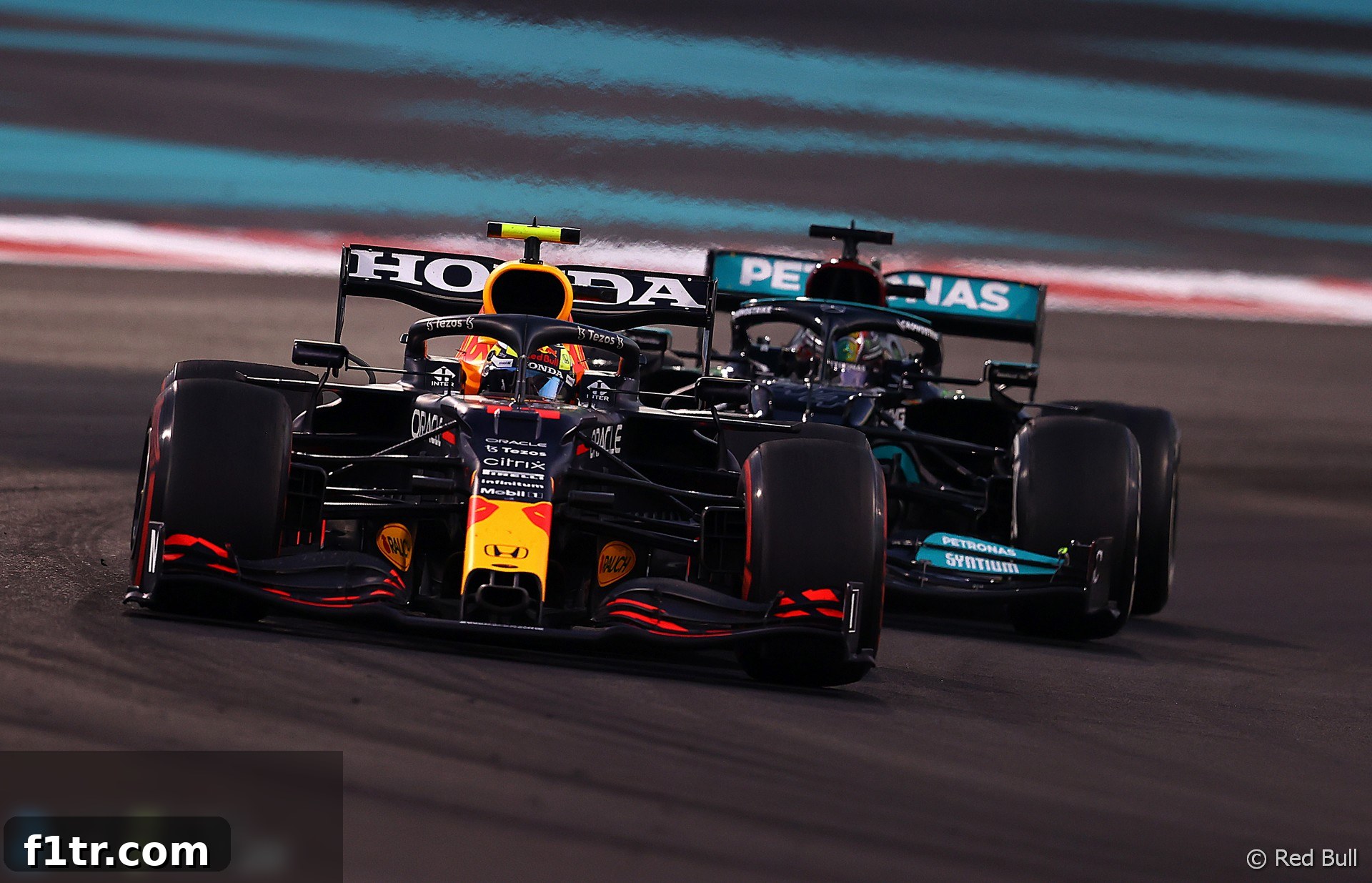
The year 2021 marked a pivotal moment in Formula 1, ushering in a new era of financial prudence with the long-anticipated introduction of the sport’s first-ever budget cap. While minor adjustments to sporting and technical regulations from the extraordinary 2020 ‘Covid’ season presented their own challenges, it was the financial regulations – commonly known as the ‘budget cap’ – that truly reshaped the landscape of F1. This groundbreaking initiative, under consideration since before Liberty Media acquired F1 rights in 2017, aimed to curb runaway spending and foster a more level playing field across the grid, ensuring the long-term sustainability and competitive balance of the sport.
Understanding F1’s Financial Regulations: Scope and Exclusions
The core principle of the budget cap is to restrict expenditure in areas directly impacting car performance. The initial cap was set at $145 million for the 2021 season, with planned reductions of $5 million per annum in 2022 ($140m) and 2023 ($135m). These limits apply primarily to three critical domains:
- Car Design and Development: Encompassing research, conceptualization, aerodynamic testing, and the continuous evolution of vehicle components.
- Car and Component Manufacture: Covering the production costs of all parts, from chassis to smaller mechanical elements.
- Testing and Race Operations: Including expenses incurred during pre-season testing, in-season tests, and all logistical and operational costs associated with Grand Prix weekends.
However, the budget cap is not all-encompassing. Several significant expenditures are explicitly excluded, a point that has sparked considerable debate. These exclusions include marketing and hospitality costs, team travel expenses (designed to prevent a decline in accommodation and flight standards), and car demonstrations or heritage operations for historic vehicles. Crucially, and perhaps most controversially, the salaries of drivers and the top three highest-paid team personnel are also exempt from the cap. This particular exclusion allows wealthier outfits to leverage their financial muscle to attract and retain superstar drivers, engineers, and strategists, potentially creating a distinct competitive advantage despite the overarching budget constraints. Critics argue this undermines the cap’s primary goal of leveling the playing field, as human talent remains a paramount performance differentiator.
Despite these exclusions, the introduction of the cap is a significant step towards mitigating the vast spending disparities that have historically plagued F1. While major teams benefit from decades of accrued facility and operational advantages, experts like AlphaTauri team boss Franz Tost predict that their momentum might carry them for up to three years before the full effects of the cap truly manifest. McLaren technical director James Key echoed this sentiment, believing that while “mismatches in facilities and things” will persist for a while, the influence of performance engineering will gradually overshadow financial might as teams adjust to the new paradigm.
The Unforeseen Impact of Covid-19: A Radical Shift
The journey to the budget cap’s implementation was fraught with unexpected challenges, primarily due to the global Covid-19 pandemic. Originally, the cap (then set at $175 million) was intended to debut alongside F1’s radical new technical regulations in 2021. This timeline would have allowed teams open budgets during 2020 to design and develop their completely new cars, while simultaneously campaigning their outgoing designs without financial pressure. The cap would then seamlessly kick in for the first year of the ‘new era’ cars. This orderly transition, however, was shattered by the pandemic.
The unprecedented crisis forced F1 to make drastic, emergency revisions. To mitigate the financial strain on teams and ensure the survival of the sport, the planned budget cap was reduced by a significant $30 million, and the existing car designs were mandated to be carried over into 2021. These crucial decisions, while likely saving several teams from bankruptcy and arguably safeguarding the very future of Formula 1, simultaneously threw the meticulously laid plans for an orderly transition into disarray. The original blueprint, carefully constructed over years, was effectively discarded, demanding rapid adaptation from all stakeholders.
Despite the immense upheaval, the governing body, the FIA, deserves considerable credit for its swift and decisive action. Navigating the complexities of securing universal agreement from all teams, especially the ‘big three’ who faced the most substantial cuts to their existing operational structures, was a monumental task. Indeed, the leading teams also demonstrated remarkable foresight and commitment to the sport’s long-term health by agreeing to these unplanned reductions, even necessitating staff cuts. Ferrari team boss Mattia Binotto highlighted the severity of the situation at the time: “The revised cap cannot be achieved without further significant sacrifices, especially in terms of human resources. However, if the current situation puts the existence of some of our competitors in this sport in doubt and make it necessary to revise certain cornerstones, then Ferrari would be open to it.” This willingness to prioritize the collective good over individual interests underscored the acute need for these drastic measures.
Following intense negotiations and a six-month “glide path” to ensure all statutory requirements were met by June 2021, the larger teams ultimately accepted budgets that presented a dual challenge: not only operating their 2021 cars within the new constraints but simultaneously designing, developing, and commencing manufacture of their entirely new 2022 cars. To prevent teams from circumventing the regulations by “sliding” 2022 design and development costs under the table during the previous year, all work on the 2022 cars was strictly outlawed until January 1st, 2021.
Real-World Implications: Strategic Choices and Operational Shifts
The immediate impact of the financial regulations on team operations became strikingly clear during the 2021 Monaco Grand Prix. Mercedes F1 CEO Toto Wolff openly admitted that the team was forced to forgo a crucial wet tyre test for the 2022-specification 18-inch tyres due to budget constraints. Wolff explained, “We are trying to make the budget cap, which is not trivial, and we couldn’t take the costs related to the tyre test and we wouldn’t have been able to send our mechanics on such a long journey.” He added that the estimated $1 million in damage costs from Valtteri Bottas’ significant crash at Imola had effectively “tipped the balance,” exhausting their contingency funds for such activities.
In a demonstration of both collaboration and underlying competitive strategy, Ferrari stepped into the breach, agreeing to conduct the Pirelli wet tyre test. Mattia Binotto articulated Ferrari’s rationale, stating, “As Ferrari, we always said that 2022 is our priority over 2021. Testing Pirelli tyres, helping Pirelli develop the new tyres, we believe is important for us. Luckily enough, we didn’t have a crash in Imola, so eventually we have some more contingency to Mercedes today, so we are happy to accept and support.” The unstated yet clear implication was that Ferrari, unlike in previous years of unlimited spending, was compelled to make a stark choice between optimizing its 2021 performance and investing in the pivotal 2022 season. Binotto later conceded, “No compromises have been done in developing 2022 cars… so we compromised the 2021 car.” This anecdote vividly illustrates how the budget cap forces teams to make difficult, strategic trade-offs, prioritizing future development over immediate gains.
Adapting to a Leaner Future: Efficiency at Every Level
To ensure widespread understanding and compliance with the financial regulations, teams embarked on comprehensive internal training programs for staff at all levels. These initiatives reinforced the critical need for cost-saving across every aspect of operations. Significant financial juggling became a routine necessity to maximize efficiencies; savings generated in one area, such as freight costs, could then be reallocated to performance-enhancing activities.
Andrea Stella, McLaren’s executive director of racing, highlighted the impact on his specific domain: “In my specific area, the main impact is the freight. This isn’t an operational element of going racing that’s sometimes not in the spotlight, but actually is a considerable opportunity to generate savings and efficiency. I really welcomed the push given by the budget cap, because we generated efficiency in the way we ship stuff around the world. We know what we need to go racing, that’s one element and I’m really pleased in the way we have been able to generate this efficiency [to benefit performance].” This demonstrates how the cap has spurred innovation not just in car design, but also in logistics and operational management.
However, as Mattia Binotto succinctly put it, “With the financial regulations, we cut some of the development and cut parts of our organization. When you’ve got a cap, you need to limit yourself.” This sentiment underscores the painful adjustments many teams, especially the larger ones, had to undertake. James Key also elaborated on McLaren’s more cautious approach to material selection. “We’ve done a lot of work on seeing what alternatives there are, in certain areas, trying to make sure that we’re not ‘over engineering’. There are some carbon fibres, which are very expensive but very effective, and you sort of default to them knowing that your part will work as intended. It adds a layer of workload and complexity onto material selections, but it’s the right thing to do to reduce costs.” This shift reflects a move towards ‘smart engineering’ – achieving optimal performance with cost-effective solutions.
The 2022 season’s overhaul extended beyond financial controls, encompassing changes to the sporting regulations as part of F1’s broader cost-saving ethos. A significant alteration was the reduction to three-day race weekends, demanding teams compress the same workload into a shorter timeframe. This further complicated the task for technical directors like Key, who stressed the need for cars to be intrinsically simpler to work on, thereby saving both time and money. “So, you want to have a car which is slightly easier to operate, and you don’t find yourself up against time or rushing or having to complete the car in the morning,” he explained, emphasizing the importance of avoiding hurried work that can lead to missing crucial aspects of a race weekend.
Drawing on his extensive experience with independent teams before joining McLaren, Key observed firsthand the power of efficiency under cost restraints. “I’ve seen how much efficiency you can gain by thinking in a different way, trying to extract maybe 80% [performance] out of 30% of the cost. There are definitely ways of working which are kind of smart and to the point and prioritised and lean and kind of aggressive and agile. That’s where you need to be under the cost cap.”
Implementing these changes involved a massive balancing act, particularly concerning team restructuring. Key admitted that reorganizing McLaren’s technical department to meet the cap was challenging. “There was an element of restructuring we had to go through with the team, but we tried to minimise [staff losses and disruption] as best we could because obviously we wanted to save the workforce we had, we wanted the team to be internally recognisable, because it settled down into a rhythm of work now with various groups operating very well together.” He clarified that the aim was not a wholesale overhaul, but a strategic adjustment: “We didn’t go through a massive restructure or a huge rehash in the way the team operates; we just looked at the sensible directions. We needed to find efficiencies and found many efficiencies. Disrupting the team would have been counter to what our objectives are longer-term. We played a very careful balancing act between the size of the team and other budgets. We’ll see if we got it right next year, more so than this year…”
Enforcement, Adjudication, and the Spectre of Penalties
Perhaps the most critical aspect of the new financial regulations lies in their enforcement. Teams are required to submit comprehensive reporting statements, detailing all information for the full operating year as outlined in the regulations, along with any additional declarations, by 19:00 CET on March 31st of the subsequent year. Beyond these annual submissions, the FIA reserves the robust right to conduct unscheduled spot-checks at any point during the year. This proactive approach ensures continuous monitoring and discourages any attempts at non-compliance.
Alpine executive director Marcin Budkowski provided insight into the FIA’s diligent oversight: “There’s quite a lot of checks going on. We get regular visits from the FIA, regular requests for data and for information. Probably more than we were expecting and they are at very short notice and including surprise visits to the factory. We are very happy about it, because that’s how it should be and that’s how it should be policed.” McLaren team principal Andreas Seidl echoed this confidence, stating, “I see no red flags. I’m very happy with the entire process that is in place at the moment, regarding enforcing the budget cap or the financial regulations. I have full trust in the system that is in place and in the FIA, and that if there is a breach, depending on what the breach is, there is the right penalty for it.”
However, the true “acid test” of the financial regulations will not simply be the outcome of the adjudication process, but critically, any penalties applied should a team be found in breach. A significant distinction from sporting and technical regulations is the absence of prescribed tariffs for financial infractions. Instead, any financial breaches are subject to penalties handed down on a discretionary basis by the FIA’s Cost Cap Adjudication Panel. Sanctions can range widely, from formal reprimands and minor points deductions to severe penalties such as championship disqualification for both the team and its designated responsible executive.
Marcin Budkowski elaborated on the deliberate reasoning behind this flexibility: “The regulations, as they are written, don’t specify what the penalty is for [a specific] breach. The reason they are not defined is that as soon as you define a penalty, teams start to calculate whether [a certain interpretation] is the right thing to do or not. If you know you risk a five-second penalty in a race for track limits or something like that, you make a call whether it’s better to serve your penalty or not, then build a gap to gain an advantage.” This approach aims to prevent teams from strategically weighing the benefits of a breach against a known penalty, thereby fostering genuine compliance rather than calculated risk-taking. As Budkowski concluded, “We haven’t seen any breaches yet, we haven’t seen any sanctions yet, so we will see effectively if it happens, but hopefully it won’t be necessary, and everybody will respect them.”
The Future of Competition: A New Era
The introduction of the budget cap represents a transformative moment for Formula 1, pushing teams to rethink their entire operational and developmental philosophies. While the immediate aftermath saw challenges, adaptations, and strategic compromises, the long-term vision is clear: a more financially sustainable, competitive, and ultimately more exciting sport. As teams continue to navigate the complexities of these regulations, the true measure of their success will be seen in the years to come, as the playing field gradually levels and ingenuity within constraints becomes the ultimate differentiator. The budget cap is not merely a financial rule; it’s a fundamental shift in the very nature of Formula 1 competition, promising a thrilling new chapter for fans and participants alike.
RacingLines
- The year of sprints, ‘the show’ – and rising stock: A political review of the 2021 F1 season
- The problems of perception the FIA must address after the Abu Dhabi row
- Why the budget cap could be F1’s next battleground between Mercedes and Red Bull
- Todt defied expectations as president – now he plans to “disappear” from FIA
- Sir Frank Williams: A personal appreciation of a true racer
Browse all RacingLines columns