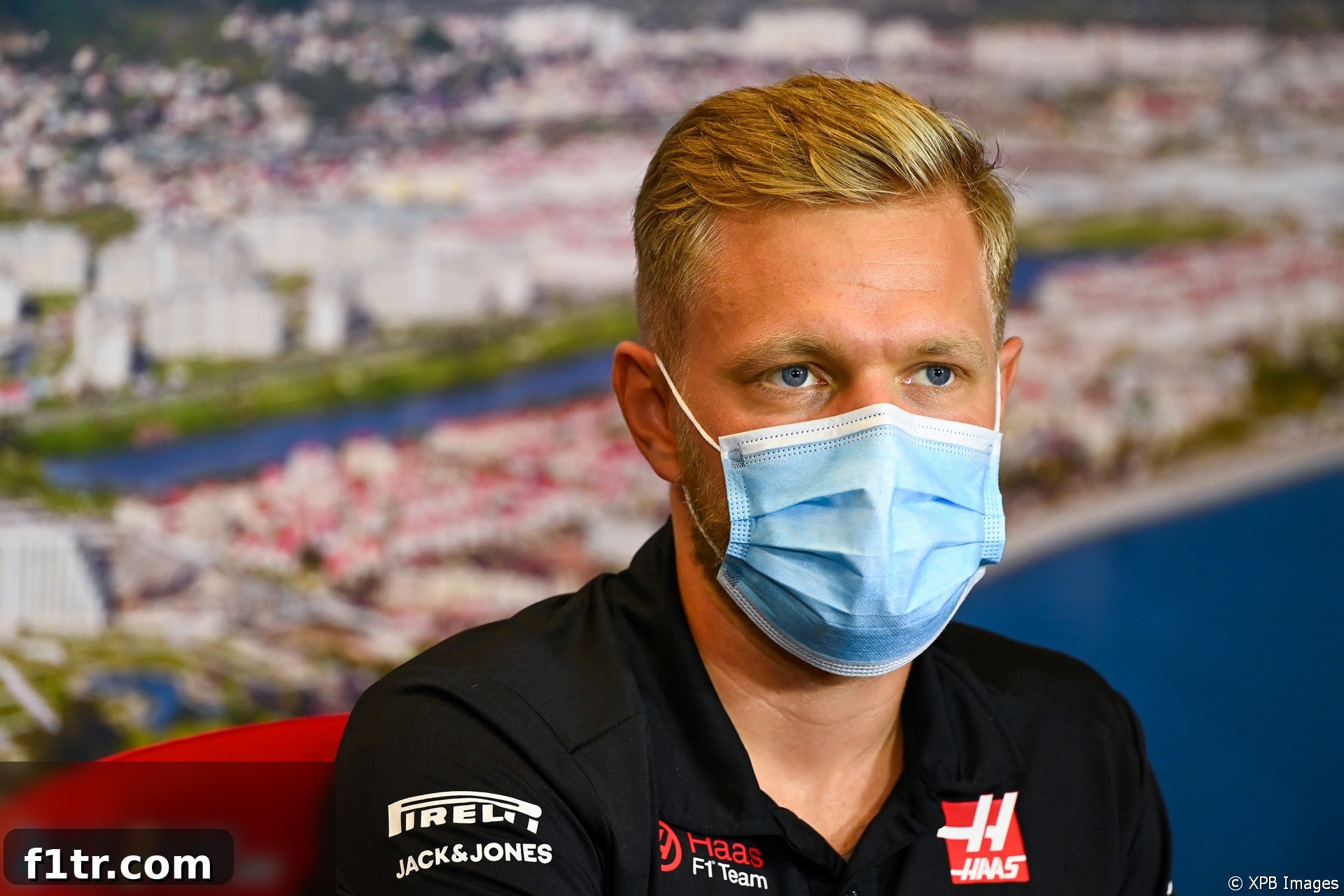
The Haas Formula 1 Team is set to undergo a significant transformation in its driver lineup for the 2021 season, as both Kevin Magnussen and Romain Grosjean have confirmed their departure from the American outfit. This dual announcement marks the end of an era for Haas, which has fielded the experienced pairing since the 2017 season, establishing a consistent presence on the grid with this formidable duo.
Romain Grosjean was the first to reveal his exit, taking to social media to announce that the 2020 Formula 1 season would be his last with the team. Shortly thereafter, his Danish teammate, Kevin Magnussen, echoed the sentiment, confirming his own departure. This synchronized announcement signals a complete reset for Haas as they prepare to introduce an entirely fresh driver roster for the upcoming championship.
Kevin Magnussen’s Journey with Haas: Four Years of Growth and Dedication
Kevin Magnussen’s tenure at Haas has been a defining period in his Formula 1 career. Reflecting on his time with the team, Magnussen shared, “The 2020 Formula 1 season will be my last with Haas F1 Team. I have had a great time with the team for four years and I look back at a great journey.” His words encapsulate the deep connection he forged with the team, a bond that saw him spend more seasons with Haas than any other F1 team in his career.
Magnussen joined Haas in 2017, just one year after the team made its debut in Formula 1. Embracing the challenge of contributing to a burgeoning F1 operation, he noted, “Being part of a brand new team has been a challenge that I have thoroughly enjoyed, and it has brought me a huge amount of experience that has helped me grow and develop as a racing driver.” This commitment to a young, ambitious team allowed Magnussen to hone his skills and assert his reputation as a tenacious and uncompromising racer.
Throughout his four years, Magnussen frequently expressed gratitude to team owner Gene Haas and team principal Guenther Steiner for their unwavering loyalty and trust. In a sport often characterized by high turnover, the stability offered by Haas allowed Magnussen to build a consistent foundation. While his future plans remain under wraps, the Danish driver assured fans, “I am still working on my plans for the future, which I will announce in due course. There are still six races to do this season, and I am determined to give my all to finish off on a high. Thank you all for your support.” This commitment underscores his professionalism as he looks to conclude his Haas chapter strongly.
Romain Grosjean’s Pivotal Role: Laying the Foundations for Haas F1
Romain Grosjean played an absolutely foundational role in the establishment and early success of the Haas F1 Team. As one of the first drivers recruited when Haas entered the sport in 2016, his blend of speed and extensive Formula 1 experience was invaluable. Team Principal Guenther Steiner highlighted Grosjean’s crucial contribution, stating, “Romain was a fundamental part of our establishment as we sought to get a driver onboard with both speed and experience.”
Indeed, Grosjean quickly delivered on this promise. His remarkable performances in early 2016, including points finishes in Australia and Bahrain, were a testament to his talent and the significant effort the fledgling team had invested. These initial results were not merely personal achievements; they served as a powerful validation of Haas’s entry into the notoriously competitive world of Formula 1. Grosjean’s ability to extract performance from a new car and translate it into tangible results provided the team with instant credibility and a morale boost that proved vital in its inaugural season.
His experience, particularly from his time with Lotus, allowed him to provide critical feedback and guidance, helping shape the VF-16 chassis and accelerating the team’s learning curve. Grosjean’s dedication to pushing the team forward, even through challenging periods, established a professional benchmark within the garage, laying a solid groundwork for Haas’s future development and growth in the subsequent seasons.
The Dynamic Duo: Highs and Lows of the Grosjean-Magnussen Partnership
The pairing of Romain Grosjean and Kevin Magnussen at Haas F1 Team, beginning in 2017, forged one of the grid’s most enduring and, at times, explosive partnerships. Their time together was marked by significant highs, moments of intense on-track rivalry, and shared struggles against challenging machinery. It was a dynamic that encapsulated the spirit of a midfield team fighting tooth and nail for every point.
One of the earliest successes for the duo was at the 2017 Monaco Grand Prix, where they secured Haas’s first-ever double points finish – a significant milestone for the young team. However, the zenith of their collaboration came in the spectacular 2018 season. That year, Haas achieved an impressive fifth place in the Constructors’ Championship, a monumental feat for a team still relatively new to Formula 1. Both drivers were instrumental in this success, consistently battling for points and often outperforming rivals from more established teams. The VF-18 chassis proved to be a genuinely competitive car, allowing Grosjean and Magnussen to showcase their raw speed and aggressive racing styles.
Guenther Steiner fondly recalled this period: “When Kevin joined a season later, we saw an immediate return with both cars scoring points, and of course, our first double points finish in Monaco that year. We have a lot of good memories together – in particular our 2018 season when we finished fifth in the standings in only our third season. Romain and Kevin played a significant part in that success.”
However, the partnership also navigated considerable adversity. The 2019 season saw a dramatic dip in performance, largely attributed to an unpredictable car that struggled with tire management and aerodynamic consistency. This led to frustrating races, sometimes strained inter-team radio communications, and even on-track incidents between the two drivers, underscoring the pressure they were under. Despite these challenges, their commitment to the team remained steadfast, continually striving to extract every ounce of performance from the car.
The 2020 season, further complicated by the global pandemic, continued to present significant difficulties for Haas. The VF-20 proved to be one of the less competitive cars on the grid, often relegating the drivers to the back of the pack. Yet, Grosjean and Magnussen continued to display their resilience and fighting spirit, often engaging in fierce battles with minimal reward. Their experience and feedback remained crucial, even when the results weren’t there to show for it.
Guenther Steiner’s Valedictory Remarks and Haas F1’s Future Direction
Guenther Steiner, the charismatic Team Principal of Haas F1, conveyed the team’s gratitude for the contributions of both departing drivers. “I want to extend my thanks to both Romain and Kevin for their hard work and commitment to Haas F1 Team over the past few seasons,” Steiner stated. He emphasized their importance, particularly through the challenging 2020 season: “Of course, there is still plenty of racing left in the 2020 season. It’s been a challenging year, no doubt about that, but both drivers have given their all behind the wheel of the VF-20. We value their inputs and experience to keep pushing the team forward through to the Abu Dhabi Grand Prix in December.”
The decision to replace both drivers signals a significant strategic shift for Haas. With a completely fresh lineup for 2021, the team is likely looking for a reset, potentially bringing in younger talent or drivers with significant financial backing to help navigate the upcoming financial regulations and the new era of Formula 1. The “silly season” rumors prior to the announcement had already linked several drivers, including members of the Ferrari Driver Academy like Mick Schumacher and Callum Ilott, as well as Nikita Mazepin, to seats at Haas, indicating the direction the team might take.
Replacing two experienced drivers with a combined wealth of Formula 1 knowledge presents both challenges and opportunities. While the new drivers will bring fresh perspectives and energy, the team will need to invest considerable effort in integrating them, adapting to their feedback, and working through the initial learning curve. The shift could impact team development in the short term, but it also opens doors for new dynamics and potentially a more commercially viable structure for the future. The choices made for 2021 will undoubtedly shape the trajectory of Haas F1 Team for years to come.
What Lies Beyond F1 for Magnussen and Grosjean?
As Kevin Magnussen and Romain Grosjean prepare to conclude their Formula 1 careers with Haas, attention now turns to their future endeavors in motorsport. Both drivers possess significant talent and experience, making them attractive prospects for other racing series around the globe.
For Kevin Magnussen, at 28 years old at the time of the announcement, a move to another top-tier motorsport championship is highly probable. His aggressive driving style and proven ability to extract performance from various F1 cars could make him a strong candidate for categories such as the NTT IndyCar Series in North America, where his countryman Christian Lundgaard has found success, or the World Endurance Championship (WEC), a series his father Jan Magnussen also competed in with distinction. Other possibilities include touring car championships like DTM, or even a return to sports car racing, where he has previously shown promise. Magnussen’s clear desire to continue racing at a competitive level ensures that he will likely find a new challenge soon.
Romain Grosjean, 34 at the time of his departure, has openly expressed interest in exploring opportunities beyond Formula 1, with the IndyCar Series often cited as a primary target. His successful test outings and eventual full-time move to IndyCar after his F1 exit (following a serious accident in Bahrain) showcased his adaptability and determination. Grosjean has also demonstrated his versatility by competing in sports car races and even expressed interest in other forms of racing. His F1 legacy is marked by flashes of brilliance, numerous podium finishes, and a never-say-die attitude that makes him a compelling figure for any top-tier racing series looking for an experienced and passionate competitor.
The F1 paddock is a brutal environment, and securing a seat depends on a complex interplay of talent, experience, and often, financial backing. Both Magnussen and Grosjean have proven their mettle against the best drivers in the world, and while their F1 chapter closes, their racing careers are far from over. Their pursuit of new challenges will be keenly watched by fans across the motorsport world.
Haas F1 Team: A Look Back at an American Ambition and Forward to a New Era
The Haas F1 Team’s entry into Formula 1 in 2016 represented a bold American ambition, becoming the first US-backed outfit to join the grid in three decades. Spearheaded by businessman Gene Haas and guided by the inimitable Guenther Steiner, the team adopted a unique business model, leveraging technical partnerships with Ferrari and Dallara to accelerate its competitive development. This approach initially yielded remarkable results, particularly with Grosjean’s early points finishes, validating their innovative strategy.
The team quickly established itself as a formidable midfield contender, culminating in their stellar 2018 season, where they finished fifth in the Constructors’ Championship. This period, largely defined by the consistent efforts of Grosjean and Magnussen, showcased the team’s potential to punch above its weight class despite being one of the smallest operations on the grid. However, subsequent seasons presented increasing challenges, as the team struggled to maintain car performance, often battling with fundamental issues and the relentless development pace of larger rivals.
The departure of both drivers signifies more than just a personnel change; it heralds a new era for Haas F1. The team is now at a crossroads, needing to make strategic decisions about its long-term viability and competitiveness in a rapidly evolving Formula 1 landscape. With new financial regulations, a budget cap, and a complete overhaul of technical rules looming for future seasons, a fresh driver lineup could be part of a broader strategy to reset, recalibrate, and potentially attract new investment or align with a different development philosophy.
As Haas looks to 2021 and beyond, the team faces the dual challenge of nurturing new talent while recapturing the competitive edge that once propelled them into the top half of the Constructors’ standings. The journey ahead for the only American team on the grid promises to be as intriguing as its initial foray into the pinnacle of motorsport.
Conclusion: A Chapter Closes, A Future Unfolds for Haas and its Drivers
The confirmed departures of Kevin Magnussen and Romain Grosjean mark a significant turning point for the Haas F1 Team. For four seasons, this dynamic pairing has been at the heart of the American team’s journey in Formula 1, navigating the highs of a fifth-place constructors’ finish and the lows of challenging machinery with unwavering dedication and fighting spirit. Their contributions have been instrumental in establishing Haas’s presence on the global motorsport stage, and their legacy within the team will undoubtedly be remembered.
As these two experienced drivers embark on new chapters in their illustrious careers, potentially exploring different motorsport disciplines, the Haas F1 Team prepares for a comprehensive reset. With a completely new driver lineup set to be announced, the 2021 season promises to be a fresh start, filled with both opportunities and challenges, as the team aims to reclaim its competitive edge in the highly demanding world of Formula 1.
Fans will eagerly follow the conclusion of the 2020 F1 season, keen to witness Magnussen and Grosjean’s final races with Haas, and then look forward to the exciting new directions their careers and the team itself will take. This is not merely an end, but a catalyst for new beginnings for all involved in this significant F1 story.
View the current list of 2021 F1 drivers and teams
Become a RaceFans supporter andgo ad-free
2020 F1 season
- Grosjean to make F1 test return tomorrow for first time since Bahrain horror crash
- Pictures: Wrecked chassis from Grosjean’s Bahrain fireball crash to go on display
- Bottas vs Rosberg: Hamilton’s Mercedes team mates compared after 78 races each
- F1 revenues fell by $877 million in Covid-struck 2020 season
- Hamilton and Mercedes finally announce new deal for 2021 season
Browse all 2020 F1 season articles