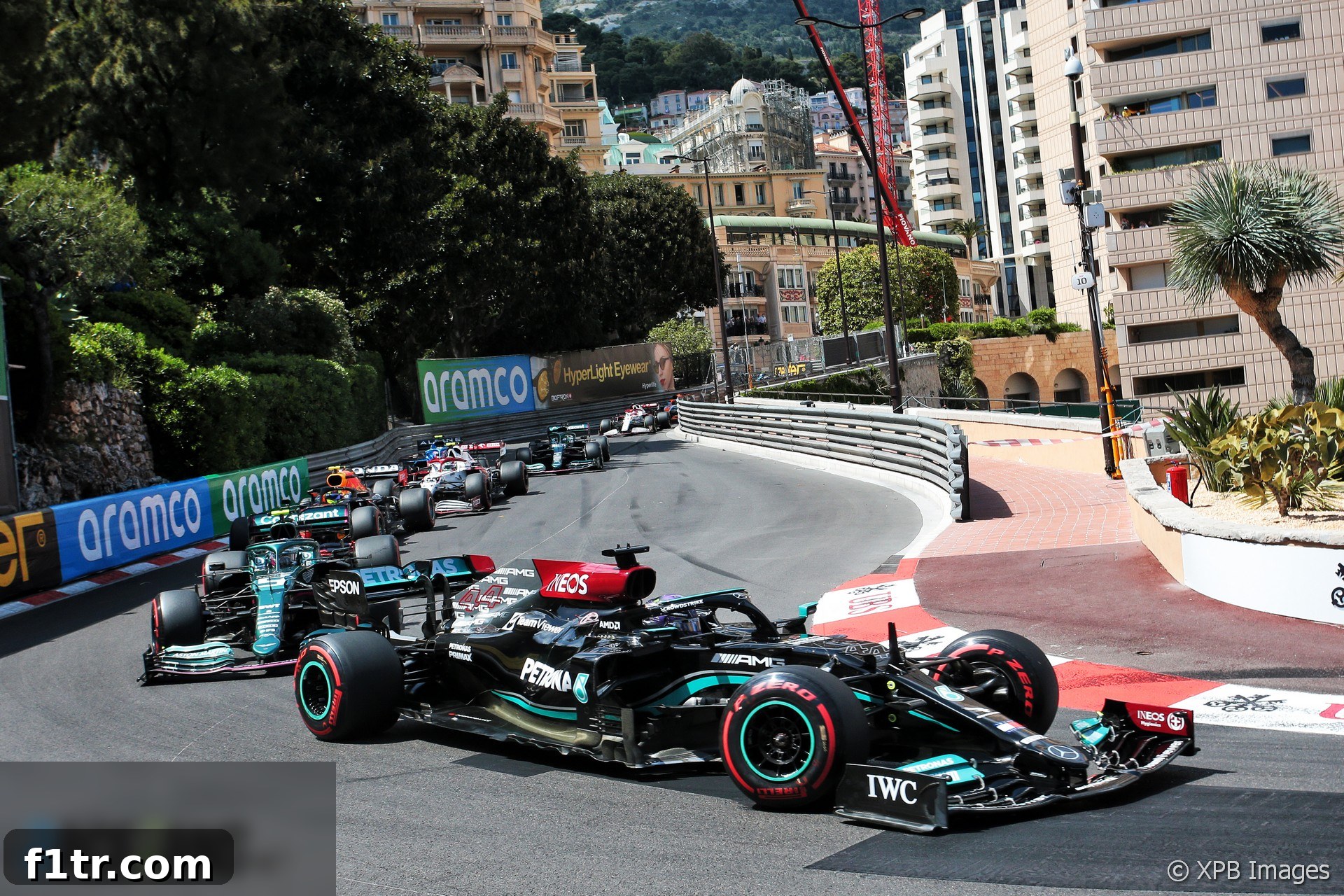
Lewis Hamilton, the seven-time Formula 1 world champion, offered a candid assessment of Mercedes’ challenging weekend at the Monaco Grand Prix, suggesting that their struggles on the principality’s unique streets are a strong indicator of their potential for much greater competitiveness on more conventional circuits later in the season. The iconic street circuit, known for its tight corners and unforgiving barriers, often exposes specific car characteristics, and for Mercedes, it highlighted areas needing immediate attention.
The initial optimism on Thursday, when the team showed promising pace during practice sessions, quickly dissipated as conditions changed dramatically. A significant drop in track temperature on Saturday proved to be Mercedes’ Achilles’ heel, profoundly impacting their ability to extract performance from their tires. Hamilton, who ultimately qualified a disappointing seventh, found himself trapped in a frustrating race, unable to make any meaningful progress on a track where overtaking is notoriously difficult. His performance was a stark contrast to his usual front-running displays, leaving both the driver and the team with significant questions to answer.
Hamilton specifically pinpointed the team’s inability to switch on their Pirelli tires effectively in the colder Monaco conditions as a critical factor. Unlike their rivals, Mercedes struggled to bring their tires into the optimal operating window, a prerequisite for generating grip and achieving competitive lap times. This issue was particularly evident during the crucial qualifying session, where every tenth of a second is paramount. The difference in tire performance between Mercedes and other leading teams was stark, leaving the Silver Arrows at a significant disadvantage even before the race began.
“We’re genuinely struggling with our tires in cold conditions for whatever reasons,” Hamilton explained, detailing the root cause of their woes. “We simply couldn’t switch on the tires, couldn’t get them working in the way the others could in qualifying. This was a major setback. What’s more perplexing is that while we struggled, our competitors seemed to achieve really good long runs and impressive race pace. This presents a massive question mark for us: how do we effectively utilize these tires on tracks like Monaco?”
The tire enigma has been a recurring theme in Formula 1, with teams constantly striving to understand the complex interactions between car setup, track conditions, and tire compounds. While Mercedes has generally demonstrated strong tire management in previous races, Monaco proved to be an anomaly. “Obviously, in the last race and the previous races, we’ve generally been relatively good on the tires,” Hamilton noted. “But this particular event has been exceptionally weak. So, this is undoubtedly an area that demands our full attention; we need to understand it thoroughly and rectify it for future events, especially as we head into a highly competitive championship battle.”
Beyond tire performance, Hamilton highlighted another fundamental aspect that contributed to Mercedes’ struggles in Monaco: the inherent design philosophy of their cars. He pointed out that Monaco has historically not been a strong venue for the team, largely due to their car’s dimensions. “This has never generally been a strong track for us, and there’s a good reason for it,” he stated. “We have the longest car on the grid. A longer car is like maneuvering a bus through the corners; it’s simply not as nimble as some of our rivals’ shorter, more compact designs on a small, twisty track like this. However, this design philosophy that hinders us here is precisely what makes our car so formidable elsewhere, on circuits with faster, more flowing layouts. There are certain characteristics that simply don’t work effectively in Monaco, but these very characteristics have served us incredibly well at other circuits on the calendar, delivering dominant performances.” This trade-off in design is a calculated risk, betting on the majority of tracks favoring their long wheelbase for stability and aerodynamic efficiency.
The race itself offered little respite for Hamilton. Despite the retirements of two drivers who had started ahead of him – Valtteri Bottas and Charles Leclerc – Hamilton found himself unable to capitalize on these opportunities. A strategic pit stop saw him lose track position to other rivals, ultimately finishing the race exactly where he started, in seventh place. This outcome had significant championship ramifications, as he surrendered the lead to his burgeoning rival, race winner Max Verstappen. The momentum of the 2021 season clearly shifted in Monaco, intensifying what was already shaping up to be a thrilling title fight.
However, true to his championship-winning mentality, Hamilton emphasized that he isn’t dwelling on what represents the biggest setback to his championship bid thus far in the season. His focus is already firmly on the future, demonstrating the mental fortitude that has defined his illustrious career.
“I don’t really feel any pain at the moment, not in the sense of being discouraged,” he reflected post-race. “Of course, it wasn’t a great weekend for any of us, and the results clearly reflect that. But I’m not dwelling on it. There’s so much that we collectively could have done better, particularly in terms of how we prepared for and approached the weekend. We’ve already had some very productive and honest conversations throughout the weekend, beginning the process of understanding what went wrong.”
Hamilton stressed the importance of collective responsibility within the Mercedes team, a hallmark of their sustained success. “Ultimately, it’s not good enough for all of us,” he stated candidly. “We operate as a single unit; we win and we lose as a team, and this performance was collectively not a good job from anyone, across the board. We absolutely don’t take it lightly, but at the same time, there’s no point getting all depressed and demoralized. Our immediate priority is to dig deep, meticulously analyze all the data, and figure out precisely why we found ourselves in this challenging position. That proactive approach is what defines us.”
The champion also drew upon Mercedes’ impressive track record of bouncing back swiftly from difficult weekends, a pattern that instills confidence in their ability to recover from this Monaco disappointment. This historical resilience forms the bedrock of his current optimism.
“We’re going to be on a brief pause over these next days once we complete the initial analysis,” Hamilton explained regarding the team’s rigorous process. “Naturally, everyone within the team is hungry for answers, and I know that every single person will be working flat-out, dedicating themselves to ensure that hopefully, this kind of weekend doesn’t happen again. We have shown time and time again in the past that we can bounce back stronger from these kinds of challenging weekends, often using them as catalysts for improvement. Hence why I’m not the most stressed individual right now; I have absolute faith in this team’s capabilities.”
Hamilton also provided a glimpse into the immediate aftermath and the systematic approach Mercedes adopts to dissect performance. “I’m sure the guys will hopefully get to blow off some steam, see their families tonight, and then they’ll be back in the factory tomorrow, ready to tackle the data,” he added, illustrating the relentless nature of Formula 1. “I’ll probably be invited into a detailed meeting already on Tuesday, and then likely another one later on in the week. These sessions will focus on our specific targets to analyze the Monaco data, understand the root causes of our issues, and then meticulously plan our strategy and approach for the next race. It’s a continuous cycle of learning and improvement.”
The Monaco Grand Prix served as a stark reminder that even the most dominant teams can face unexpected challenges, especially on such a unique circuit. For Mercedes and Lewis Hamilton, it was a valuable, albeit frustrating, lesson. However, their unwavering determination to understand and rectify their shortcomings, coupled with Hamilton’s characteristic resilience and leadership, signals their clear intent to return to their formidable best. The championship battle with Max Verstappen and Red Bull Racing is now more intense than ever, promising a captivating and fiercely contested season ahead. The upcoming races on more conventional tracks will be crucial in demonstrating whether Monaco was merely an outlier or a deeper symptom of underlying issues for the Silver Arrows.
2021 Monaco Grand Prix Insights
- ‘I need that point, we’ve lost a ton’: Hamilton team radio transcript analysis
- Perez sees Austrian double-header as valuable chance to master his RB16B
- No fun to be had in Monaco Grand Prix even if you’re winning, says Hamilton
- Mercedes explain Bottas’ Monaco pit stop failure
- F1 will consider adopting “intelligent” IndyCar rule in wake of Leclerc crash
Browse all 2021 Monaco Grand Prix articles