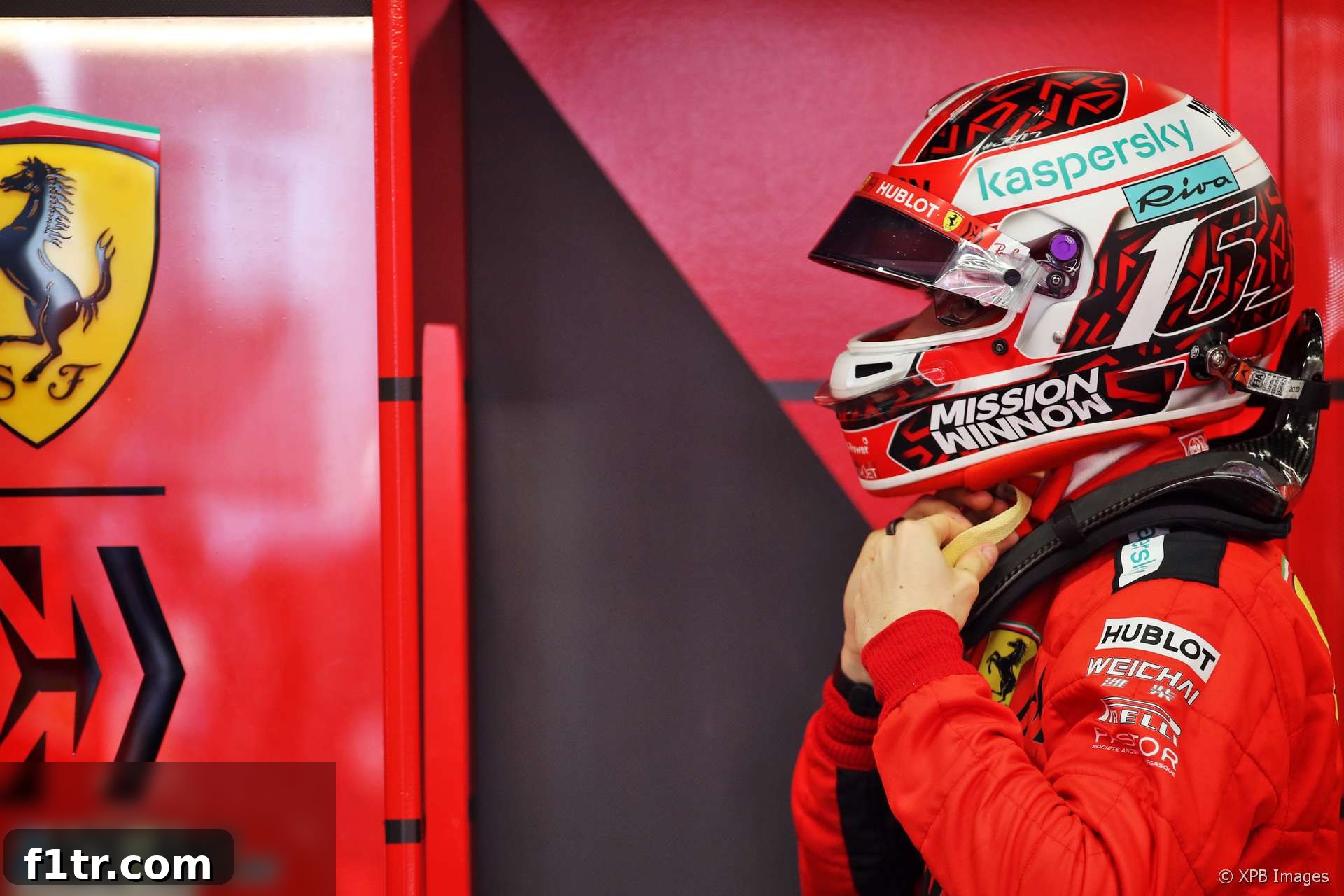
Sebastian Vettel Sidelined: Charles Leclerc Steps In for Ferrari F1 Pre-Season Testing Amidst Illness
The highly anticipated 2020 Formula 1 pre-season testing in Barcelona has witnessed an unexpected turn of events for Scuderia Ferrari, as four-time world champion Sebastian Vettel was forced to withdraw from his scheduled driving duties due to illness. The team confirmed the news, stating that Vettel was “not feeling great,” leading to a last-minute change in their testing schedule. In a swift decision, his talented teammate Charles Leclerc stepped in to take the wheel of the brand-new SF1000, ensuring Ferrari could continue their critical development program without significant delay.
This unforeseen health setback for Vettel, while seemingly minor, underscores the intense demands and tight schedules that characterize Formula 1 pre-season preparations. Every minute of track time is invaluable, particularly with a brand-new car like the SF1000, which holds the hopes and aspirations of the entire Maranello outfit for the upcoming season. Vettel was originally slated to drive for two consecutive days, providing crucial feedback on the car’s initial performance before handing over to Leclerc. The alteration means Leclerc will now have extended seat time in the early phase of testing, potentially offering a different perspective on the car’s initial characteristics.
The Critical Importance of Pre-Season Testing
Pre-season testing is arguably one of the most vital phases in a Formula 1 team’s calendar. It’s not just about setting fast lap times; it’s a meticulously planned operation designed to push the new car to its limits, uncover potential weaknesses, and validate months of painstaking design and engineering work. For Ferrari, the 2020 season presented a fresh opportunity to challenge Mercedes’ dominance, and the SF1000 was their weapon. Every kilometer covered on the track provides invaluable data on aerodynamics, power unit performance, tire degradation, and chassis balance.
Drivers play an indispensable role in this process. Their highly specialized feedback, honed over years of experience, translates the complex behavior of a high-performance racing car into actionable insights for engineers. They can identify subtle nuances in handling, braking, and power delivery that telemetry alone might not fully capture. This qualitative input is then combined with vast quantities of quantitative data to fine-tune the car’s setup, optimize its performance across various conditions, and troubleshoot any emerging issues before the competitive season begins.
Reliability runs are another cornerstone of pre-season testing. Teams aim to complete hundreds of laps, simulating race distances to ensure every component, from the engine to the smallest sensor, can withstand the immense stresses of Grand Prix racing. A single mechanical failure during testing can cost a team precious hours, delaying their progress and potentially carrying over into the early races of the season. Therefore, maximizing track time and minimizing disruptions are paramount for every team on the grid.
Sebastian Vettel’s Role and the Impact of His Absence
Sebastian Vettel, with his wealth of experience including four world championships, is a cornerstone of Ferrari’s development program. His precise feedback and deep understanding of car dynamics are crucial for guiding the team in shaping the SF1000. For a driver of his caliber, every session in a new car is an opportunity to build confidence, understand its idiosyncrasies, and begin forming a critical bond that will last throughout the season. His absence, even for a single day, means a missed opportunity for him to gather personal data and acclimatize to the nuances of the new machine.
While the team’s doctors and management will undoubtedly prioritize Vettel’s health, the timing of the illness is far from ideal. Pre-season testing days are extremely limited, and a driver missing out on their allocated time can disrupt the planned testing program. Ferrari would have had a specific test plan for Vettel, focusing on certain setups, aerodynamic evaluations, or long runs. When a driver is replaced, even by a teammate, there’s always a slight adjustment, as different drivers have different driving styles and preferences. However, the professionalism of an F1 team ensures they adapt swiftly to such challenges.
Charles Leclerc’s Opportunity and Ferrari’s Dynamic Duo
Stepping in for Vettel, Charles Leclerc seized an unexpected opportunity to gain additional valuable mileage in the SF1000. Leclerc, who joined Ferrari in 2019, quickly established himself as a future star, challenging Vettel and securing multiple pole positions and race victories in his debut season with the Scuderia. His aggressive driving style and exceptional raw speed make him an invaluable asset for car development, capable of pushing the limits and providing sharp feedback.
For Leclerc, this extended track time during the initial phase of testing is a significant bonus. It allows him to further familiarize himself with the SF1000’s behavior, experiment with different setups, and gather more data to share with the engineering team. This early understanding of the car can be particularly beneficial as he aims to build on his impressive 2019 season and potentially lead Ferrari’s charge for the championship. The dynamic between Vettel and Leclerc is a key aspect of Ferrari’s strategy, and both drivers’ ability to provide consistent and complementary feedback is paramount for overall car development.
Ferrari’s Ambitions for the SF1000 in the 2020 Season
The SF1000 represented Ferrari’s latest challenger in their relentless pursuit of a Formula 1 world title. After a mixed 2019 season where they showed flashes of brilliance but struggled with overall consistency and straight-line speed legality questions in the latter part of the year, the pressure was immense for the Maranello team to deliver a truly competitive package. The 2020 car was designed to address the weaknesses of its predecessor, particularly in terms of aerodynamic efficiency and cornering performance, while maintaining its formidable power unit advantage.
The name SF1000 itself carried significant weight, commemorating Ferrari’s 1000th Grand Prix start in Formula 1. It was a testament to their enduring legacy and a symbol of their continuous commitment to excellence in motorsport. Expectations from the Tifosi (Ferrari fans) are always sky-high, and the team knows that nothing less than challenging for both the Constructors’ and Drivers’ championships will satisfy their loyal fanbase and the leadership in Maranello. Pre-season testing was the first public display of whether the SF1000 could live up to these towering expectations.
The Broader Context of the 2020 F1 Season
The 2020 Formula 1 season was shaping up to be a fascinating chapter in the sport’s history, even before the unforeseen global events that would later reshape it. The grid was fiercely competitive, with Mercedes aiming to extend its dominant reign, Red Bull looking to capitalize on its improving Honda power unit, and a host of midfield teams battling for supremacy. Pre-season testing offered the first glimpses into the pecking order, as teams unveiled their new machines and began to explore their performance ceilings.
While driver illness is a relatively rare occurrence during pre-season testing, it serves as a reminder of the human element in a technologically advanced sport. F1 drivers are elite athletes, subjected to rigorous physical training and immense G-forces in the cockpit. Maintaining peak physical condition is crucial not just for race performance but also for enduring the demanding schedules of testing and racing. Ferrari’s quick and transparent communication regarding Vettel’s condition, stating he was “not feeling great,” reflects the modern era of F1 where teams often use social media to keep fans updated on developments, both big and small.
Looking Ahead: Towards the Season Opener
While Sebastian Vettel’s temporary absence was a minor hiccup, it was unlikely to derail Ferrari’s overall testing program or their ambitions for the 2020 season. With Charles Leclerc stepping up, the team ensured continuity in data collection and car development. The focus remained squarely on maximizing the remaining test days, understanding the SF1000 inside out, and preparing both drivers for what promised to be another thrilling championship battle.
The insights gained during these testing sessions would be meticulously analyzed, influencing car upgrades and setup choices for the critical opening races of the season. Every team approaches testing with a clear strategy, and while a driver change can introduce slight deviations, the ultimate goal of optimizing the package for the competitive season remains paramount. Fans and pundits alike would be eagerly watching how Ferrari performed in the subsequent testing days, and how their latest challenger, the SF1000, truly measured up against its rivals as the countdown to the Australian Grand Prix continued.
2020 F1 season
- Grosjean to make F1 test return tomorrow for first time since Bahrain horror crash
- Pictures: Wrecked chassis from Grosjean’s Bahrain fireball crash to go on display
- Bottas vs Rosberg: Hamilton’s Mercedes team mates compared after 78 races each
- F1 revenues fell by $877 million in Covid-struck 2020 season
- Hamilton and Mercedes finally announce new deal for 2021 season
Browse all 2020 F1 season articles