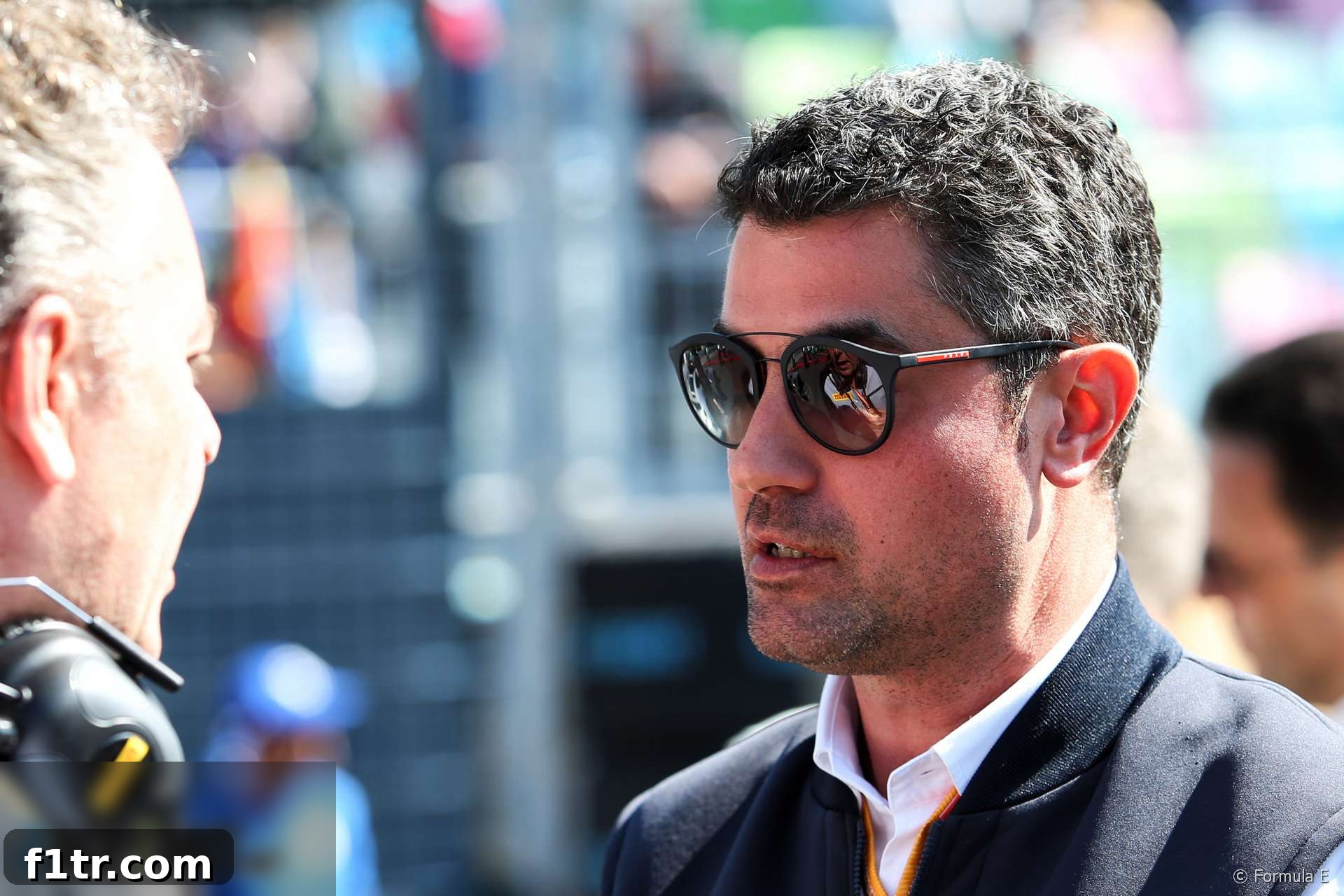
The fast-paced world of Formula 1 demands steadfast leadership, especially when navigating the intricate web of sporting regulations and safety protocols. Following an unforeseen and deeply felt loss that shook the motorsport community, the FIA moved swiftly to ensure continuity and stability at the helm of race operations. Michael Masi, who stepped into the pivotal role of FIA Race Director under extraordinary circumstances at the dawn of the 2019 F1 season, received official confirmation that he would continue in the position for the remainder of the year, signaling confidence in his nascent leadership.
Masi’s confirmation came after a crucial meeting with then-FIA President Jean Todt, providing a much-needed sense of permanence to a role that had been thrust upon him abruptly. “Following a meeting with President Jean Todt yesterday, he’s advised me and the FIA team that I will be continuing in the role until the end of the 2019 season,” Masi confirmed after the British Grand Prix. This announcement was a testament to his capabilities and the seamless transition he had managed, despite the immense pressure and the shadow of his predecessor’s legacy.
The Unforeseen Void: Charlie Whiting’s Legacy and Sudden Passing
The Formula 1 paddock was plunged into mourning just days before the opening race of the 2019 season in Australia. Charlie Whiting, a figure synonymous with Formula 1 for decades, and the sport’s long-serving Race Director, suddenly passed away. His death left an immeasurable void and presented an immediate, critical challenge for the FIA. Whiting was not merely an official; he was the bedrock of F1 race operations, revered for his profound knowledge, unwavering impartiality, and calm demeanor under pressure. For 30 years, he was the ultimate arbiter of racing rules, the architect of track safety, and the vital link between teams, drivers, and the governing body. His sudden absence meant that the FIA had to find a successor capable of stepping into exceptionally large shoes with virtually no transition period.
The role of FIA Race Director is one of the most demanding and high-stakes positions in global sport. It encompasses an incredible breadth of responsibilities, from overseeing the start of every Grand Prix to managing complex safety car deployments, monitoring track conditions, enforcing technical and sporting regulations, and ensuring the safety of all participants and spectators. The individual holding this position must possess not only an encyclopedic understanding of the rulebook but also exceptional judgment, communication skills, and the ability to make split-second decisions with far-reaching consequences for race outcomes, championships, and driver safety. The suddenness of Whiting’s passing amplified the urgency and difficulty of finding a suitable replacement who could command immediate respect and authority.
Michael Masi: A Prepared Successor for a Critical Role
While Masi’s appointment as interim Race Director was born out of crisis, it was not entirely a leap into the unknown. Prior to Whiting’s untimely death, Masi was already being groomed within the FIA structure as a potential future successor to the veteran Race Director. He was slated to serve as the FIA’s Deputy Race Director at selected Formula 1 races throughout 2019, providing him with invaluable exposure to the top tier of motorsport administration. Furthermore, Masi was already performing the critical role of Race Director for both Formula 2 and Formula 3 rounds, categories that serve as vital feeder series to F1 and operate under similarly stringent regulations and high-pressure environments. This background provided him with practical experience in race management, a deep understanding of FIA protocols, and familiarity with many of the personnel and processes involved in top-level motorsport.
His prior experience meant that Masi wasn’t a stranger to the demands of race direction. He had demonstrated his competence in managing races, interpreting regulations, and making crucial decisions in high-stakes environments. This foundational knowledge and hands-on experience were instrumental in enabling him to step up to the pinnacle of motorsport management with a degree of confidence, even amidst the tragic circumstances. The FIA’s foresight in identifying and nurturing Masi as a potential future leader within its race management structure proved to be provident, allowing for a relatively smooth, albeit emotionally charged, succession.
Key Responsibilities of an FIA Formula 1 Race Director:
- Race Operations Management: Overseeing all aspects of a Grand Prix weekend, from practice sessions and qualifying to the race itself. This includes managing pit lane procedures, grid formation, and race starts.
- Safety Protocols: Ensuring the highest safety standards are maintained on track, including the deployment of Safety Cars, Virtual Safety Cars, and red flags in response to incidents, and coordinating medical and emergency services.
- Regulation Enforcement: Interpreting and enforcing the FIA Formula 1 Sporting Regulations, making decisions on penalties, track limits infringements, and other racing incidents in collaboration with the Stewards.
- Track and Circuit Homologation: Working with circuit officials to ensure tracks meet FIA safety standards and operational requirements.
- Communication Hub: Serving as the central point of contact for teams, drivers, stewards, and media during a race weekend, requiring clear and decisive communication under constant scrutiny.
- Weather and Event Management: Making critical decisions related to adverse weather conditions, potential delays, or race suspensions to ensure fair competition and driver safety.
Steering Through the 2019 Season: Masi’s Early Challenges and Confirmation
Taking over the Race Director role mid-season, particularly in the immediate aftermath of a tragedy, presented Masi with an unparalleled trial by fire. The 2019 F1 season was shaping up to be a competitive year, with Mercedes and Ferrari battling fiercely for supremacy, and a host of midfield teams vying for points. Every race decision Masi made was under intense scrutiny from teams, drivers, fans, and the global media. He had to navigate complex on-track incidents, implement new regulations, and maintain the delicate balance of authority and impartiality that the role demands, all while still processing the sudden loss of his mentor and predecessor.
His confirmation after the British Grand Prix midway through the season was a significant vote of confidence from the FIA leadership, particularly from President Jean Todt. It signified that Masi had not only managed to keep the ship steady but had also demonstrated the necessary attributes to lead F1 race operations effectively. This decision brought stability to the FIA’s race management team and allowed Masi to fully embrace the demanding responsibilities without the added uncertainty of his tenure. It underscored the FIA’s commitment to providing strong, consistent leadership for the pinnacle of motorsport.
The 2019 season saw Masi tackle various challenges inherent to the Race Director role. From managing the chaotic rain-affected German Grand Prix to handling various controversial incidents and penalties, he gained invaluable experience. His ability to adapt quickly, learn on the job, and command the respect of the paddock during this intense period paved the way for his continued involvement in the sport’s highest echelons. The confirmation was a clear indication that the FIA believed in Masi’s long-term potential to uphold the standards of integrity and safety that Charlie Whiting had so meticulously established.
Looking Ahead: Ensuring Continuity and Evolution in Formula 1 Leadership
The decision to confirm Michael Masi for the remainder of the 2019 season was more than just a temporary fix; it was a foundational step in ensuring the long-term stability and leadership of Formula 1’s race direction. It allowed Masi to build on his early experiences, further develop his relationships with teams and drivers, and implement his own leadership style within the established FIA framework. This continuity was crucial for the sport, which relies heavily on consistent application of rules and clear, decisive management during race weekends.
The FIA’s proactive approach in preparing Masi for a higher role, even before the tragic event, demonstrated a prudent succession planning strategy. While the circumstances of his full-time debut were far from ideal, Masi’s foundational experience, coupled with the confidence placed in him by the FIA, allowed for a relatively seamless transition that minimized disruption to the competitive integrity and operational fluidity of Formula 1. His confirmation provided the necessary clarity and authority for him to fully embody the role, ensuring that the sport continued to operate at its highest possible standards throughout a challenging year.
In conclusion, Michael Masi’s confirmation as FIA Race Director for the rest of the 2019 F1 season marked a pivotal moment for the sport. It not only honored the legacy of Charlie Whiting by ensuring immediate and competent leadership but also signaled the beginning of a new chapter in race management. Masi’s background, quick adaptation, and the FIA’s confidence in his abilities provided a crucial anchor during a period of significant change, affirming the sport’s commitment to robust leadership and operational excellence.
Related 2019 F1 Season Articles
- Crying in the Melbourne car park at 2019 grand prix was my career low – Ocon
- McLaren Racing reports reduced £71 million loss in 2019
- Kvyat: Hockenheim podium last year was “my biggest achievement” so far
- How the FIA’s new encrypted fuel flow meter targets Ferrari’s suspected ‘aliasing’ trick
- “He smashed my office door”: 23 must-see moments from ‘Drive to Survive’ season two
Browse all 2019 F1 season articles