F1 Canadian Grand Prix: Grid Penalties Reshape the Starting Order
The build-up to the Canadian Grand Prix qualifying session delivered its usual drama, but the aftermath proved even more consequential as stewards handed out crucial penalties that significantly reshaped the starting grid. Isack Hadjar received a three-place grid demotion for impeding Carlos Sainz Jnr during the crucial Q1 session, while Esteban Ocon earned a reprimand for failing to follow race director instructions on track.
These incidents highlight the razor-thin margins and strict adherence to regulations that define Formula 1, where even minor missteps or communication errors can have profound impacts on a driver’s race weekend. The penalties underscore the FIA’s commitment to ensuring fair competition and driver safety, particularly during the high-pressure environment of qualifying where every millisecond counts.
Isack Hadjar’s Impeding Incident and Grid Drop
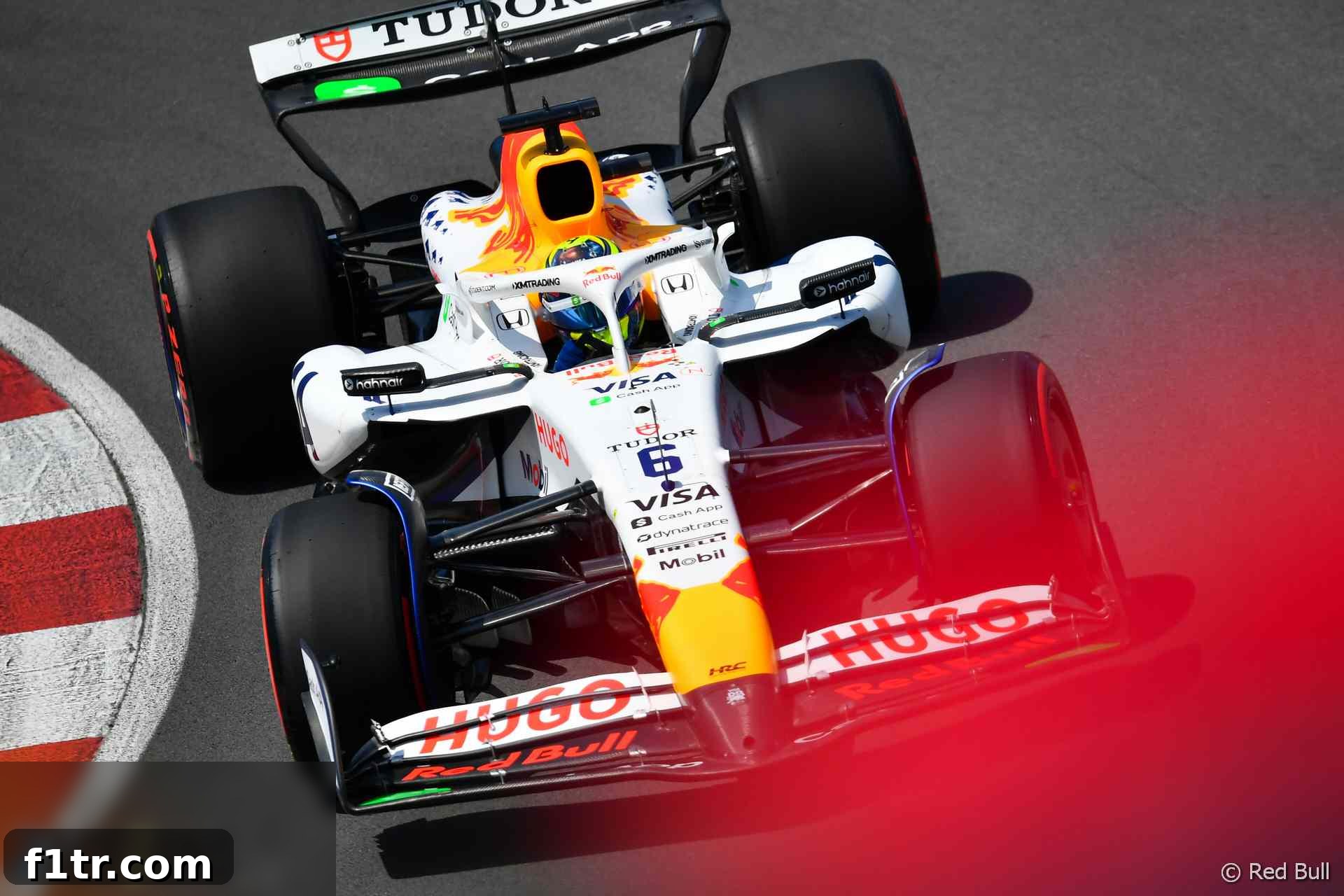
The most significant penalty of the day fell upon Racing Bulls driver Isack Hadjar, who was found to have impeded Carlos Sainz Jnr during Q1. The incident occurred as Sainz was on his final push lap, battling to secure a spot in Q2. Hadjar, on an in-lap, was positioned on the racing line approaching Turn 6 – a critical section of the Circuit Gilles Villeneuve. Despite not being on a flying lap himself, his presence directly impacted Sainz’s momentum, forcing the Williams driver to take evasive action and lose valuable time.
In the highly competitive Q1 session, every fraction of a second is vital. Sainz reported losing several tenths of a second due to Hadjar’s obstruction. This seemingly small time loss proved catastrophic for Sainz, as he subsequently missed the cut for Q2 by a mere two hundredths of a second. Such fine margins are commonplace in Formula 1, making any impediment a serious offence with direct consequences for a competitor’s performance.
The stewards thoroughly investigated the incident, and their findings revealed a critical miscommunication within Hadjar’s team. Hadjar did not dispute the fact that he held up Sainz. According to the stewards’ report, Hadjar’s team initially informed him that Sainz was approaching on a push lap, only to subsequently relay incorrect information, stating that Sainz had abandoned his lap. Relying on this erroneous advice, Hadjar remained on the racing line longer than he should have.
The official statement from the stewards detailed the sequence of events: “Car six [Hadjar] was on an in-lap and was caught by car 55 [Sainz], on a push lap, at the entry to Turn 6. Although car six attempted to move off the racing line to leave space for car 55, the move was too late.” The report further clarified Hadjar’s explanation: “He explained that he had earlier been told by his team that car 55 was approaching on a push lap but the team then told him that car 55 had abandoned the lap. He said that although he saw car 55 in his mirrors, he relied upon what he had been told by his team and when he realised the information was wrong he did his best to move out of the way.”
Despite Hadjar’s attempts to move aside once he realized the mistake, the damage was already done. The stewards’ penalty guidelines for impeding during qualifying are clear and stringent: a standard three-grid position penalty is applied, irrespective of whether the incident was primarily the fault of the driver or the team. This rule emphasizes the collective responsibility within a team, ensuring that drivers are ultimately accountable for their actions on track, even if influenced by team instructions.
As a direct result of this penalty, Isack Hadjar, who had originally qualified in a respectable position, will now drop three places on the grid, placing him 12th for the start of the Canadian Grand Prix. This demotion will undoubtedly complicate his race strategy, making it harder to score points on a circuit known for its challenging overtaking opportunities. For Carlos Sainz, the indirect impact of penalties worked in his favor. While he missed Q2, he will gain one place on the grid from his original 17th position, moving to 16th, due to a separate penalty incurred by Yuki Tsunoda. This slight improvement, while small, highlights how a chain reaction of penalties can alter the entire starting order.
Esteban Ocon Reprimanded for Disregarding Race Director Instructions
In addition to Hadjar’s grid penalty, Esteban Ocon also faced scrutiny from the stewards, receiving a reprimand for failing to comply with the race director’s instructions during qualifying. The incident involved Ocon neglecting to pull to the right-hand side of the track between Turns 12 and 13 while on a slow lap, a mandatory instruction designed to allow quicker drivers to pass safely and without impediment. Turns 12 and 13 form part of one of the fastest sections of the Circuit Gilles Villeneuve, where cars approach at very high speeds, making compliance with such instructions paramount for safety.
The consequences of Ocon’s non-compliance were evident when Charles Leclerc, on a hot lap, was forced to pull off the racing line to his right to bypass Ocon. While the stewards acknowledged that Leclerc was ultimately not impeded in a way that significantly compromised his lap time, the breach of the race director’s specific instruction warranted a penalty. This decision underscores a critical aspect of Formula 1 regulations: drivers are expected to adhere strictly to all directives from the race director, not just those that directly cause an impedance. These instructions are in place to prevent dangerous situations and ensure a consistent flow of traffic during critical sessions like qualifying.
A reprimand, while not impacting the grid position, serves as an official warning and is recorded against the driver. Accumulation of reprimands can lead to more severe penalties, including grid drops or even race bans, emphasizing the importance of even seemingly minor infractions. This type of penalty highlights the FIA’s proactive approach to safety and fair play, ensuring that drivers maintain discipline and situational awareness at all times on track.
Implications for the Canadian Grand Prix Grid and Race Strategy
The grid penalties and reprimands serve as a stark reminder of the tight regulations governing Formula 1 and the immense pressure drivers and teams operate under. Qualifying is not just about raw pace; it’s also about flawless execution, clear communication, and strict adherence to rules. Any slip-up, whether a driver error or a team miscommunication, can have significant repercussions, altering the starting order and shaping the narrative of the race before it even begins.
For Hadjar, starting further back on the grid means a more challenging race, likely requiring more aggressive overtaking and careful tire management. For Sainz, the small gain provides a glimmer of hope for a better strategic position, even after a disappointing Q1. Ocon’s reprimand, though less immediate in its impact, sends a clear message about the importance of following race protocols. These incidents will undoubtedly add another layer of intrigue to what promises to be an exciting Canadian Grand Prix.
Become a RaceFans supporter and go ad-free
2025 Canadian Grand Prix
- Canada was my most obvious missed opportunity to score more points – Norris
- Norris names China and Canada as biggest missed opportunities this year
- Don’t boo Piastri, Norris tells British Grand Prix fans
- Fine teams for “long shot” protests like Red Bull’s in Canada, says Wolff
- Verstappen refuses to say whether he supported Red Bull’s latest Russell protests
Browse all 2025 Canadian Grand Prix articles