F1 Drivers Divided: Vettel and Ricciardo Back Australian Grand Prix Amid Pandemic Concerns
The build-up to the Australian Grand Prix, traditionally a thrilling curtain-raiser for the Formula 1 season, was overshadowed by unprecedented global health concerns. As the world grappled with the rapidly escalating COVID-19 pandemic, the decision to press ahead with the Melbourne event ignited a heated debate within the motorsport community and beyond. While seven-time world champion Lewis Hamilton voiced his profound shock at the race proceeding, two prominent figures, Sebastian Vettel and Daniel Ricciardo, offered a contrasting perspective, emphasizing trust in the sport’s governing bodies.
The World Health Organization (WHO) had, just days prior, officially declared COVID-19 a global pandemic, casting a long shadow over major international events. This declaration prompted widespread cancellations and postponements across various sports and industries worldwide. Against this backdrop, Hamilton’s candid remarks that it was “shocking” the race was going ahead resonated with many who felt the health risks outweighed the sporting spectacle. His comments highlighted a growing ethical dilemma facing global sports organizations: the balance between commercial interests and public health responsibility.
Trust in Authority: Vettel and Ricciardo’s Stance
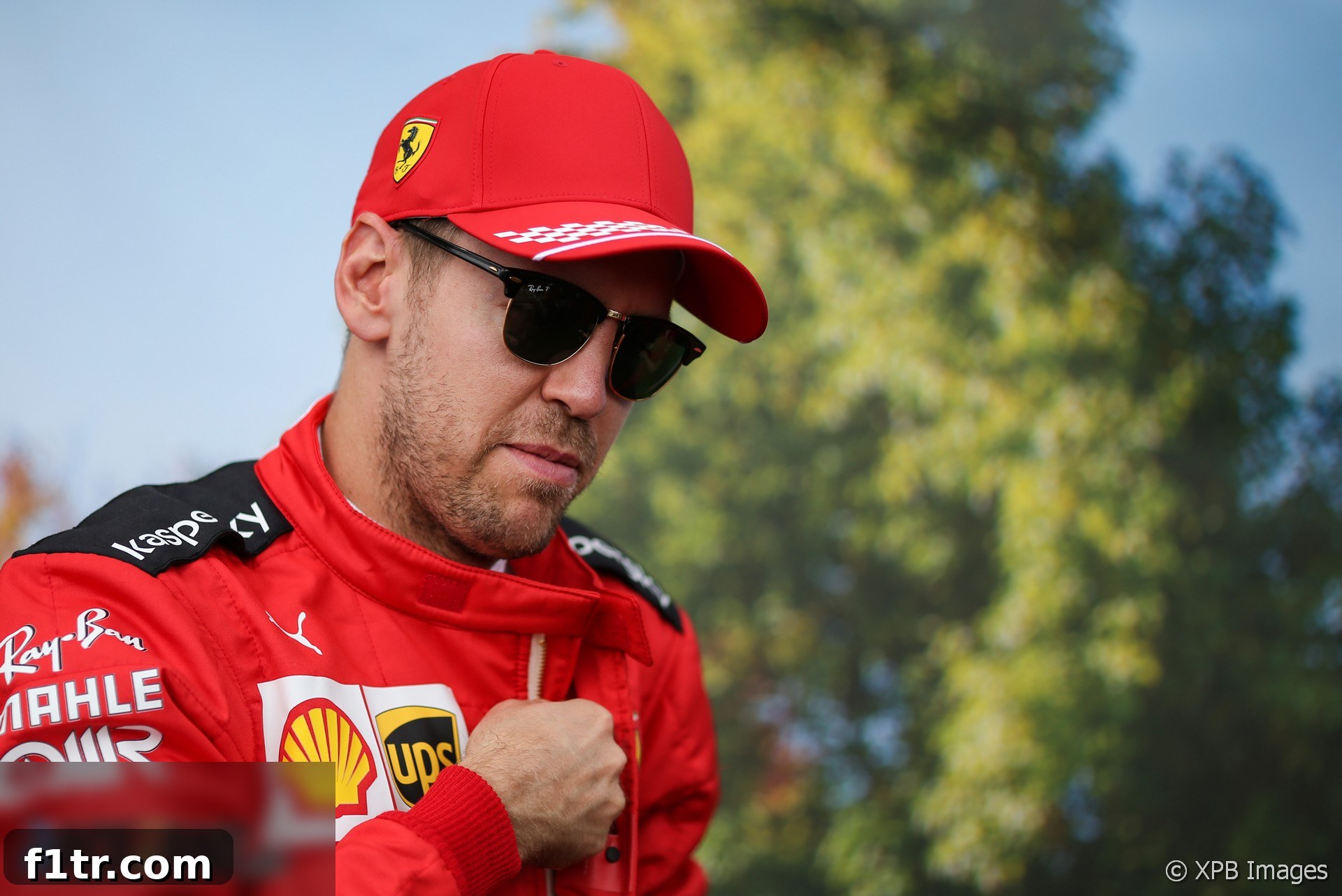
Joining Hamilton at the FIA press conference ahead of the scheduled practice sessions, both Sebastian Vettel, a four-time world champion, and Daniel Ricciardo, the local hero and Renault driver, adopted a more measured tone. Both drivers conveyed a shared sentiment of trust in Formula 1 and the FIA (Fédération Internationale de l’Automobile) to make the appropriate decisions regarding the weekend’s schedule. Their positions underscored the unique pressures faced by athletes who are often expected to perform regardless of external circumstances, while also navigating complex ethical landscapes.
Sebastian Vettel on the “Difficult Judgement”
Sebastian Vettel articulated the complexity of the situation, stating it was “very difficult to have a fair judgement” on whether the race should proceed. He acknowledged the widespread disruption impacting other major sporting competitions globally. “Of course, you realise that a lot of sport competitions, big events get postponed and cancelled,” Vettel observed, lending credence to Hamilton’s underlying point. Yet, the German driver pivoted to a pragmatic stance, emphasizing the need to place faith in the organizing bodies.
“Like Lewis said it’s fair to question why you’re here,” Vettel admitted, recognizing the validity of the skepticism. “Obviously, we have to trust the FIA and FOM [Formula 1 Management] [and] to take precaution as much as I can. But I think the answer that nobody can give you at the moment is how much you can control what’s going on. So as a matter of fact, we are here so I think you just try to take care as much as you can.” This reflection highlighted the inherent uncertainty of the early pandemic phase, where comprehensive understanding and control over the virus were still elusive.
Vettel further elaborated on the privileged position of F1 drivers, who, to some extent, possess a degree of control over their personal interactions. “To be completely straight, we are probably in a lucky situation, as in, obviously we’re exposed to people and so on, but I think we can largely control our own situation. Obviously, in the car, we don’t even have a passenger.” This statement, while perhaps inadvertently controversial given broader public health concerns, pointed to the isolated nature of their professional environment once inside the cockpit, distinguishing it from mass gatherings.
The discussion then veered into the personal responsibility drivers felt. “What I mean is I think you try to control the situation for yourself first as much as you can. That’s selfish but I think everybody in this regard is selfish,” Vettel mused. He noted the varied personal responses to the unfolding crisis, from relaxed attitudes towards handshakes to extreme caution. “Some people being more relaxed about handshakes, others less, some laugh it off. Some take it very serious,” he described, capturing the societal divergence in reaction.
Vettel reiterated his position on the ambiguity of the situation. “As I said before, my stand on it is that it’s very difficult at the moment to really categorise and say it is great. I don’t know if serious or not serious, but that’s why I think you have to ultimately put yourself into into other people’s hands and trust them. I think we all did getting down here. The flights weren’t cancelled, we were all allowed to travel, so we trusted whoever we flew with.” This final point underscored the reliance on broader infrastructure and regulatory decisions that allowed them to travel to Australia in the first place, reinforcing his trust-based argument.
Daniel Ricciardo’s “Racer” Mentality Amidst Uncertainty
Daniel Ricciardo, the sole Australian on the grid and a fan favorite, echoed Vettel’s sentiments, emphasizing his role as a competitor. “Honestly from my side I have to put my trust in the FIA,” Ricciardo asserted, aligning with his colleague’s pragmatic approach. He acknowledged that opinions on the matter would vary widely but ultimately emphasized his professional duty.
“And also, I think, we may all have opinions, but at the end of the day I’m here to compete and race cars. I’m not really much more than that in this situation,” Ricciardo candidly stated. His comments highlighted the single-minded focus often required of elite athletes, where external distractions must be compartmentalized to maintain performance. For a driver like Ricciardo, racing is not just a job, but a core identity, making it difficult to step back from the competitive imperative.
Ricciardo admitted to a more hands-off approach regarding the intricate details of the pandemic, relying on his team and organizers for guidance. “There’s people who are spending more time investing in it than I am, I’m kind of just following guidelines. I came here knowing we were going to compete. So to be honest, I don’t want to say selfishly, but I just got my head down and focused on the race. I’ve been training and preparing, obviously getting a bunch of e-mails with guidelines and this and that. But I honestly haven’t spent too much time digging into details. There’s certainly people around me doing that.” This perspective sheds light on the specialized roles within a professional sports team, where drivers often delegate health and logistical concerns to their support staff, allowing them to concentrate solely on their craft.
Despite his focus on racing, Ricciardo acknowledged the gravity of the situation. “It’s a tough one. I know it’s real but I think as may be Seb touched on, I don’t know who knows really, at least in this room, we don’t really know the extent of it or how quickly it can spread, what level it’s at. It’s kind of left to the others for now. So it’s mixed. But the racer in me is happy that I’m here for sure.” His concluding remark perfectly encapsulated the internal conflict: a recognition of a serious global crisis juxtaposed with the intrinsic desire to compete, a powerful drive that defines every professional racer.
The Unseen Pressures and the Evolving Narrative
The stark difference in opinions between Hamilton and the duo of Vettel and Ricciardo underscored the unprecedented pressures placed upon all stakeholders in Formula 1. Beyond the immediate health concerns, the financial implications of cancellation, the contractual obligations, and the sheer logistical effort of organizing a global sporting event weigh heavily on decisions. For the drivers, there’s the pressure from teams, sponsors, and fans, coupled with their own competitive ambitions. While Hamilton allowed himself to express a broader societal concern, Vettel and Ricciardo focused on the immediate operational reality and the chain of trust that brought them to Melbourne.
This discussion occurred at a pivotal moment, just hours before the situation would take a dramatic turn. The palpable tension and divided opinions within the paddock were merely a prelude to the eventual, agonizing decision to cancel the Australian Grand Prix, a development that would unfold just as practice sessions were set to begin. The drivers’ varied responses perfectly captured the global confusion and the moral quandaries inherent in attempting to maintain normalcy in the face of an extraordinary health crisis. Ultimately, their words served as a snapshot of a sport grappling with its responsibilities and identity in a world irrevocably altered by a pandemic.
Related F1 News and Updates
- Grosjean to make F1 test return tomorrow for first time since Bahrain horror crash
- Pictures: Wrecked chassis from Grosjean’s Bahrain fireball crash to go on display
- Bottas vs Rosberg: Hamilton’s Mercedes team mates compared after 78 races each
- F1 revenues fell by $877 million in Covid-struck 2020 season
- Hamilton and Mercedes finally announce new deal for 2021 season
Browse all 2020 F1 season articles