F1 Porpoising Controversy: Teams Risk Protest Over FIA Technical Directive Changes
The highly debated phenomenon of ‘porpoising’ in Formula 1 has taken another contentious turn, with Alpine team principal Otmar Szafnauer issuing a stark warning: teams that have hastily altered their cars in response to the FIA’s recent technical directive could put themselves at significant risk of a formal protest. This development introduces a layer of complexity and potential instability into an already challenging 2022 season, where teams grapple with the aerodynamic intricacies of the new ground-effect regulations.
Advertisement
The technical directive (TD) in question was issued by the FIA to address the severe vertical oscillation, or ‘porpoising,’ experienced by many cars. This directive outlined certain permissible changes to car floors, including the addition of an extra floor stay, ostensibly to help mitigate the aggressive bouncing. While intended as a safety measure and a guideline for teams, Szafnauer emphasizes a crucial distinction: a technical directive does not inherently carry the full force of a formal regulation. Consequently, any modifications made based solely on this directive, without being explicitly covered by the existing sporting or technical regulations, could be deemed non-compliant and therefore protestable by rival teams.
Szafnauer further highlighted that the timing of the directive left Alpine at a disadvantage for the immediate Canadian Grand Prix. “The TD came out when our chief technical officer was flying over, so it was quite late and we aren’t able to produce a stay here,” he explained. This logistical hurdle prevented Alpine from implementing the suggested changes in time for the current race, forcing them to consider alternative, less optimal solutions. His concern centers on the fundamental legal framework of the sport: “As far as the process goes, it’s a technical directive and technical directives, as we all know, aren’t regulations.”
The potential for competitive advantage stemming from these changes is also a major point of contention. Szafnauer elaborated, “So it could very well be that we shouldn’t be running this in qualifying and the race. And if teams have brought those stays, I would imagine they could be perhaps looked at after and protested. So it’s against the regulation as it stands today.” He underscored the tangible benefits for teams able to implement the stays: “But we definitely don’t have one and unfortunately, if you do have an extra stay, you can run the car lower and stiffer and gain some advantage.” A stiffer floor allows for lower ride heights, which directly translates to improved aerodynamic performance and increased downforce, a critical factor in Formula 1.
The Technical Trade-Offs and Alpine’s Strategy for Silverstone
For teams unable to swiftly adapt to the TD’s allowance for an additional floor stay, alternative solutions often involve significant compromises. Alpine, for instance, has had to reinforce its floor by adding weight, a decision with its own set of disadvantages. “But we’ve chosen to stiffen the floor in that area at the expense of weight,” Szafnauer revealed. In Formula 1, every gram counts, and many cars are already struggling with being overweight relative to the minimum limit. This creates a difficult trade-off: gain floor stiffness to combat porpoising, but at the cost of overall car weight, which impacts lap time. The advantage of a “given stay” from the TD is precisely that it allows for the desired stiffness without the associated weight penalty, creating an uneven playing field.
Looking ahead, Alpine anticipates being able to incorporate the necessary floor modifications in line with the technical directive before the next round of the championship at the iconic Silverstone circuit, scheduled in two weeks. This suggests a frantic development race behind the scenes, as teams scramble to understand the implications of the TD and integrate any necessary design changes without falling foul of the broader regulations or their rivals’ scrutiny.
Widespread Frustration Over the Timing of the FIA Directive
Advertisement
Alpine is not alone in its frustration regarding the timing of the technical directive. Several other team principals echoed Szafnauer’s sentiments, highlighting the logistical nightmares and competitive disadvantages created by such late-stage guidance. Formula 1 teams operate on incredibly tight schedules, especially during race weekends, with personnel and equipment often travelling across continents.
Aston Martin team principal Mike Krack articulated this widespread disappointment. “It was not really ideal because we have all the team travelling, everything is on-site,” he noted. He stressed the need for careful consideration and thorough analysis before implementing any changes, especially given the high-stakes nature of Formula 1 car development. “Yes, you can react, but you need to be really sure what you are doing, you need to know upfront what this would do. So I think it’s a situation you have to take a conservative approach and then look for it for the following race. But as I said, the timing really could have been better.” This conservative approach means that teams, despite the TD, might opt to delay changes until they can be properly designed, manufactured, and tested, further illustrating the disconnect between the directive’s issuance and practical implementation.
AlphaTauri team principal Franz Tost echoed these sentiments, strongly criticizing the lateness of the directive. “The timing was absolutely not good because most of the people were travelling and just to send out the technical directive a few days before the race is for sure not the best,” Tost stated. He emphasized the extreme sensitivity and complexity of Formula 1 car floors, which are meticulously designed aerodynamic surfaces, integral to a car’s overall performance. “To the reaction time, especially the floor of a Formula 1 car, it’s very [sensitive] part it’s not just [you] put any parts on it without investigations.” This highlights that even seemingly minor structural additions require extensive aerodynamic and structural analysis to ensure they don’t inadvertently degrade performance or introduce other unforeseen issues. Tost confirmed that AlphaTauri would also not be making immediate changes in Canada, stating, “So we from Scuderia AlphaTauri have to find out what we do, which direction we will take to the technical directive regarding stiffening of the floor or whatever, and this takes some time. For sure we will not do it here and then we will see what we can arrange for Silverstone.”
Understanding Porpoising and the FIA’s Stance on Safety
The core issue driving these discussions is porpoising, an aerodynamic phenomenon that has plagued many F1 cars since the introduction of the new ground-effect regulations in 2022. It occurs when the car’s underbody aerodynamics repeatedly stall and recover at high speeds, causing the car to bounce violently. While visually dramatic, porpoising also has serious implications for driver comfort, concentration, and long-term health, leading to concerns about spine and brain trauma. The FIA’s technical directive was ostensibly issued in response to these safety concerns, aiming to provide immediate guidance to teams on how to mitigate the issue. However, the method of intervention and its timing have created a regulatory grey area that threatens to complicate the season further.
The tension lies in balancing driver safety with the integrity of the sporting regulations. While the FIA has a clear mandate to ensure the safety of competitors, issuing a directive that permits changes outside of established regulations, without proper due process for rule changes, creates a precarious situation. Teams that adhere strictly to the rulebook as it stands may feel disadvantaged, while those who act on the TD risk potential protests and scrutiny.
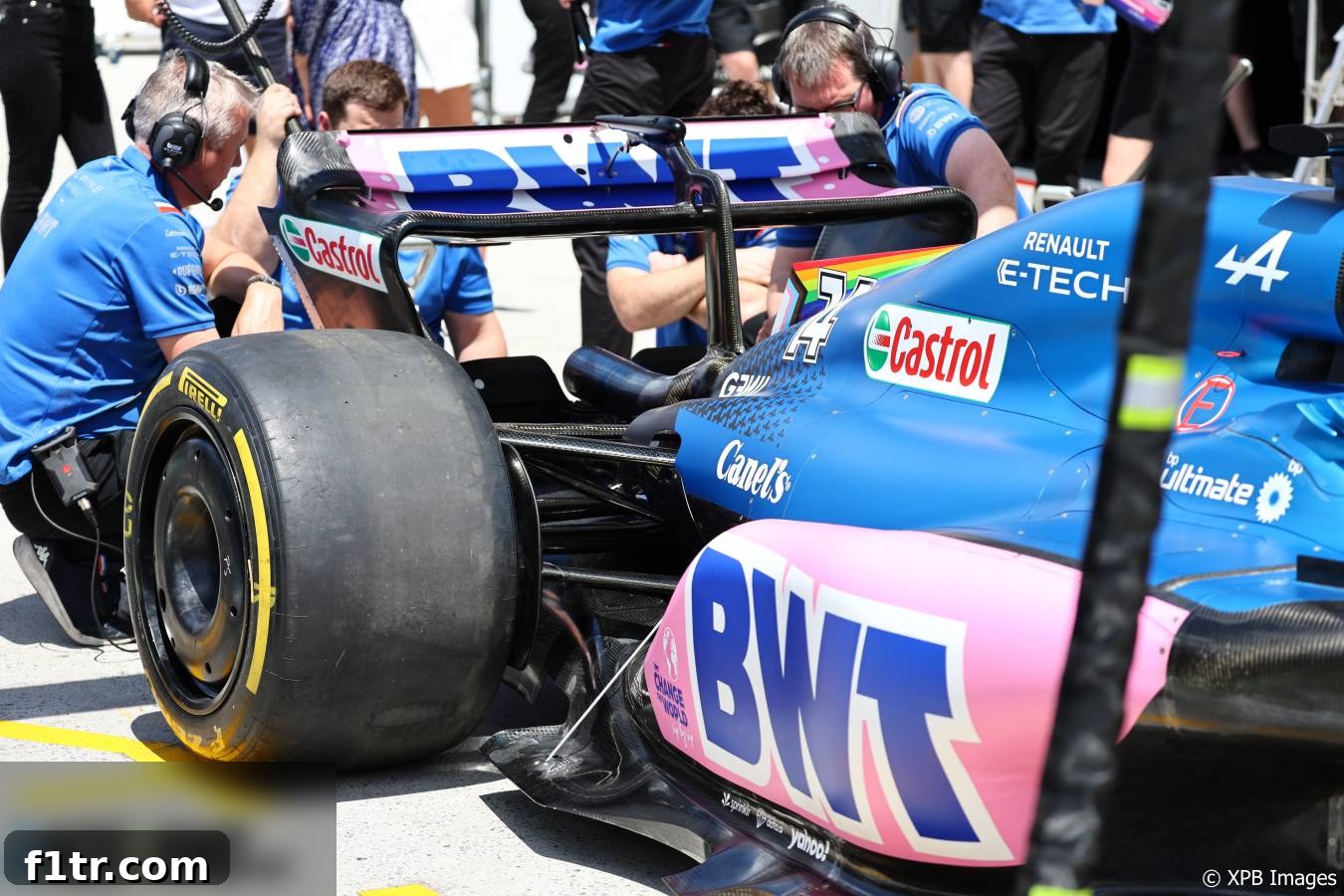
Teams’ Floors at the Circuit Gilles Villeneuve: A Visual Guide to Aerodynamic Design
To truly appreciate the complexity and sensitivity of the issues discussed, it’s beneficial to observe the intricate design of current Formula 1 car floors. These highly sculpted surfaces are pivotal to generating downforce through ground effect, and even minor changes, like the addition of a floor stay, can have profound aerodynamic implications. The following images offer a close-up view of various teams’ floor designs captured during practice sessions at the Circuit Gilles Villeneuve for the Canadian Grand Prix in 2022, providing context to the ongoing technical debate.
Advertisement
Advertisement
The Broader Implications for F1 Regulations and Competition
The controversy surrounding the FIA’s technical directive on porpoising underscores a significant challenge for Formula 1: how to rapidly address safety concerns without undermining the established regulatory framework or unfairly impacting the competitive balance. Szafnauer’s warning about protests is not merely a hypothetical scenario; it highlights the cut-throat nature of F1 competition, where teams will exploit any perceived breach of rules to gain an advantage, or at least neutralize a rival’s. The distinction between a “technical directive” and an official “regulation” is critical here, and the FIA’s approach to implementing changes will undoubtedly face intense scrutiny moving forward.
As the F1 circus heads towards Silverstone, the debate is far from over. Teams will likely continue to push for clearer guidance and a more structured approach to rule modifications. The situation could evolve, with the FIA potentially issuing further clarifications, or even formally incorporating elements of the TD into the technical regulations through the standard legislative process. However, for the immediate future, the shadow of potential protests hangs over teams that choose to interpret the directive as a license for immediate car modifications. This saga highlights the delicate balance between innovation, safety, and fairness that continuously defines the pinnacle of motorsport.