The dawn of a new Formula 1 season always ignites fervent hopes, and for Ferrari, the pre-season testing hinted at a resurgence that sent ripples of excitement through the Tifosi. Their SF90 challenger appeared fast, stable, and ready to challenge for the championship. Yet, the reality of the opening races delivered a stark, disappointing contrast. Despite the initial setback, credit must be given to the Maranello squad for their immediate and candid approach to confronting the underlying issues head-on. This newfound transparency marks a significant shift, signaling a team determined to learn and adapt, rather than shy away from scrutiny.
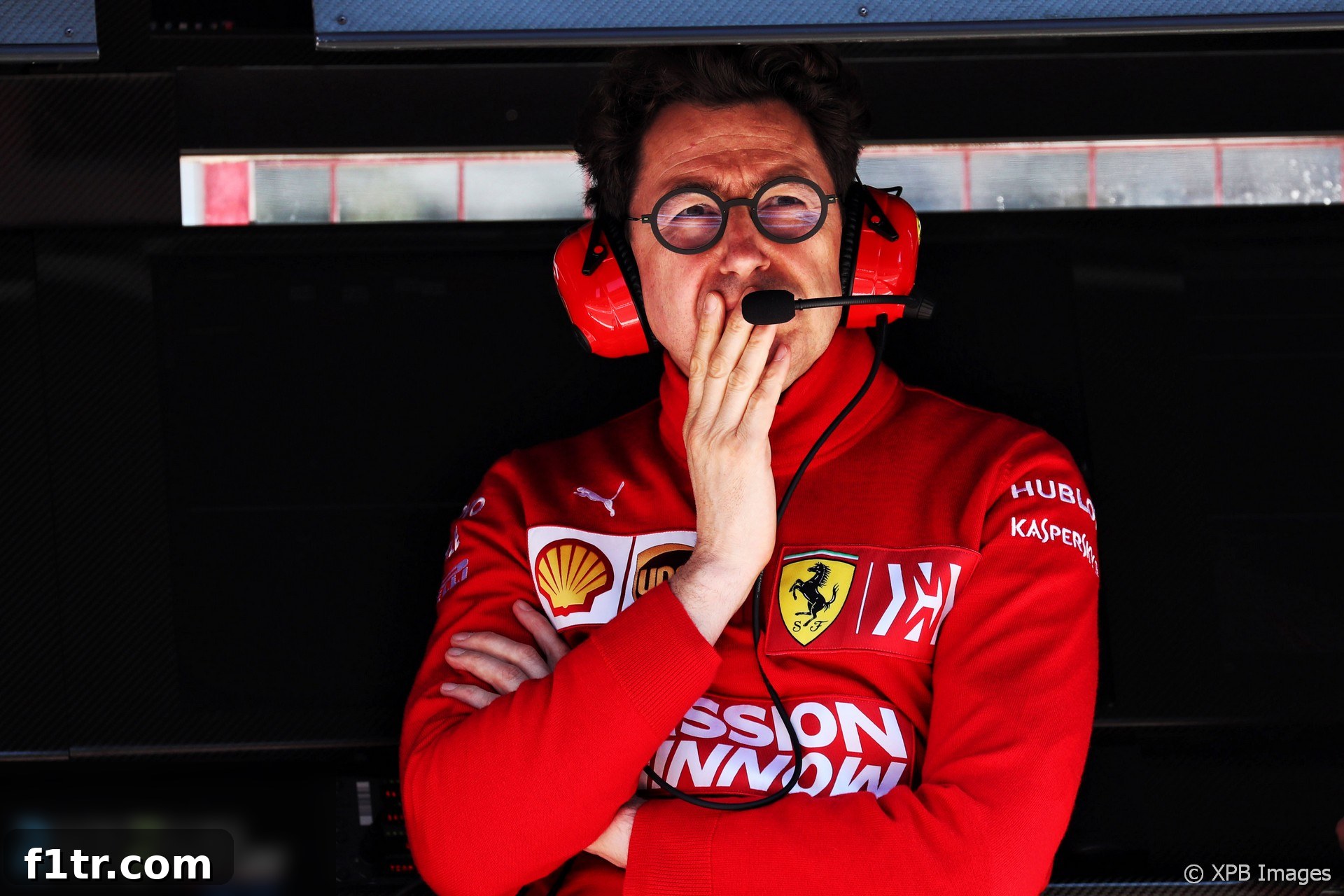
Under the leadership of Team Principal Mattia Binotto, the post-Maurizio Arrivabene era has ushered in a refreshing candor. Gone are the days of dismissive responses to legitimate inquiries about performance shortfalls. Instead, Binotto’s Ferrari actively engages with the difficult questions, publicly acknowledging and analyzing its weaknesses, no matter how challenging or painful the admissions might be. This shift in culture is vital for a team steeped in such rich history and expectation, demonstrating a mature willingness to address problems rather than mask them, a crucial first step towards any meaningful turnaround.
Ferrari’s Struggle Against Mercedes’ Dominance
The stark reality of the 2019 season became painfully clear as Mercedes-AMG F1 notched up their fifth consecutive one-two finish, marking Ferrari’s fifth straight defeat. This unprecedented run of dominance by the Silver Arrows has put immense pressure on Ferrari. Following the Spanish Grand Prix, Binotto, with characteristic honesty, offered praise for their rivals’ impeccable performance. He then conceded that while Ferrari’s problems are “obvious and straightforward” in their manifestation on track, the root causes and, more importantly, the definitive solutions, are proving to be anything but simple.
A “Young Team” Navigating Complex Challenges
In Spain, beyond Sebastian Vettel’s audacious first-lap lunge, the SF90 never truly threatened Mercedes. The Silver Arrows displayed a performance gap reminiscent of their peak years, exhibiting their largest lap time advantage since the 2016 British Grand Prix. Ferrari’s car characteristics seem almost ironic given its heritage; its prowess on the straights is undeniable, yet it severely compromises performance through corners. This dichotomy brings to mind Enzo Ferrari’s memorable quip that “aerodynamics are for people who can’t build engines.” While Ferrari has historically excelled in engine power, their current car struggles acutely in the aerodynamic department, particularly in low-speed cornering scenarios.
This particular weakness was glaringly evident in the final sector of the Circuit de Catalunya, where the car lost significant time to its rivals. Such deficiencies send alarm bells ringing, especially with the demanding twists and turns of the Monaco Grand Prix on the horizon, a circuit where low-speed grip and downforce are paramount. This isn’t the first time Ferrari has found itself in this predicament. Only 12 months prior, the team started strong but then pursued a development path that proved to be a “cul-de-sac,” ultimately derailing Vettel’s championship aspirations. Despite continuous updates and new parts being introduced to the 2019 car, its fundamental aerodynamic shortcoming has persisted, suggesting a deeper conceptual issue.
Binotto openly acknowledged the recurring nature of these problems: “The limitation we had [in Spain] were present already in the first races of the season. I think the entire weekend certainly emphasises [it is] straightforward and obvious.” However, pinpointing the exact solutions and estimating a timeline for recovery remains elusive. “How long it will take [to fix] is difficult to answer,” he stated. “I think more important for us is at first to understand really how to address them and then I’m pretty sure we can do it quickly.” This perspective can be viewed either as optimistic – perhaps overly so, given the undefined nature of the problem – or as a testament to Binotto’s unwavering confidence in his team’s capabilities and engineering prowess.
Binotto candidly describes the current Ferrari F1 team as “quite a young team,” emphasizing that “in terms of process [and] methodology there is still much to learn.” However, he maintains a confident outlook, believing they are “improving” and that the season is far from a write-off. He believes that if the issue stems from a “concept design problem,” there are avenues to address it within the current season, suggesting a strategic, long-term view rather than a reactive, short-term fix. This requires a meticulous analysis of data, a willingness to challenge established methodologies, and a continuous feedback loop between track performance and design iterations.
The Power Unit: A Beacon of Strength Amidst Struggles
One of the more surprising moves of the season so far was Ferrari’s decision to introduce an upgraded engine at the Spanish Grand Prix. This was particularly noteworthy because their power unit has consistently been the strongest component of their package, despite an electronic issue costing Charles Leclerc a likely victory in Bahrain. The upgrade involved only the internal combustion engine components, not the intricate hybrid hardware, highlighting Ferrari’s laser focus on maximizing every available horsepower.
Binotto explained that this engine change had been accelerated by four weeks from its original schedule. The urgency stemmed from the team’s realization at the very first race weekend in Australia just how significant the performance gap to Mercedes truly was. “When starting the season in Australia we realised that there was performance to recover to the main competitors,” he recounted. “And so it was important for us to push as much as possible on the development.” This aggressive development strategy underscores Ferrari’s determination to fight for every tenth of a second, demonstrating a willingness to incur significant effort and potential risk to regain ground.
The team views continuous development as a critical factor in the championship battle, making it their “task and our duty” to anticipate any program that can bring performance gains. The decision to fast-track the engine program was a “big effort,” which Binotto described as “not straightforward, not obvious.” The sheer dedication to extracting performance is further exemplified by Binotto’s belief that even on the calendar’s least ‘power sensitive’ circuit, Monaco, the engine upgrade could still yield benefits. This nuanced understanding suggests gains beyond pure top-end speed, perhaps in areas like drivability or energy recovery, which are crucial even on tight street circuits.
“It has been a very last-minute decision to introduce it,” Binotto confirmed, revealing the intense pressure and tight deadlines involved. “We just concluded the homologation process in the last days [before the race weekend].” This last-minute push was driven by a strong conviction that the upgrade would be important in Spain and subsequent races, including the unique challenge of Monaco. While the new engine’s impact in Spain might have been more about fending off Red Bull in qualifying rather than directly challenging Mercedes in the race, it did enable Vettel to get tantalizingly close to out-dragging the Silver Arrows into Turn One from third on the grid. Had he succeeded, the race’s dynamic could have been dramatically different, highlighting the fine margins in Formula 1.
The Pirelli Tyre Puzzle: A Critical Factor
Beyond the car’s inherent aerodynamic characteristics and engine performance, the 2019 Pirelli tyres have emerged as a significant and perplexing variable for many teams. The new generation of thinner-tread rubber has presented considerable challenges, with Mercedes being the conspicuous exception, consistently demonstrating superior tyre management. Binotto firmly believes that tyre optimization is a crucial piece of Ferrari’s overall performance puzzle, stating, “Tyres certainly are difficult to manage. I think tyres are a significant, key performance factor. [The] management and optimisation is key for the overall performance of the car itself.”
Binotto reiterated the complexity of extracting optimal performance from Pirelli’s latest compounds. The 2019 tyres behave distinctly differently compared to their 2018 predecessors, a factor that requires continuous learning and adaptation. While acknowledging that Pirelli has achieved its targets, particularly in mitigating blistering, which is a positive for safety, the onus remains on the teams to understand and master these nuanced characteristics. “But understanding and addressing or optimising the performance is part of our job, and if I may see that, certainly it’s not obvious, not straightforward and not an easy task,” he elaborated.
The variability in track conditions further complicates this challenge. “Last weekend we had various situations, track temperatures quite different from Saturday morning to the afternoon to today and again I think that part of the data we need to analyse through the weekend to understand our car behaviour,” Binotto remarked. This highlights the intricate relationship between track temperature, tyre compound, and car setup, and how even slight environmental changes can drastically impact performance. Mercedes’ ability to consistently hit the narrow operating window of these tyres, regardless of conditions, gives them a significant advantage that Ferrari is clearly struggling to replicate.
Ferrari’s forthrightness about their current difficulties is commendable, offering a rare glimpse into the complex world of Formula 1 engineering and strategy. However, it also underscores the multi-faceted and deeply complicated nature of their problems. This is not a team on the verge of a quick fix, nor is it merely “one bright idea away” from turning its season around. Instead, it suggests a profound journey of self-assessment, technical re-evaluation, and cultural evolution will be required to bring the Scuderia back to its championship-challenging best. The path ahead for Ferrari is undoubtedly arduous, demanding patience, perseverance, and a meticulous approach to overcome the confluence of aerodynamic deficiencies, tyre puzzles, and the relentless pressure of competing at the pinnacle of motorsport.
2019 F1 Season Insights
- Crying in the Melbourne car park at 2019 grand prix was my career low – Ocon
- McLaren Racing reports reduced £71 million loss in 2019
- Kvyat: Hockenheim podium last year was “my biggest achievement” so far
- How the FIA’s new encrypted fuel flow meter targets Ferrari’s suspected ‘aliasing’ trick
- “He smashed my office door”: 23 must-see moments from ‘Drive to Survive’ season two
Browse all 2019 F1 season articles