The Formula 1 circus descends upon the iconic Hungaroring circuit this weekend, setting the stage for the Hungarian Grand Prix – an event now brimming with more intrigue and potential drama than usual. Nestled in the hills outside Budapest, this tight, technical track often referred to as ‘Monaco without the barriers’ demands precision, driver skill, and a meticulously set-up car, making it a unique challenge on the F1 calendar. This year, however, the race arrives with a confluence of captivating storylines, from a triumphant return to the grid to record-breaking aspirations and the ebb and flow of championship battles.
Red Bull Racing arrives in Hungary on the precipice of etching their name into Formula 1 history books, aiming for an unprecedented winning streak. Meanwhile, their sister team, AlphaTauri, makes headlines with a significant driver reshuffle, welcoming back a beloved fan favorite whose every move will be under intense scrutiny. Beyond these central narratives, the performance of a resurgent McLaren, the ongoing qualifying struggles of a key championship contender, and the sudden shift in fortune for a podium-regular team add layers of complexity and excitement to what promises to be an enthralling weekend.
These are the pivotal talking points that will define the 2023 Hungarian Grand Prix.
Ricciardo’s Triumphant Return to the Grid
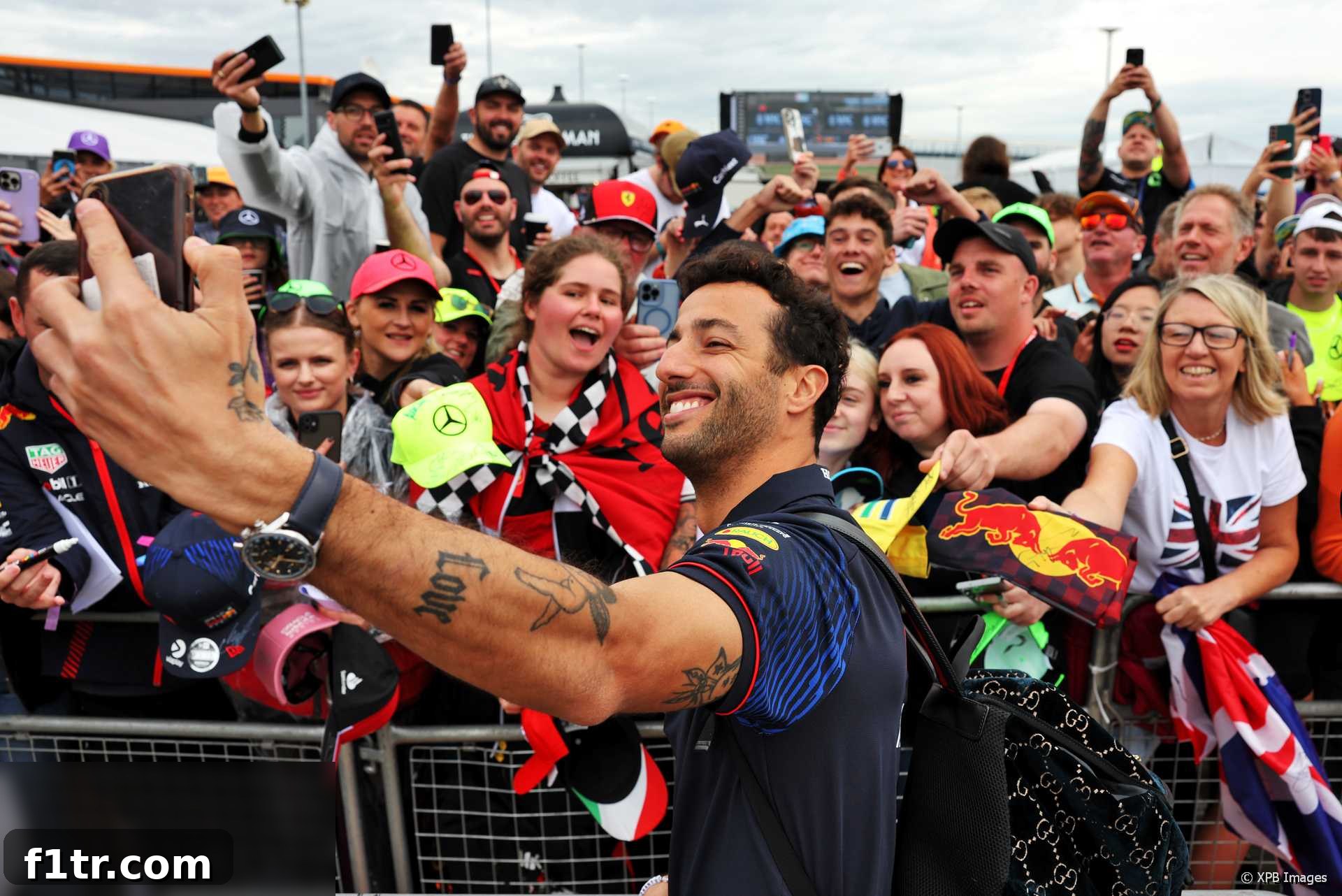
After a ten-round hiatus, the vibrant personality and undeniable talent of Daniel Ricciardo are set to grace the Formula 1 grid once more at the Hungaroring. This comeback stands as one of the most significant and unexpected developments in the first half of the 2023 season. Ricciardo steps into the AlphaTauri cockpit, replacing Nyck de Vries, who, despite a promising junior career and a commendable F1 debut, was unceremoniously dropped after a challenging start to his rookie season. The decision to bring back a seasoned veteran with over 220 Grand Prix starts underscores Red Bull’s strategic intent and the immense pressure within its driver development program.
For Ricciardo, this return marks a reunion with Red Bull’s junior team, where he previously raced in 2012 and 2013 during their Toro Rosso era. The 34-year-old Australian has spent the initial half of the season as Red Bull’s third driver, diligently fulfilling reserve duties alongside Liam Lawson and dedicating countless hours in the state-of-the-art Red Bull simulator. This behind-the-scenes work, far from the pressures of competitive racing, seems to have rekindled his passion and sharpened his skills.
Intriguingly, Ricciardo enters this race having driven a 2023 Formula 1 car more recently than most of the current grid. He participated in a private Pirelli tyre test at Silverstone following the British Grand Prix, where reports suggest he impressed Red Bull’s hierarchy significantly with his pace and feedback. This positive outing has undoubtedly boosted his confidence as he seeks to make an immediate impact in Hungary. His previous two seasons at McLaren were notoriously challenging, culminating in a premature departure from the grid despite a memorable victory at Monza. Now, with a refreshed perspective and a point to prove, Ricciardo is eager to demonstrate that he still possesses the speed and race craft that made him a multiple Grand Prix winner.
While acknowledging the inherent “challenge” of stepping into a car mid-season, Ricciardo’s words reveal a deep-seated enthusiasm and a resilient mindset. “I think it’s a challenge, for sure, to jump in and try to hit the ground running,” Ricciardo stated. “But I guess I feel like I’ve also been through a lot the last year – or even the last few years – where I’m not really scared of anything that’s going to be thrown my way. I actually really do like the challenge. I say ‘challenge’ because yes, it will be a challenge. But I don’t know if I’d have it any other way.” This candid reflection highlights a driver who has found peace with his past struggles and is now fully embracing the opportunity to reassert himself at the pinnacle of motorsport.
Red Bull on the Brink of Formula 1 History
For over three decades, one of Formula 1’s most formidable and enduring records has stood unchallenged. In the glorious 1988 season, the legendary McLaren team achieved an astonishing feat: an unbroken streak of 11 consecutive Grand Prix victories. This monumental accomplishment, spearheaded by the iconic duo of Ayrton Senna and Alain Prost in the dominant MP4/4, remained untouched, surviving dominant eras from powerhouses like Ferrari, Red Bull themselves, and Mercedes.
However, the narrative of F1 dominance has taken a dramatic turn. At the recent British Grand Prix at Silverstone, the seemingly invincible Red Bull Racing squad secured their 11th consecutive victory, a streak that commenced with last year’s season-ending Abu Dhabi Grand Prix. Max Verstappen’s commanding win at Silverstone not only equaled McLaren’s long-standing record but also maintained Red Bull’s flawless record in the 2023 season, making it an incredible ten wins out of ten races so far. This unprecedented consistency underscores a level of performance rarely seen in the sport’s storied past.
The true extent of Red Bull’s superiority becomes even more apparent when considering an almost unbelievable statistic: had it not been for George Russell’s solitary triumph at the Brazilian Grand Prix in the penultimate round of last year, the reigning world champions would currently be basking in an astonishing run of 20 consecutive victories, stretching back to the French Grand Prix at Paul Ricard last July. Russell’s win remains the only instance of a non-Red Bull driver taking the top step of the podium in the last 12 months, a stark testament to the Austrian outfit’s unparalleled command over the current era of Formula 1.
This period of dominance is arguably the most comprehensive in the sport’s history, made even more remarkable by the fact that the RB19, while undeniably the class of the field, doesn’t possess the same overwhelming single-lap performance advantage over its rivals that McLaren’s MP4/4 enjoyed in 1988. Red Bull’s success is a synthesis of superb aerodynamic design, efficient power unit integration, operational excellence, and the exceptional talents of Max Verstappen. Should either Verstappen or his teammate, Sergio Perez, cross the finish line first on Sunday in Hungary, Red Bull will stand alone as the sole owners of one of the most significant and prestigious records in Formula 1, solidifying their legacy as one of the sport’s all-time great teams.
McLaren’s Astonishing Resurgence: From Crisis to Contenders
The dawn of the 2023 Formula 1 season found McLaren in a state of considerable turmoil. For the second consecutive year, the Woking-based squad endured a brutal start, highlighted by a deeply challenging pre-season testing period and a dismal Bahrain Grand Prix. Rookie Oscar Piastri’s debut was marred by an electrical retirement, while Lando Norris suffered a catastrophic race plagued by a pneumatic leak, forcing him into the pits an unprecedented six times. The team’s early form was a significant concern, casting a shadow over their championship aspirations.
However, what followed was nothing short of a spectacular turnaround. After managing to score points in only three of the first eight rounds, McLaren introduced a substantial upgrade package for Norris at the Austrian Grand Prix. The impact was immediate and profound: Norris piloted the revised MCL60 to a superb fourth-place finish, marking McLaren’s best result of the season up to that point and injecting a much-needed dose of optimism into the team.
The crucial question then became whether this newfound pace was a one-off or a genuine step forward, especially with the team’s home Grand Prix at Silverstone next on the calendar, where Piastri would also receive the benefit of the upgraded car. That question was answered with an emphatic display of speed and performance. Norris stunned the grid by securing a front-row start, qualifying an impressive second behind Max Verstappen, while Piastri showcased his burgeoning talent by locking out the second row in third place. This qualifying performance alone sent shockwaves through the paddock, signalling McLaren’s return to competitive contention.
The race itself at Silverstone further cemented McLaren’s resurgence. Norris launched brilliantly from the start, seizing the lead and holding off Verstappen for the opening laps, igniting hope among the home crowd. He ultimately fended off a late charge from Lewis Hamilton to secure a sensational second place, while Piastri delivered an equally impressive performance to finish fourth, narrowly missing out on a podium due to an unfortunately timed Safety Car intervention. The staggering 42 points McLaren accumulated in just eight days propelled them from a distant 27 points behind Alpine to a commanding 12-point advantage over their French rivals in the Constructors’ Championship, firmly establishing them in fifth position.
Now, with momentum firmly on their side, all eyes will be on McLaren to see if they can sustain this remarkable speed and performance on the unique characteristics of the Hungaroring. As a high-downforce circuit that rewards aerodynamic efficiency and mechanical grip, Hungary will provide a critical test of whether the MCL60’s upgrades have truly transformed it into a consistent front-running machine, or if Silverstone was merely a peak performance on a specific track layout. Their performance here will be a crucial indicator of their potential to challenge the established top teams for the remainder of the season.
The Alternative Tyre Allocation: A Strategic Unknown
Originally slated for the Emilia-Romagna Grand Prix weekend in Imola before its unfortunate cancellation, the Hungarian Grand Prix will now serve as the inaugural testing ground for the Alternative Tyre Allocation (ATA) format this season. This experimental change, introduced by Pirelli and the FIA, represents a significant deviation from the standard tyre regulations and aims to address issues beyond mere on-track entertainment, focusing instead on broader logistical and environmental considerations within Formula 1.
Throughout the entire race weekend, encompassing all three practice sessions, qualifying, and the main Grand Prix, each driver will be provided with a reduced allocation of only 11 sets of Pirelli tyres, a noticeable decrease from the standard 13 sets available at all other rounds. This limited allocation comprises four sets of soft compounds, four sets of medium compounds, and three sets of hard compounds. The reduction is primarily intended to lessen the logistical burden and environmental impact associated with transporting and managing vast quantities of tyres globally.
The most impactful aspect of the ATA format, however, will be felt during Saturday’s crucial qualifying session. Specific tyre restrictions will be enforced, mandating the use of a particular compound for each segment. In Q1, all drivers must exclusively run on hard tyres. Those who successfully navigate to Q2 will then be restricted to using only medium compounds. Finally, the top ten drivers who advance to the exhilarating final shootout for pole position will be required to bolt on soft rubber for their ultimate flying laps. This progressive mandated usage of different compounds adds a fascinating strategic layer to qualifying, forcing teams to adapt their car setups and driver approaches in ways they typically wouldn’t.
The rules allow for the ATA experiment to be trialled at a second Grand Prix later in the season, although a venue for this potential second test has yet to be determined. It has, however, been confirmed that it will not coincide with any of the four remaining sprint race weekends, ensuring focused data collection for this particular format. While the primary goal of this experimental format is not solely focused on enhancing entertainment, it is expected to introduce greater variability and strategic challenges, potentially shaking up the established pecking order during qualifying and impacting race strategy. These changes will undoubtedly affect every driver on the grid, but given varying car characteristics and driving styles, it may ultimately impact some teams and their performance more significantly than others, adding another layer of unpredictability to the Hungarian Grand Prix weekend.
Sergio Perez’s Qualifying Peril Deepens
What initially began as an unfortunate but sporadic pattern of failing to progress to Q3 has now spiraled into an alarming and persistent streak for Sergio Perez. The Red Bull driver has now endured five consecutive qualifying disappointments, a run that is increasingly jeopardizing his championship aspirations and placing immense pressure on his shoulders. The Hungaroring, with its tight and demanding layout, will be a critical juncture for Perez to reverse this worrying trend.
Just a few races ago, following a strong performance in Baku and a competitive start to the season, Perez entered the Miami Grand Prix within a handful of points of his teammate, Max Verstappen, in the Drivers’ Championship. However, the narrative has shifted dramatically since then. In the period following Miami, Verstappen has embarked on an incredible winning streak, claiming victory in every single race and securing five consecutive pole positions. Conversely, Perez has failed to make it into Q3 at all since that Miami weekend, a stark contrast that has seen his points deficit balloon to a staggering 99 points behind the dominant Verstappen.
The psychological toll of such a streak, especially within the confines of a championship-winning team where performance expectations are sky-high, cannot be understated. Perez will be desperate to break this unwelcome run at the Hungaroring, but he must first contend with lingering memories of last season’s Hungarian Grand Prix. On that occasion, he also failed to reach Q3, being eliminated in a frustrating 11th place. His qualifying session was plagued by an erroneous deletion of a lap time for a track limits infringement, which was then reinstated. This confusion led him to take a second new set of tyres in Q2 in a desperate attempt to progress. However, even with fresh rubber, he could not improve enough to break into the top ten, highlighting the specific challenges this circuit presents for him.
The Hungaroring’s nature as a circuit where overtaking is notoriously difficult places an even greater emphasis on qualifying performance. Starting deep in the midfield, as Perez has consistently done, means battling through traffic and often compromising race strategy to make up positions. With Ricciardo now back on the grid and a strong performer in the sister team, the pressure on Perez to deliver a clean, high-performance qualifying session is immense. His ability to turn around this qualifying crisis will be a defining factor not only for his 2023 season but potentially for his long-term future with Red Bull Racing.
Aston Martin: A Decline from Early Season Heights?
The opening rounds of the 2023 Formula 1 season saw Aston Martin emerge as the undisputed dark horses, enjoying a fairytale start that captivated fans and rivals alike. With veteran Fernando Alonso delivering an astonishing five podium finishes in the first six races, the Silverstone-based team dramatically exceeded all realistic expectations. Their rapid ascent from midfield obscurity to consistent podium contenders was a testament to significant off-season investment, strategic personnel changes, and a remarkably well-designed AMR23.
However, the narrative has shifted in recent races. For the first time all year, Aston Martin has gone two consecutive races without a podium finish. While their early season performance remains a stunning achievement – exceeding even Alonso’s personal expectations – the team now faces mounting pressure from rejuvenated rivals in the Constructors’ Championship. Ferrari and Mercedes, though inconsistent, are still formidable, and the dramatic resurgence of McLaren at Silverstone has introduced a new, potent threat, thrusting themselves into the battle at the front of the field.
A key factor potentially influencing Aston Martin’s performance trajectory is the intricate system of Aerodynamic Testing Restrictions (ATR) within Formula 1. The team significantly benefited from a generous allocation of aerodynamic testing time – encompassing both wind tunnel hours and CFD simulation runs – as a direct result of finishing seventh in last year’s Constructors’ Championship. This increased development allowance was crucial in developing their highly competitive 2023 car. However, with the ATR allocations resetting mid-season based on current championship standings, Aston Martin now finds itself with considerably less development time compared to the first half of the year, as their improved standing means a reduced allowance.
What this reduced development time could mean for the remainder of their season is a subject of intense speculation. The Hungaroring, a circuit demanding maximum downforce and strong mechanical grip, historically suited the characteristics of the AMR23 during its peak performance. If Aston Martin fails to demonstrate a significant return to form and pace at this high-downforce circuit compared to their recent showings at Silverstone, it could be a disheartening sign. It might indicate that the initial advantage gained from their early season development has plateaued, and that their days of consistently fighting for podiums may, for now, be behind them, leaving them in a fierce battle for ‘best of the rest’ rather than challenging the absolute front-runners.
Engage with the Hungarian Grand Prix Action!
Are you among the passionate fans making the pilgrimage to Hungary for this weekend’s thrilling race at the Hungaroring? We’d love to hear about your experience, your expectations, and your unique perspective from the stands or trackside!
- Forum: Going to the Hungarian Grand Prix at Hungaroring
Who do you believe will emerge as the dominant force, the team to beat, in the Hungarian Grand Prix this year? Share your predictions and insights below – your opinion counts!
And don’t forget to participate in our predictions championship! You can submit and edit your predictions for this weekend’s race right up until the start of the qualifying session:
- RaceFans Predictions Championship
2023 Hungarian Grand Prix Related Articles
- Was F1’s Alternative Tyre Allocation test successful? Drivers and teams have their say
- How far can McLaren climb with car rivals now say is the second-fastest in F1?
- Why Ricciardo says McLaren’s car “speaks Lando’s language” – but Norris disagrees
- Mercedes reveal cooling error behind loss of pace in Hungarian GP
- Perez answered critics in Hungary but needs to qualify better – Horner
Browse all 2023 Hungarian Grand Prix articles