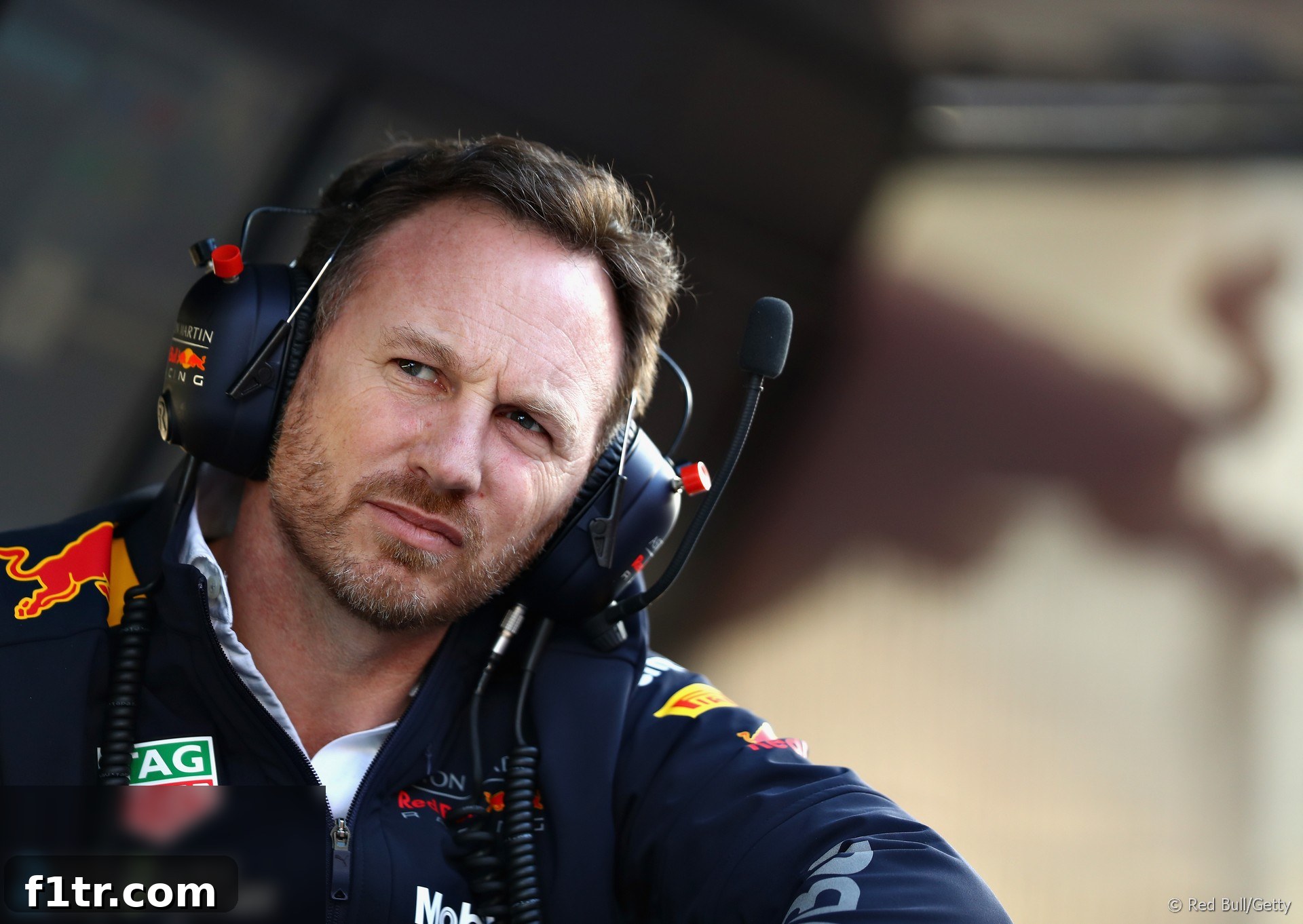
Christian Horner Slams 2019 F1 Aero Rules: Unresearched, Costly, and Rushed
Red Bull Racing Team Principal Christian Horner has expressed vehement disapproval regarding the new aerodynamic regulations approved for the 2019 Formula 1 season. These significant changes, primarily intended to enhance overtaking opportunities on track, are, in Horner’s strong opinion, based on insufficient research and will impose an additional financial burden of “millions” on the participating teams. His candid remarks highlight a palpable frustration within certain sectors of the F1 paddock concerning the sport’s decision-making processes and its approach to regulatory amendments.
Advert | Become a Supporter & Go Ad-Free
The Controversial 2019 Aerodynamic Rule Changes Explained
A pivotal vote concluded recently, affirming the introduction of revised specifications for both the front and rear wings of Formula 1 cars for the upcoming 2019 championship. The fundamental objective behind these aerodynamic modifications is to minimize the disruptive effect of “dirty air” – the turbulent wake created by a leading car – thereby enabling following cars to maintain closer proximity and consequently facilitating more aggressive and frequent overtaking maneuvers. This initiative was spawned from preliminary research conducted as part of a broader study into the radical car designs envisioned for the 2021 F1 car generation, with the aim of proactively enhancing the racing spectacle.
Specifically, the 2019 regulations mandate a wider, simpler front wing design, coupled with simplified brake duct designs devoid of complex winglets. Additionally, the rear wing will be slightly larger and positioned higher. While these changes might appear confined to a few external components, their implications are far-reaching. They fundamentally alter how airflow interacts with and travels over and around the car, affecting critical performance metrics such as downforce generation, aerodynamic efficiency, cooling systems, and even tire degradation. The optimistic forecast is that by reducing the turbulent air and its detrimental impact on downforce, cars will experience less aerodynamic grip loss when running close behind rivals, paving the way for more thrilling, wheel-to-wheel racing action.
Christian Horner’s Vehement Criticism: A Sport “Shooting Itself in the Foot”
Christian Horner’s assessment of these impending changes is unreservedly critical, characterizing them as yet another instance where Formula 1 demonstrates a concerning propensity to “shoot itself in the foot.” This pointed metaphor encapsulates his conviction that the sport, in its earnest pursuit of perceived improvements, often inadvertently makes self-detrimental decisions that ultimately compromise its participants’ operational stability or financial health.
Unsubstantiated Decisions and a Rushed Implementation
Horner’s primary contention is that the 2019 regulations have been hastily enacted without the benefit of comprehensive analytical scrutiny. While acknowledging the promising nature of the long-term research being undertaken for the 2021 season, he stated, “What has been done for 2021 is all good stuff.” However, he expressed profound disappointment that “a snapshot of that has been taken, it hasn’t been fully analysed, there’s no proven conclusion from it. It’s been rushed into a set of regulations, it completely conflicts existing regulations.” This implies a troubling lack of thorough validation and an almost experimental approach to regulatory reform, which, in the intensely competitive and high-stakes environment of F1, risks leading to significant unintended consequences and operational challenges for all teams involved.
His concerns resonate with the complex interplay between theoretical aerodynamic research, practical application in real-world racing conditions, and the paramount importance of maintaining sporting fairness. Introducing rules based on incomplete or inconclusive data poses a substantial risk of disrupting the competitive equilibrium, potentially affording an undue advantage to teams with greater resources to rapidly adapt or those who happen to stumble upon a superior interpretation of the new rules. This situation, according to Horner, necessitates frantic, last-minute adjustments and clarification sessions even as the pre-season testing looms, generating unnecessary stress and fostering an environment of inconsistency.
The Staggering Financial Burden on Teams
Among Horner’s most significant criticisms is the immense financial impact these seemingly limited rule changes will have on teams. Despite the modifications being ostensibly restricted to a few aerodynamic components, he emphasized that their effects cascade throughout the entire car’s design philosophy. “It completely changes the philosophy of the car,” he elaborated. “The front wing will be wider. The point that the air meets the car is the front wing, that then changes everything behind it so suspension, bodywork, absolutely every single component.”
This aerodynamic domino effect means that what might appear to be a minor adjustment to the front wing demands a wholesale re-evaluation and redesign of numerous crucial components across the entire chassis. The front wing fundamentally dictates how air is managed and directed over, under, and around the car, thereby influencing the efficiency and performance of the floor, diffuser, rear wing, and even the cooling systems. Consequently, teams are compelled to dedicate substantial resources to the research, design, advanced simulation, manufacturing, and rigorous testing of new parts – encompassing suspension elements, intricate bargeboards, the entire floor assembly, and various bodywork components. All of this is required to maintain optimal aerodynamic performance within the parameters of the new regulatory envelope. Horner pointedly asserted, “And we talk about costs and [responsibility] – what’s just been introduced is a completely new concept. It will cost millions and millions of pounds,” highlighting the stark contradiction with ongoing, industry-wide efforts to control and reduce expenditure within Formula 1.
Questioning the Rationale: The Melbourne GP and Inconsistent Approach
Horner also challenged the timing and underlying motivation behind this regulatory push. He specifically highlighted that the changes were “rushed after Melbourne because it was a race with not a lot of overtaking.” While the Australian Grand Prix is often singled out for its characteristic lack of on-track action due to the nature of its semi-street circuit layout, Horner contends that it is an anomalous event in the F1 calendar. He underscored that subsequent races had, in fact, delivered ample overtaking opportunities, suggesting that a singular race, particularly one known for its unique characteristics, should not serve as the sole or primary catalyst for such sweeping and financially impactful rule modifications.
“When has there ever been any overtaking in Melbourne? And we’ve had three great races since then,” he challenged, implying a reactive rather than a data-driven approach. This criticism raises broader questions about the decision-making process within Formula 1, specifically whether critical regulatory changes are influenced more by fleeting emotions or isolated incidents rather than by comprehensive, long-term data analysis. Such an approach, Horner maintains, inevitably leads to decisions founded on “zero evidence, zero conclusions, on theories,” with the immense financial and operational “burden of costs” being unfairly and directly passed onto the participating teams.
Conflicting Regulations and the Sport’s Potential Self-Inflicted Wounds
Beyond the immediate concerns of cost and insufficient research, Horner subtly alluded to potential conflicts arising between the new aerodynamic rules and existing regulations, suggesting a lack of cohesive integration. This administrative oversight can lead to ambiguity, necessitating further clarification and potentially creating unintended design constraints or even regulatory loopholes. The constant need to “tidy that up over this weekend,” as he vividly described it, implies a reactive rather than a proactive stance to governance, thereby undermining the stability and predictability that teams crucially rely upon for efficient planning and operation.
The overarching sentiment that the “sport has the ability to shoot itself in the foot” encapsulates a deeper concern that Formula 1, in its relentless pursuit of improvement and a more engaging spectacle, sometimes inadvertently creates more problems than it solves. This recurring cycle of reactive rule changes, frequently driven by an urgent desire for a ‘better show’ or to rectify a perceived immediate problem, can foster an unstable and unpredictable regulatory environment, rendering long-term strategic planning exceptionally difficult and consistently increasing the financial pressure on all involved participants.
FIA’s Counter-Perspective: A History of Extensive Research
In stark contrast to Christian Horner’s pointed criticisms, Nikolas Tombazis, the FIA’s respected head of single-seater technical matters, offered a robust defense of the new regulations. He asserted that the 2019 rules had been subjected to a far more extensive and rigorous research and analysis process than any other aerodynamic rule change implemented in Formula 1 since 2009. This assertion suggests that while Horner may perceive the research as incomplete from a team’s intensely competitive perspective, the FIA believes it leveraged considerable resources, advanced simulations, and expert knowledge to thoroughly validate the proposed aerodynamic modifications.
Tombazis’s remarks underscore a fundamental difference in perspective regarding what constitutes ‘fully researched.’ While teams understandably demand absolute certainty on performance outcomes and precise cost implications, the FIA’s mandate is primarily to ensure sporting fairness and enhance the overall spectacle, often relying on sophisticated simulations and theoretical models that may not perfectly replicate the intricate, real-world development curves of individual teams. The FIA had previously indicated that these new rules for 2019 would likely result in cars being approximately 1.5 seconds slower per lap, a minor trade-off deemed acceptable for the potential benefit of better, more engaging racing.
Broader Implications for Formula 1’s Future
The fervent debate surrounding the 2019 aerodynamic rules extends far beyond the immediate concerns articulated by Red Bull or Christian Horner; it delves into fundamental aspects of Formula 1’s governance structure, its long-term financial sustainability, and its very identity as the pinnacle of motorsport. It vividly highlights the perpetual tension that exists between fostering cutting-edge innovation, exercising stringent cost control, and the elusive, ongoing quest to consistently deliver compelling, edge-of-the-seat racing.
The Pursuit of Better Racing Versus Regulatory Stability
One of the central dilemmas confronting Formula 1 is how to effectively strike a delicate balance between continuously enhancing the racing spectacle and simultaneously providing a stable, predictable regulatory framework for its participating teams. Frequent and significant rule changes, especially those that incur substantial financial burdens, possess the potential to destabilize smaller, less affluent teams and inadvertently widen the competitive chasm between the sport’s wealthiest and more modestly budgeted competitors. While the underlying intent of the 2019 changes—to enhance overtaking—is undeniably laudable, the specific method and timing of their implementation have ignited considerable debate, compelling teams to redirect precious resources from ongoing performance development into hastily adapting to unforeseen regulatory shifts. This dynamic often leaves teams feeling trapped between the imperative to innovate relentlessly and the relentless pressure to conform to an ever-evolving set of mandates.
Engineering Challenges and Shifting Design Philosophies
From an intricate engineering perspective, the mandated aerodynamic changes compel teams to fundamentally re-evaluate and, in many cases, entirely reconsider their established aerodynamic design philosophies. The front wing, serving as the crucial first point of contact for the airflow, plays an absolutely pivotal role in dictating how air is efficiently managed and directed across the entirety of the car’s bodywork. A wider, simpler front wing fundamentally alters how teams can strategically ‘outwash’ air around the front wheels to minimize drag and effectively manage the turbulent wake. This pervasive ripple effect signifies that engineers must embark on an exceedingly complex and costly journey of comprehensive re-optimization, impacting every single aspect from suspension kinematics and intricate bargeboard designs to the overall floor configuration and aerodynamic efficiency. This formidable challenge, while undoubtedly stimulating for the most ingenious engineers, invariably comes at a substantial financial and temporal cost, significantly disrupting overall development schedules and potentially shifting competitive advantages within the field.
Looking Ahead: The 2019 Season and Beyond
As the 2019 Formula 1 season officially commenced, the precise impact of these controversial aerodynamic rule changes remained a key and intensely debated talking point across the paddock. The ultimate efficacy of these modifications in genuinely improving overtaking, and their true financial burden on the teams, would only become definitively apparent once the cars took to the track in live, competitive conditions. The ongoing and spirited debate between influential figures like Christian Horner and the governing body, the FIA, starkly underscores the persistent challenge of harmoniously balancing the sport’s overarching desire for an exhilarating and unpredictable spectacle with the practical realities and inherent financial constraints faced by its dedicated participants.
Ultimately, these 2019 rule changes serve as a crucial and insightful precursor to the much-anticipated, sweeping regulatory overhaul slated for the 2021 season. The invaluable lessons learned from the 2019 experience, encompassing both the positive outcomes and any unforeseen negative consequences, will undoubtedly play a critical role in informing and shaping future regulatory decisions for Formula 1. The F1 paddock remains a vibrant hotbed of unparalleled innovation and fierce competition, but also a crucible of intense scrutiny regarding how the sport is strategically governed, regulated, and ultimately evolves into its next exciting chapter.
Advert | Become a RaceFans supporter andgo ad-free
Related Articles on the 2019 F1 Season
Explore more insights, analyses, and discussions surrounding the highly debated and memorable 2019 Formula 1 season through our curated collection of related articles:
- Crying in the Melbourne car park at 2019 grand prix was my career low – Ocon
- McLaren Racing reports reduced £71 million loss in 2019
- Kvyat: Hockenheim podium last year was “my biggest achievement” so far
- How the FIA’s new encrypted fuel flow meter targets Ferrari’s suspected ‘aliasing’ trick
- “He smashed my office door”: 23 must-see moments from ‘Drive to Survive’ season two
Browse all 2019 F1 season articles