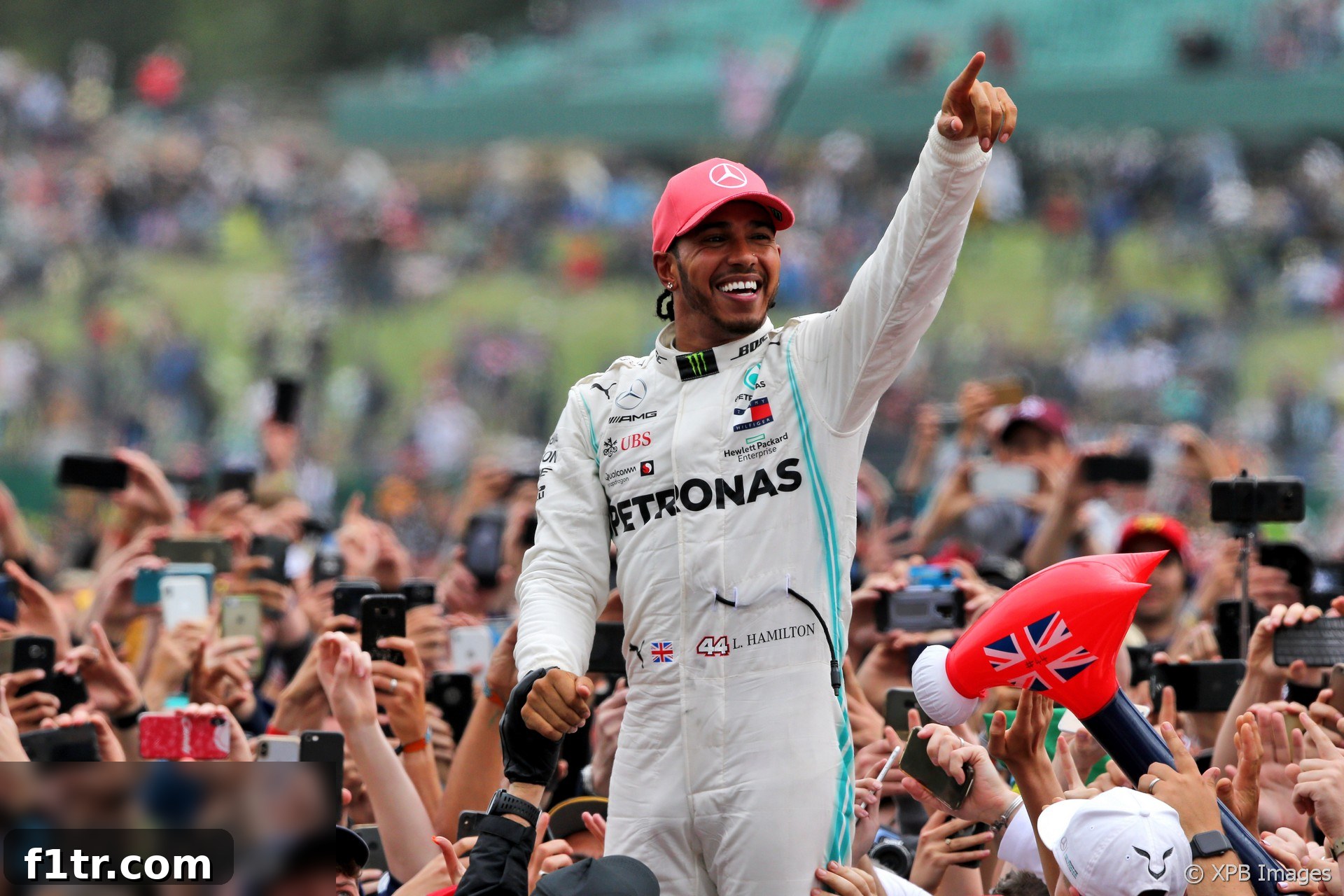
The 2019 Formula 1 season stands as a monumental chapter in the illustrious career of Lewis Hamilton, seeing him clinch his sixth World Championship with two races still on the calendar. This remarkable feat placed him in an exclusive echelon of motorsport legends, reaffirming his status as one of the greatest drivers of all time. While his dominant points tally might suggest a relatively straightforward path to the title, and although his team mate Valtteri Bottas couldn’t quite sustain a season-long title challenge, nor did the packages from Ferrari and Red Bull Racing prove consistently competitive enough over the gruelling 21-race campaign to mount a full-scale championship bid, to underestimate Hamilton’s achievement would be a significant oversight. The narrative of his sixth championship was far from a comfortable drive; instead, it was a testament to his unparalleled skill, strategic brilliance, and mental fortitude, as he navigated stern and varied competition from four different rivals at various critical junctures throughout the demanding season.
Advert | Become a Supporter & go ad-free
Indeed, Hamilton was seriously tested, facing intense pressure and direct confrontations that underscored his championship pedigree. These challenges emerged from a diverse group of elite drivers, each pushing him to his limits and demanding his absolute best. His ability to rise above these tests, often under immense scrutiny and pressure, defined his remarkable 2019 campaign.
One of the earliest and most significant duels came against long-standing rival Sebastian Vettel. Their encounters provided a fascinating spectacle of tactical prowess and raw racing talent. The first major confrontation unfolded in Bahrain, a race where Hamilton masterfully pressured Vettel into an uncharacteristic error, resulting in the Ferrari driver spinning off track while attempting to defend his position. This was a clear demonstration of Hamilton’s ability to exploit weaknesses and capitalize on opportunities. Later in the season, in Canada, their battle escalated, culminating in a highly debated incident where Vettel strayed wide under relentless pressure from Hamilton, rejoining the track unsafely and earning a controversial five-second penalty. This effectively handed Hamilton the victory, highlighting how even minor missteps could be leveraged by the Mercedes ace, turning a straight fight into a strategic knock-out under intense psychological and on-track pressure. These victories over a four-time world champion solidified Hamilton’s mental edge and underscored his capability to win in diverse circumstances.
As the season progressed, a new, formidable threat emerged in the form of Max Verstappen. The young Dutchman, driving a steadily improving Red Bull, often found himself locked in electrifying wheel-to-wheel combat with Hamilton. In Brazil, Verstappen truly had the measure of Hamilton, demonstrating superior pace and securing a dominant victory that Hamilton, despite his best efforts, simply couldn’t counter. Whatever Hamilton threw at him that weekend, Verstappen seemed to have an answer, showing the raw speed and aggressive determination that defines his driving style. However, Hamilton responded with characteristic brilliance in Hungary, delivering one of the most intelligent and tactically astute wins of the year. In a race where a crucial strategy call involving an extra pit stop for fresh tyres propelled him past Verstappen in the closing stages, Hamilton showcased his deep understanding of race dynamics and tire management. While his team radio messages at the time hinted at doubts regarding the team’s strategy, leading some to speculate about potential mind games, the outcome was undeniable: a superb victory snatched from the jaws of a seemingly inevitable second place, demonstrating Hamilton’s ability to execute complex strategies under pressure and extract maximum performance from his machinery.
Another burgeoning rival who challenged Hamilton’s supremacy was Valtteri Bottas, found new reserves of speed and confidence in 2019, taking several impressive wins away from Hamilton and often pushing him hard, particularly in the early stages of the season. Bottas’s resurgence meant Hamilton rarely had a comfortable time, even within his own garage, maintaining a competitive edge over his revitalized colleague.
Despite these formidable challenges, Lewis Hamilton’s sheer consistency was the defining factor that set him apart from his rivals throughout the majority of the 21-race campaign. While some of his competitors had occasional flashes of brilliance and converted some of their chances into victories, Hamilton was rarely out of contention for podiums, if not wins, on any given race weekend. This unwavering performance allowed him to accumulate points relentlessly, building an insurmountable lead.
His ability to perform at a high level, week in and week out, was unparalleled. Although he secured ‘only’ five pole positions over the course of the year, a relatively low number for a champion of his calibre, Hamilton consistently started very close to the front of the grid. This strategic positioning often placed him ideally to capitalise when his rivals made errors or faced misfortune. As a direct result of this astute race craft and consistency, he took more than twice as many race wins as pole positions, demonstrating his exceptional ability to convert any front-row start into a victory opportunity. There were almost no weekends all year when Hamilton wasn’t in with a realistic chance of winning or at least securing significant points. His worst results—the German Grand Prix, marred by changing conditions and an uncharacteristic slide into the barrier, and the Brazilian Grand Prix, where a collision with Albon led to a penalty—came as a result of extremely rare misjudgements, highlighting just how few mistakes he made throughout the season.
Lewis Hamilton |
|
|---|---|
| Beat team mate in qualifying | 14/21 |
| Beat team mate in race | 13/19 |
| Races finished | 20/21 |
| Laps spent ahead of team mate | 907/1233 |
| Qualifying margin | -0.12 |
| Points | 413 |
Naturally, the majority of his early season victories were secured when the Mercedes W10 was at its strongest, demonstrating an undeniable performance advantage. However, it was in the demanding second half of the season, when Ferrari mounted a significant resurgence and the Red Bulls also found their stride, that Hamilton produced some of his most impressive and strategically astute performances. Faced with genuinely strong opposition, he seized opportunistic wins in Russia and Mexico, not through sheer pace dominance, but by being fast enough, intelligent enough, and consistent enough to capitalise on Ferrari’s strategic failings, reliability issues, or driver errors. These victories in the face of heightened competition were particularly telling, showcasing his ability to adapt and perform even when the car’s absolute advantage had diminished.
Specifically, in Mexico, Hamilton was notably fortunate to escape unscathed from a first-lap skirmish with Max Verstappen, an incident that could have easily ended his race. Former F1 driver Mark Webber found it particularly telling that Hamilton was prepared to risk a “very rare low percentage move” against that particular rival. This calculated aggression against Verstappen, a driver known for his uncompromising style, spoke volumes about Hamilton’s assessment of the emerging threat from Red Bull and his willingness to push the boundaries to assert dominance or defend his position, even against a rival who was becoming increasingly formidable.
Throughout the 2019 season, Hamilton wasn’t always as sharp in qualifying with the W10 as he had been with other Mercedes cars during his career. This slight dip in qualifying form occasionally compromised his race weekends, such as in the USA, where he had to settle for a hard-fought second place behind Bottas after his team mate secured pole position. Despite this, his race craft, tire management, and strategic acumen consistently allowed him to recover and secure vital points or victories. He closed out the year in Abu Dhabi with the kind of utterly dominant performance that, paradoxically, was somewhat atypical of a season where he had faced so much genuine competition, yet it served as a powerful reminder of his ultimate potential and solidified the achievement of his sixth World Championship title, setting the stage for his continued assault on the F1 record books.
Advert | Become a RaceFans supporter andgo ad-free
Over to you
What’s your ultimate verdict on Lewis Hamilton’s electrifying 2019 Formula 1 season? Considering the intense challenges from Bottas, Vettel, Verstappen, and Leclerc, which drivers do you believe he performed better or worse than over the course of the championship year? Share your insights, opinions, and analyses in the comments section below – we’d love to hear your perspective on a truly memorable season.
Vote for your 2019 F1 driver of the year
Participate in our annual poll and make your voice heard! Let us know who you believe was the standout performer of the 2019 F1 season by casting your vote here:
- Vote for your 2019 F1 Driver of the Year
Advert | Become a RaceFans supporter andgo ad-free
2019 F1 season review
- ‘I should have done a better job. There’s things that I know I can do better’
- ‘I am definitely not a rookie anymore – but I’m still getting better’
- ‘I didn’t believe in myself much. But after Australia and Bahrain and I gained a lot of confidence’
- ‘It was my best season for sure so far in terms of pure results and speed’
- ‘There’s been plenty of good performances – but there’s also other years I’ve performed at my best’
Browse all 2019 F1 season review articles