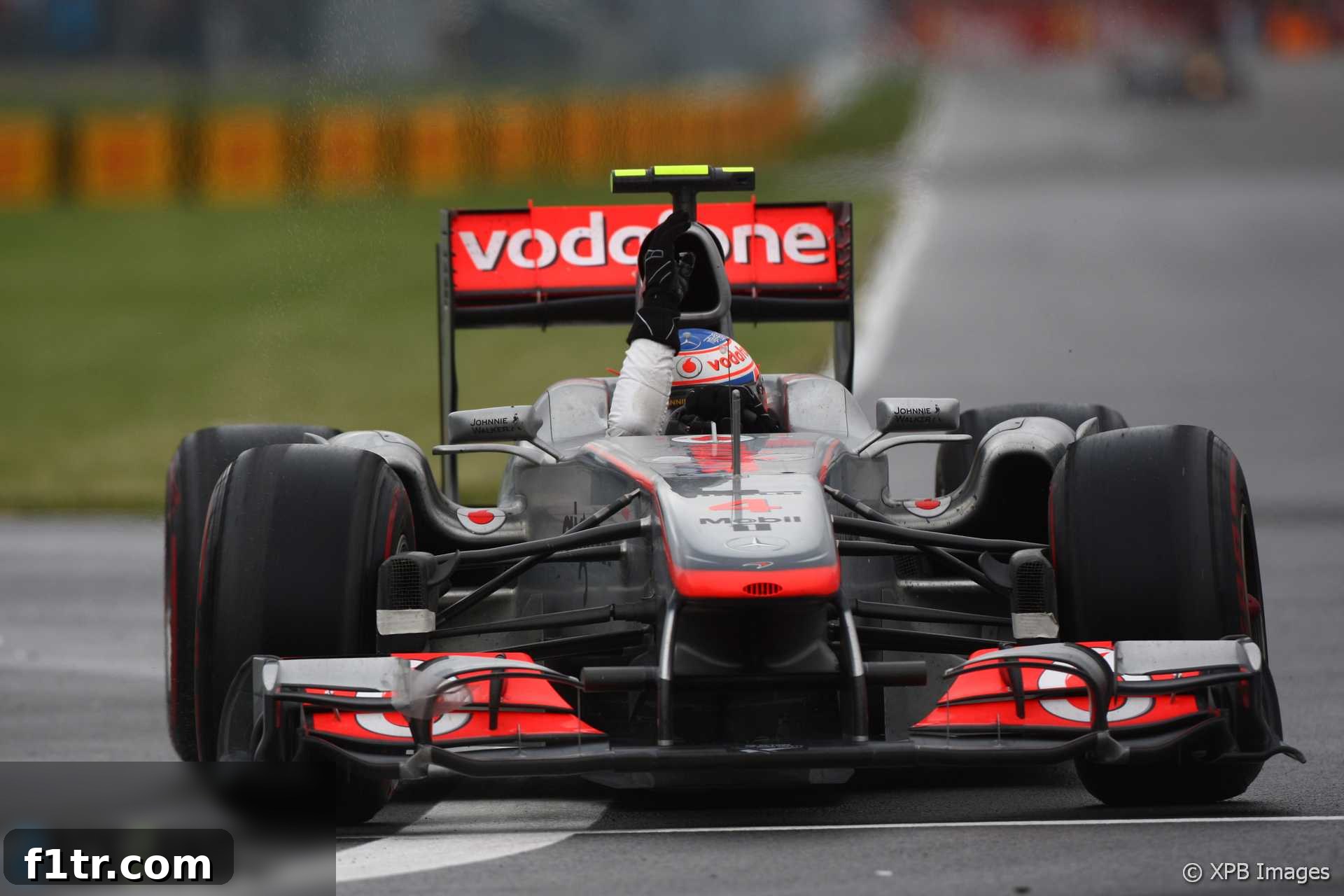
The 2011 Canadian Grand Prix is etched into Formula 1 folklore, widely regarded as one of the most thrilling and unpredictable races in the sport’s history, particularly within the modern era. Its dramatic conclusion and the sheer scale of the comeback make it a perennial highlight for fans and a testament to the unpredictable nature of motorsport.
The Unforgettable 2011 Canadian Grand Prix: A F1 Spectacle Unrepeatable Today
Picture a rain-soaked afternoon at the iconic Circuit Gilles Villeneuve in Montreal. What unfolded was an epic, four-hour-plus endurance test punctuated by a torrential downpour, multiple safety car periods, a red flag, and a nail-biting finish decided on the very last lap. This was the 2011 Canadian Grand Prix, a race that defied expectations and delivered a narrative stranger than fiction.
Reigning world champion Sebastian Vettel, in his dominant Red Bull, appeared to be cruising towards yet another victory, leading for the vast majority of the day. However, McLaren’s Jenson Button was on a charge for the ages. Button’s race started disastrously, involving a collision with his teammate Lewis Hamilton, an unscheduled pit stop, and a penalty for speeding behind the Safety Car, which saw him tumble to 21st place – effectively last. From that improbable position, Button embarked on a relentless pursuit, scything through the field in treacherous conditions.
As the final lap began, Button had incredibly closed the gap to Vettel, who was still leading. Then, in a moment of high drama that defined the race, Vettel slid wide on a damp patch, allowing Button to seize the lead and sensationally claim the win. This remarkable performance, transforming a seemingly lost cause into a historic triumph, is why the race consistently ranks among the top F1 races as rated by fans. F1 itself often showcases it on platforms like social media as a prime example of the sport’s thrilling unpredictability.
The Evolution of F1 Race Duration Rules: Safety vs. Spectacle
However, the very circumstances that made the 2011 Canadian Grand Prix so legendary – its extended duration and multiple stoppages – mean that a similar event is no longer possible under current Formula 1 regulations. The race began with four laps behind the Safety Car, was neutralised again on lap 20, and then dramatically red-flagged on lap 25. What followed was a suspension for almost two hours before the action resumed. By the time Button made his iconic pass to claim victory, more than four hours had passed since the original start of the race.
The rules governing race duration have evolved significantly since 2011. In 2012, Formula 1 introduced a strict four-hour time limit for any Grand Prix, including any red flag periods. This rule was further tightened in 2021, reducing the maximum duration to a mere three hours. These changes were primarily driven by a desire to improve safety in fading light, particularly after incidents like the 2010 Korean Grand Prix where visibility became a major concern as daylight diminished. Additionally, stricter time limits help with broadcast scheduling and logistics.
Rewriting History: The 2011 Canadian Grand Prix Under Modern Rules
If the 2011 Canadian Grand Prix were to take place under today’s three-hour rule, the outcome, and indeed the entire spectacle, would be drastically different. Let’s revisit the timeline:
- The race starts, runs for 25 laps, and is red-flagged.
- The suspension lasts for nearly two hours.
- By the time the cars were finally sent back out to resume the race, the clock would have already been running for approximately two hours and 50 minutes.
This means that with only about ten minutes remaining in the permitted three-hour window, the race would have been concluded almost immediately. Sebastian Vettel would have crossed the line at the end of lap 30 with just three hours and 41 seconds on the clock, under current regulations he would have been shown the chequered flag the very next time around. Instead of a full 70-lap race, the soaked Montreal crowd would have witnessed a mere 31 laps, with only about 10 laps of actual green-flag racing. The result would have been an incredibly anticlimactic conclusion.
The impact on the drivers and the championship would also be profound. Jenson Button’s legendary drive, which saw him overcome adversity and make numerous overtakes, would have been cut short. Instead of his incredible last-lap victory, he would have been classified 10th. Moreover, modern F1 rules only award reduced points for shortened races that fail to reach a certain distance threshold. Given the minimal number of green-flag laps, Button would likely not have scored any points at all, fundamentally altering the championship battle.
Hypothetical Results: 2011 Canadian GP Under 2023 Rules
To illustrate the stark contrast, here’s how the points and finishing order would have differed:
| Position | Actual Finisher (2011) | Actual Points (2011) | Finisher Under 2023 Rules | Points Under 2023 Rules |
|---|---|---|---|---|
| 1 | Jenson Button | 25 | Sebastian Vettel | 13 |
| 2 | Sebastian Vettel | 18 | Kamui Kobayashi | 10 |
| 3 | Mark Webber | 15 | Felipe Massa | 8 |
| 4 | Michael Schumacher | 12 | Nick Heidfeld | 6 |
| 5 | Vitaly Petrov | 10 | Vitaly Petrov | 5 |
| 6 | Felipe Massa | 8 | Paul di Resta | 4 |
| 7 | Kamui Kobayashi | 6 | Mark Webber | 3 |
| 8 | Jaime Alguersuari | 4 | Fernando Alonso | 2 |
| 9 | Rubens Barrichello | 2 | Pedro de la Rosa | 1 |
| 10 | Sebastien Buemi | 1 | Jenson Button | 0 |
Faced with similar conditions today, race control would undoubtedly make greater efforts to restart the race sooner to maximise green flag laps. However, the stringent restrictions of the modern rules mean it’s highly doubtful the race would even reach half-distance, let alone the full 70 laps. The magic of the original event would be entirely lost.
The Dilemma: Flexibility for Race Directors in Adverse Conditions
The underlying reason for these duration restrictions is sound: primarily, to ensure driver safety and prevent races from continuing into dangerously low light levels, as witnessed in the aforementioned Korean Grand Prix. However, tightening the window to just three hours leaves race directors with very little flexibility when confronted with extreme weather. This is particularly relevant given the increasing visibility problems F1 cars face in very wet conditions, partly exacerbated by the wider tires introduced in 2017 which displace significantly greater volumes of water.
This strict adherence to time limits has already impacted recent races. A similar scenario unfolded at the Monaco Grand Prix last year, where the race concluded at the three-hour mark despite there being 14 laps left to run. Race leader Sergio Perez was beginning to struggle with his tires, with a trio of cars looming large in his mirrors, promising a thrilling chase to the flag. Did the rules inadvertently cost us another memorable F1 moment that day? We will never truly know the answer, which is often the most frustrating part for fans.
Instead of witnessing Button’s dramatic dive past Vettel and the creation of a cherished piece of F1 history, had that race taken place today, teams would have been packing up their equipment, and fans would have been making their way home, perhaps feeling a sense of anticlimax. The current regulations, while ensuring safety, undeniably diminish the potential for the kind of extraordinary, unpredictable events that define races like the 2011 Canadian Grand Prix.
Support RaceFans and Go Ad-Free
RaceFans thrives thanks to the generous support of its dedicated readers. By contributing a small amount monthly or annually, you can help cover the costs of creating, hosting, and developing RaceFans content, ensuring its continued growth and quality.
Become a RaceFans Supporter today and enjoy an entirely ad-free browsing experience. Find out more or sign up via the links below:
- Become a RaceFans Supporter
- RaceFans Supporter FAQ
More from the 2023 F1 Season
- FIA president cleared of alleged interference in two 2023 races
- First week viewing figures for new Drive to Survive season fall again
- Max who? Drive to Survive season six prefers its favourite faces
- RaceFans’ complete 2023 season review
- The F1 drivers who pulled off the 10 biggest charges through the field in 2023
Browse all 2023 F1 season articles