Formula 1’s Seismic Week: Williams Racing on the Brink Amidst Industry Shake-Ups
Even by the often-turbulent standards of Formula 1, the past week delivered an extraordinary torrent of news, sending ripples across the motorsport landscape. From executive shifts and sweeping redundancies to critical rule changes and the potential sale of an iconic team, the sport found itself at a pivotal juncture, grappling with both internal and external pressures.
A Cascade of Major Announcements
The week kicked off with a bombshell on Monday, as reports surfaced regarding Aston Martin’s ambitious plans to replace its CEO, Andy Palmer, with Tobias Moers, a prominent executive from Mercedes-AMG. This development immediately ignited fresh speculation about the intricate and sometimes controversial relationship between the two automotive giants and their respective Formula 1 racing operations. The close ties between Mercedes, as an engine supplier and technical partner, and teams like Racing Point (soon to be Aston Martin), have long been a talking point, raising questions about competitive fairness and the future direction of constructor independence.
As the days progressed, the headlines continued to dominate the motorsport world. The McLaren Group, a revered name in both automotive and racing circles, announced a significant redundancy program, a stark reminder of the global economic challenges exacerbated by the ongoing pandemic. Simultaneously, French carmaker Renault, despite laying off an astounding 15,000 employees worldwide, reaffirmed its commitment to Formula 1. However, the caveat “for how long remains to be seen” hung heavy in the air, highlighting the perennial uncertainty surrounding manufacturer involvement in the sport. These corporate maneuvers underscore the financial pressures that even well-established entities in Formula 1 face, demanding constant strategic re-evaluation.
Mid-week also saw a crucial development on the regulatory front. The FIA World Motor Sport Council officially ratified a comprehensive package of rule changes primarily aimed at drastically cutting teams’ costs. These new regulations, including a long-awaited budget cap, represent a fundamental shift in Formula 1’s economic model, designed to foster greater financial sustainability and ultimately, a more competitive grid. The hope is that these measures will level the playing field, making the sport more accessible and reducing the vast spending disparities that have long characterized the top tier of motorsport.
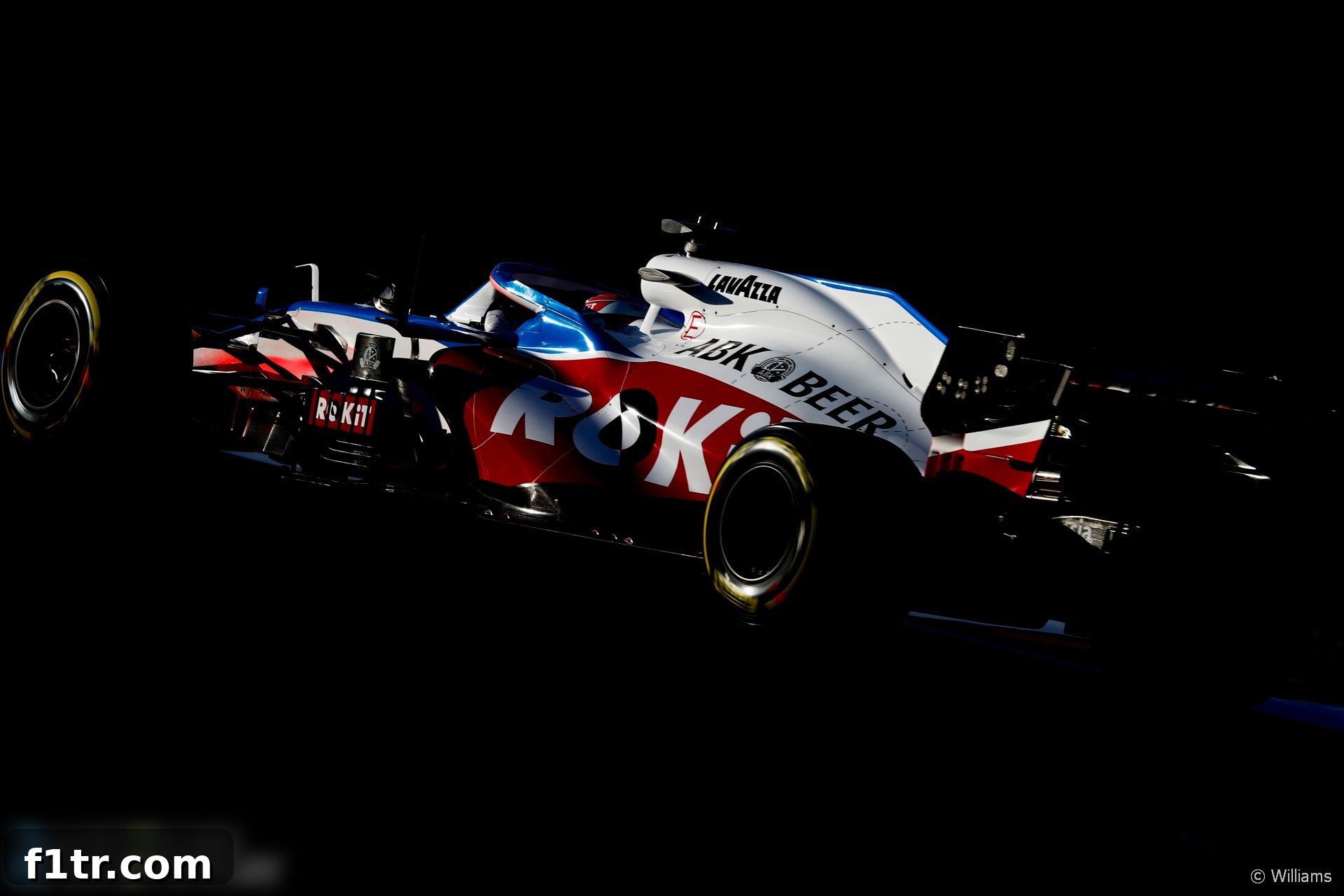
Yet, topping all these significant announcements was Friday morning’s revelation from Williams Racing: the legendary British team declared a £13 million loss and explicitly stated that it was exploring a sale of the team. While Williams has admittedly struggled, finishing last in the constructors’ championship in the two most recent seasons, the news of its potential sale generated immense interest and a collective gasp across the F1 community. It serves as a powerful testament to the enduring legacy and high regard in which the Williams name is still held globally, despite its recent on-track misfortunes.
The Decline of a Formula 1 Legend
Following the stunning announcement, deputy team principal Claire Williams addressed selected media, including RaceFans, vehemently refuting suggestions that the team was in “long-term decline.” Instead, she attributed their current predicament to merely “two bad years.” While her passion and defense of the team are understandable, a dispassionate look at the historical record tells a more somber tale. Williams’ last World Championship title dates back to 1997, a quarter-century ago, and their last race victory was achieved in 2012. Remarkably, the win before that was a full eight years earlier in 2004. Furthermore, the team’s championship standings have demonstrated a clear and concerning downward trajectory over the past five years, plummeting from an admirable third place in both 2014 and 2015 to a dismal tenth and ultimately last position in the most recent seasons.
The harsh reality facing Williams Racing is that its long-standing business model, centered on designing and building virtually an entire Formula 1 car in-house (apart from the engine), has become increasingly untenable and, arguably, obsolete in the modern era of the sport. This traditional approach, once a hallmark of independent constructors, stands in stark contrast to the more contemporary and cost-effective model adopted by many of their competitors. Teams such as AlphaTauri, Racing Point (now Aston Martin), Sauber (now Stake F1 Team Kick Sauber), and Haas have all successfully leveraged technology and components sourced from larger ‘mothership’ teams or strategic partners. This allows them to allocate resources more efficiently, focusing on integration and performance rather than the prohibitive costs associated with developing every single part from scratch.
The trend towards this ‘customer team’ model has only accelerated in recent years, leaving Williams at a significant disadvantage. As these rival teams have successfully leapfrogged Williams in the constructors’ standings, the financial and competitive pressures on the Grove-based outfit have mounted. It’s worth noting that McLaren is currently the only other non-manufacturer team operating with a similar, largely independent, in-house model, and it too has faced its share of financial and structural challenges, as highlighted by its own recent headlines.
The Inequitable Financial Landscape of F1
However, the fundamental issue underpinning Williams’ struggles extends beyond its manufacturing philosophy; it lies at the heart of Formula 1’s deeply inequitable revenue distribution structure. For many years, a significant portion of the sport’s earnings has been funneled to its largest and most historically successful teams in the form of substantial bonuses. Over a six-year period, giants like Ferrari, Mercedes, and Red Bull collectively reaped almost $2 billion purely in these bonus payments. In stark contrast, during the same timeframe, Williams Racing received a mere $60 million over and above its standard share of prize money. This colossal disparity profoundly impacted Williams’ ability to invest in crucial facilities, cutting-edge technologies, and vital personnel, creating a vicious cycle where a lack of funds leads to a lack of performance, further diminishing their prize money earnings.
To put this into perspective, McLaren, while still receiving less than the top three, managed to earn around $180 million in the same period, illustrating the varying degrees of financial strain even among the more established independent teams. While it is true that some teams received no such bonuses, their survival strategies differ significantly from Williams. Some boast direct manufacturer owners, such as Renault (now Alpine), providing a robust financial backbone. Others benefit from wealthy benefactors, like Red Bull’s ownership of AlphaTauri or Gene Haas’s funding of Haas F1. Then there are those that teetered on the brink of bankruptcy before being dramatically rescued by billionaire investors, a fate that befell Racing Point (formerly Force India) and Sauber. In contrast, McLaren is predominantly owned by Bahrain’s sovereign wealth fund, providing substantial financial stability. Williams, however, is publicly listed in Frankfurt, with 52% owned by its founder, Sir Frank Williams, a man of modest family background who earned his knighthood for his immense services to Formula 1, embodying a more traditional, family-run approach that has struggled to adapt to the sport’s increasingly corporate and capital-intensive environment.
A Strategic Crossroads, Not a Fire Sale
While the headline “Williams for sale” undeniably carries significant impact and captures immediate attention, it is crucial to understand that this represents only one of several potential outcomes. The team’s announcement explicitly details a strategic review, an endeavor to secure much-needed incoming investment. This process could lead to various scenarios, including the sale of a minor or majority stake, or other options open to the current owners as they seek to recapitalize the team. Claire Williams underscored this point by emphasizing that no redundancies are planned, a clear signal that this is not a desperate “fire sale” as some sensationalist reports might suggest. Instead, it is a measured and strategic exploration of pathways to ensure the long-term viability and competitiveness of the team.
Indeed, Williams’ official announcement was meticulously worded, stating in block letters: “THIS IS AN ANNOUNCEMENT OF A POSSIBLE OFFER UNDER [THE CITY CODE] ON TAKEOVERS AND MERGERS AND DOES NOT CONSTITUTE AN ANNOUNCEMENT OF A FIRM OFFER UNDER RULE [OF THE CODE]. THERE CAN BE NO CERTAINTY THAT AN OFFER WILL BE MADE NOR AS TO THE TERMS ON WHICH ANY OFFER MIGHT BE MADE.” This legally precise language highlights the exploratory nature of their current position and indicates that any definitive offer is far from a foregone conclusion. Unfortunately, the nuanced implications of this statement were overlooked by some media outlets, who were quick to jump to the conclusion of an immediate and inevitable sale.
When pressed by RaceFans for further clarification on the situation, Williams CEO Mike O’Driscoll expressed concern that some were “rushing to conclusions in the various headlines that are appearing.” He reiterated the team’s official stance, asserting, “There are no prescribed outcomes, and we were clear about it in the release this morning. We’re looking at a range of options. The capital injection all the way through minority [share], [or] wholesale, is just one of many, many options. And I think to arrive at that conclusion [of sale] probably makes headlines, but it’s not necessarily factual and it’s not the way we’re looking at it. So we’re working through a process. We’ve got a couple of great banks helping us and I really would just leave it at that.” His words further reinforce the idea that Williams is exploring all avenues to secure its future, not simply offloading the team.
The Road Ahead: Timely Review Amidst F1’s New Era
While the prospect of such a significant strategic shift may be difficult for loyal Williams supporters and the family itself to contemplate, the timing of this review is, serendipitously, on their side. Formula 1 is poised for a transformative period, with the sport facing just one more season under its outgoing, largely frozen regulations, which were rubber-stamped by the FIA. Crucially, during this transition period, more equitable revenue structures and a significantly lower budget cap will finally kick in. Following this, F1 will transition into its much-heralded ‘new era,’ an ambitious initiative designed to deliver substantially lower costs, tighter grids, better and more competitive racing, and an overall improved spectacle for fans worldwide. This impending shift towards greater financial prudence and competitive balance makes an investment in an existing F1 team, particularly one with the heritage of Williams, potentially far more appealing.
The current company structure, with the Williams family holding a controlling 52% stake, American healthcare mogul Brad Hollinger and former Williams technical director Patrick Head owning approximately 14% and 9% respectively, and the remaining 22% available as free float on the Frankfurt stock exchange, offers a flexible framework for potential investors. This diverse ownership structure means a wide array of options is open, dependent on the size and nature of the stake an investor might seek. Furthermore, the possibility exists for the company to be taken private and de-listed from the stock exchange, offering even more flexibility for a new strategic direction.
Against this backdrop, there is expected to be no shortage of interest from potential suitors. The Williams brand, despite its recent struggles, still resonates powerfully with Formula 1 fans across the globe, synonymous with pioneering engineering and numerous championship victories. Moreover, under F1’s new governance, prospective team owners seeking to enter the sport from scratch are required to deposit a substantial $200 million into an anti-dilution fund. Acquiring an existing, established team like Williams offers a compelling alternative, allowing an investor to circumvent this hefty entry fee and immediately gain a foothold in the sport.
Indeed, numerous parties have previously expressed a desire to acquire an F1 team. These include Russian chemicals billionaire Dmitry Mazepin, the collective behind the Panthera F1 project, and serial F1 applicant Adrian Campos. Williams presents an attractive turn-key opportunity – a fully operational, though admittedly struggling, Formula 1 team with existing infrastructure and personnel. Such an asset could be readily adapted to various business models, whether an investor envisions a manufacturer-backed team, a satellite operation benefiting from a larger entity, or a fully independent outfit operating from its custom facility (albeit one that likely requires significant modernization and upgrading).
It would, undeniably, be a profound loss to the sport to witness the disappearance of the iconic Williams name and family from Formula 1 as a direct consequence of any investment or outright sale. However, even these two outcomes are not foregone conclusions. A shrewd investor or purchaser could conceivably acquire a minority stake, thereby injecting much-needed capital for upgraded facilities, advanced technologies, and talent acquisition, all while preserving the revered Williams identity and potentially even maintaining family involvement in some capacity. Such a scenario would represent a true win-win for both the team and the heritage of Formula 1.
Ultimately, today’s statement from Williams Racing merely signals the initiation of a comprehensive review process aimed at attracting crucial investment. It is not, at least not yet, a definitive “For Sale” sign. Whether this strategic exploration culminates in an outright sale or a more nuanced partnership designed to revitalize the team, only time will tell. The future of one of Formula 1’s most storied names hangs in the balance, as the sport itself prepares for a new, more financially sustainable era.
Support Independent F1 Journalism: Go ad-free for just £1 per month>> Find out more and sign up
Related Articles: Exploring the 2020 F1 Season
- Grosjean to make F1 test return tomorrow for first time since Bahrain horror crash
- Pictures: Wrecked chassis from Grosjean’s Bahrain fireball crash to go on display
- Bottas vs Rosberg: Hamilton’s Mercedes team mates compared after 78 races each
- F1 revenues fell by $877 million in Covid-struck 2020 season
- Hamilton and Mercedes finally announce new deal for 2021 season
Browse all 2020 F1 season articles