Fernando Alonso’s Le Mans F1 Drive: A Dream Race or a Safety Challenge?
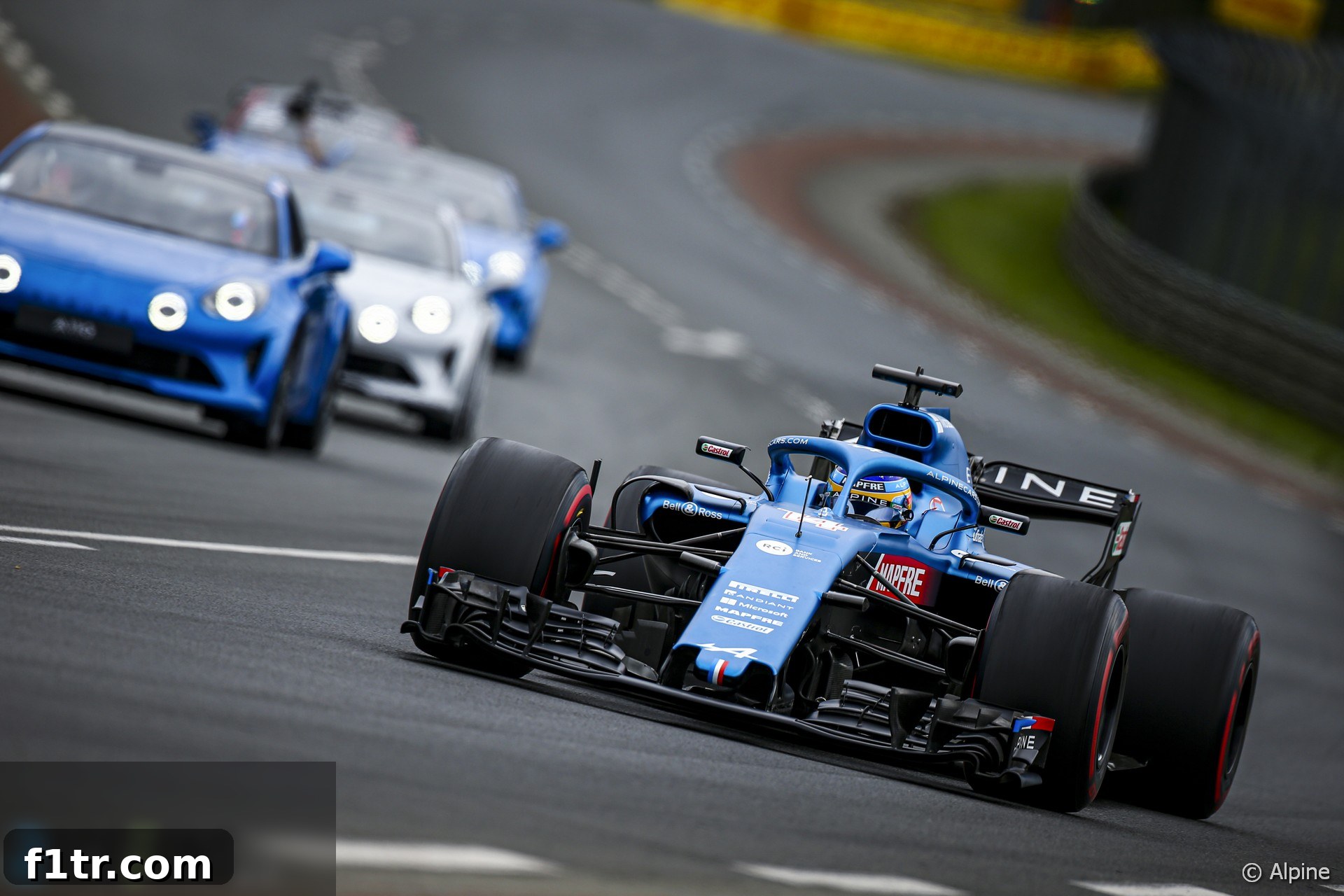
The roar of a Formula 1 engine echoing through the hallowed grounds of the Circuit de la Sarthe is a sound rarely heard. Yet, last weekend, two-time F1 world champion and double Le Mans 24 Hours winner, Fernando Alonso, had the extraordinary opportunity to pilot an Alpine F1 car on this legendary track. His demo lap, a spectacle before the start of the iconic sportscar race, sparked immediate speculation and excitement among motorsport enthusiasts: could Formula 1 ever race at Le Mans?
Alonso’s initial reaction, after experiencing the circuit from the cockpit of a modern F1 machine, was a resounding “fun.” However, his enthusiasm was quickly tempered by a pragmatic assessment of the significant changes that would be “essential” to make the circuit suitable for a Formula 1 Grand Prix. This rare crossover event illuminated both the immense allure and the substantial hurdles of bringing the pinnacle of single-seater racing to the world’s most famous endurance track.
Alonso’s Historic Drive at Circuit de la Sarthe: A Glimpse into the Impossible
Fernando Alonso, a name synonymous with motorsport versatility, has a unique connection to Le Mans, having clinched victory twice with Toyota in the 24 Hours race. His recent demonstration run in an Alpine A521 F1 car was more than just a promotional stunt; it was a real-world test, albeit brief, of how Formula 1 technology interacts with the unique characteristics of the 13.6-kilometer Circuit de la Sarthe. While only minor set-up adjustments were needed for the demo, Alonso’s experience underscored the stark differences between an F1 car and the prototypes designed for endurance racing.
The sheer speed and aerodynamic capabilities of an F1 car push circuits to their absolute limits, demanding uncompromising safety standards that are often beyond those required for other categories of racing. Alonso, leveraging his vast experience in both disciplines, provided invaluable insight into what a competitive F1 race at Le Mans would truly entail. His observations quickly shifted the conversation from mere fantasy to a serious discussion about feasibility, safety, and the extensive modifications that would transform a Grade 2 endurance circuit into a Grade 1 F1-ready venue.
Le Mans for F1: A Circuit Grading Dilemma and Safety Imperatives
The fundamental challenge of hosting an F1 race at Le Mans lies in the FIA’s strict circuit grading system. Formula 1 requires a Grade 1 license, which mandates specific, rigorous safety features, including extensive run-off areas, advanced barrier systems, medical facilities, and overall track width. The Circuit de la Sarthe, while iconic and thrilling, currently holds an FIA Grade 2 license, deemed suitable for sportscar racing but not for the blistering speeds and cornering forces of contemporary F1 cars.
Alonso’s concern highlighted the immediate issues: “at those speeds and talking about safety standards probably we’ll have to change a few things on the track itself. It will be way too fast and way too narrow in some of the sections on the straights.” This statement directly addresses the core discrepancies. F1 cars, with their immense braking power and aerodynamic grip, demand vast run-off zones to safely dissipate speed in the event of an excursion. Many sections of Le Mans, particularly its legendary straights like the Mulsanne, are bordered by traditional armco barriers or grass, which are inadequate for containing a high-speed F1 impact.
Navigating the Perils: Specific Modifications for F1 Integration
Transforming Le Mans for F1 would necessitate a comprehensive overhaul, focusing on several critical areas:
The Mulsanne Straight Challenge
The Mulsanne Straight, famous for allowing sportscars to reach incredible top speeds, would be a unique test for F1. While chicanes were introduced in the early 1990s to reduce speeds for endurance racing, an F1 car would still hit unprecedented velocities. The sustained high-speed running could present unique challenges for tyre integrity and engine longevity, components that are typically optimized for circuits with a more balanced mix of straights and corners.
Braking Zones and Tyre Management
Alonso specifically noted the difficulty of managing the F1 car after the prolonged full-throttle sections. “The braking points after the long straights were a little bit tricky because the front tyres tried to lock up and things like that.” This indicates the immense stress placed on the braking system and tyres. F1 tyres are designed to operate within very specific temperature windows, and long straights can cause them to cool, only to be suddenly subjected to extreme forces in braking zones, increasing the risk of lock-ups and flat spots. Extensive run-off and potentially revised chicane configurations would be crucial to accommodate the physics of F1 braking.
Run-off Areas and Barrier Systems
Modern F1 circuits feature vast expanses of tarmac run-off, designed to provide drivers with maximum opportunity to recover control or slow down safely. Le Mans, in contrast, often has limited run-off, frequently transitioning directly into gravel traps or grass. To meet Grade 1 standards, significant sections of the track would require widening, repositioning of barriers further away from the racing line, and the construction of state-of-the-art energy-absorbing barriers, vastly altering the traditional aesthetic of the circuit. These changes would be extensive, costly, and potentially controversial among purists.
The Allure of Le Mans: Why F1 Fans Dream of This Race
Despite the considerable safety and logistical hurdles, the idea of an F1 Grand Prix at Le Mans holds an almost irresistible appeal. The Circuit de la Sarthe is not just a track; it’s a living legend, steeped in over a century of motorsport history. The prospect of Formula 1 cars attacking its long straights, iconic corners, and unique character offers several compelling reasons for its enduring popularity among fans:
Firstly, the raw spectacle of F1 cars on such a high-speed, demanding layout would be unparalleled. The theoretical sub-three-minute lap time, as indicated by Alpine’s simulations, hints at a breathtaking display of speed that few other circuits could offer. This extreme challenge would test drivers and machinery to their absolute limits, promising a race of high drama and unpredictable outcomes.
Secondly, it would represent a historic convergence of two motorsport titans: Formula 1’s cutting-edge technology and Le Mans’ timeless endurance heritage. Fans could witness a fascinating clash of philosophies, bringing a fresh dynamic to the F1 calendar. For drivers like Alonso, who have conquered both worlds, it would be the ultimate personal challenge, a chance to cement their legacy in an even more extraordinary way.
Finally, the sheer sense of occasion would be immense. A Grand Prix at Le Mans would instantly become one of the most anticipated events on the calendar, drawing immense global attention and potentially introducing Formula 1 to a new generation of fans who appreciate the unique narrative of endurance racing.
Beyond the Track: Logistical and Commercial Hurdles
The challenges of hosting an F1 race at Le Mans extend far beyond the asphalt and safety barriers. Logistically, Formula 1 requires vast paddock facilities, extensive hospitality suites, media centres, and infrastructure to support thousands of personnel and guests. The current Le Mans facilities, while impressive for endurance racing, would likely need significant upgrades and temporary constructions to meet F1’s exacting standards.
Commercially, the cost of bringing the circuit up to Grade 1 specifications would be monumental, involving not only track modifications but also extensive changes to spectator areas, access roads, and general site infrastructure. Who would bear this cost? And how would an F1 race integrate into the already packed global motorsport calendar, especially given Le Mans’ existing commitments to the 24 Hours race and other events?
The financial viability for F1 would also be a key consideration. While the prestige would be immense, the practicalities of staging such an event, from securing long-term funding to managing the complex logistics, would present significant commercial hurdles. Finding a balance between preserving the circuit’s historic character and meeting the demands of modern Formula 1 is a tightrope walk fraught with potential pitfalls.
Alonso’s Verdict: A Realistic Future or a Fantastical Wish?
Fernando Alonso’s demo lap at Le Mans ultimately painted a picture of compelling contradiction. On one hand, the prospect of F1 cars unleashing their fury on such a legendary track is undeniably thrilling, promising a spectacle of speed and skill. On the other hand, the practicalities, particularly concerning safety, are daunting. Alonso himself admitted, “If you really go for it and you push, it will be quite stressful. So in a way, I was happy that it was just a demo lap.” This honest assessment underscores the incredible demands an F1 car places on both circuit and driver.
While the dream of an F1 Grand Prix at Le Mans continues to capture the imagination of fans and drivers alike, Alonso’s experience serves as a grounded reminder of the significant obstacles. The essential changes he highlighted, encompassing safety standards, track modifications, and the unique technical challenges for F1 machinery, suggest that such a race, while “fun,” remains firmly in the realm of an aspirational future rather than an imminent reality. It’s a tantalizing “what if” that ignites passion but demands a profound transformation to ever truly come to fruition.
2021 Belgian Grand Prix
- Spa spectators who saw no racing offered prize draw for 2022 tickets
- ‘Wrong to award points for a couple of laps behind the Safety Car’ – Horner
- Hamilton offers “exclusive gift” to fans who attended Belgian GP wash-out
- Change rules to give points for qualifying if race can’t happen – Seidl
- “I apologised to the entire team for my mistake” – Perez
Browse all 2021 Belgian Grand Prix articles