Red Bull’s Strategic Masterclass: How They Outfoxed Ferrari at the 2019 Chinese Grand Prix
In a display of astute tactical prowess, Red Bull Racing successfully navigated the challenging strategic landscape of the 2019 Chinese Grand Prix, ultimately beating one of the quicker Ferrari cars. Team Principal Christian Horner lauded his team’s strategic execution, highlighting how their bold decision to commit to a two-stop tyre strategy proved instrumental in securing a valuable fourth-place finish for Max Verstappen.
Verstappen’s P4: A Triumph of Strategy Over Raw Pace
The race, which marked the 1000th Grand Prix in Formula 1 history, saw Max Verstappen brilliantly slotting in between the two Ferrari drivers, Sebastian Vettel and Charles Leclerc. This impressive result wasn’t merely a testament to Verstappen’s driving skill but a clear demonstration of Red Bull’s strategic acumen. The team’s proactive approach effectively pressured their rivals, compelling Ferrari into reactive decisions that ultimately worked in Red Bull’s favour.
“We sort of triggered off the two-stop for everybody else,” Horner explained post-race. He elaborated on the rationale behind this pivotal decision, stating, “Our rationale was pretty clear; early on we decided that the most upside we might have was in the event of a two-stop, particularly if there’d been a Safety Car around and others had elected to stay on the one.” This insight reveals a calculated risk, betting on both potential race disruptions and the competitive advantage a fresher set of tyres could provide in the latter stages of the race.
The Strategic Chess Match: Red Bull Forces Ferrari’s Hand
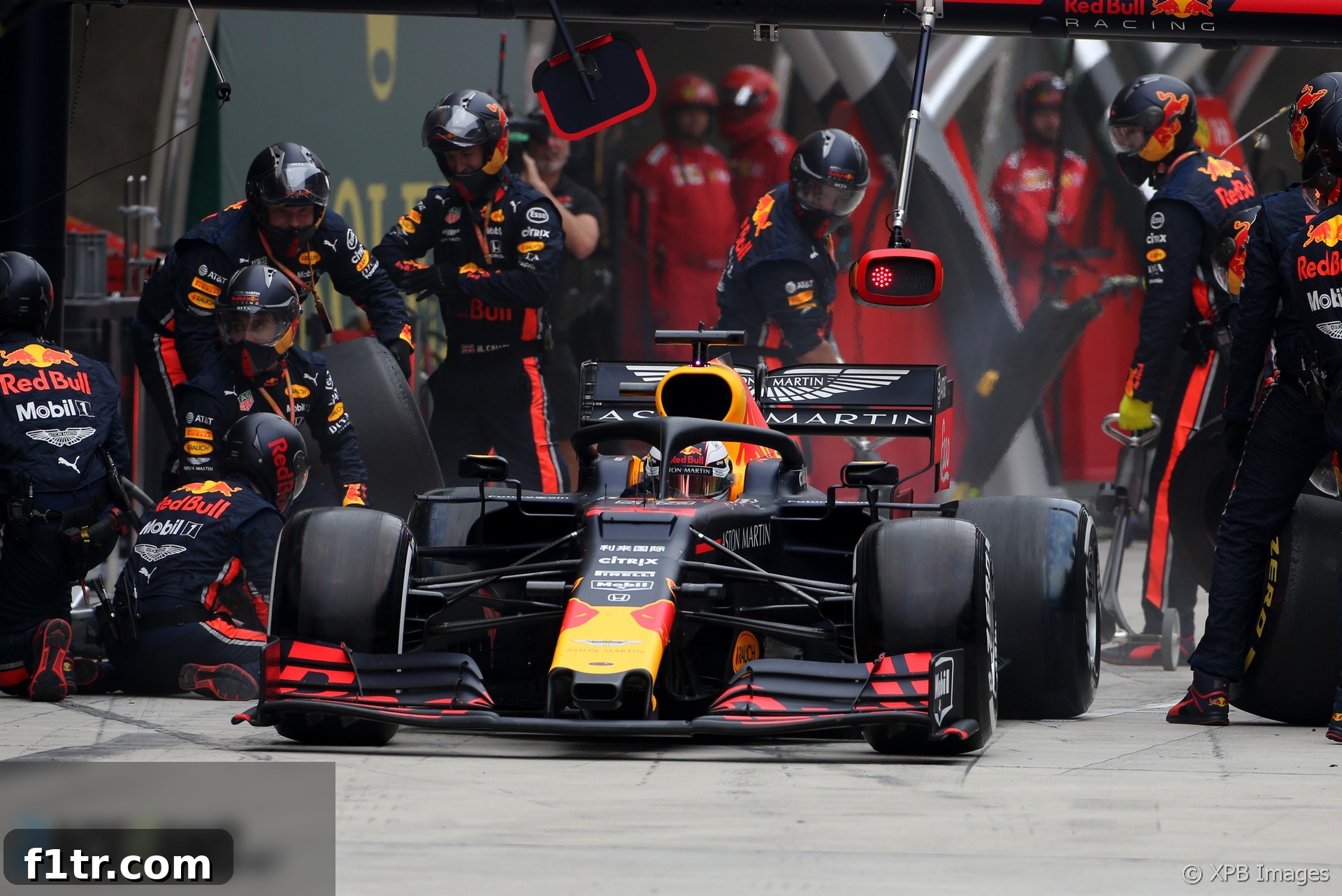
The strategic battle truly unfolded after Verstappen’s second pit stop. This move from Red Bull immediately put pressure on the Ferrari garage. Sensing the threat of Verstappen on fresher rubber, Ferrari swiftly reacted by bringing Sebastian Vettel in for his second stop. While this initially seemed like a logical cover, it effectively locked Ferrari into a similar two-stop strategy for their lead car. The crucial domino effect didn’t stop there. Later in the race, Ferrari was forced to make a second stop for Charles Leclerc as well. However, by this point, the timing worked against them, and Leclerc emerged from the pits behind Verstappen, finding himself unable to close the gap or challenge for position. This sequence of events perfectly illustrated Red Bull’s ability to dictate the pace of the strategic game.
Horner acknowledged the inherent challenges of the race, openly admitting, “I don’t think we had a faster car than Ferrari today.” This honest assessment underscores the significance of their strategic victory. “So our best way of beating at least one of their cars was going onto the two-stop,” he continued. “That then sparked some discussion between Sebastian and his pit wall as to whether they were going to stop or not, but in the end they covered, and Mercedes ended up having to cover him, and then Leclerc got hung out to dry a little bit. So for us P4 was the maximum today.” This detailed breakdown from the team principal highlights the intricate considerations and high-stakes decision-making that define Formula 1 strategy. It wasn’t just about beating Ferrari, but optimizing their own result in a highly competitive field, a feat they undoubtedly achieved.
Enhanced Competitiveness: Correcting the Course After Bahrain
The strong performance in China wasn’t solely down to strategy; significant improvements to the car’s underlying pace also played a crucial role. Red Bull had diligently worked to correct a critical set-up error on their car that had compromised their performance during the preceding Bahrain Grand Prix. Christian Horner confirmed the positive impact of these adjustments, indicating a clear step forward for the team.
“Definitely, I think we’ve made a step forward from Bahrain,” he stated confidently. “We were definitely more competitive this weekend.” This boost in performance was tangible and measurable, reflecting the relentless development efforts behind the scenes. The team’s engineers and strategists meticulously analyzed data, identified the root cause of their struggles in Bahrain, and implemented effective solutions, allowing Max Verstappen to extract more pace from the RB15 chassis.
Detailed Performance Analysis: Strengths and Areas for Growth
Horner provided further detail on where Red Bull’s car showed particular strength, offering insights into their sector-by-sector performance. “You look on the overlays, particularly Sector One, Sector Two, we were in good shape.” This indicates that the car was performing well in the high-speed and medium-speed corners and straights that characterized the initial parts of the Shanghai International Circuit. However, the team principal also candidly identified an area requiring further optimization: “Sector Three we’ve got some work to do, but I think we’ve got some upgrades and so on coming soon that will help with that.” Sector Three, with its unique long right-hand curve leading onto the back straight and the tight final turns, clearly presented a challenge that Red Bull was already addressing with planned aerodynamic and mechanical enhancements.
This balanced assessment underscores Red Bull’s commitment to continuous improvement. While celebrating the strategic victory and improved competitiveness, the team remained focused on refining the car’s performance across all aspects of a Grand Prix circuit. The anticipation of upcoming upgrades further fueled optimism within the team, suggesting a potential for even greater gains in the races to come, particularly in mitigating the identified weakness in the final sector.
Looking Ahead: Building on Strategic Success and Development
The 2019 Chinese Grand Prix served as a vital indicator of Red Bull Racing’s potential for the season. It demonstrated not only Max Verstappen’s unwavering talent but also the team’s capacity to execute sophisticated strategies under pressure. By turning a perceived pace deficit into a strategic advantage, Red Bull showed that Formula 1 is as much a chess game off the track as it is a battle on it.
This result provided a significant morale boost and valuable championship points. More importantly, it reaffirmed Red Bull’s position as a top-tier competitor capable of challenging the established front-runners, Ferrari and Mercedes. The combination of an improving car, a strong driver, and clever strategic decisions positions Red Bull Racing well for the remainder of the 2019 F1 season. Their ability to adapt, learn from setbacks, and relentlessly pursue perfection on both the technical and tactical fronts makes them a formidable force to reckon with as the championship battle intensifies.
2019 F1 season
- Crying in the Melbourne car park at 2019 grand prix was my career low – Ocon
- McLaren Racing reports reduced £71 million loss in 2019
- Kvyat: Hockenheim podium last year was “my biggest achievement” so far
- How the FIA’s new encrypted fuel flow meter targets Ferrari’s suspected ‘aliasing’ trick
- “He smashed my office door”: 23 must-see moments from ‘Drive to Survive’ season two
Browse all 2019 F1 season articles