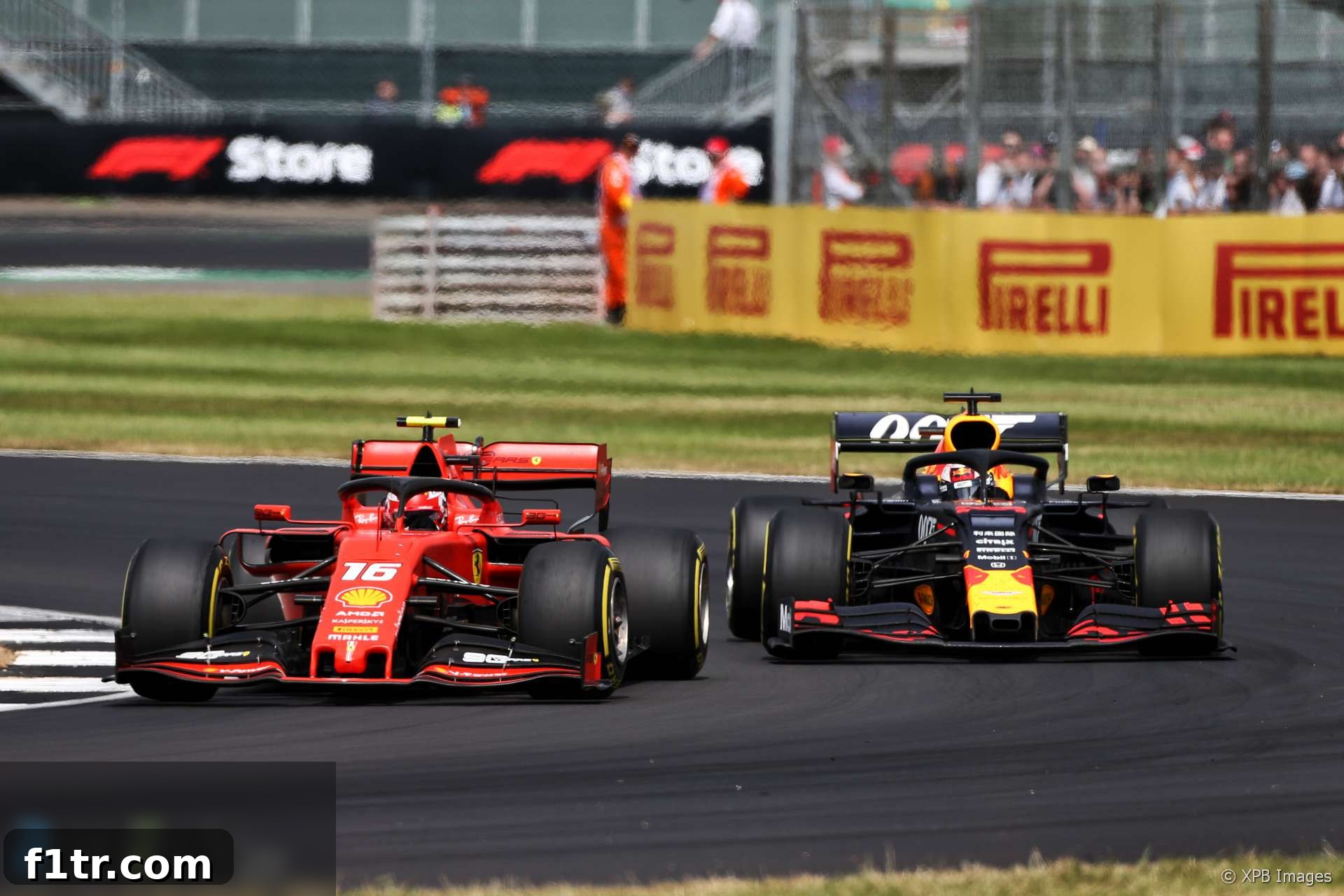
The 2019 Formula 1 season brought a significant shake-up at Red Bull Racing during the traditional summer break. The team, known for its decisive moves, opted to replace Pierre Gasly with rookie Alexander Albon, a clear signal of their intent. This strategic personnel change was accompanied by a bold declaration: Red Bull believed they could mount a serious challenge to Ferrari for the runner-up spot in the Constructor’s Championship during the crucial second half of the year. This ambition, however, faced immediate hurdles as the Scuderia Ferrari initially surged ahead, widening the gap between the two fierce rivals.
Following the summer interval, Ferrari showcased formidable pace, particularly on circuits that rewarded outright power and straight-line speed. The high-speed layouts of Spa-Francorchamps and Monza, two of Formula 1’s most iconic tracks, perfectly suited the powerful Ferrari SF90 and its potent power unit. During this period, the Italian outfit capitalized on its strengths, achieving two decisive victories that dramatically increased their advantage over Red Bull. The initial 44-point lead Ferrari held over Red Bull nearly doubled, expanding to a substantial 85 points. This significant gap put considerable pressure on the Milton Keynes-based team and its aspirations. Yet, the F1 paddock buzzed with anticipation that this momentum was poised for a shift as the calendar moved to more diverse track characteristics.
The narrative of the 2019 season suggested that the upcoming races would intrinsically favor Red Bull Racing’s car design and their improving Honda power unit. With the high-speed demands of Spa and Monza now behind them, the impetus was expected to swing back in Red Bull’s favor. The calendar’s shift towards circuits requiring high downforce and strong chassis performance presented a golden opportunity for the team. The Singapore Grand Prix, a spectacular night race held on the challenging Marina Bay Street Circuit, was particularly highlighted. Historically, Singapore has been a happy hunting ground for Red Bull, a track where their meticulously engineered chassis and superior aerodynamic package often allow them to excel, providing a glimmer of hope for a late-season surge.
At the outset of the 2019 campaign, Red Bull had found themselves somewhat adrift of their main rivals, particularly Ferrari and Mercedes. A year-on-year comparison revealed that their competitive edge had dulled slightly compared to the robust performance demonstrated in the 2018 season. However, a significant turning point emerged around the time of their home race, the Austrian Grand Prix. From this point onwards, a remarkable transformation began. Through relentless development by their partners at Honda and continuous aerodynamic refinements spearheaded by their design team in Milton Keynes, Red Bull made impressive year-on-year gains. This progress was not limited to their traditionally strong tracks but was also evident at circuits where they might typically struggle, underscoring the comprehensive nature of their improvements in both chassis and power unit integration.
The gradual but consistent advancements made by Red Bull and Honda demonstrated a concerted effort to close the performance gap to the front-runners. The meticulous attention to detail in aerodynamic efficiency, combined with significant upgrades to the Honda F1 power unit, provided the RB15 chassis with a new lease of life. This upward trajectory in performance was clearly quantifiable, with internal data and external analyses revealing a shrinking deficit in raw pace. This tangible progress offered a strong foundation for their renewed challenge against Ferrari, building confidence within the team as they looked ahead to circuits better suited to their car’s characteristics. The visual representation below dramatically illustrates this positive trend, highlighting the unmistakable progress achieved since their pivotal home race:
As the Formula 1 calendar approached its final third, Red Bull Racing could look back at the corresponding period in 2018 with optimism. The team had historically performed exceptionally well in the closing stages of the previous season, securing some of their most competitive outings. These strong performances included not only a dominant showing at Singapore but also a memorable pole position at the Mexican Grand Prix. The Autódromo Hermanos Rodríguez, with its unique high-altitude conditions, often plays into Red Bull’s hands, as the thinner air reduces the reliance on engine power and magnifies the importance of aerodynamic downforce – an area where Red Bull’s chassis consistently excels. These historical precedents provided a strong basis for expecting similar competitive displays in the upcoming races.
Strategically, Red Bull utilized the preceding two race weekends to introduce Honda’s latest-specification four power unit into their cars. This upgrade, designed to boost performance and reliability, inevitably came with associated grid penalties for exceeding component limits. The decision to take these penalties at tracks like Spa and Monza, where their car was already less competitive due to their inherent characteristics, was a calculated gamble. The aim was to have fresh, high-performance engines available for the circuits where they genuinely expected to contend for victories. With the penalties digested and new engines fitted, the team anticipated a return to fighting at the very front of the pack. However, their lead driver, Max Verstappen, remained characteristically cautious, tempering expectations despite the palpable improvements.
“I find it really difficult because sometimes it looks like we are more competitive than [at] other tracks,” Verstappen commented, highlighting the inherent variability in Formula 1 performance across diverse circuit layouts. “So I don’t want to say that from now onwards every track we go we can benefit.” This pragmatic approach from the young Dutch superstar underscored the complexity of F1 performance, where even small track characteristics can have a significant impact. His caution, however, did not detract from the genuine belief within the team that they had turned a corner in terms of raw pace and competitive potential, especially as they headed into circuits that better suited the RB15’s strengths.
Despite his cautious outlook, Verstappen conceded that the underlying performance of the RB15 at Monza, a track not traditionally suited to Red Bull’s package, provided strong encouragement. The Italian Grand Prix weekend had been marred by a chaotic qualifying session, where a bizarre ‘tow train’ strategy led to several drivers, including Verstappen, failing to set optimal lap times. This unfortunate sequence of events meant the team’s true potential on Saturday wasn’t fully showcased. Yet, even with these setbacks and a grid penalty, the car’s competitive showing was a significant step forward, particularly given Monza’s power-sensitive nature. This performance indicated that the development work by Honda and Red Bull was indeed yielding tangible results on a wider variety of tracks.
“A fresh engine for sure helps a lot,” Verstappen explained, emphasizing the impact of the new Honda Spec 4 power unit. He elaborated on his qualifying efforts: “Even my lap on [Saturday] morning: I only had a tow into turn one, the rest of my lap I was on my own, some of the guys around me had a tow all over the lap. So we looked really competitive.” This observation was critical, suggesting that even without the optimal slipstream assistance that many rivals benefited from, the RB15 demonstrated impressive inherent speed. “In a way I was a bit disappointed to take a penalty but of course I didn’t know this was going to happen that we would be so competitive because I think if we look to last year we were one-and-a-half seconds behind in qualifying which is of course massive. I think we definitely made some good steps forward this weekend with the engine and the car all weekend seemed to be performing really well.” This stark comparison to their 2018 Monza performance underscored the magnitude of Red Bull and Honda’s progress, a clear indicator that their development curve was accelerating at precisely the right time.
With the demanding high-speed circuits behind them, the Formula 1 circus moved into a series of races where Verstappen knew the Red Bull RB15 should be a much more competitive prospect. The upcoming tracks, characterized by tight corners, technical sectors, and elevation changes, were perfectly aligned with Red Bull’s renowned chassis design and high-downforce philosophy. The critical question now was whether the team could effectively close the substantial 85-point gap to Ferrari in the Constructor’s Championship. This ambitious target would hinge not only on Verstappen returning to his superb pre-summer break form, which had seen him secure multiple victories and podiums, but also on the consistent performance of his new teammate, Alexander Albon. Albon’s ability to adapt quickly to the RB15 and consistently score valuable points would be paramount to Red Bull’s hopes of overhauling Ferrari.
While Ferrari currently held the numerical advantage in the standings, the recent form guide and the characteristics of the remaining circuits strongly suggested that they would be fighting a rearguard action against a resurgent Red Bull. The battle for the Constructor’s Championship’s runner-up spot had suddenly become the most compelling narrative of the season’s concluding phase. While the overall championship titles, both for drivers and constructors, appeared destined for the dominant Mercedes-AMG Petronas Formula One Team, the fight for second place promised to be an absorbing and unpredictable contest. For Red Bull, securing this position would signify a successful recovery and validate their strategic decisions, showcasing their potential for future championship bids and cementing their status as a top-tier contender against the might of Ferrari and Mercedes.
Quotes: Dieter Rencken
2019 F1 season
- Crying in the Melbourne car park at 2019 grand prix was my career low – Ocon
- McLaren Racing reports reduced £71 million loss in 2019
- Kvyat: Hockenheim podium last year was “my biggest achievement” so far
- How the FIA’s new encrypted fuel flow meter targets Ferrari’s suspected ‘aliasing’ trick
- “He smashed my office door”: 23 must-see moments from ‘Drive to Survive’ season two
Browse all 2019 F1 season articles