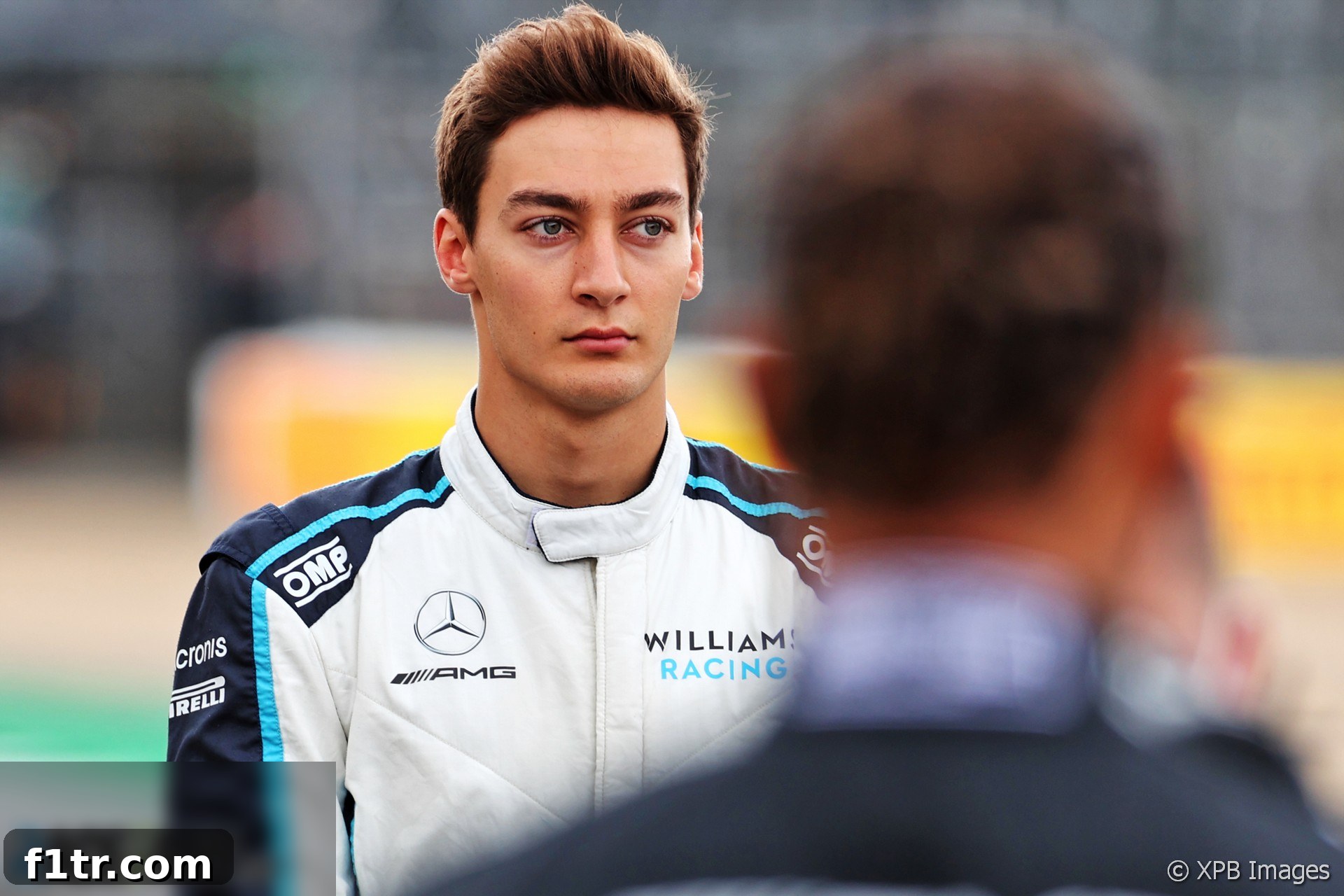
In the high-octane world of Formula 1, where every driver dreams of championship glory and race victories, the journey for many is fraught with significant challenges. For immensely talented individuals like George Russell, the transition from junior categories, where winning was the sole metric of success, to the pinnacle of motorsport has required a profound mental adjustment. Russell, a driver widely tipped for future stardom, has candidly shared his experience of making peace with the stark reality of not winning races during his formative years in Formula 1.
Russell arrived on the F1 grid in 2019 with an impressive junior career resume. He was not just a promising talent; he was a proven winner, having secured the Formula 2 championship in 2018 and the GP3 (now Formula 3) title the year before. These back-to-back championships showcased his exceptional skill, consistency, and raw speed, marking him as one of the brightest prospects in motorsport. Expectations were naturally high, both from himself and from observers who had witnessed his dominance in feeder series. However, the step up to Formula 1, particularly with a team like Williams which was then struggling at the back of the grid, presented a dramatically different landscape.
During his tenure with Williams, Russell consistently demonstrated his prodigious talent, often extracting performances from the car that few others could. Despite numerous standout qualifying laps and races where he pushed the limits, scoring a point remained an elusive goal for the majority of his time with the team. The harsh reality of Formula 1, where car performance plays a predominant role, meant that even the most stellar individual performances often went unrewarded in terms of championship points. This experience stands in stark contrast to his junior career, where, as he notes, “It was very clear growing up, from when I was eight years old until I got to Formula 1, the goal was to win. [Whether] you had a successful weekend was based on if you put it on pole and then won the races or not.”
A pivotal moment that offered a glimpse into Russell’s true potential came during his one-off drive for Mercedes at the 2020 Sakhir Grand Prix. Stepping into Lewis Hamilton’s championship-winning car, Russell immediately showcased his capabilities, qualifying second and leading much of the race with a commanding performance. A botched pit stop and a subsequent puncture cruelly denied him a probable victory, but he still managed to score his first F1 points with a top-10 finish. This remarkable outing underscored what many already suspected: given competitive machinery, Russell possesses the talent to challenge at the very front of the grid.
Yet, the everyday reality for George, as a Mercedes junior driver on loan to Williams, meant returning to a less competitive environment. He acknowledges that this situation, while frustrating, is not unique to him. “It is obviously a bit frustrating not getting the chance to go out there and really fight,” he stated, adding a poignant observation about the sport’s current structure. “But that’s the same for 16 of the drivers in Formula 1. There’s only four drivers on the grid, currently, who on merit can probably win a race. Which is obviously deeply frustrating for everybody else.” This statement highlights the significant disparity in performance across the grid, where only a handful of teams genuinely possess the machinery capable of clinching victory on any given Sunday. For the vast majority, the battles are fought in the midfield, against direct competitors, where smaller gains and strategic brilliance define success rather than outright wins.
This acceptance of a revised definition of success – measuring personal performance, outperforming teammates, and maximizing the car’s potential rather than just winning – has been a necessary psychological journey for Russell. It reflects a maturity beyond his years, understanding that sustained motivation in F1 often requires finding satisfaction in the incremental improvements and the execution of a flawless weekend, regardless of the final position on the scoreboard. Making “peace” with this reality doesn’t signify a lack of ambition, but rather a pragmatic approach to a highly competitive and often hierarchical sport. It’s about channeling that winning mentality into achieving the best possible outcome with the tools available, while continuously striving for opportunities to climb higher.
The Quest for Greater Competition: Hopes for the 2022 F1 Season
The collective hope for a more level playing field is not just a personal sentiment for drivers like Russell; it’s a driving force behind the sport’s evolution. A significant overhaul of the technical regulations for the 2022 F1 season was introduced with the explicit aim of fostering closer competition and enabling more teams to contend for podiums and victories. These sweeping changes include radical shifts in aerodynamics, a focus on ground effect to allow cars to follow each other more closely, and a budget cap designed to limit spending by larger teams, thereby preventing them from dominating indefinitely through sheer financial power. An example of which was presented, showcasing the vision for a new era of Formula 1 racing.
Drivers, team principals, and fans alike have expressed considerable excitement regarding these new regulations. The promise of closer racing, more unpredictable results, and a greater opportunity for driver talent to shine through regardless of the team’s historical standing, is immensely appealing. For drivers like George Russell, these changes represent a beacon of hope. A more competitive grid means that a strong performance in a well-developed car could genuinely translate into fighting for wins and championships, rather than just impressive qualifying efforts that lead to midfield finishes. “That’s why we’re all excited for next year. We just want good competition and close competition,” Russell articulated, echoing the sentiments of many within the paddock.
The impact of these regulations is expected to be far-reaching, potentially reshuffling the pecking order and offering a fresh start for all teams. While it’s impossible to predict the exact outcome, the intention is clear: to move away from the dominance of a select few and create an environment where strategic decisions, driver skill, and technical innovation across the grid can truly make a difference. This renewed focus on competitive balance could be transformative for the sport, rekindling the excitement of unpredictable races and fostering a more diverse set of winners.
George Russell’s Journey: A Reflection of F1’s Challenges and Hopes
George Russell’s journey in Formula 1 is a compelling narrative that encapsulates both the brutal realities and the enduring appeal of the sport. His early career highlighted the immense talent required to reach F1, while his time at Williams demonstrated the profound influence of machinery on a driver’s immediate success. His mature perspective on setting realistic goals and finding satisfaction in personal excellence, even amidst the frustration of not winning, offers valuable insight into the mindset of a modern F1 driver. It underscores the psychological resilience needed to thrive at the pinnacle of motorsport, where success is often measured on multiple levels, not just by victories.
As Formula 1 embraces a new era with its revised regulations, the anticipation for drivers like Russell is palpable. The potential for a more equitable playing field could unlock opportunities for many, transforming the dreams of winning from distant aspirations into tangible goals. Russell’s experiences, his measured approach, and his unwavering belief in the sport’s capacity for improvement make him a compelling figure to watch as Formula 1 continues its evolution. His story is a testament to the pursuit of excellence, even when the ultimate prize seems out of reach, and a powerful reminder of the passion that fuels every competitor on the grid.
This commitment to constant improvement and the anticipation of a fairer fight on track embody the spirit of modern Formula 1. For George Russell, the journey has been one of adaptation and perseverance, but with the horizon of the 2022 F1 season, the prospect of turning potential into performance on the biggest stage has never felt closer. The hope for a more dynamic and competitive sport, where talent can truly triumph, resonates deeply with drivers and fans alike, promising an exhilarating future for Formula 1.
2021 British Grand Prix
- Verstappen reveals “vision problems” since 2021 Silverstone crash with Hamilton
- Who was to blame for Verstappen and Hamilton’s collision at Silverstone?
- Hamilton penalty “harsh” for move within FIA’s overtaking guidance – Allison
- Why Hamilton “wasn’t seen as wholly to blame” for the Verstappen crash
- Sainz convinced he had pace to challenge for podium without British GP setbacks
Browse all 2021 British Grand Prix articles