Max Verstappen Navigates Qualifying Hurdles: The Rear Wing Gambit and Search for Balance
In a recent pivotal qualifying session, Max Verstappen, the reigning Formula 1 champion, found himself facing an unexpected challenge. Despite clinching victory in Saturday’s sprint race, a strategic decision to switch to a higher downforce rear wing for the main qualifying session did not yield the desired improvements in car balance, leaving the Red Bull driver grappling for optimal performance.
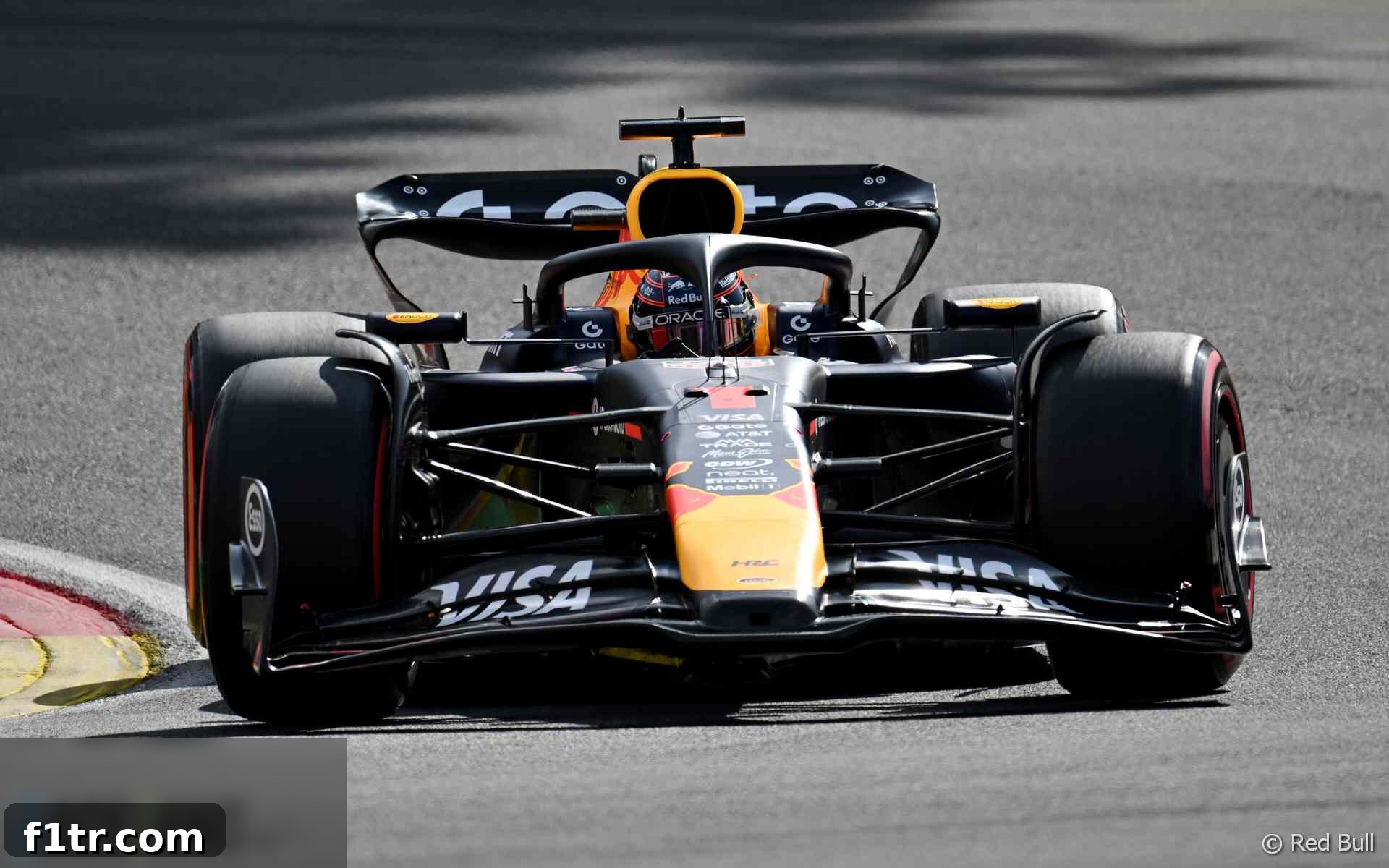
Verstappen’s weekend began on a strong note, showcasing Red Bull’s formidable pace with a slim, low-downforce rear wing on his RB21 during the sprint. However, with heavy rain anticipated for Sunday’s main race, the team made a calculated call to equip his car with a more conventional, high-downforce rear wing. This modification is typically designed to enhance grip and stability, especially crucial in treacherous wet conditions, where maximum downforce helps maintain traction and control.
The Dutchman, however, revealed that his car’s behaviour post-change was far from what he or the team had anticipated. The intricate relationship between aerodynamics and car dynamics means even slight alterations can significantly impact a driver’s feel and the car’s handling characteristics. Verstappen’s initial qualifying runs suggested he was on track for a top-three start, but a crucial error in his final flying lap saw him slip behind Charles Leclerc, ultimately securing a fourth-place grid slot – a result that, while not disastrous, was certainly below his usual impeccable standards.
The Aerodynamic Conundrum: A Wing Change Gone Awry
Speaking to the official Formula 1 channel, Verstappen shed light on the team’s thought process behind the aerodynamic adjustment. “We opted [to change] a little bit, of course, looking ahead for tomorrow [Sunday],” he explained. This foresight for potential wet weather highlights the complex strategic decisions teams must make during a Grand Prix weekend, often balancing immediate performance against future race conditions.
However, the execution of this strategy proved problematic. “But somehow also the balance didn’t really improve with that change and that’s a bit weird,” Verstappen admitted. This suggests that the expected increase in rear grip from the higher downforce wing was either not fully realised or came at the expense of other critical performance parameters, such as front-end grip or overall aerodynamic harmony. A car’s balance is a delicate equilibrium, and disrupting it can lead to understeer, oversteer, or general instability, making it difficult for the driver to extract maximum pace.
The impact of this compromised balance became starkly evident in Q3, the final and most critical phase of qualifying. “Especially in Q3, the first set [of tyres] felt awful,” Verstappen recounted, highlighting a severe lack of grip. Tyre performance is intrinsically linked to how a car uses its aerodynamics and suspension, and a poor balance can prevent tyres from reaching their optimal operating temperature and grip levels. This “awful” feeling is a clear indicator that the car was not allowing the tyres to perform as intended.
Further attempts to rectify the situation with the second set of tyres also proved futile. “And then the second set we tried something else and it just didn’t give me any grip starting the lap,” he continued. The problem exacerbated right from the start of his final push lap. “I already had a lot of wheelspin starting the last lap out of the last corner and exactly the same happened out of turn one and I just lost two tenths on my own lap time already, which is of course not ideal.” Wheelspin, a loss of traction from the driven wheels, is a direct consequence of insufficient grip and an imbalance between engine power and available adhesion. Losing two tenths of a second so early in the lap is an enormous deficit in the hyper-competitive world of Formula 1 qualifying, effectively ending any hopes of pole position or a front-row start.
“From there onwards we tried to catch up a bit of lap time,” Verstappen concluded, acknowledging the uphill battle to recover from such an early setback. While he noted that without the Turn 1 issue, he would have been “quite okay, quite close to the McLarens,” the overall sentiment was clear: “But of course overall it’s not been a very good qualifying.” This candid assessment underscores the high standards Verstappen holds for himself and his Red Bull team, even when securing a respectable fourth place.
Anticipating Race Day: McLaren’s Threat and Wet Weather Worries
Looking ahead to Sunday’s main race, Verstappen expressed his realism about the challenge posed by the McLaren drivers, who impressively locked out the front row of the grid. Their strong qualifying performance indicates that they have found a sweet spot with their car’s setup, potentially giving them an edge, especially if the rain materialises.
The prospect of a wet race introduces another layer of complexity. “First of all, if it’s wet, you can’t see anything so you can’t really do anything in lap one,” Verstappen pointed out. Visibility in heavy rain is notoriously poor in Formula 1, making the opening lap incredibly perilous and often limiting overtakes. Drivers rely heavily on spray patterns and visual cues, which become non-existent in a deluge, leading to cautious initial laps.
Despite his team’s struggles in qualifying, Verstappen remains hopeful for a strong recovery. “I hope that we can fight back to a podium,” he stated. However, he also tempered expectations with a pragmatic assessment of McLaren’s capabilities in wet conditions. “But normally in the wet conditions, McLaren is also very fast. They have that really under control now as well with how the inter[mediate tyres] are operating.” This observation highlights McLaren’s recent improvements in wet weather performance, a crucial factor that could see them maintain their advantage even if the track is damp or fully wet. Intermediate tyres, designed for damp but not fully waterlogged tracks, require a car with excellent balance and tyre management to maximise their effectiveness.
Verstappen’s final thoughts on the weekend’s prospects were grounded in reality. “So I’m not making any kind of illusion, we just need to be realistic and we just need to work on our balance first of all.” This focus on addressing the fundamental balance issues of the RB21 is paramount for Red Bull if they are to challenge McLaren and reclaim their dominant form. A well-balanced car allows a driver to push closer to the limit, preserve tyres more effectively, and adapt better to changing track conditions.
McLaren’s Resurgence and the Championship Picture
McLaren’s dominant qualifying performance is a significant talking point, showcasing their remarkable progress and solidifying their position as genuine contenders. Locking out the front row against the likes of Red Bull and Ferrari is no small feat and underscores their technical prowess and strategic execution. Their confidence in wet conditions further amplifies their threat, suggesting that they might not just be fast in a straight line but also possess superior chassis dynamics crucial for tricky race conditions.
For Red Bull, this weekend presents a critical test. While Verstappen’s skill often allows him to overcome car limitations, starting from the second row against such strong competitors, especially in unpredictable weather, will require a flawless race strategy and exceptional driving. Every point is crucial in the tight championship battle, and any stumble could have broader implications for the constructors’ and drivers’ standings.
The challenges faced by Verstappen and Red Bull underscore the razor-thin margins in modern Formula 1. A single decision, such as a rear wing change, can dramatically alter a team’s fortunes. As the sport continues to push the boundaries of technology and driver skill, the quest for perfect balance and optimal performance remains an eternal pursuit.
Looking Ahead: The Thrill of the Race
Despite the qualifying setback, Max Verstappen remains one of the most formidable drivers on the grid, renowned for his aggressive yet calculated race craft. His ability to navigate traffic, manage tyres, and exploit every opportunity means he can never be counted out, regardless of his starting position. The upcoming race promises to be an enthralling spectacle, with the weather adding an unpredictable element that could shake up the established hierarchy and deliver unexpected results. Fans eagerly anticipate whether Verstappen can overcome his car’s balance issues and the challenge of McLaren to fight his way onto the podium, or even challenge for victory.
Related Articles: 2025 Belgian Grand Prix Analysis
- Hadjar’s Silverstone crash shows FIA was right to be cautious with Spa rain, say drivers
- “Stay out”: Antonelli told Mercedes track was ready for slicks on same lap as Hamilton
- Antonelli ‘paying the price for wrong steps’ made by Mercedes – Allison
- Verstappen is in his longest run of races without a podium finish for six years
- “I’m down to try”: How Hamilton changed his mind about crucial Spa pit stop
Browse all 2025 Belgian Grand Prix articles