Lando Norris Anticipates Max Verstappen Threat in Bahrain: McLaren’s Car Dynamics Under the Microscope
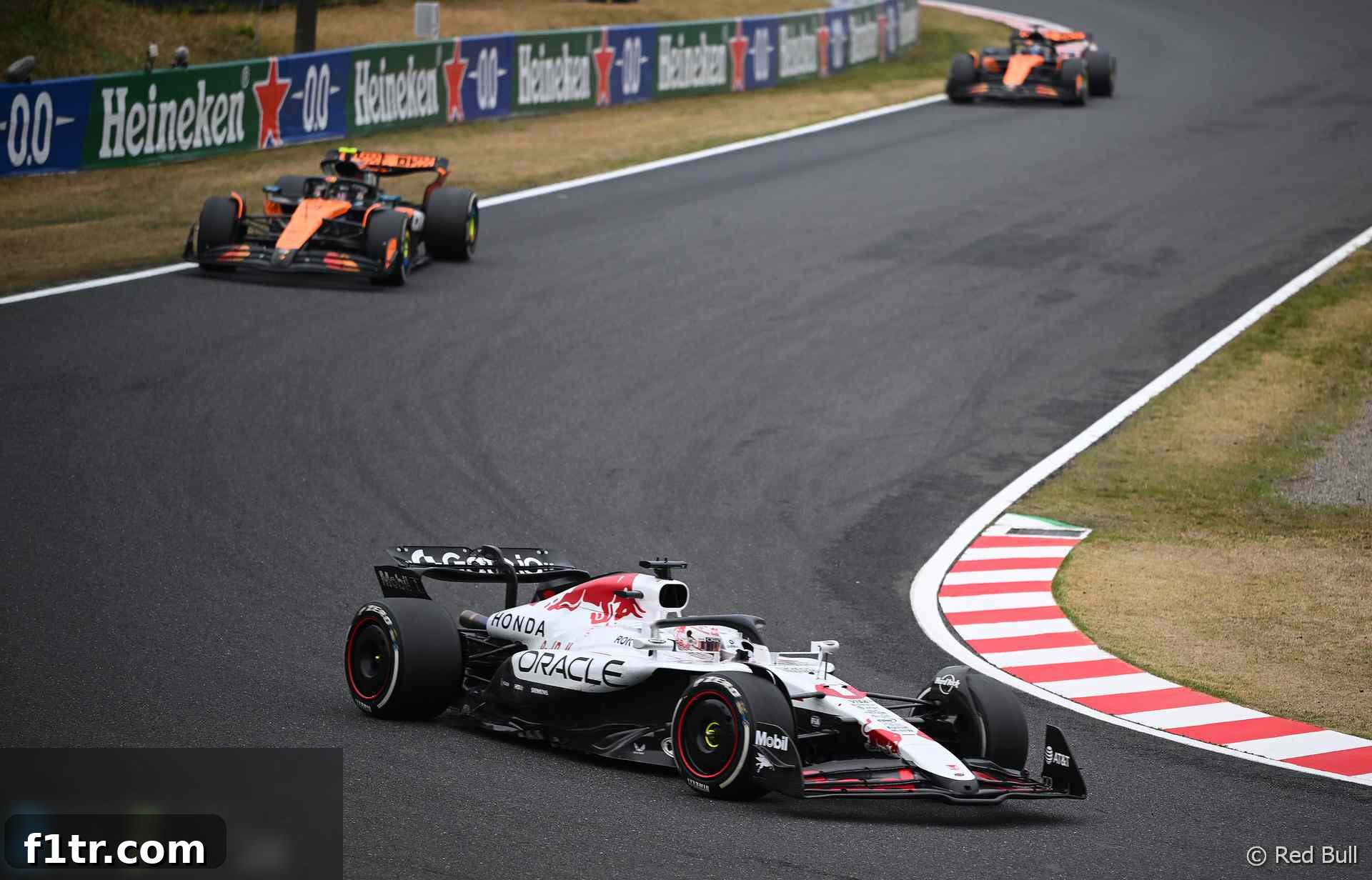
As the Formula 1 calendar moves towards another thrilling spectacle, attention shifts to the iconic Bahrain International Circuit. McLaren driver Lando Norris has openly shared his expectations for the upcoming Bahrain Grand Prix, pinpointing Max Verstappen and Red Bull Racing as a significant threat. Norris’s analysis is grounded in the inherent characteristics of the Bahrain track layout, which he believes will intrinsically play to the strengths of the Red Bull car, particularly its performance in low-speed corners.
The intricate balance of a Formula 1 car’s design means that different circuits can highlight varying strengths and weaknesses. Norris articulated this perfectly after a recent race, explaining that McLaren’s current car, while demonstrating exceptional capability in high-speed sections, faces a comparative disadvantage when navigating slower turns against Red Bull. “Our weakness was the slow-speed compared to them,” Norris commented, drawing a clear distinction. This assessment is particularly pertinent for Bahrain, a circuit notably defined by its greater proportion of low-speed corners and demanding braking zones, a stark contrast to the flowing, high-speed nature of tracks like Suzuka.
Bahrain’s Track Characteristics: A Boon for Red Bull?
The Bahrain International Circuit is notorious for its blend of long straights and tight, technical corners that necessitate strong braking and excellent traction. This design places a premium on mechanical grip and efficient power delivery out of slow-speed turns – areas where Red Bull has historically excelled. Norris’s concern stems from this fundamental architectural difference. “There’s a lot less high-speed [in Bahrain], so we’re kind of losing some of our strengths and we’re going more into our weaknesses,” he stated, offering a candid insight into McLaren’s strategic considerations.
For a team like McLaren, which has made impressive strides in recent seasons, adapting to such specific track demands is crucial. Their car’s aerodynamic package, while yielding superb results on faster circuits, may require a different approach to unlock optimal performance in Bahrain’s stop-and-go sections. The challenge for F1 engineers lies in finding the delicate balance between maximizing high-speed downforce and ensuring sufficient low-speed agility without compromising overall stability. Norris’s foresight highlights the critical role of this balance in dictating weekend performance and championship aspirations.
Red Bull’s Enduring Pace and Verstappen’s Unmatched Skill
Norris’s observations are not isolated; they reflect a consistent pattern observed throughout the current Formula 1 season. Despite McLaren’s own significant development and improved competitiveness, Norris believes that Red Bull has continued to refine and enhance their car since the start of the campaign. This continuous evolution was clearly demonstrated at the Japanese Grand Prix, where Max Verstappen secured pole position by a narrow margin over both Norris and his McLaren teammate, Oscar Piastri. This closely contested qualifying session, even on a track that should theoretically favor McLaren’s high-speed strengths, underscored Red Bull’s adaptability.
“Clearly, they’re quick,” Norris conceded, acknowledging the sheer pace of their rivals. He further elaborated on the Suzuka qualifying, explaining, “I feel like between Oscar and myself, we got a lot out of the car. It was probably a little bit more, yes, but both our theoretical [lap times] were not that far ahead.” This implies that while McLaren drivers pushed their MCL38 to its absolute limits, Verstappen’s ability to extract an extra fraction of a second indicated not only superior car performance in certain areas but also his exceptional talent behind the wheel. “So Max is doing a good job and Red Bull seemed to maybe have caught up a little bit,” Norris concluded, also noting that “they’ve also not been that bad the whole season.”
Consistent Performance Across Diverse Circuits
Indeed, Red Bull’s consistent performance across a variety of circuit types this season provides strong evidence of their comprehensive package. Norris referenced earlier races to support his point: “When you look at Australia, he was fighting for a win. When you look at China, he wasn’t miles away. And this weekend he’s done very good. So I expect him to be challenging us every weekend.” This remarkable level of consistency, irrespective of a track’s unique characteristics, underscores Red Bull’s engineering prowess and their ability to optimize their car for a wide range of aerodynamic and mechanical demands. They remain formidable contenders at every turn, a testament to their relentless pursuit of perfection.
McLaren’s Development Imperatives: Addressing Key Weaknesses
While recognizing the formidable challenge posed by Red Bull, Norris also highlighted McLaren’s proactive approach to car development. The team is keenly aware of specific areas that require attention to close the performance gap. “We’ve got areas to work on,” he affirmed, detailing the ongoing focus of the Woking-based squad. The stark contrast between their undeniable high-speed dominance and their struggles in low-speed corners remains a primary area of concern and development.
“In high-speed [corners] we were very, very strong and I think definitely the strongest car out there,” Norris proudly declared. This assertion is strongly supported by McLaren’s strong showing on circuits featuring fast, flowing sections and long straights, where their aerodynamic efficiency is maximized. However, this strength also illuminates their Achilles’ heel: “In slow-speed we’re quite a chunk off the Red Bull, and that’s where we lost in qualifying. We lost again consistently in the race.”
The Technical Nuances of F1 Car Design
This differential performance is a classic example of the intricate trade-offs inherent in Formula 1 car design. A car meticulously optimized for high-speed corners might struggle to generate the requisite downforce and mechanical grip at lower speeds without compromising its overall balance and responsiveness. Conversely, a car designed for maximum low-speed traction might incur too much aerodynamic drag, hindering its performance on faster sections. McLaren’s engineering challenge is to strike a more harmonious balance, reducing their low-speed deficit without eroding their considerable high-speed advantage. This complex task involves precise aerodynamic revisions, sophisticated suspension tuning, and meticulous mechanical setup adjustments, all conducted within the stringent framework of F1 regulations.
The pursuit of such an optimal balance is a continuous, data-driven process, fueled by extensive simulator work, rigorous track testing, and detailed post-race analysis. Every Grand Prix weekend serves as a crucial learning opportunity, allowing engineers to fine-tune existing components and spearhead the development of innovative solutions. For McLaren, the Bahrain Grand Prix will be another pivotal test, pushing them to demonstrate progress in overcoming their slow-speed corner challenges and moving closer to a more universally competitive package.
Strategic Considerations for the Bahrain Grand Prix
Given the detailed analysis of car characteristics by Lando Norris, the Bahrain Grand Prix is set to be a fascinating strategic battleground. Red Bull will likely aim to capitalize on their perceived advantage in the circuit’s technical, low-speed sections, focusing on securing a strong qualifying position and dictating the race pace from the front. Their superior low-speed performance could also translate into better tyre management, potentially allowing them to extend stints or push harder on their Pirelli compounds.
McLaren, conversely, will need to devise a meticulous strategy that minimizes their low-speed weakness while maximizing their high-speed strengths. This might involve an optimized car setup favoring race pace over single-lap qualifying performance, planning opportunistic overtakes on faster sections, or employing innovative pit stop strategies to gain track position. The roles of Norris and Oscar Piastri will be paramount, requiring them to be exceptionally precise and adaptable, especially in the critical braking zones and acceleration phases out of slow corners.
The intense desert heat typical of Bahrain will further complicate matters, significantly impacting tyre degradation and engine cooling, which can subtly yet profoundly influence car performance. Teams that can effectively manage these complex variables, combined with a profound understanding of their car’s inherent strengths and weaknesses, will undoubtedly hold a crucial advantage.
The Enduring Fusion of Driver and Machine
Beyond the sophisticated technical specifications of Formula 1 cars, the human element remains an irreplaceable core of the sport. Max Verstappen’s extraordinary ability to extract peak performance from his Red Bull, even in situations where the car might not hold a universal dominance, is a testament to his unparalleled skill and racing intelligence. Norris himself candidly acknowledged Verstappen’s “good job,” highlighting the symbiotic relationship between a world-class driver and a top-tier racing machine.
Similarly, Norris and Piastri are consistently pushing McLaren to new competitive heights, frequently extracting more performance than the car might initially suggest. Their consistent ability to deliver strong results and challenge the established front-runners underscores their growing maturity, raw speed, and strategic acumen. The Bahrain Grand Prix will serve not only as a crucible for engineering excellence but also as a powerful showcase for the incredible talent behind the wheel, as drivers strive to overcome mechanical limitations and exploit every conceivable advantage on track.
Conclusion: A High-Stakes Battle Awaits
As the Formula 1 fraternity prepares for the Bahrain Grand Prix, Lando Norris’s insightful observations offer a clear and compelling perspective on the anticipated challenges. His expectation of a strong, perhaps even dominant, showing from Max Verstappen and Red Bull is well-founded, given the circuit’s specific characteristics and Red Bull’s consistent strength in low-speed conditions. McLaren, while justifiably proud of their high-speed prowess, remains steadfastly focused on bridging the gap in their identified weaker areas.
The relentless development race in Formula 1 dictates that no team can afford to rest on its laurels. Every single race presents a unique opportunity to learn, adapt, and incrementally push the boundaries of performance. Bahrain is poised to be another captivating chapter in this exhilarating narrative, promising a thrilling contest where cutting-edge car design, unparalleled driver skill, and astute strategic execution will all converge to play pivotal roles. Fans can eagerly anticipate a fierce battle as McLaren continues its journey to transform its high-speed advantage into a more balanced, all-around competitive package capable of consistently challenging for victories at every type of circuit.
Don’t Miss Out on the Latest F1 News and Insights!
Get a daily email with all our newest stories and exclusive content delivered directly to your inbox. No marketing, no ads – just pure Formula 1 passion. Sign up today to stay fully informed and ahead of the grid!
Subscribe to our F1 Newsletter
Related Articles: Exploring the 2025 Bahrain Grand Prix and Beyond
- Hamilton making “drastic shift” in driving style to master Ferrari’s car
- Leclerc revealed Ferrari strategy details to Gasly before Bahrain Grand Prix
- Lawson made “very significant step forward” in Bahrain – Mekies
- Russell’s transponder was ‘frazzled and charred’ after Bahrain Grand Prix DRS drama
- “Don’t give me too much now”: Hamilton’s search for speed at Ferrari continues
Browse all 2025 Bahrain Grand Prix articles