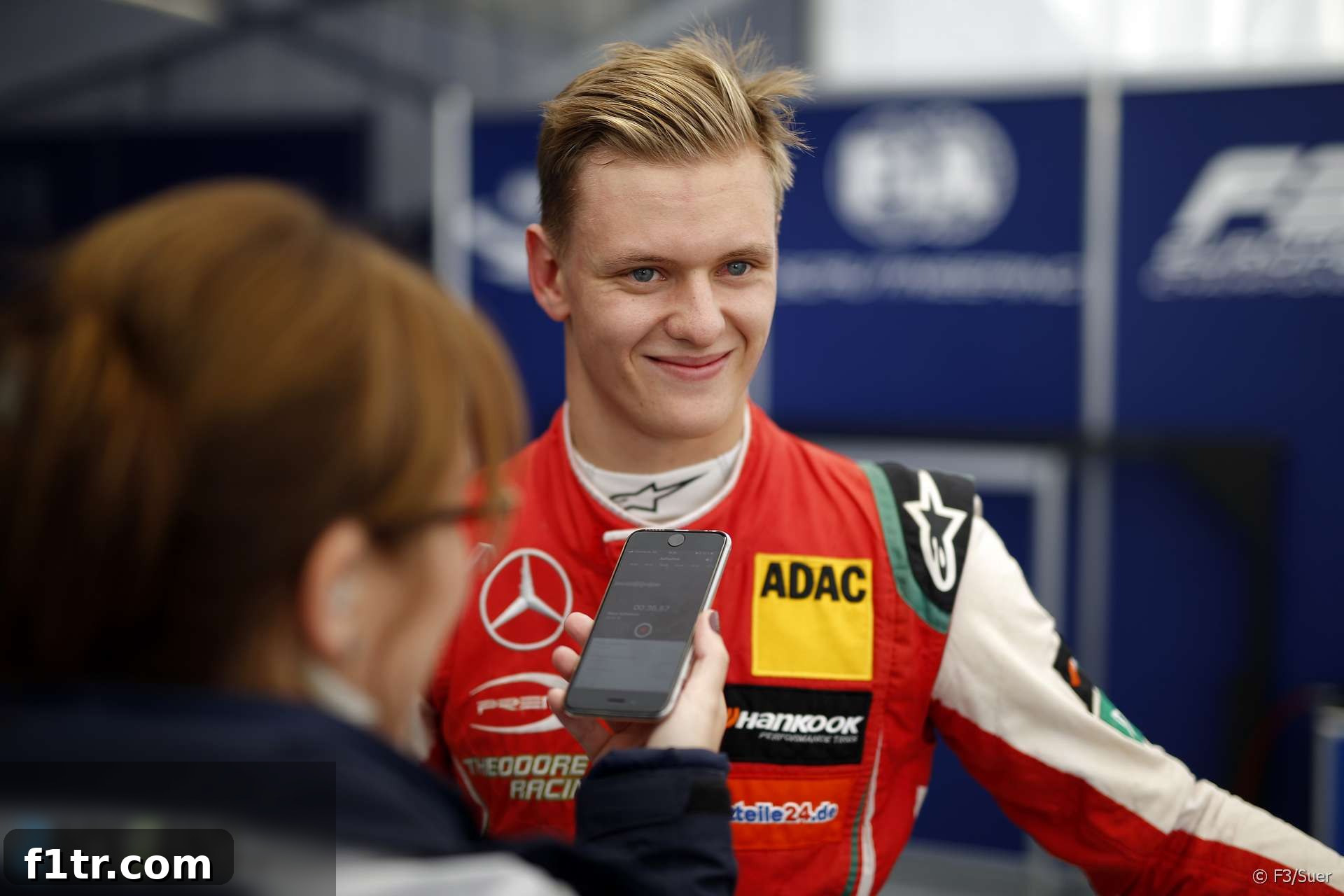
Mick Schumacher: The Next Chapter in a Racing Dynasty, According to Lewis Hamilton
The name Schumacher echoes with unparalleled dominance in the annals of Formula 1 history. For decades, Michael Schumacher set benchmarks that seemed insurmountable, cementing his legacy as one of the greatest drivers to ever grace the asphalt. Now, his son, Mick Schumacher, has emerged from the junior categories, fresh off a commanding victory in the European Formula 3 championship, reigniting the fervent hope among fans and pundits alike that the legendary surname will once again grace the Formula 1 grid.
This growing excitement has not gone unnoticed by the current titans of the sport. Lewis Hamilton, a multiple world champion and a contemporary legend in his own right, has weighed in on Mick’s prospects, offering a nuanced perspective on the unique challenges and immense potential that come with being the son of a sporting icon. Hamilton’s endorsement is not merely a polite nod; it’s a significant vote of confidence from one of the most successful drivers in Formula 1 history.
Hamilton’s Endorsement: Talent Beyond the Name
Speaking during a highly anticipated FIA press conference, Lewis Hamilton shared his candid assessment of Mick Schumacher’s abilities, immediately drawing a connection to his father’s celebrated prowess. “He’s obviously got a lot of talent as his dad had,” Hamilton affirmed, a statement that resonates deeply within a sport where innate ability is paramount. This observation isn’t just about genetic lineage; it’s about the observable skill and race craft Mick has displayed throughout his progression in the junior series.
Hamilton went on to contextualize Mick’s situation within a broader historical pattern of motorsport dynasties. He invoked the success of drivers like Keke Rosberg and his world champion son, Nico Rosberg, highlighting how talent can indeed be passed down and nurtured across generations. “Just like Keke and Nico,” Hamilton noted, adding a touch of humor and perhaps a hint of reality regarding the power of a famous name: “Just like when Fernando [Alonso] has kids I’m sure an Alonso will be here again. Even if I have a kid who wants to race and even if he’s no good he can make it Formula One because of the name.”
While Hamilton’s playful remark underscores the undeniable marketing appeal and brand recognition a storied surname can bring, he was quick to emphasize that Mick Schumacher’s potential is rooted in genuine merit. For Mick, the name is a foundation, not a crutch, built upon a solid bedrock of proven performance and dedication.
The Michael Schumacher Legacy: A Name of Immense Weight and Inspiration
The legacy of Michael Schumacher is arguably the most formidable in Formula 1. His record-breaking seven world championships, 91 Grand Prix victories, and countless other statistics paint a picture of relentless pursuit of excellence and unparalleled success. This creates a unique backdrop for Mick’s journey. For many young drivers, merely reaching Formula 1 is the ultimate dream; for Mick, the comparison to greatness is an ever-present part of his narrative.
The question of whether this immense legacy becomes a “burden” or a “blessing” is one that Hamilton thoughtfully addressed. His take is unequivocally positive. “I don’t think it will be a burden,” he stated, providing compelling reasons. “I think naturally for any of the champions when they have youngsters come through, naturally Michael is named the greatest driver of all time, he’s got the most titles, so there will one hundred percent be a Schumacher back in Formula One, partly because of the name, but secondly because he’s doing a great job.”
This dual perspective is crucial. The name undoubtedly generates immense interest, paving a smoother path in terms of initial recognition and opportunities. However, as Hamilton correctly points out, this would be fleeting without genuine talent. Mick’s impressive form throughout his junior career demonstrates that he is earning his progression through skill, not just heritage.
Mick’s Ascent: A Championship-Winning Season and Beyond
Mick Schumacher’s 2018 European F3 season was a testament to his burgeoning talent and mental resilience. After a steady start, he found an exceptional rhythm in the latter half of the championship, stringing together a remarkable series of victories and podium finishes. This dominant surge saw him overcome strong competition and secure the coveted title, firmly establishing himself as one of the brightest prospects outside of Formula 1. His ability to perform under pressure and convert potential into results highlighted the qualities essential for a top-tier racing driver.
Hamilton’s personal observations further underscore Mick’s promising character. “He’s doing a really great job and he’s a really great kid as well,” Hamilton commented, reminiscing about Mick’s visits to the Mercedes garage. “He’s come and been a part of our team a couple of weekends, I think it was last year, [he’s] very attentive.” This insight into Mick’s demeanor reveals a studious and engaged individual, eager to absorb knowledge from the pinnacle of the sport. Such attentiveness and willingness to learn are invaluable attributes for any aspiring F1 driver.
The collective sentiment within the paddock, amplified by Hamilton’s remarks, is that Mick’s talent is authentic. “He’s got a great talent as his dad had,” Hamilton reiterated, concluding his thought on the “burden” debate by suggesting, “so I don’t think it will be a burden in my personal opinion. I think it could be great for the sport.” A Schumacher on the F1 grid wouldn’t just be a nostalgic moment; it would be a significant boost for global fan engagement, attracting new audiences and rekindling old passions.
The Road to F1: Junior Series Pathways and Strategic Decisions
While Mick Schumacher’s talent is clear, the path to Formula 1 is rarely straightforward. With only 20 seats available globally and fierce competition for every opening, strategic career decisions are paramount. For the 2019 F1 season, with most seats already allocated, it became increasingly evident that Mick’s most logical next step would be a transition to Formula 2, the premier feeder series to Formula 1.
Formula 2 serves as a crucial proving ground, offering a step up in power, complexity, and racing intensity from Formula 3. It demands greater physical endurance, a deeper understanding of tire management, and the ability to perform consistently across a full season against a grid of equally ambitious and talented drivers. A successful stint in F2 is often considered the final, indispensable hurdle before an F1 promotion.
However, not all elite talents follow this traditional progression. Max Verstappen, another prodigious talent, famously bypassed Formula 2 entirely, making a direct jump from Formula 3 to Formula 1. His immediate success and aggressive driving style reshaped perceptions of how quickly a driver could adapt to F1’s demands. Yet, Verstappen himself is pragmatic about his unique trajectory.
“I think everybody is different,” said Verstappen, when asked about Mick’s potential path. “They just need to make up their minds what they want to do and what offers they get in whatever series.” He emphasized that personal circumstances, team affiliations, and available opportunities heavily influence these choices. “I’m very happy I skipped Formula Two but for some other drivers it’s maybe better,” Verstappen conceded, acknowledging the varying needs and readiness levels of young drivers.
For Mick Schumacher, a season or two in Formula 2 would provide invaluable experience, allowing him to refine his skills in a high-pressure, competitive environment that closely mirrors F1 in many respects. This measured approach can often lead to a more rounded and prepared F1 debut, ensuring he arrives not just with raw speed, but with the maturity and strategic thinking necessary to thrive at the pinnacle of motorsport.
The Future of the Schumacher Name in Formula 1
The journey of Mick Schumacher is more than just another aspiring driver; it’s a narrative woven into the very fabric of Formula 1’s history and future. The anticipation surrounding his potential arrival on the grid is immense, driven not only by his famous name but by the demonstrable talent and dedication he has shown.
Lewis Hamilton’s belief in Mick’s abilities underscores the genuine potential residing within the young German. His transition through the junior categories, particularly his European F3 championship, has been a significant statement of intent. The next steps, likely in Formula 2, will be crucial in solidifying his readiness for the ultimate challenge.
Should Mick successfully navigate these final hurdles, his presence in Formula 1 promises to be a captivating spectacle. He carries not just a name but a legacy, a weight of expectation that few drivers ever experience. Yet, if Hamilton’s insights and Mick’s own performances are any indication, he is well-equipped to not only meet these expectations but to forge his own remarkable chapter in the storied history of motorsport. The prospect of seeing a Schumacher battling for supremacy on the Formula 1 stage once more is a dream shared by millions, a dream that appears closer to reality than ever before.
Further Reading: Exploring Motorsport’s Future and Legacies
Dive into related articles that explore the dynamics of talent development, family legacies, and the competitive landscape of Formula 1.
- The Evolution of Driver Development Programs in Modern F1.
- Family Dynasties in Motorsport: A Historical Perspective.
- Analyzing the Impact of Junior Series on F1 Driver Performance.
- The Mental Fortitude Required to Succeed in Elite Motorsport.
- Sponsorship and Branding: How a Famous Name Influences a Racing Career.
Discover more insights and analysis on Formula 1.