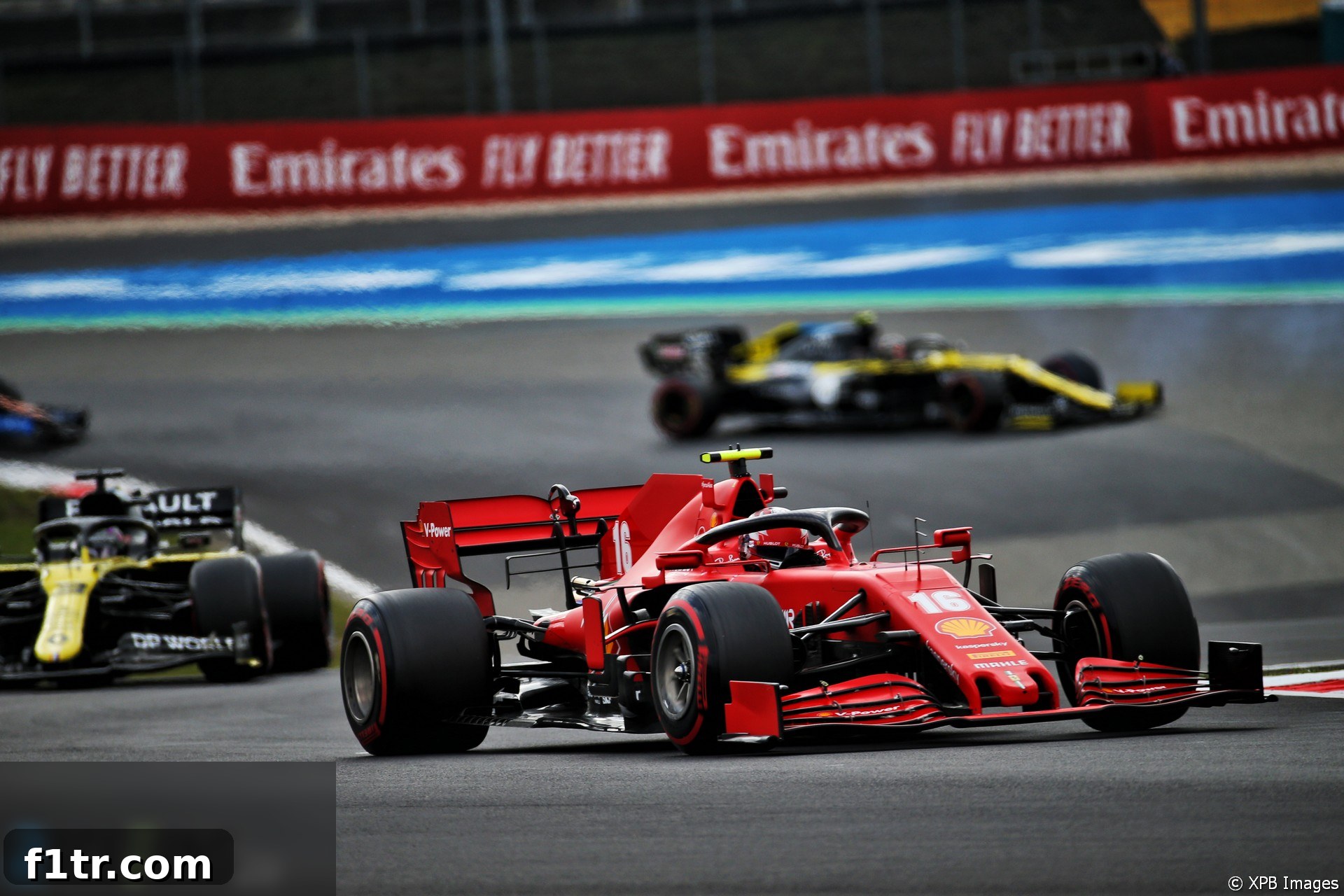
The Eifel Grand Prix at the iconic Nürburgring circuit offered a nuanced perspective on Charles Leclerc’s performance and Scuderia Ferrari’s ongoing development trajectory. Despite a challenging race that saw him drop from an impressive fourth on the grid to finish seventh, Leclerc expressed a surprising degree of encouragement regarding Ferrari’s display. This sentiment, though unexpected given the outcome, underscores the team’s meticulous approach to identifying positives amidst a historically difficult season, signaling a cautious optimism for future races and the path ahead for the legendary Italian outfit.
Advert | Become a Supporter & go ad-free
Leclerc, reflecting on the weekend, articulated a sense of progress that transcended the raw results. “I would have preferred to finish a bit higher,” he conceded post-race, a natural reaction for any competitive driver. However, he quickly pivoted to highlight the broader context: “But looking back at the weekend, I think there are quite a bit of positives.” This introspective view is crucial for a team like Ferrari, which has been grappling with significant performance deficits throughout the 2020 Formula 1 season. Pinpointing specific areas of improvement, even minor ones, becomes a vital exercise in rebuilding confidence and charting a course for recovery.
A Glimmer of Hope at the Nürburgring: Ferrari’s Cold Weather Performance
One of the most striking aspects of Ferrari’s Nürburgring weekend, from Leclerc’s perspective, was the SF1000’s unexpected competitiveness in the prevailing cold conditions. The Eifel region is renowned for its unpredictable and often chilly weather, presenting unique challenges for Formula 1 cars, particularly concerning tyre performance and overall grip. “I did not expect to be so competitive with the cold weather like that,” Leclerc admitted, revealing a pleasant surprise. This revelation suggests that Ferrari might have found a better operating window for their car in cooler temperatures, or perhaps the circuit characteristics minimized some of the SF1000’s inherent weaknesses.
The ability of the car to handle “quite well” in such circumstances is a significant positive. Cold ambient temperatures and track surfaces typically make it harder to generate and maintain tyre temperature, leading to reduced grip and increased degradation. For Ferrari to demonstrate improved handling in these conditions indicates potential breakthroughs in chassis setup, aerodynamic balance, or even understanding the Pirelli tyres better in specific thermal ranges. This insight could be invaluable for future races held in similar climates or for developing a more versatile car that performs across a wider spectrum of environmental conditions. For a team that has struggled with consistency, finding a positive outlier like this provides tangible data and direction for further development.
The Impact of Ferrari’s Minor Upgrade: A Step in the Right Direction?
Ferrari arrived at the Nürburgring armed with another incremental upgrade package for their SF1000. In a season characterized by significant technical challenges, every new component or aerodynamic tweak carries immense weight. Leclerc’s assessment of this latest modification was measured but positive. “I think the small update that we brought this weekend worked in the right direction,” he confirmed. This statement, while lacking specific technical details, implies that the development parts delivered on their intended purpose, however modest that might have been.
“It wasn’t a massive step, but that was not what we were searching for. It was a small step going in the right direction and this is also positive,” Leclerc elaborated. This candid assessment highlights Ferrari’s realistic approach in the latter half of the 2020 season. Instead of chasing revolutionary gains that were proving elusive, the team focused on smaller, verifiable improvements designed to address specific weaknesses and provide a clearer understanding of the car’s behavior. In the highly complex world of Formula 1, even minor advancements that confirm the validity of a development path are crucial. They provide data correlation, validate simulation tools, and build confidence within the engineering team, paving the way for more significant changes in future designs, particularly with the regulations shift looming for 2021.
The Race Day Challenge: Navigating the Soft Tyre Conundrum
Despite the encouraging signs in qualifying and early feedback on the car’s handling, the Eifel Grand Prix race itself presented Leclerc with significant hurdles, particularly during his opening stint on the soft compound tyres. He endured a difficult initial phase, characterized by acute graining and persistent understeer. Tyre graining occurs when the surface of the tyre shreds or peels off in small chunks due to excessive sliding, significantly reducing grip and accelerating wear. Coupled with understeer – a condition where the front of the car loses grip before the rear, making it difficult to turn into corners – Leclerc’s first stint was severely compromised.
“We need to understand why the first stint on the soft was so affected by graining,” Leclerc stated, underscoring a critical area for team analysis. This issue not only hindered his pace but also forced an early pit stop, disrupting his race strategy and costing him track position. The impact of this early struggle was starkly highlighted when Daniel Ricciardo, demonstrating strong pace in his Renault, was able to comfortably overtake Leclerc. This battle underscored the importance of tyre management and car balance in a tightly contested midfield. Leclerc further explained, “I was struggling quite a bit with graining and understeer” during that initial phase. In contrast, the subsequent second and third stints, presumably on medium or hard compounds, saw an improvement. “The second and third stint was a bit better but the first stint compromised massively our race,” he concluded, pinpointing the soft tyre performance as the key differentiator between a stronger result and his eventual seventh-place finish.
Advert | Become a RaceFans supporter andgo ad-free
Qualifying Prowess vs. Race Pace Struggles: A Recurring Theme?
Leclerc’s performance in qualifying for the Eifel Grand Prix was undoubtedly a standout moment for Ferrari. Securing fourth position on the grid, ahead of several faster cars in normal circumstances, showcased his exceptional talent and ability to extract maximum performance from the SF1000 over a single lap. “Surely [qualifying] was, I think, a bit of a standout performance,” he acknowledged, reflecting on a session where Ferrari’s pace truly shone. This ‘one-shot’ speed has been a recurring highlight for Leclerc throughout his career, often elevating the car beyond its perceived capabilities.
However, the stark contrast between qualifying brilliance and race day struggles, particularly on specific tyre compounds, has been a persistent challenge for Ferrari in 2020. “So it was good for qualifying on the one shot we’ve been strong, but on the long run, we struggled a bit more, especially on the soft,” Leclerc elaborated. This disparity often points to fundamental issues with the car’s aerodynamics, engine power, or chassis setup that become more pronounced over extended periods of racing. While a single lap allows a driver to compensate for certain deficiencies through sheer bravery and skill, a full race distance exposes any inherent imbalances or inefficiencies. For Ferrari, understanding and resolving this divergence between qualifying and race pace, particularly the soft tyre degradation on longer runs, remains a top priority for their technical department. It’s a critical step toward converting strong grid positions into equally strong race finishes.
Looking Ahead: Ferrari’s Path to Recovery
The Eifel Grand Prix, despite its mixed results, provided valuable lessons and glimmers of hope for Ferrari. Leclerc’s measured optimism is infectious and indicative of a team striving to make meaningful progress, even if it comes in small increments. The ability to identify positives in challenging conditions, coupled with a candid acknowledgment of weaknesses like the soft tyre graining, forms the foundation for effective development.
For Ferrari, the focus now shifts to meticulously analyzing the data from the Nürburgring, understanding why the car performed better in cold weather, and, crucially, addressing the persistent long-run issues, especially with tyre management. Charles Leclerc, as the team’s leading driver, plays an indispensable role in this process, providing precise feedback that guides the engineers. His unwavering commitment and analytical approach are vital assets in Ferrari’s ongoing quest to return to the front of the grid.
The 2020 season has been a rebuilding year for Scuderia Ferrari, marked by patience and the pursuit of foundational improvements rather than immediate, dramatic results. The “small step in the right direction” described by Leclerc reinforces this philosophy. It’s about laying solid groundwork for the future, understanding the car’s intricate dynamics, and ensuring that every upgrade, no matter how minor, contributes to a clearer understanding of how to unlock true performance. While the road ahead remains long and arduous, the Eifel Grand Prix offered a subtle but significant reminder that even in adversity, progress is possible, and the spirit of Maranello continues to fight for every advantage.
2020 F1 season
- Grosjean to make F1 test return tomorrow for first time since Bahrain horror crash
- Pictures: Wrecked chassis from Grosjean’s Bahrain fireball crash to go on display
- Bottas vs Rosberg: Hamilton’s Mercedes team mates compared after 78 races each
- F1 revenues fell by $877 million in Covid-struck 2020 season
- Hamilton and Mercedes finally announce new deal for 2021 season
Browse all 2020 F1 season articles