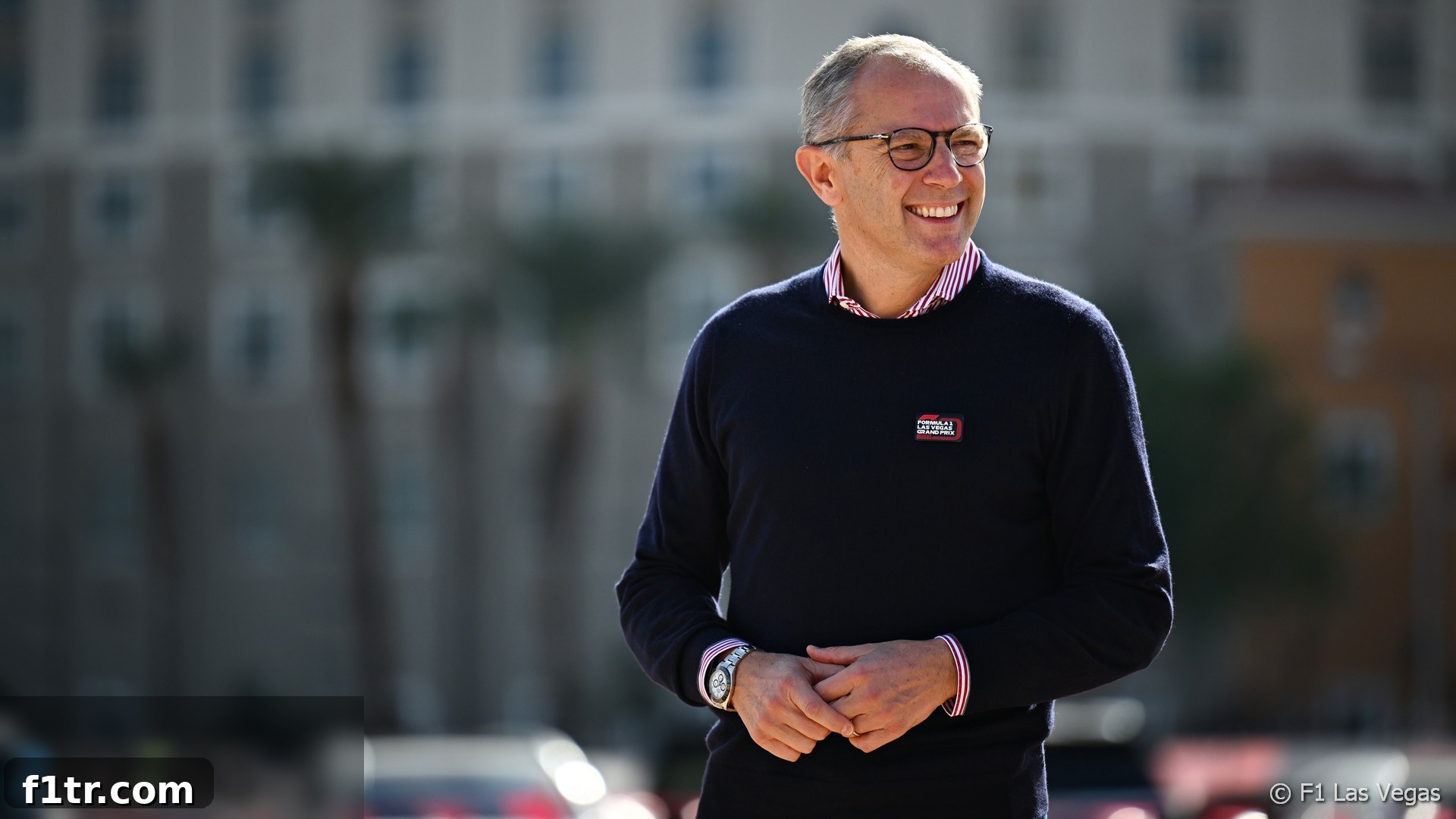
Formula 1 CEO Stefano Domenicali recently articulated a robust vision for the sport’s future, expressing confidence in its ability to navigate the impending economic headwinds forecast for Britain and Europe. Economists have issued stark warnings about a looming recession in these regions, prompting global businesses to assess their resilience. However, Domenicali believes that F1, with its unique global footprint and strategic commercial framework, is exceptionally well-positioned to withstand these challenges and continue its trajectory of impressive growth.
Advert | Become a Supporter & go ad-free
The commercial rights holder for Formula 1 is strategically based in the UK, a country now facing what the Bank of England has warned could be its longest recession on record. Similarly, the majority of F1’s iconic teams are headquartered within the UK, with the remaining few distributed across other European nations. The European continent also remains a significant hub for the sport’s calendar, hosting nine of the 24 races scheduled for the 2023 F1 season. Despite this concentration, F1’s global outreach provides a critical layer of insulation against regional economic fluctuations, a factor central to Domenicali’s optimistic assessment.
During a recent address to investors of Liberty Media, F1’s parent company, Domenicali acknowledged the developing economic landscape. He emphasized that while the sport is closely monitoring the situation, its foundational structure offers inherent protection. “First of all, being a world championship, we can spread around the world the risk of having this kind of situation to manage,” he stated. This geographical diversification means that while one region might experience a downturn, strong performance and fan engagement in other parts of the world can offset potential impacts, ensuring overall stability for the Formula 1 enterprise.
A cornerstone of F1’s resilience, as highlighted by Domenicali, lies in its long-term commercial agreements. These comprehensive contracts, encompassing race promoters, broadcast rights holders, and major sponsors, are designed to provide significant financial predictability and stability over extended periods. “On the other hand, the fact that we have long-term agreements will reduce the exposure to this risk,” he explained. Such agreements buffer the sport from immediate market volatility, ensuring consistent revenue streams even during periods of economic uncertainty. This contrasts sharply with industries or sports heavily reliant on short-term deals or discretionary spending, making F1’s model particularly robust.
Beyond structural protections, the overwhelming and sustained surge in Formula 1’s popularity serves as a powerful testament to its current strength. Domenicali pointed to tangible evidence of this demand, noting an “incredible number of preregistration with regards to the ticketing of next year. So this is a good sign.” This exceptional demand for tickets, often selling out within minutes of release and well in advance of the events, underscores a deeply engaged and expanding global fanbase. The sport’s growing appeal, significantly amplified by initiatives like Netflix’s ‘Drive to Survive’ series, has introduced F1 to new demographics and territories, transforming it into a mainstream cultural phenomenon rather than solely a niche motorsport.
The F1 CEO elaborated on this phenomenon, highlighting that the “attendance increase is just magnificent in terms of what Formula 1 is bringing mainly to new audiences.” This influx of fresh eyes and newfound enthusiasm is not merely translating into packed grandstands but also presents substantial opportunities for revenue maximization. While traditional business models with certain promoters involve fixed fees, F1 also directly benefits from high-value revenue streams such as the exclusive Paddock Club experiences. These premium hospitality packages command significant prices, catering to a clientele often less susceptible to economic fluctuations and providing high-margin income for the sport.
Domenicali stressed that the “big opportunity to move forward is how we can maximise the revenue and monetise the revenue that we can take from the fact that Formula 1 has become more and more attractive.” This strategic focus involves a multi-pronged approach to capitalize on F1’s elevated global profile. It includes negotiating increasingly lucrative media rights deals with broadcasters and streaming platforms worldwide, attracting premium global sponsors eager to align with F1’s dynamic image, and exploring innovative digital engagement strategies to convert viewership into tangible commercial value. The sport is actively looking for “a different way to do it,” ensuring it can effectively “capitalise this growth in the best way that we can in the next couple of years.”
While acknowledging the gravity of the economic forecasts, particularly in Europe, Domenicali maintains a clear sense of optimism. “In Europe, where I’m living, it is clear that this recession is taking place. But I think that the way that we are structured, the way that we have done the deals will protect us and will enable us to move forward in this direction,” he affirmed. This perspective suggests that F1’s leadership views the current economic challenges not as an insurmountable barrier, but as a manageable obstacle that their pre-existing strategies are designed to navigate. The structured financial agreements and global diversification serve as crucial safeguards.
The inherent appeal of Formula 1 itself also contributes significantly to its resilience. As a premier global sport, it offers a compelling blend of high-octane racing, cutting-edge technology, and aspirational luxury. This unique combination makes it a highly desirable entertainment product, capable of retaining strong viewership and fan engagement even when disposable incomes are under pressure. For many fans and corporate partners, Formula 1 transcends mere sport, representing a spectacle and a brand synonymous with excellence, innovation, and excitement – qualities that maintain their value regardless of economic cycles.
Therefore, Domenicali concluded, “I would say this kind of situation lets us think that we should be optimistic in this context that, of course, we monitor. But this is what we see today.” This statement encapsulates F1’s proactive yet cautiously optimistic stance. The sport is not complacent but is confident in its well-established strategic pillars: global market diversification, robust long-term financial agreements, and an explosive surge in fan engagement and commercial attractiveness. These factors collectively position Formula 1 not just to survive, but to continue thriving and expanding its influence on the global stage, even in the face of widespread economic uncertainty.
Advert | Become a RaceFans supporter andgo ad-free
2022 F1 season
- Mercedes told me “you’re wrong” about 2022 car’s problems – Hamilton
- FIA confirms all 10 F1 teams complied with 2022 cost cap
- Steiner “not ashamed” of panning “slow” Schumacher in Drive to Survive
- Albon believes year out of F1 improved him as a driver
- Hamilton sees diversity gains in F1 years on from his ‘traumatising’ experience of racism
Browse all 2022 F1 season articles