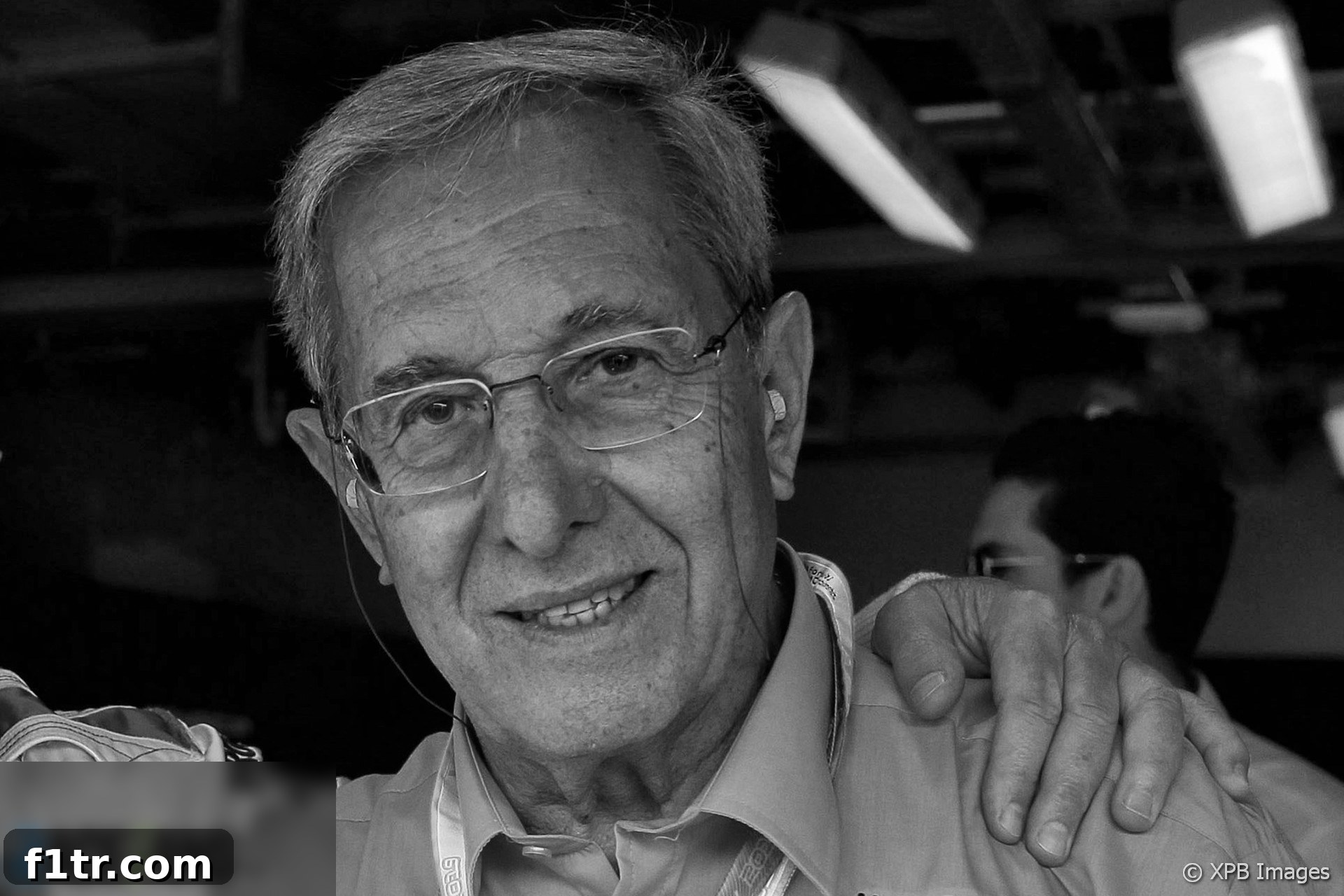
The world of Formula 1 mourns the loss of a true visionary, Mauro Forghieri, who passed away at the age of 87. Revered as one of Ferrari’s most influential designers and engineers, Forghieri’s indelible mark on the sport is defined by his instrumental role in guiding the legendary Italian team back to its championship-winning glory throughout the 1970s and 1980s. His innovative designs and unwavering dedication not only secured numerous titles but also cemented Ferrari’s status as a dominant force in Grand Prix racing.
Forghieri represented a dying breed of motorsport engineers – a polymath who oversaw virtually every aspect of a Formula 1 car’s creation, from its fundamental chassis and intricate mechanical components to the powerful engine, sophisticated transmission, and crucial aerodynamic profile. In an era where specialized departments now handle these roles, Forghieri’s comprehensive understanding and holistic approach to car design allowed for a synergy and coherence rarely seen in modern F1, making him a unique and indispensable figure in Ferrari’s history.
Remarkably, Mauro Forghieri was appointed as Ferrari’s chief F1 car designer at the tender age of 27. His connection to the marque ran deep; he was the son of Reclus Forghieri, a skilled mechanic who had worked on Enzo Ferrari’s early racing cars before World War Two. This familial bond with the racing giant was so profound that Enzo Ferrari himself reportedly funded Mauro’s engineering education at the prestigious University of Bologna, recognizing his extraordinary talent and potential from an early stage. This personal investment by the ‘Commendatore’ underscored the immense faith placed in the young engineer.
Forghieri’s ascendancy to such a pivotal role came during a tumultuous period for Ferrari in 1961. Facing a critical mass walk-out of his engineering staff, Enzo Ferrari made the bold decision to entrust Forghieri with the responsibility of leading the design department, effectively replacing former designer Carlo Chiti. It was a baptism by fire for the young engineer, but one he navigated with exceptional skill and ingenuity. His early challenges included adapting to significant rule changes, notably the increase in F1 engine capacities to three litres in 1966. Forghieri’s team responded with remarkable swiftness, developing the formidable Ferrari 312. This car showcased its competitive prowess by winning its second race at the iconic Spa-Francorchamps circuit in the hands of the versatile John Surtees, signaling a promising new chapter for Ferrari under Forghieri’s design leadership.
Despite this early success, the late 1960s presented considerable obstacles for Ferrari’s F1 team. Resources were often diverted to the lucrative sports car division, leading to a period where the Grand Prix effort suffered from fluctuating performance. Forghieri, however, remained a beacon of innovation. Even with limited resources, he advanced the team’s design capabilities, notably with trend-setting innovations such as the introduction of an adjustable wing – a crucial aerodynamic device that would later become standard in Formula 1. However, internal politics and inconsistent results led to his temporary relocation away from the F1 effort in 1969. The team’s fortunes, predictably, plummeted in his absence, starkly highlighting his indispensable contribution. Recognizing this strategic misstep, Enzo Ferrari swiftly reinstated Forghieri the following year.
Upon his return, Forghieri unveiled his latest masterpiece: the flat-12 Ferrari 312B1. This car immediately reignited Ferrari’s competitive spirit, scoring three significant victories towards the end of the 1970 season. While it proved too late for driver Jacky Ickx to snatch the championship from Jochen Rindt, whose title was tragically awarded posthumously after his fatal crash at Monza, the 312B1 demonstrated Forghieri’s ability to quickly turn around the team’s fortunes. The subsequent 1971 season, however, was marred by a series of mechanical niggles and a lukewarm reception to Forghieri’s radical 312B3 ‘Spazzaneve’ (‘snowplough’) design. This unorthodox creation, characterized by its wide, flat nose, was ahead of its time but struggled for immediate acceptance and performance, leading to Forghieri being moved aside once more. Yet again, Ferrari found itself languishing in the doldrums the following year, underscoring the cyclical nature of their dependence on their brilliant engineer. Unsurprisingly, Forghieri was soon recalled to lead the charge.
This time, Ferrari leadership, spearheaded by Enzo himself, recognized that more fundamental changes were imperative for sustained success. The charismatic and strategically astute Luca di Montezemolo was appointed to manage the team, signaling a new era of professionalism and focus. This strategic restructuring was accompanied by Forghieri’s reinstatement, and crucially, the arrival of the intensely analytical and unflinchingly honest Niki Lauda. This triad – Montezemolo’s leadership, Forghieri’s engineering genius, and Lauda’s precise feedback – formed a potent combination. Forghieri eagerly absorbed Lauda’s frank assessments of the car’s shortcomings, utilizing this invaluable input to rapidly refine and optimize his designs. Together, they meticulously addressed the weaknesses, propelling Ferrari back to the very forefront of Formula 1.
The 1974 season proved to be a pivotal breakthrough year for Ferrari, marking the beginning of a golden age. Niki Lauda showcased blistering pace, leading more laps than any other driver on the grid. However, reliability issues, a recurring challenge, meant that it was his seasoned teammate, Clay Regazzoni, who entered the final race tied for the points lead with Emerson Fittipaldi. Ultimately, the Lotus driver claimed the championship, but the groundwork for future dominance had been laid. During the intense off-season, Forghieri masterminded the development of the revolutionary Ferrari 312T chassis. The ‘T’ in its designation stood for ‘transverse gearbox,’ a radical innovation that significantly improved the car’s weight distribution and handling characteristics. This design refinement transformed Ferrari into an unstoppable force, utterly dominating the subsequent 1975 season.
In a spectacular display of engineering prowess and driving skill, Niki Lauda, piloting Forghieri’s superb 312T, only failed to score points twice in 14 races during the 1975 season. He clinched an impressive five victories and nine pole positions, showcasing the car’s raw speed and reliability. For the first time in 11 years, a Ferrari driver was crowned the Formula 1 World Champion, and the team triumphantly secured the Constructors’ title. This dual championship victory was a monumental achievement, signaling Ferrari’s emphatic return to the pinnacle of motorsport, largely thanks to Forghieri’s genius. The 1976 season promised to be a repeat of their success, with Lauda again performing brilliantly, until tragedy struck. Lauda suffered horrific, near-fatal injuries in a fiery crash at the Nürburgring, forcing him to miss two races. Despite this profound setback, Forghieri’s robust design and the team’s resilience ensured they still managed to secure the Constructors’ Championship once more, a testament to the fundamental strength of the 312T. The following year, demonstrating incredible courage and determination, Lauda was back in his 1975 form, securing 10 podium finishes and clinching his second Drivers’ World Championship, further solidifying Forghieri’s legacy.
While a famous falling-out with Enzo Ferrari ultimately led to Niki Lauda’s departure from the team, Mauro Forghieri continued his relentless pursuit of engineering perfection, refining his acclaimed 312 generation of Ferraris. His commitment to pushing boundaries was evident in the 1979 Ferrari 312T4. This car, while perhaps not the most aesthetically pleasing, was a masterclass in exploiting the emerging science of ground effect aerodynamics. Its innovative design, which utilized the car’s shape to generate downforce, made it incredibly competitive. Driving this formidable machine, Jody Scheckter skillfully navigated it to the Drivers’ World Championship, marking Ferrari’s fourth title in an astonishing five-year span. This period underscored Forghieri’s ability to adapt and innovate, keeping Ferrari at the forefront of F1 technology.
Anticipating the next major shift in Formula 1 technology, Forghieri presciently recognized the impending dominance of turbocharged engines, a trend already being exploited by rivals like Renault who were beginning to win races with their forced-induction power units. To maintain Ferrari’s competitive edge, Forghieri initiated the development of a turbocharged engine for the Scuderia. The fruit of this labor, a new turbo-powered Ferrari, made its debut towards the end of an otherwise challenging 1980 campaign. Despite the initial iteration, the 1981 race-ready Ferrari 126CK, being famously described as having “truck-like handling” due to its powerful but unwieldy turbo engine and rudimentary ground effect integration, it was an inspired Gilles Villeneuve who, through sheer bravado and talent, managed to wrestle it to two incredible victories. Villeneuve’s heroic drives highlighted the raw potential within Forghieri’s pioneering turbo design.
To further refine the chassis and integrate the powerful new turbo engine more effectively, British engineer Harvey Postlethwaite was brought in to work alongside Forghieri. This collaboration proved highly effective, as the team went on to secure back-to-back Constructors’ Championships in the subsequent two seasons (1982 and 1983). However, these years were tragically devoid of a Drivers’ title. The legendary Gilles Villeneuve was killed in a devastating crash during qualifying for the 1982 Belgian Grand Prix, leaving a void that was impossible to fill. Just three months later, his teammate Didier Pironi sustained career-ending injuries in another severe accident at the German Grand Prix. These profound losses cast a dark shadow over Ferrari’s constructor successes, underscoring the brutal realities of Formula 1 in that era.
Always keen to explore new engineering avenues, Forghieri took note of the exceptional performance of Brabham’s four-cylinder BMW engine in 1983. Inspired by its compact and efficient layout, he initiated work on a similar design to potentially replace Ferrari’s V6 engine with. However, this new development engine encountered significant challenges and performed poorly during its testing phase. By the end of 1984, after decades of unparalleled contribution to Ferrari’s Formula 1 efforts, Mauro Forghieri was relocated to research projects elsewhere within the vast Ferrari organization, marking the end of his direct involvement in the Scuderia’s F1 car design.
Despite stepping away from Ferrari’s F1 team, Forghieri’s engineering journey was far from over. He made a notable return to Formula 1 as the esteemed designer of the powerful 3.5-litre Lamborghini V12 engines, which were famously utilized by the Lola team in 1989 and subsequently by Lotus the following year. His expertise extended beyond established teams, as Forghieri was also involved in an ambitious, though ultimately aborted, project to establish a Mexican team in Formula 1, showcasing his enduring passion for the sport and its technical challenges. Later in his distinguished career, Mauro Forghieri contributed his engineering acumen to Bugatti, a testament to his versatility and respected standing in the automotive world. Furthermore, his unparalleled depth of knowledge made him a crucial figure when he was called upon to serve as an expert witness in the highly sensitive trial concerning the tragic death of the iconic Ayrton Senna in 1994, solidifying his legacy not just as a designer, but as a pivotal figure in motorsport history whose insight was sought even in the most somber of moments.
2022 F1 season
While Mauro Forghieri’s most active period in Formula 1 predates the modern era, his legacy of innovation and championship success continues to inspire the engineers and drivers of today. Understanding the technical evolution of the sport, Forghieri’s work laid foundations that influence contemporary car design. For those interested in the ongoing narrative of Formula 1 and the challenges faced by teams and drivers in recent years, here are some related articles from the 2022 F1 season:
- Mercedes told me “you’re wrong” about 2022 car’s problems – Hamilton
- FIA confirms all 10 F1 teams complied with 2022 cost cap
- Steiner “not ashamed” of panning “slow” Schumacher in Drive to Survive
- Albon believes year out of F1 improved him as a driver
- Hamilton sees diversity gains in F1 years on from his ‘traumatising’ experience of racism
Browse all 2022 F1 season articles