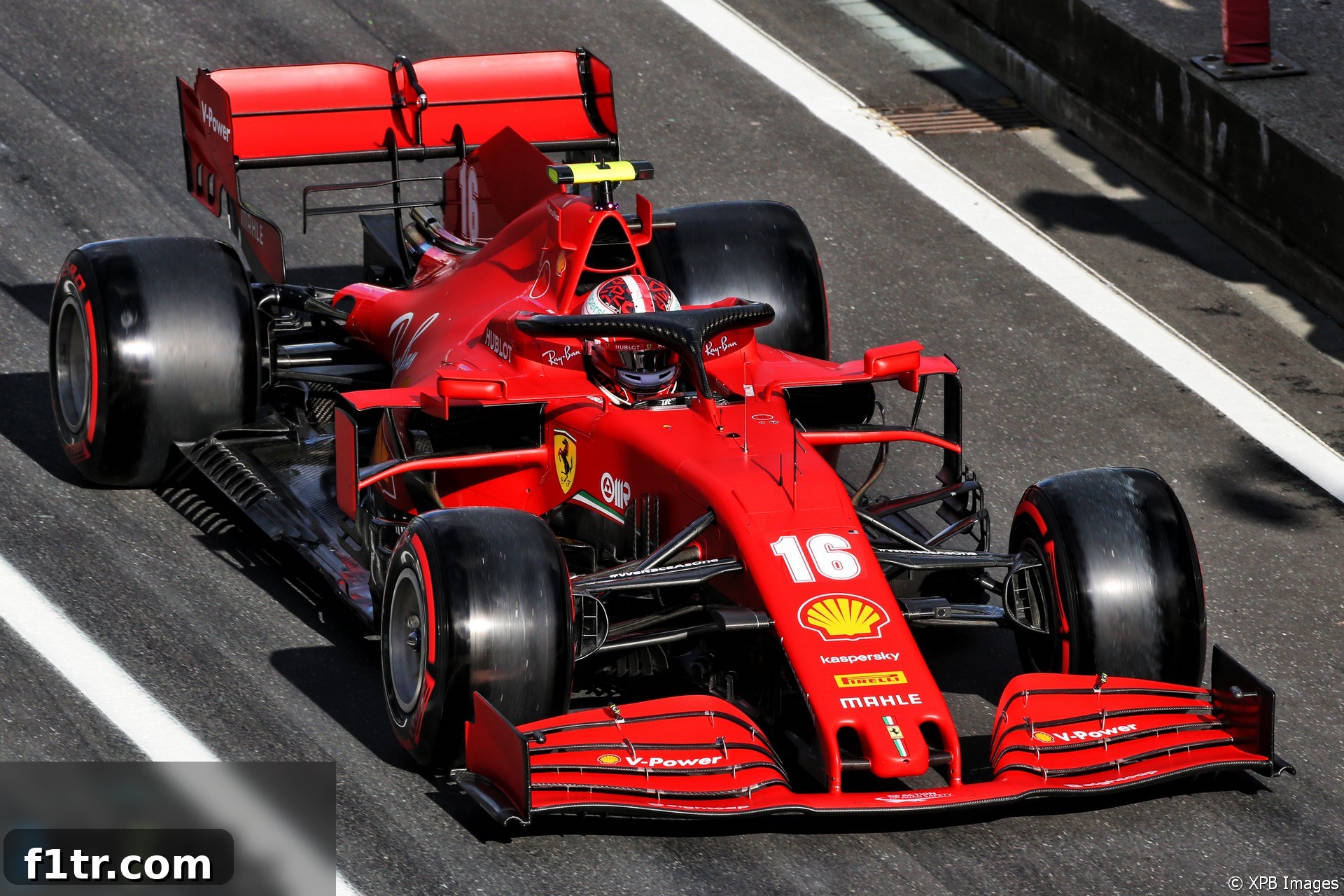
Charles Leclerc’s Surprise Fourth Place at Nürburgring Ignites Hope for Ferrari
Charles Leclerc delivered a remarkable performance at the Eifel Grand Prix qualifying session, securing a highly impressive fourth position on the grid. This result was not just a personal best since the 70th Anniversary Grand Prix for the young Monegasque driver, but also a significant morale booster for the Scuderia Ferrari team. What made this achievement even more surprising was its context: Leclerc himself admitted he was astonished by Ferrari’s strong showing in the unusually cold conditions at the Nürburgring, a scenario where the team has historically struggled.
The Eifel Grand Prix, held at the iconic Nürburgring circuit in Germany, presented unique challenges with its low temperatures, typically problematic for Formula 1 cars, especially regarding tyre performance. Yet, Ferrari’s SF1000, often dubbed a temperamental machine, seemed to find a rhythm. “I’m quite surprised, especially in this weather – I expected us to struggle in this cold weather,” Leclerc candidly told Sky Sports after the session. His statement underscored the prevailing belief that Ferrari’s car, particularly the Pirelli tyres, found it challenging to generate and maintain optimal operating temperatures when ambient conditions were chilly.
Defying Expectations: Ferrari’s Unexpected Cold Weather Prowess
Throughout the 2020 Formula 1 season, Ferrari’s SF1000 has often been an enigma, with its performance fluctuating wildly depending on track layout, weather conditions, and tyre compounds. A recurring theme in their struggles, especially during colder European races or morning sessions, has been the difficulty in getting the tyres into their optimal working window. This directly impacts grip levels, braking performance, and overall lap time. Therefore, Leclerc’s ability to extract such pace in the Eifel Grand Prix qualifying, where temperatures hovered in the single digits, represented a genuine breakthrough for the team.
Leclerc elaborated on this unexpected shift: “From the beginning of the season, we’ve struggled to make these tyres work any time it’s been cold, but today it seems like it’s worked out for us. So I’m very happy and I’m very happy with my last lap. I put everything together and fourth is great.” This sentiment speaks volumes about the team’s ongoing efforts to understand and tame their challenging car. The Nürburgring’s undulating layout, combined with the brisk autumnal air, usually places a premium on tyre management and chassis balance. For Ferrari to find a sweet spot in these conditions suggests a significant step forward in their analytical approach and potentially, the effectiveness of recent technical adjustments.
The Impact of Ferrari’s Continuous Upgrade Strategy
Ferrari’s 2020 campaign has been characterized by a relentless pursuit of performance through incremental upgrades. After a disappointing start to the season, which saw the storied Italian team languishing in the midfield and struggling for points, a strategic decision was made to bring consistent, small-scale updates to the SF1000. These upgrades, often focusing on aerodynamic refinements and chassis adjustments, aim to gradually improve the car’s overall balance and efficiency rather than introducing a single, large overhaul.
Leclerc confirmed the positive impact of this development philosophy at the Eifel Grand Prix: “For sure there were some upgrades this weekend that worked in the proper way. We are not trying to find an update that will give us a huge amount of lap time, but just smaller differences every weekend.” This measured approach is critical for a team like Ferrari, which is not only fighting for current season performance but also laying the groundwork for future regulations and car designs. The ability to validate upgrades effectively on track provides invaluable data and confidence for their engineering department back in Maranello.
The success of these upgrades marks a crucial turning point for Ferrari. In previous seasons, the team occasionally faced difficulties in correlating simulation data with real-world track performance, leading to frustrating periods of slow progress. The current trend, as highlighted by Leclerc, where “Every time we bring something new to the car, it’s working, which is the most important thing and something which was not the case in the past,” is a testament to improved processes and a more robust understanding of their vehicle’s characteristics. This foundational improvement is vital as Ferrari looks beyond 2020, aiming to build a truly competitive package for the upcoming seasons, especially with significant regulation changes on the horizon.
Leclerc’s Consistent Brilliance Contrasts with Vettel’s Ongoing Struggles
The Eifel Grand Prix qualifying once again cast a stark light on the diverging fortunes of Ferrari’s two drivers. Charles Leclerc’s stellar fourth-place effort stood in sharp contrast to team-mate Sebastian Vettel, who will start tomorrow’s race from 11th position. This marked the eighth consecutive race weekend where Leclerc has out-qualified the four-time world champion, a statistic that underscores the younger driver’s consistent ability to extract maximum performance from the challenging SF1000.
Vettel’s difficulties throughout the 2020 season have been well-documented. Whether it’s been adapting to the car’s tricky rear end, struggling with tyre management, or simply battling a crisis of confidence in his final season with Ferrari before moving to Aston Martin (formerly Racing Point), the German driver has found it hard to match Leclerc’s pace. While the Nürburgring is a circuit where Vettel has historically performed well, even on home soil, he couldn’t bridge the gap to his team-mate. Leclerc acknowledged the difference in performance but remained respectful of his team-mate’s calibre: “Today I especially think the first sector was quite competitive. Seb is a four-time world champion and I am pretty sure that he will come back to where he needs to be.”
Despite the internal team dynamic, Leclerc remains steadfastly focused on his own performance. His approach is one of maximizing personal effort and pushing the car to its absolute limits, regardless of what others are doing. “At the moment, I’m focusing on myself, I’m trying to push the car as hard as possible every time I’m in the car and it’s working pretty well for me,” he stated. This single-minded determination has been a hallmark of Leclerc’s career and is undoubtedly a key factor in his consistent ability to outperform the car’s perceived limitations and his more experienced team-mate.
Looking Ahead: Implications for the Eifel Grand Prix and Beyond
Securing fourth on the grid offers Ferrari a strong starting position for the Eifel Grand Prix, potentially enabling Leclerc to challenge for significant points, or even a podium finish, should race conditions play into their hands. The Nürburgring is known for its unpredictable weather, and Sunday’s race could bring further challenges and opportunities. For Ferrari, converting this strong qualifying performance into a tangible race result will be crucial for validating their recent progress and maintaining momentum in the Constructors’ Championship, where they aim to climb higher than their current sixth position.
This weekend’s performance provides valuable data and renewed optimism for the Maranello-based squad. It suggests that their development path is indeed yielding positive results, and that the SF1000 is slowly but surely becoming a more predictable and competitive machine. The ability to perform well in cold conditions, a previous Achilles’ heel, broadens the car’s operating window and bodes well for the remaining races of the season, many of which could see similar cool temperatures. As the 2020 season progresses, all eyes will be on Ferrari to see if they can build on this surprising Nürburgring performance and continue their upward trajectory.
More on the 2020 Eifel Grand Prix:
- Renault “not scared of anywhere” in remaining races
- Bottas “needs a miracle” to overturn Hamilton’s 69-point lead
- 2020 Eifel Grand Prix Star Performers
- Leclerc sees ‘quite a few positives’ in Ferrari’s Nurburgring weekend
- Mercedes relied on DAS “more than ever” at cold Nurburgring
Browse all 2020 Eifel Grand Prix articles